

Dr. Sun Qiang of Shandong University Second Hospital: Four Decades, Thousands of Heart Surgeries — Passion as the Foundation
“Whenever a great physician treats disease, he must first calm his mind and steady his will, free from desire and self-interest. He should first arouse a heart of great compassion and empathy, vowing to alleviate the suffering of all sentient beings... He must not shy away from danger or difficulty, nor be deterred by day or night, cold or heat, hunger or thirst, or fatigue; instead, he should devote himself wholeheartedly to rescue efforts, without any thought of personal gain or ostentation. Only in this way can one become a great physician for the common people.”
——Sun Simiao, a medical scholar of the Tang Dynasty, from "The Great Physician's Sincerity and Mastery"
In one year, Sun Qiang will turn 60.
From a high-spirited youth to an elder whose prime has faded, over countless days arriving with the light and returning under the moon, he rescued stranger after stranger whose hearts were on the verge of stopping. He devoted the most brilliant years of his life wholeheartedly to the medical profession.
“Little did I expect that once I picked up the scalpel, it would become my life’s work,” Sun Qiang remarked with emotion. He began his medical studies at the age of 17 and became the Chief of Cardiovascular Surgery at 40. Through continuous self-exploration and learning, he has achieved remarkable success in the fields of complex congenital heart disease in children, various valvular heart diseases, coronary atherosclerotic heart disease, and large vessel disorders, earning widespread recognition from patients. He is particularly renowned for performing the “Sun’s Procedure,” having completed more than 500 cases to date.
As the Director of the Department of Cardiovascular Surgery at the Second Hospital of Shandong University, Sun Qiang introduced that the department initially had only one or two patients. With continuous breakthroughs in technical expertise, the annual caseload later stabilized at dozens of patients, and is expected to reach 1,000 cases this year.
“In the past, when we encountered patients with complex aortic dissections, our technical capabilities were insufficient to provide treatment. We had no choice but to regretfully advise them to seek care elsewhere. However, aortic dissection is extremely dangerous; some patients would even pass away before they could be transferred to another hospital, which was deeply distressing. I am gratified that, through our efforts, we can now save more patients with aortic dissections, and our cardiac surgery department has gradually risen to the forefront in its field,” pointed out Sun Qiang.
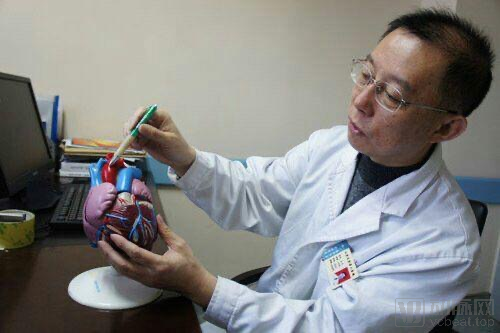
(Director of the Department of Cardiovascular Surgery, The Second Hospital of Shandong University, Sun Qiang)
The Long Road to Medical Care: Striving Hard, Feeling Lost, Rejoicing Wildly, and Enduring Helpless Sorrow... Most Precious of All Is the Steel-like Will That Prevailed After Experiencing a Thousand Flavors.
Initially, Sun Qiang had never considered studying medicine.
In the 1970s, amid widespread social turmoil, pursuing education was extremely arduous. Sun Qiang recalls that schooling operated on an intermittent basis, with classes held one day and suspended the next. As a result, his primary, secondary, and high school education lacked systematic continuity. Concerned about his academic performance, he sought tutoring assistance from university-educated employees at his mother’s factory after school. In 1977, shortly after the end of the Cultural Revolution, 17-year-old Sun Qiang reached the first major turning point in his life by taking the National College Entrance Examination (Gaokao).
“I packed some steamed buns and pickled vegetables, then headed to the exam venue. The desks were made of wooden planks; at night, we would lay down some straw as bedding and sleep in our clothes, resuming the exams the next day,” said Sun Qiang. Through the National College Entrance Examination (Gaokao), he was admitted to Jining Medical University, which was close to his hometown and was a junior college at the time. Ambitious by nature, Sun had initially intended to repeat the year to gain admission to a more prestigious institution. However, in the eyes of his elders, becoming a “doctor” to treat patients and save lives was considered an excellent career choice. Amidst his family’s joy and persuasion, Sun accepted this path.
Since entering medical school, Sun Qiang’s deepest impression has been that everyone is striving for their future. To what extent? Students study day and night; those who have been studying in the classroom until 2 or 3 a.m. are preparing to go back and rest, while others who wake up at 2 or 3 a.m. to study have already arrived in the classroom. No matter how late it is, there are always people reading in the classroom.
The surrounding environment had a profound impact on Sun Qiang. After two years of diligent study at medical school, he was assigned in his third year to complete his internship at what was then the First People’s Hospital of Jining City. Within the hospital, physicians with exceptional clinical skills commanded particular respect. Motivated by his reverence and admiration for these senior mentors, Sun Qiang quietly steeled himself to excel. He was only 20 years old when he began his internship—an age marked by youthful vigor and ambition. His solid foundational knowledge, willingness to learn, and competitive spirit enabled him to stand out during his mentors’ frequent questioning, and their praise provided him with tremendous encouragement.
“Thus, my interest in medicine grew ever stronger. At that time, I set a goal for myself: to become an outstanding surgeon,” said Sun Qiang.
After graduation, Sun Qiang was assigned to the Affiliated Hospital of Jining Medical University. At that time, he stood 173 cm tall and weighed just over 50 kilograms, appearing extremely slender. The department director advised him to choose internal medicine rather than surgery, warning that the physical demands of surgical work would be too taxing for someone with his frail constitution. “I had a very strong-willed personality back then; I firmly believed I could handle it,” he recalled. Thus, driven by lofty aspirations, Sun Qiang plunged headfirst into the field of cardiac surgery.
Medicine is a path with no end in sight. After becoming a surgeon, Sun Qiang was determined to acquire more clinical knowledge and gain hands-on surgical experience. He asked a nurse to bring him bedding and found a set of bunk beds in the logistics warehouse—bare wooden planks without any mattress. He made do with this makeshift arrangement for four years, all for the sake of securing one more opportunity to participate in clinical surgeries.
After four years of consolidation, Sun Qiang gained a clearer understanding of his specialty. To further refine his medical skills, he applied for the master’s program at Shandong Medical University. In 1986, he was successfully admitted to Shandong Medical University, specializing in cardiac surgery. “Cardiac surgery can be said to be the most challenging discipline within the field. At that time, I thought to myself: if I’m going to study it, I might as well tackle the most difficult one,” said Sun Qiang. Upon completing his master’s degree, he joined Qilu Hospital and devoted himself to frontline clinical practice.
Later, inspired by his esteemed mentor, Sun Qiang joined the Department of Cardiovascular Surgery at the Second Hospital of Shandong University. In 2001, upon the retirement of the original director of the department, Sun Qiang was promoted to Director of the Department of Cardiovascular Surgery at the Second Hospital of Shandong University, owing to his exceptional medical expertise.
Upon assuming the role of department director, Sun Qiang shouldered even greater responsibilities. Elevating the overall medical standards of the department and strengthening its development became his top priorities. Subsequently, he pursued a doctoral degree in medicine and completed advanced training at Fuwai Hospital, a renowned cardiovascular specialty hospital in China. Upon his return, his enhanced expertise enabled him to manage more complex and refractory cases. During this period, the Department of Cardiac Surgery at the Second Hospital of Shandong University transitioned from a phase of gradual growth to one of rapid development.
For patients, the two words they most hope to hear from their doctor are “it’s treatable.” In those moments of indecision, what is needed is the physician’s courage and competence.
In 2006, a young man with congenital heart disease was admitted to the Second Hospital of Shandong University. The 17-year-old patient presented with a rare condition in which the aorta and pulmonary artery failed to separate, remaining connected as a single vessel. He also exhibited pulmonary hypertension, a complication that can severely lead to right heart failure. Prior to seeking care at the Department of Cardiovascular Surgery of the Second Hospital of Shandong University, he had consulted medical experts in Beijing but did not receive an effective treatment plan.
“This case was extremely critical. Without intervention, such a young life could have been lost very quickly; yet even with surgery, there was a risk of failure, making it highly challenging. We devised several surgical plans and only proceeded once we identified the approach with the highest likelihood of success,” said Sun Qiang. The surgery was ultimately successful, and the patient made a full recovery. At a follow-up visit several years later, he was in excellent health and had grown into a handsome young man.
After becoming a cardiac surgeon, Sun Qiang handled only major surgeries that determined patients’ survival. Cardiac procedures typically last six hours or longer, and fighting through the night until dawn has become the norm. The most memorable experience for him was performing surgeries throughout four consecutive nights; after completing the final operation, he stepped away from the operating table with stiff, numb legs and cramping hands.
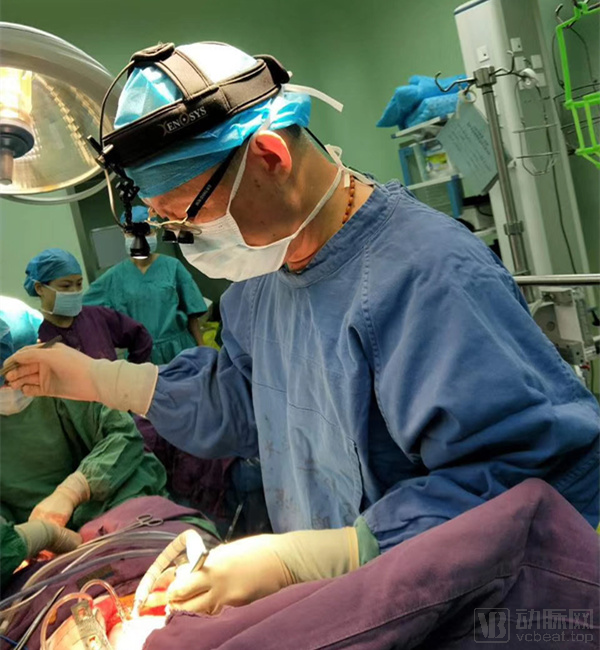
(Sun Qiang(Performing surgery on the patient)
“Cardiac surgeons have all crawled out from piles of the dead,” Sun Qiang lamented.
Every time a surgeon steps up to the operating table, it is a gamble with death. At the threshold of life and death, patients pin their hopes for survival on their doctors, who must pass through rigorous trials to earn the key to saving lives.
At the Second Hospital of Shandong University, a male patient in his 50s with aortic dissection was left in critical condition with severely low blood pressure following surgery. Despite interventions by multiple teams of physicians, his blood pressure remained difficult to stabilize at an ideal level. Upon being notified, Sun Qiang arrived at the scene immediately. After assessing the situation, he informed the patient’s family that a second surgery would carry extremely high risks and complexity, with virtually no chance of success.
Upon learning the results, the patient’s wife immediately knelt down and begged Sun Qiang to provide treatment. At that moment, Sun Qiang was deeply conflicted. “The actual chance of success was less than one percent; it was highly likely that the patient would not survive the surgery,” Sun Qiang recalled. It was already late at night. Moved by the family’s pleas, Sun Qiang, with a grave expression, agreed to their request. He told his assistant, “Prepare for surgery,” and then strode quickly into the operating room.
Fortunately, the patient successfully pulled through and made a good recovery thanks to the emergency efforts of Sun Qiang and his team. “Later, when I mentioned this to my peers, they said, ‘You’re so young. If the surgery had failed, especially given the sensitivity of doctor-patient relations, the consequences would have been unthinkable.’ I replied that as long as there was a glimmer of hope and the patient was willing, I would spare no effort in saving him,” Sun Qiang stated firmly.
In fact, there are many such cases.
“Cardiac surgeons perform thousands, or even tens of thousands, of operations over their careers; any single procedure may be just one among many. But for the patient, there is only one chance,” said Sun Qiang. He believes that his mission is to devote his utmost effort to every surgery.
People often liken cardiac surgeons to “mere scalpel-wielders.” Sun Qiang believes that a truly outstanding cardiac surgeon should be a competent “internist” armed with a “scalpel.”
“Our generation can be said to have grown up focusing on congenital heart disease. Twenty years ago, cardiac surgery departments in major hospitals were still primarily dedicated to congenital heart disease. Later, with the trend of population aging, diseases related to hypertension and atherosclerosis, such as coronary artery bypass grafting and aortic dissection surgery, gradually became more common,” introduced Sun Qiang.
Aortic dissection is a common critical emergency in cardiac surgery, with its incidence showing an upward trend in recent years. Aortic dissection is classified according to the Stanford and DeBakey systems. Based on surgical requirements, the Stanford classification is further divided into Stanford type A and Stanford type B. Among these classifications, once acute Stanford type A aortic dissection occurs, the patient’s life is immediately at grave risk. Without surgical intervention, the prognosis is extremely poor, with a mortality rate of 50% within 48 hours, 70% within one week, and up to 90% within two weeks.
Currently, the primary surgical treatment for acute type A aortic dissection in China is the Sun’s procedure, which involves total arch replacement with a quadrifurcated graft and distal stent graft implantation. Compared with other surgical techniques used domestically and internationally, the Sun’s procedure simplifies the operative approach, shortens operative time, and reduces the incidence of complications and mortality.
In 2013, Sun Qiang was first introduced to the “Sun’s Procedure.” At that time, Chang Qian, Executive Deputy Director of the Vascular Surgery Center at Fuwai Hospital, Chinese Academy of Medical Sciences, was invited to the Second Hospital of Shandong University, where he successfully treated a patient with aortic disease using the Sun’s Procedure.
“Previously, when patients with aortic conditions came to our department, we had no choice but to transfer them to other hospitals. After being introduced to the Sun’s procedure, I was eager to master this technique thoroughly so that I could treat more patients,” said Sun Qiang. After learning about the Sun’s procedure, he studied under Professor Sun Lizhong, the inventor of the technique, and through his unremitting efforts, he successfully mastered it.
Over the past seven years of performing the Sun’s procedure, he has personally completed nearly 500 cases, successfully treating a large number of patients with aortic dissection. He is also the physician who has performed the highest number of Sun’s procedures nationwide, second only to Professor Sun Lizhong.
Recently, Sun Qiang managed a highly complex and technically challenging surgical case. The patient was a 70-year-old individual with significant dissections involving all three major branches of the aorta, avulsion of the right coronary artery, an aortic root aneurysm, a history of Marfan syndrome, and prior valve replacement surgery.
“After reviewing the patient’s imaging studies, I broke out in a cold sweat. The complexity of her condition far exceeded my expectations, and no single surgical approach could adequately address her problems,” pointed out Sun Qiang. Fortunately, through persistent efforts, a more optimal surgical plan was ultimately identified. In the end, this elderly patient was successfully treated and made a remarkable recovery.
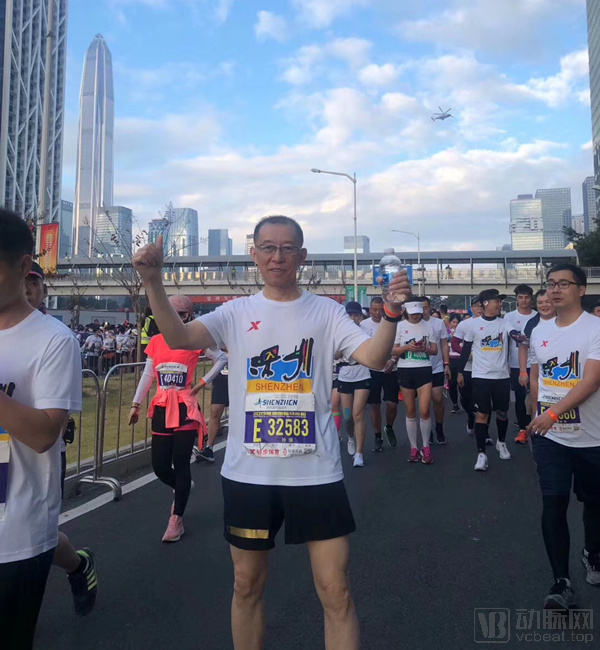
(Sun Qiang participates in a marathon race)
Physical stamina and mental energy are fundamental prerequisites for cardiac surgery. To extend his surgical career by several more years and save more patients, Sun Qiang persists in physical exercises such as running despite his demanding schedule. It is hard to imagine that since the second half of last year, he has already participated in 16 marathon races.
At the end of the exclusive interview, we asked Sun Qiang how he had managed to persevere for forty years. He smiled and said, “There is a line in Guo Degang’s crosstalk routines: ‘Your greatest happiness lies in the fact that what you love most is precisely your work.’”
“Cardiac surgeons must first be willing to endure hardship, and second, have a passion for the work.” This is the phrase Sun Qiang mentions most often when imparting technical skills to young doctors.
The best resources in cardiovascular surgery are concentrated in developed cities such as Beijing and Shanghai. In East China, where resources are relatively scarce, there are many physicians like Dr. Sun Qiang. Working quietly behind the scenes, they dedicate their lives to exploration and breakthroughs, striving to contribute to the advancement of China’s cardiovascular field. We extend our gratitude to these countless white-coated professionals for their selfless dedication.