

HeartFlow Tech Files IPO Prospectus: Delivering Stress Relief and Sleep Solutions to Nearly 100 Million Users
Promotions, pay raises, home purchases, exams, and university studies—pressures from life, work, and education are pervasive, leaving many contemporary individuals plagued by suboptimal psychological health or even mental disorders.
Suboptimal psychological health is not an organic disease or defect, but rather a state characterized by subjective discomfort, fatigue and weakness, and frequent anxiety and agitation. If psychological stress remains unaddressed over a prolonged period, it can lead to physical problems such as insomnia and migraines.
Data from the 2018 “White Paper on Mental Health of Urban Residents in China” shows that 73.6% of people in China are in a state of suboptimal psychological health, 16.1% have varying degrees of psychological problems, and only 10.3% are mentally healthy.
When mental health management is mentioned, most people likely think of psychological counseling and psychoeducational courses. For many individuals, seeking professional psychological counseling for mild psychological stress feels like “using a sledgehammer to crack a nut.” Moreover, traditional psychological counseling agencies predominantly provide services through offline, one-on-one sessions, charging on an hourly basis. The associated time and financial costs can, to some extent, deter those in need from seeking help.
With the advancement of technology, an increasing number of people are embracing the integration of technology and psychology as a new trend in mental health development. Emerging technologies such as virtual reality (VR), heart rate monitoring, smart hardware, and big data analytics are opening up entirely new horizons for the mental health industry.
VCBeat has learned that the Xinchao Decompression APP, developed by Guangzhou xinyuchao Information Technology Co., Ltd. (hereinafter referred to as “Xinchao Tech”), integrates biofeedback and affective computing technologies to enable rapid stress relief and emotion regulation. In light of this, VCBeat conducted an exclusive interview with Xinchao Tech.
Ph.D. candidate in Psychology & M.D. candidate, internationally certified hypnotherapist, and nationally certified Level-2 psychological counselor; proficient in programming and algorithms, with expertise in brainwave analysis and psychiatric rehabilitation. These numerous titles and skills all underscore the capabilities and credentials of Zou Zou, Founder & CEO of Xinchao Technology.
Zou Zou, who holds a Ph.D. in Psychology, majored in Computer Science during his undergraduate studies. After graduation, he joined a foreign enterprise. During his tenure, he observed that many people around him were grappling with varying degrees of mental health issues. Coupled with his strong personal interest in psychology, Zou Zou made the decision to resign from his job and pursue graduate studies in psychology.
During her second year of graduate studies, Zou Zou joined the university’s psychological counseling center as a counselor. Through her practice, she observed that many acute psychological crises resulted from the failure to provide timely intervention for psychological distress. It was also during this period that she began to conceive the idea of developing stress-relief products.
After graduating with a master’s degree, Zou Zou began providing psychological counseling services to enterprises, traveling to 28 prefectures and counties across Guangdong Province during her tenure. What left the deepest impression on her was that many individuals failed to experience significant relief from psychological stress after attending psychology courses and receiving initial counseling, due to the lack of follow-up support. For Zou Zou, even with her phone ringing off the hook every day, the assistance one person could offer remained a drop in the bucket against the backdrop of such overwhelming demand.
During his doctoral studies, Zou Zou decided to leverage internet-based solutions for stress assessment and relief. He later shared this idea with a senior fellow student who had previously won the silver medal in the Beijing regional contest of the National College Student Programming Contest (ACM-ICPC) alongside him. The two immediately clicked and formed the founding team with this goal in mind.
Thus, in the summer of 2015, Xinchao Technology was born.
As one of the earliest psychological companies engaged in the research and development of scenario-based psychological regulation solutions, Xinchao Technology has been committed to integrating mental health with cutting-edge technology. In 2015, leveraging this foundation, it launched a stress-relief application called “Xinchao Stress Relief.”
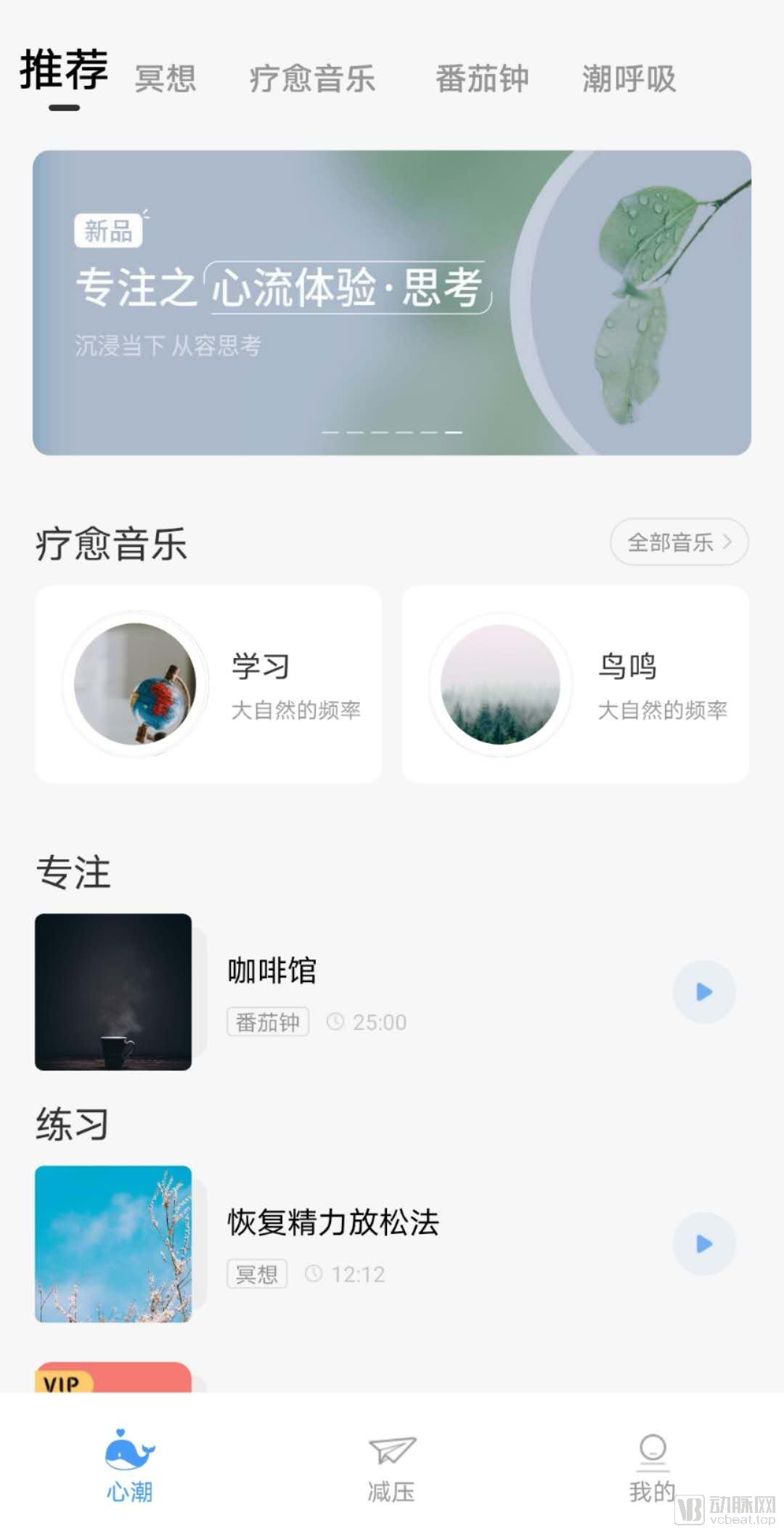
Xin Chao Stress ReliefFeaturing three proprietary technologies: physiological monitoring, emotion computing, and biofeedback-based stress reductionUnlike common mental health apps on the market, XinChao Stress Relief does not focus on psychological counseling or courses as its core approach to mental wellness; instead, it provides users with immediately accessible stress-relief measures.
Physiological Monitoring: Based on cutting-edge PPG (photoplethysmography) biosensing technology, it scans the user’s skin via the smartphone camera to capture and analyze color changes in cutaneous capillaries. It rapidly obtains core parameters such as heart rate, respiration rate, and HRV (heart rate variability), achieving a monitoring accuracy of 96%.
"In the interview, Zou Zou stated that although it is challenging to use cameras for emotion recognition in distinguishing between similar emotions such as worry and sadness, the technology can accurately differentiate between negative and positive emotions."
Affective Computing: The chaotic characteristics of multiple physiological signals (such as ECG, EMG, and respiratory signals) exhibit distinct variation patterns under different emotional states. XinChao Stress Relief innovatively isolates the chaotic features of these multi-modal physiological signals, efficiently mapping them to specific emotion labels while simultaneously analyzing the user’s stress coordination coefficient and emotional state.
Biofeedback Stress Reduction: Based on biofeedback and integrating various psychological regulation techniques, it rapidly improves and adjusts mental states through methods such as music, meditation, brainwave entrainment, and hypnosis.
Data analysis across three dimensions—standard psychological experimental paradigms, randomized user surveys, and backend statistical data—shows thatXinchao Stress Relief increased users’ sleep onset speed by 52% and focus by 57%, while reducing the anxiety index by 66%.。
Xinchao Stress Relief provides users with solutions by monitoring data, forming a closed loop that encourages stable usage cycles. Considering user cost concerns, Xinchao Technology did not choose hardware devices to monitor users' physiological data. In light mode, Xinchao TechnologyThe cost to activate each user is less than 0.1 yuan。
Currently, Xinchao Stress Relief'sThe platform has approximately 10 million registered users, with 100,000 daily active users.. Driven by the psychological needs of its user base, Xinchao Stress Relief demonstrates a high overall user retention rate.
Based on data samples from Xinchao Stress Relief, Zou Zou discovered a significant user demand for sleep-related solutions. Unlike other scenarios involving suboptimal psychological health that raise privacy concerns, the sleep context is one where users feel comfortable discussing, communicating, venting, and sharing. With high levels of social acceptance and attention, this approach can rapidly attract a user base, establishing an entry point into a niche health-focused ecosystem.
In 2017, Xinchao Technology launched the “Little Sleep” mini-program. On its first day online, it attracted 700,000 users, a figure that rose to 1 million within three days. The “Little Sleep” mini-program primarily provides users with sleep-aiding and soothing audio content, featuring hundreds of natural sounds and white noise options such as rainfall and thunder.
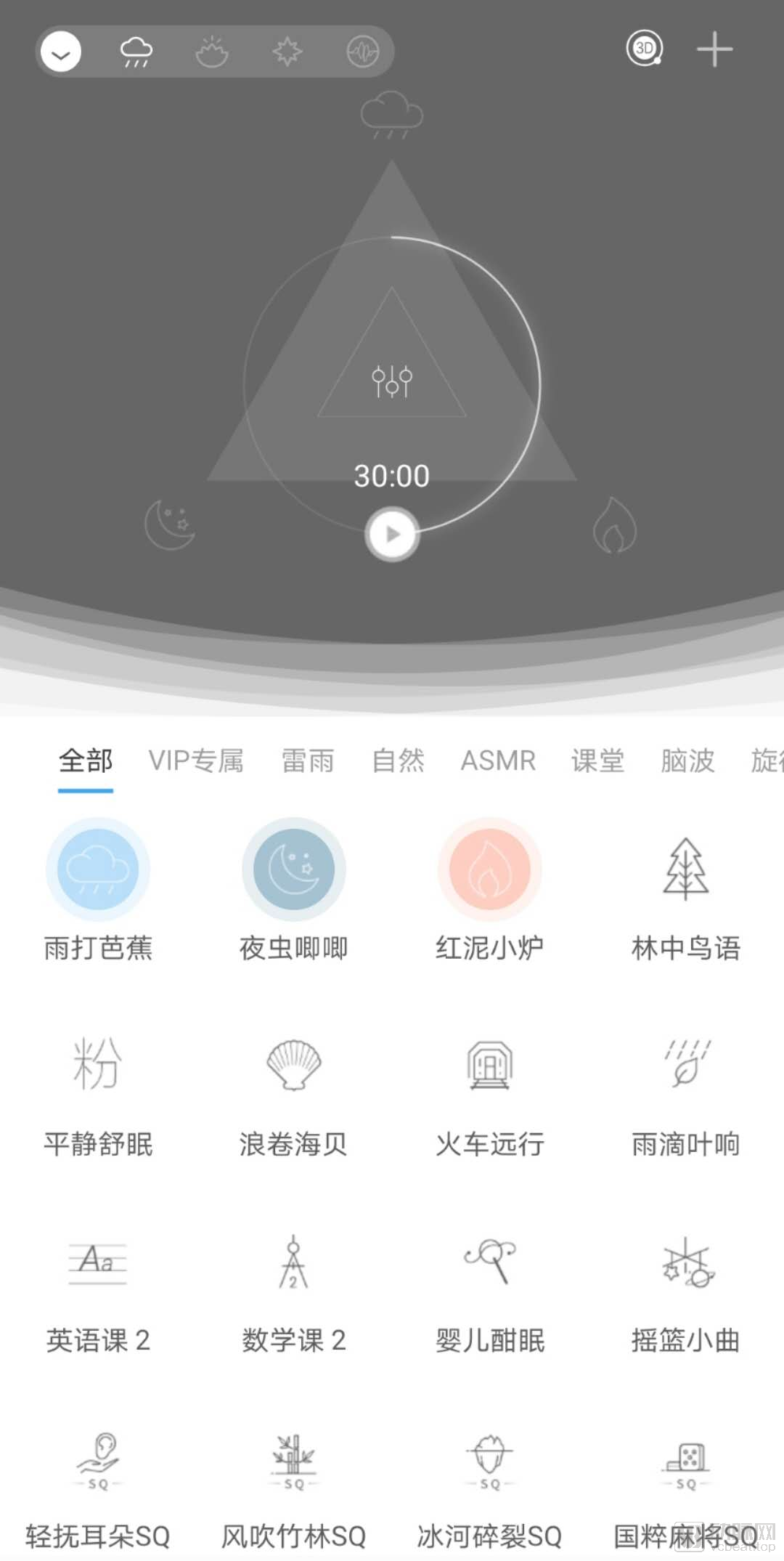
Subsequently, the Little Sleep app was launched. Compared with the mini-program, the app allows simultaneous playback of multiple audio tracks, enabling users to freely select and play their preferred combinations of audio content.
In addition, the Little Sleep app offers more diversified sleep services. Building upon its mini-program foundation, it has added features such as 3D sleep-inducing sound effects, sleep monitoring and management, snoring and sleep talking detection, daytime napping tools, a tranquility space, a sound community, sleep-aid courses, and an “Idol Lullaby” module. Regarding the launch of the “Idol Lullaby” module, Zou Zou believes that celebrity fandom is a prominent psychological need among contemporary young people. It is not uncommon for idols to serve as emotional pillars and role models. Moreover, leveraging the influence of celebrities can help promote concepts of healthy living and encourage younger demographics to establish correct views on sleep.
All audio content on Little Sleep is currently original to the team. Ambient sounds are either captured on-site and then optimized using computer software, or synthetically generated, such as brainwave audio tracks. The audio library encompasses not only natural elements like rain, snow, wind, and thunder, but also scenario-based elements including classrooms, daily life settings, and forests.
Furthermore, the app’s backend continuously collects user feedback and requests. In addition to a comprehensive psychological content team, Xinchao Technology’s team includes experts in the fields of sleep medicine and music therapy, who will add corresponding content based on user feedback and needs.
Compared with sleep health products and smart hardware for healthy sleep, Xiao Shuimian adopts a lighter model. Users can access its services through multiple channels, including its mobile app, WeChat Mini Program, Alipay Mini Program, QQ Mini Program, and Quick Apps. Currently,Xiao Shuimian’s total user base across all platforms has approached 100 million, with 4 million daily active users and an average daily usage time of 30 minutes.。
For individual users, Xinchao Technology offers membership services built upon a vast library of free content. For enterprise clients, throughIn collaboration with sleep service providers and hardware manufacturers such as Huawei and Omron, Xinchao Technology charges licensing fees for its algorithms and services.. In addition, advertising is also one of the monetization methods for Xinchao Technology. With a large user base from its Xinchao Stress Relief and Little Sleep apps, Xinchao Technology can provide marketing and traffic diversion support to clients in need.
Zou Zou stated that in 2015, most people in China had limited awareness of the mental health and sleep sectors, with only a small number of internet professionals willing to enter these fields. This also resulted in a shortage of talent for the company’s product development and operations at the time.
Although China’s sleep market has grown significantly compared to five years ago, and public awareness of mental health has improved, Xinchao Technology still needs to make substantial efforts in team building.
In its future development, Xinchao Technology will leverage its traffic advantages within vertical user segments and its strengths in algorithmic data.Integrate the upstream and downstream sectors of the mental health and sleep health industries to build a mental and sleep health platform. Meanwhile, we will continue to optimize and iterate on our existing products and services.
“Technology’s attitude reflects the warmth it brings to the world; navigating through endless data to care for one’s own health and that of others remains a heartwarming endeavor.” In an era marked by tremendous advancements in technology and the economy, Xinchao Technology is leveraging its strengths to provide a sense of stability and well-being for the human spirit amidst the rapid currents of change.