

Innovative Traditional Chinese Medicine Faces Transformation Challenges and Urgently Requires Policy Support in Four Key Areas
Author: Sun Jian
Traditional Chinese Medicine (TCM) is a great creation of the Chinese nation and has received high attention from the government. In October 2019, the State Council issued the "Opinions on Promoting the Inheritance, Innovation, and Development of Traditional Chinese Medicine," once again emphasizing the need to promote the inheritance, innovation, and development of TCM. However, modern technological innovation in TCM is facing the "growing pains" of transformation brought about by shifts in value concepts, as well as the dilemma of a "gap between generations." With substantial investment required, significant price reductions under medical insurance coverage, and difficulties in cost recovery, enterprises lack enthusiasm for innovation. Innovative TCM drugs require large investments, have long R&D cycles, and incur high costs, resulting in low returns on R&D investment.
Generally, the development of a new traditional Chinese medicine (TCM) drug requires 10 to 20 years, with an average of 15 years. From 2016 to present, only 10 new TCM drugs have been approved over a five-year period, among which only two have undergone head-to-head clinical comparative studies against chemical drugs. Furthermore, when applying for inclusion in the National Reimbursement Drug List (NRDL), innovative TCM drugs produced using modern purification processes are subject to price comparisons against traditional-processed TCM drugs already listed. Failure to secure NRDL inclusion effectively precludes market access, rendering the products unsellable. To gain entry into the NRDL, companies are forced to implement significant price reductions, making it inherently difficult to recoup costs. This situation undermines the incentive for TCM pharmaceutical enterprises to engage in innovative research and development.
Not included in the National Essential Medicines List, with limited development prospects. In December 2019, the National Health Commission issued the Notice on Doing a Good Job in the Assessment of Rational Drug Use in Medical Institutions, which clarified the “986” requirement for the allocation of essential medicines, thereby ensuring the utilization rate of essential medicine products. If innovative traditional Chinese medicines are not included in the National Essential Medicines List, they cannot be rapidly deployed in clinical practice to benefit more patients, resulting in difficulties in market sales.
Meanwhile, the national performance appraisal system for public hospitals includes indicators on rational drug use, which has impacted the initial sales of innovative drugs newly included in the National Essential Medicines List. This has severely constrained the early-stage market development of innovative traditional Chinese medicine (TCM). Due to a lack of targeted policy support, the advantages of innovative TCM remain underutilized. Although the state has significantly increased its support for the TCM industry to promote its inheritance, innovation, and development, it has not differentiated or addressed a series of specific issues related to innovative TCM infused with modern scientific and technological content. These issues include price comparison for medical insurance inclusion, post-launch pricing, patent protection, and international standards and access channels. There is an urgent need for relevant national government departments to provide greater attention to innovative TCM through top-level design, adopting a multi-pronged approach to offer substantial support.
The author believes that policy support for innovative traditional Chinese medicine can be provided from the following four aspects:
First, the National Healthcare Security Administration (NHSA) may adopt a strategy of “priority inclusion and phased price negotiation” for innovative traditional Chinese medicine (TCM) drugs. The first three years after a new drug’s launch constitute its market introduction phase; even if it is included in the National Reimbursement Drug List (NRDL), it takes time for market acceptance, and hospital formulary access remains highly challenging. Due to low initial sales volumes, the early-stage pricing of such products has minimal impact on the national medical insurance fund. It is recommended that, upon the launch of new TCM drugs, the NHSA establish reimbursement access prices with manufacturers based on drug sales revenue, employing higher initial prices to provide compensation, followed by proportional price reductions as sales volume increases.
Using "Drug A" as an example: Table 1 Market Forecast for "Drug A" Over the Next Three Years
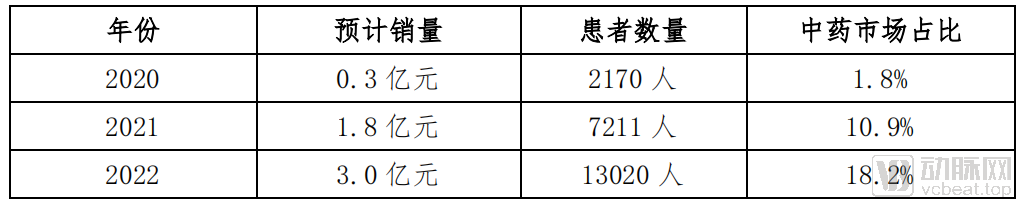
Table 2: Assumptions on Sales Revenue and Pricing Range for “Drug A”
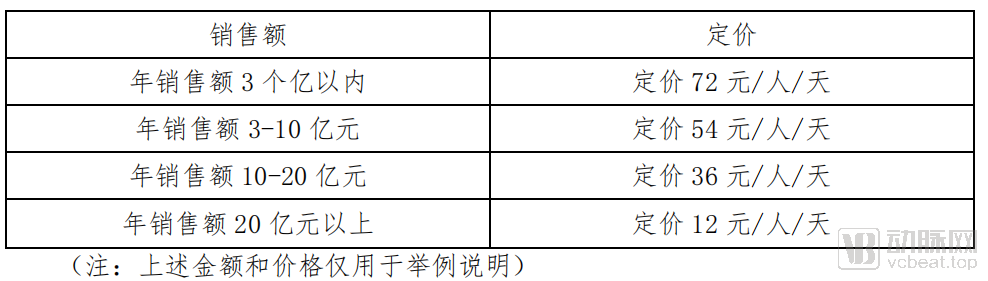
Adopting a strategy of “priority inclusion followed by sequential price negotiation” for innovative traditional Chinese medicine (TCM) products facilitates their early inclusion in the National Reimbursement Drug List (NRDL), while ensuring that manufacturers can recover costs and maintain reasonable profit margins, thereby incentivizing corporate innovation.
Second, the National Health Commission may include eligible innovative traditional Chinese medicine (TCM) products in the National Essential Medicines List at an early stage. Modern TCM products developed through technological innovation, which have undergone head-to-head comparative studies with chemical drugs and demonstrated clear efficacy and a favorable safety profile, should be included in the National Essential Medicines List as early as possible. Furthermore, these products should be excluded from the performance assessment of the drug revenue proportion. (Liaoning Province has already launched a pilot program excluding national essential medicines from the calculation of the drug revenue proportion in public hospitals.) This approach will facilitate rapid hospital access for innovative TCM products, boost market sales, enable more patients to benefit from these high-quality medicines, accelerate scientific research and innovation in TCM, and enhance the translation of TCM research and innovation outcomes into practical applications.
Third, a “Traditional Chinese Medicine (TCM) Natural Products” category should be added to the national drug catalog. China boasts abundant natural plant resources, and integrating modern technology with TCM theory to develop internationally recognized modern natural medicines undoubtedly represents a breakthrough area for indigenous innovation in China. However, current drug catalogs maintained by various national ministries and agencies classify drugs into TCM products, chemical drugs, and biological products. Within this framework, TCM products largely refer to proprietary Chinese medicines described according to syndrome differentiation and treatment principles, whereas chemical drugs are categorized by their distinct mechanisms of action. It is unreasonable to compare drugs that have undergone clinical trials and received approval as natural medicines either directly with traditional TCM products or with chemical drugs; therefore, a separate classification should be considered. This adjustment would be of great significance for promoting the inheritance and innovation of TCM.
Fourth, provide stronger policy support for enterprises developing innovative traditional Chinese medicine (TCM). It is recommended that the 14th Five-Year Plan for the pharmaceutical industry give priority consideration to TCM products driven by modern technological innovation. Government special funds and industrial guidance funds should increase support for major TCM products and innovative varieties in areas such as fiscal and taxation policies, finance, import and export, and patent protection. Measures such as establishing special projects, setting up venture capital guidance funds, creating diversified investment and financing mechanisms, and reducing corporate income tax should be implemented to encourage the development of the innovative TCM industry. Furthermore, TCM enterprises should be encouraged to actively participate in overseas TCM center projects and international organization platform projects, engage in international competition, and receive corresponding supporting policy assistance. The development of technologically innovative TCM urgently requires strong national policy support to stimulate R&D enthusiasm among TCM enterprises and ensure that they retain control over innovation initiatives.