

Huang Junjiu Team Advances Dual-AAV Base Editing Platform for In Vivo Lipid-Lowering and Ocular Gene Therapy
CRISPR-Cas technology is currently the most concise and efficient gene-editing system. As a major scientific breakthrough, it has seen rapid development and widespread application since 2013, when institutions such as Harvard Medical School, the Broad Institute, and the University of California, San Francisco, successfully applied this system to mammalian cells to achieve specific editing of complex genomes. The technology has quickly entered the field of human disease treatment, with representative companies including Editas Medicine, CRISPR Therapeutics, and Intellia Therapeutics.
As the application boundaries of gene editing technologies continue to expand and their derivative technologies develop, these technologies have moved beyond their initial focus on genetic disorders into areas such as complex diseases—including cardiovascular and neurological conditions—and cancer. CRISPR-based gene editing therapies for thalassemia are currently advancing rapidly and are poised to become benchmark therapeutic products in the global clinical translation of gene editing.
As early as 2015, a research team led by Chinese scientist Huang Junjiu began exploring the clinical feasibility of this technology for treating β-thalassemia. Their findings were recognized by Nature magazine as one of the “Top Ten People Who Mattered in Science” that year (1), opening up vast possibilities for the use of novel gene-editing technologies in the treatment of genetic diseases.
Delivery systems are a critical factor influencing the efficacy and safety of gene therapy. Particularly for in vivo gene editing therapies, it is essential to deliver single-base editing systems into the body while ensuring high efficiency. Adeno-associated virus (AAV) is the predominant delivery vector. However, the size of the genetic payload packaged by AAV must be less than 4.8 kb, whereas the 5.4 kb single-base editing system, ABE, cannot be delivered in vivo via a single AAV vector.
Focusing on innovation and exploration of the critical issue of delivery systems in gene therapy, Professor Huang Junjiu’s research team at Sun Yat-sen University recently published a study titled “Development of Highly Efficient Dual-AAV Split Adenosine Base Editor for In Vivo Gene Therapy” in the journal Small Methods (IF: 12) (2,3).
This study achieved dual-AAV delivery efficiency surpassing previous benchmarks and effectively validated gene targets associated with hepatic and ophthalmic diseases in animal models. It establishes an internationally leading AAV combination strategy for base editing therapies, offering a novel approach to precision gene therapy. This represents another technological achievement with potential clinical translation value from the research team’s sustained efforts in the field of gene editing.
Currently, two strategies may address the delivery challenges of single-base editing systems. One approach utilizes an RNA trans-splicing system, but its efficiency is very low, at only 1%. The other strategy employs an intein-mediated protein splicing system, which is more effective than the RNA splicing system.
By screening inteins from different species and matching them with various ABE split strategies, researchers ultimately identified two combinations with the highest editing efficiency: ABE-Rma573 and ABE-Rma674 (Figure 1). The researchers further demonstrated in mouse liver and eyes that dual-AAV delivery of this editing system enables highly efficient single-base editing in vivo (Figure 2).
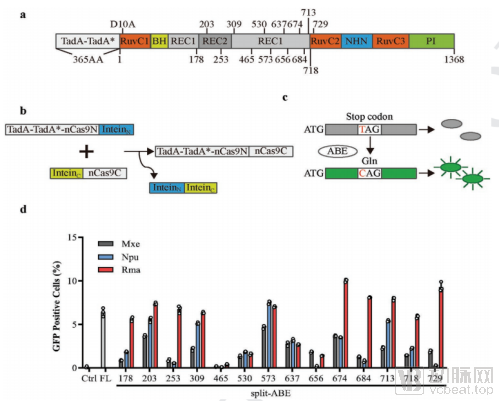
Figure 1. Screening system for the construction of ABE dual-AAV vectors
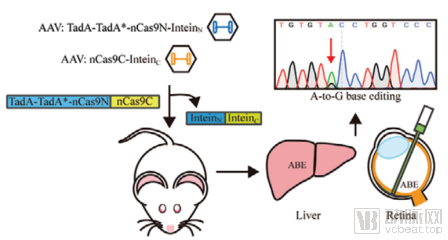
Figure 2. Efficient single-base editing in target cells of the liver and retina in mice achieved by dual AAV-mediated delivery of Split-ABE
After establishing an efficient delivery strategy, researchers first validated its efficacy in mouse livers. Using a dual-AAV delivery system for a single-base editing platform, they successfully induced A-to-G single-base editing of the PCSK9 gene in mouse livers, achieving an efficiency of up to 6%. Six weeks after treatment with split-ABE-Rma573, serum PCSK9 protein levels—a key indicator—decreased by nearly 50%, while serum very-low-density lipoprotein and low-density lipoprotein (VLDL/LDL) levels dropped by approximately 25%, with no evidence of liver injury. PCSK9 is one of the most widely targeted therapeutic avenues in cardiovascular drug development and holds substantial clinical application value; the development of this class of novel therapeutics has the potential to benefit hundreds of millions of people worldwide.
At the end of 2019, Novartis acquired The Medicines Company for nearly $10 billion (4). The latter had been developing a small interfering RNA (siRNA) therapeutic targeting PCSK9. The success of this drug is expected to realize, for the first time, the vision of providing long-acting nucleic acid-based therapies to patient populations.
On the other hand, PCSK9-targeting therapies based on single-base gene editing technology appear to better demonstrate the potential for a one-time administration to achieve a lifelong cure. In July this year, Verve Therapeutics presented its preclinical data in non-human primates at the International Society for Stem Cell Research (ISSCR) annual meeting. The company successfully silenced PCSK9 expression in the livers of cynomolgus monkeys using base editing technology, significantly reducing levels of low-density lipoprotein (LDL) cholesterol and triglycerides in the blood, with no off-target effects observed. This represents an encouraging milestone in the development of gene-based lipid-lowering therapeutics (5).
Another major indication for gene-editing therapies is ophthalmic diseases, such as inherited blinding retinal disorders and chronic degenerative conditions. Notably, Luxturna, a gene therapy developed by Spark Therapeutics, is the first FDA-approved ophthalmic gene therapy (6). Additionally, the gene-editing therapy for Leber congenital amaurosis developed by Editas Medicine, co-founded by pioneering Chinese-American gene-editing scientist Feng Zhang, has entered early-stage clinical trials. The research team led by Huang Junjiu has also conducted validations in ophthalmology. Using this system, they successfully performed A-to-G single-base editing of NR2E3, a gene associated with rod cell characteristics in Goldmann-Favre syndrome, and VEGFA, a vascular endothelial growth factor linked to age-related macular degeneration, achieving an editing efficiency of up to 25% in mouse retinas.
Professor Huang Junjiu’s research team has long been dedicated to academic innovation and clinical translation in the fields of gene editing and stem cells. Since pioneering the successful gene editing and single-base correction for thalassemia—the genetic disorder with the largest affected population worldwide—in 2015, the team has also conducted scientific explorations into the application of gene editing technologies in hepatology and ophthalmology. Delivery and editing efficiency are core components of gene editing therapies. These findings demonstrate that this highly efficient dual-AAV single-base editing delivery system, along with its proof-of-concept in animal models, offers superior therapeutic options for precision gene therapy of both hereditary and non-hereditary human diseases.
1 Reforgene
Ruifeng Biologics is a high-tech company in the preclinical stage, dedicated to developing gene therapies with curative potential. Its R&D team hails from prestigious institutions such as The University of Texas MD Anderson Cancer Center, New York University, and Sun Yat-sen University. Starting from the fundamental code underlying life processes, Ruifeng leverages talent and technology as its driving forces, integrating cutting-edge approaches such as gene editing and genomics to focus on innovating next-generation, highly programmable nucleic acid-based therapeutics. The founding team of Ruifeng Biologics comprises experts from both industry and academia, including Dr. Liang Junbin and Professor Huang Junjiu from Sun Yat-sen University, and has received joint investment from Legend Star and Legend Holdings Corporation.
2 Edigene
EdiGene, founded in 2015, is dedicated to translating cutting-edge genome editing technologies into innovative therapies for genetic diseases and cancer, as well as creative solutions for drug development. Backed by investors including IDG Capital, Lilly Asia Ventures, and Huagai Capital, EdiGene was established by Professor Wei Wensheng of Peking University and has assembled a professional management team with comprehensive expertise in drug development and clinical trials.
3 Bioray Lab
Shanghai Biocytogen Co., Ltd. was established in 2013. It is a high-tech enterprise dedicated to leading innovation through gene-editing technologies, developing breakthrough therapies, and benefiting humanity as its mission. The company was founded by a team of scholars led by Professor Liu Mingyao from East China Normal University, including members such as National Distinguished Professors and Chang Jiang Scholars. Biocytogen has secured angel-round financing led by Oriental Fortune Capital and nearly RMB 100 million in Pre-A round financing led by China Resources, which will be used to advance domestic and international new drug applications and registrational clinical trials for UCART, an allogeneic cell therapy for treating B-cell malignant hematologic diseases. This support aims to help the company achieve new breakthroughs in the CAR-T field at an earlier stage. To date, the company has filed more than 40 patent applications.
4 Huigene
Huida (Shanghai) Biotechnology Co., Ltd. was founded in October 2018 by Dr. Yang Hui, a researcher at the Institute of Neuroscience, Chinese Academy of Sciences, and Dr. Yao Xuan. It is a high-tech biopharmaceutical company focused on the research, development, and translation of gene therapy drugs. In November 2018, the company secured tens of millions of RMB in angel investment, and in November 2019, it completed its Series A financing round, raising over RMB 100 million. The company operates a 500 m² BSL-2 gene therapy R&D laboratory, a 500 m² SPF-grade experimental animal facility, and a 4,000 m² gene therapy manufacturing workshop (under construction). Its capabilities encompass a gene editing technology platform, an AAV technology platform, a disease model animal platform, and a process development and manufacturing platform, with the aim of becoming the leading gene therapy platform in China and among the top globally.
Source:
1.https://www.nature.com/news/365-days-nature-s-10-1.19018
2.https://onlinelibrary.wiley.com/doi/10.1002/smtd.202000309
3.https://www.ncbi.nlm.nih.gov/pmc/articles/PMC5726555/
4.https://www.forbes.com/sites/brucelee/2019/11/26/why-novartis-is-buying-the-medicines-company-for-97-billion/
5.https://www.businesswire.com/news/home/20200627005005/en/Verve-Therapeutics-Presents-New-Data-Non-Human-Primates
6.https://www.cnbc.com/2017/12/19/fda-approves-spark-therapeutics-luxturna-gene-therapy.html