

From Hims' Success to the Rise of Healthcare Consumerism and Opportunities in Vertical Disease Markets

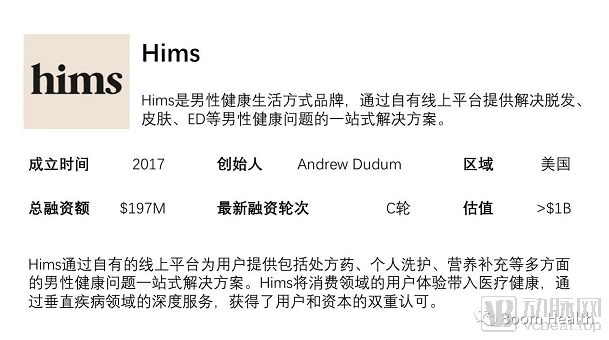
Hims
Men's Health Product Supplier
TMT is accelerating its integration into the traditional healthcare sector, while consumerism is rapidly gaining momentum within the industry. An increasing number of patients are seeking “patient-centered” service experiences, imposing new competitive pressures on healthcare practitioners.
Meanwhile, it is observable that on one hand, the renowned health supplement giant GNC has filed for bankruptcy; on the other hand, Hims, a vertical brand focused on men’s health and wellness, has achieved a valuation exceeding $1 billion within just two years of its establishment and is currently pursuing an initial public offering (IPO). In this era of scarce traffic, vertical sectors are demonstrating robust vitality.
In this article, we will begin with Hims, a U.S. digital health unicorn, analyze the key factors behind its success from a healthcare perspective, and discuss:
1. The Rise of Medical Consumerism and Its Driving Forces;
2. Market Opportunities in Vertical Disease Areas.
We hope this information is helpful to you.
The success of Luo Yonghao’s live-streaming e-commerce has reignited heated discussions around “the purchasing power of straight men.” Behind this phenomenon lies the underestimated consumer demand among men and a relatively underserved market supply.
In fact, this imbalance is not unique to China;Hims—A New Unicorn in the U.S. Men’s Health Sector, with Total Financing Approaching $200 Million in Just Three Years Since Its Founding1, becoming a noteworthy startup case study in the digital health sector.
There has been extensive discussion in the TMT sector regarding Hims, recognizing it as one of the fastest-growing brands under the DTC (Direct-to-Consumer) model.2. In fact, although Hims offers products and services spanning personal care, nutritional supplements, and many other areas, one of its starting points was the online sale of generic drugs such as finasteride and sildenafil. Today, let us explore the insights this digital health unicorn brings us from a medical perspective.
Finasteride is currently the only orally administered medication clinically validated for the treatment of male pattern hair loss (androgenetic alopecia). It works by inhibiting the intracellular enzyme type II 5α-reductase, thereby reducing the formation of dihydrotestosterone (DHT), which causes hair loss, thus promoting hair growth and preventing further hair loss.3。
The originator of finasteride is Merck & Co. In 1992, Propecia, produced by Merck & Co., was approved by the FDA for market launch. Following the patent cliff, generic versions gradually entered the market. Today, finasteride has become a standard clinical treatment for androgenetic alopecia.
Hims’ business began with the online sale of men’s health prescription medications, including finasteride.The company’s founding team recognized that male health issues such as hair loss, erectile dysfunction (ED), and acne are silently afflicting many men. Due to the sensitive nature of these conditions, patients (consumers) often feel embarrassed—hesitant to seek help or consult doctors in person. Nevertheless, the majority of them are eager to learn about these conditions and desire access to treatment and services.4. The online platform Hims emerged as the times required, providing patients with the following differentiated value:
1. Patient-Centered Service Experience
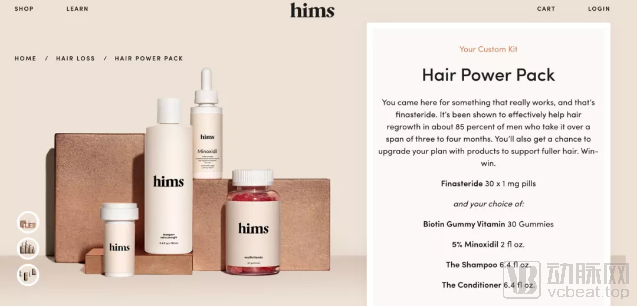
Hims brings the “customer-centric” service experience—now taken for granted by today’s consumers—into the healthcare sector. By providing accessible, vetted medical education, Hims offers patients clear, in-depth explanations of diseases, treatments, and the mechanisms of action and potential side effects of medications. Its purchasing process is highly user-friendly: after answering a few simple questions and undergoing a review by a remote physician, medications and consumer health products are delivered regularly to patients’ doors. Hims also provides bundled solutions that include oral prescription drugs, topical medications, and shampoos, and even offers free trials and samples.All of this has enabled today’s consumers to enjoy a familiar, customer-centric experience—one that was previously absent from the healthcare journey.
2. Highly Competitive Pricing and Products
Hims primarily sells low-cost generic drugs with weak brand recognition among patients. Its direct-to-consumer (DTC) sales model also enables lower pricing by eliminating intermediary markups.
More importantly, due to Hims’ strong focus on the vertical niche of men’s health, it rapidly achieved substantial user growth and significant sales volume within this specialized disease area—In 2019, just two years after its founding, Hims’ subscription revenue reached $100 million.5This undoubtedly positions him at a core and pivotal point within the entire value chain, granting him greater leverage in negotiations with upstream and downstream industry partners—Hims’ products are priced 50%–80% lower than those in the retail market.6, this is a highly competitive price.
On the other hand, it is precisely because Hims has remained sufficiently focused that it has been able to continuously update and refine its products and services. Starting with hair loss, its product portfolio has steadily expanded into areas such as erectile dysfunction (ED), acne, and online psychotherapy, thereby meeting the multifaceted needs of patients in this vertical across medical care, health wellness, and consumer sectors, and thus sustaining its competitive edge.
3. Elegant and Stylish Brand Tone
Do you care about what your medication packaging looks like? Hims believes that patients (consumers) do. They have chosen to present patients’ concerns and offer solutions in a manner that is lighthearted and humorous, yet quite sophisticated:Millennial pink hues, a clean and minimalist page layout, and the use of plants as humorous metaphors... create a relaxed and pleasant atmosphere for patients.
The product’s packaging is equally thoughtful—eschewing the cold, impersonal presentation of brand names, chemical names, and traditional drug packaging that has changed little over the past two decades, it instead features an elegant minimalist design with gold foil stamping, subtly reflecting the brand’s sophistication. The application of well-established consumer goods branding strategies to the health sector has yielded positive results, fostering brand awareness and a degree of loyalty among patients (consumers).

"
Hims is not a pharmaceutical e-commerce platform, but a lifestyle brand offering a one-stop solution for men's health.
——Andrew Dudum, CEO of Hims
"
Successful business models are rooted in specific business ecosystems. Although there are many differences between the business ecosystems of China and the United States, we can still draw certain insights from Hims’ successful development to date.
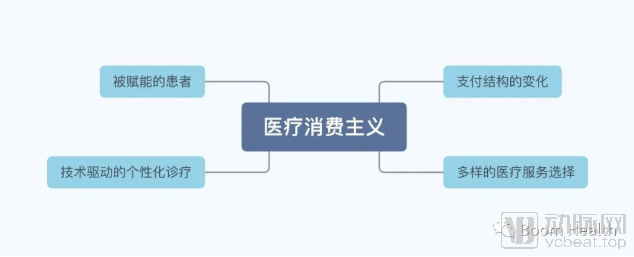
1. The Rise of Consumerism in the Healthcare Sector
The Rise of Medical Consumerism Is a Major, Long-Term Trend in the Healthcare System.Today, consumer-centric experiences have permeated every aspect of consumers’ lives—shopping, travel, dining, and entertainment—yet such experiences remain scarce in most healthcare services. As patients receive medical care, they continually draw upon their experiential benchmarks from other areas of life, seeking similar levels of service. This trend will ultimately drive fundamental changes in the healthcare ecosystem. The primary drivers behind the rapid rise of healthcare consumerism include the following aspects:
a. Empowered Patients: Digital technology is continuously empowering patients from various perspectives, gradually breaking down the strong information asymmetry in the healthcare sector. Technology-driven self-diagnosis products are becoming increasingly accessible, and patients are taking a more proactive role in the entire diagnosis and treatment process.
Taking Hims as an example, patients can conveniently access clear and easy-to-understand medical knowledge through Hims’ website and social media matrix, gaining insights into various diseases and treatment options. This empowers them to make more proactive choices regarding diagnosis, treatment, and healthcare. Such proactive lifestyle management further leads to improved clinical outcomes, thereby benefiting patients.
b. Changes in Payment Structure: Payment structures are undergoing changes in both China and the United States. Data from the U.S. market indicates that the proportion of out-of-pocket payments by patients is gradually increasing. In China, the national basic medical insurance has established a clear position as the foundational coverage, while the share of commercial insurance and patient out-of-pocket expenses will continue to expand.
The rising proportion of out-of-pocket payments has led patients to seek value in different aspects of healthcare services. In fact, the majority of Hims’ revenue comes from direct patient payments. Thanks to its unique value proposition, Hims has reduced its reliance on traditional insurance payers and gained direct recognition from its target customer base. Following the implementation of volume-based procurement for male health medications such as sildenafil, which drove prices down to floor levels, Hims’ business model offers valuable insights for reference.
c. Technology-Driven Personalized Diagnosis and Treatment: Digital technologies such as AI, big data, and 3D printing are shaping increasingly personalized diagnostic and treatment approaches. Driven by these technologies, patients may receive customized, cost-controlled services across the entire care continuum.
d. Diverse Healthcare Service Options: Another trend, though still in its early stages in China, is becoming increasingly clear: for certain diseases, patients will have access to an ever-growing variety of service providers, as traditional healthcare practitioners face mounting pressure from new competitors. Hims serves as a prime example, offering consumers a novel healthcare experience and garnering a substantial following.
Meanwhile, we are also seeing Chinese followers rapidly catching up, with several startup teams recently replicating Hims’ business model in China.TMT practitioners are accelerating their learning curve in the healthcare sector and hastening their entry into this traditional industry.In addition to the entry of startups,Tech giants in China and the United States are also highly interested in the healthcare sector, ambitiously planning and implementing their strategies.
2. Vast Opportunities in Vertical Disease Areas
Another insight from Hims is that there are vast opportunities in vertical disease-specific fields.
Traditional medical services are categorized according to disease systems, and new digital-enabled medical services will also follow this pattern.Only when the focus is sufficiently targeted can the two most critical stakeholders in the healthcare value chain for a specific disease area—physicians and patients—be effectively brought together. By uniting these core stakeholders, one occupies the central position in the disease-specific healthcare value chain, enabling effective integration of other stakeholders and becoming the key value-linking node across the entire chain.
Every disease is complex, and the ecosystems vary; therefore, building a large, all-encompassing platform for aggregation is nearly impossible.Only by focusing on a specific disease category and providing products and services that cover the entire patient journey—pre-diagnosis, during diagnosis, and post-diagnosis—can high competitive barriers be truly established. This approach meets patients’ needs at different levels through the sequence of treatment, healthcare, and consumption.
Hims does exactly that, occupying a key position in the value chain of the male health vertical by addressing issues ranging from hair loss and erectile dysfunction (ED) to acne and mental health. It has established significant competitive barriers by integrating services from over 200 physicians across the United States. Interestingly, Hims is attempting horizontal expansion—its incubated brand, Hers, offers a one-stop solution focused on women’s health—as Hims replicates its successful model in new verticals.
Hims’ current success highlights a long-term trend—the rise of healthcare consumerism—and reveals a significant opportunity in vertical-specific management and services. In many respects, this represents a successful case in digital health venture capital. However, we also observe certain concerns, particularly regarding the seriousness and professionalism of medical care: notably, one of the side effects of finasteride is erectile dysfunction (ED).Prescription drugs must be used under a physician’s prescription and guidance; they are not consumer goods, and patients cannot bear full responsibility for their use.
Medical consumerism is on the rise, but it does not align entirely with other consumer sectors—medicine itself is serious, scientific, and requires physicians’ professional expertise. As Dr. Zhang Wenhong remarked, “If I explain it to you, you certainly won’t understand, because we have read different books.”
Although the doctor-patient relationship is shifting from a paternalistic model to a partnership model, we must still respect physicians’ professionalism; doctors are inevitably the core value creators in the digital healthcare system. How to better provide patients with rigorous, professional disease management may be a question this digital healthcare unicorn needs to consider.
Reference:
1.CrunchBase; https://www.crunchbase.com/organization/hims#section-overview
2. Lin Waimen, Chuxin Capital: Hims and the Startup Dream Factory Behind It
3.Wikipedia :Finasteride
4.https://www.fastgrowthbrands.com/2019/09/eliminating-societal-taboos-qa-hims/
5.CNBC:How men’s health start-ups are turning erectile dysfunction and hair loss treatment into a booming business;https://www.cnbc.com/2019/11/17/hims-aims-to-raise-200-million-as-sales-of-mens-health-products-grow.html
6.INSIDER:A men's wellness startup is redefining how guys approach hair loss by making modern treatments affordable and accessible;https://www.insider.com/for-hims-mens-hair-loss-treatments-the-accessible-and-affordable-solution
Author: Carrie WeChat Official Account:Boom Health