

UnitedHealth Reports $10.16 Billion Net Income in H1, Driven by Strong Performance of Two Core Segments

UnitedHealth Group
Health Insurance and Health Information Technology Service Provider
UnitedHealth Group was founded in Minnesota, United States, in 1974.It is the largest commercial health insurance company in the United States. With over 40 years of development, UnitedHealth has established a closed-loop business model integrating health insurance and healthcare services, thereby disrupting and reshaping the medical ecosystem.
VCBeat (WeChat ID: vcbeat) has learned that UnitedHealth Group released its financial report for the first half of 2020, which provides a detailed analysis of the revenue performance of its two core business segments. VCBeat aims to offer insights to Chinese entrepreneurs by analyzing UnitedHealth Group’s semi-annual report.
According to the financial report, as of June 30, 2020,UnitedHealth Group’s total revenue in the first half of the year reached $126.559 billion, a year-on-year increase of 4.7%; net income was $10.161 billion, up 46.4% year on year.UnitedHealth Group Maintained Steady Revenue Growth Amid the Pandemic.
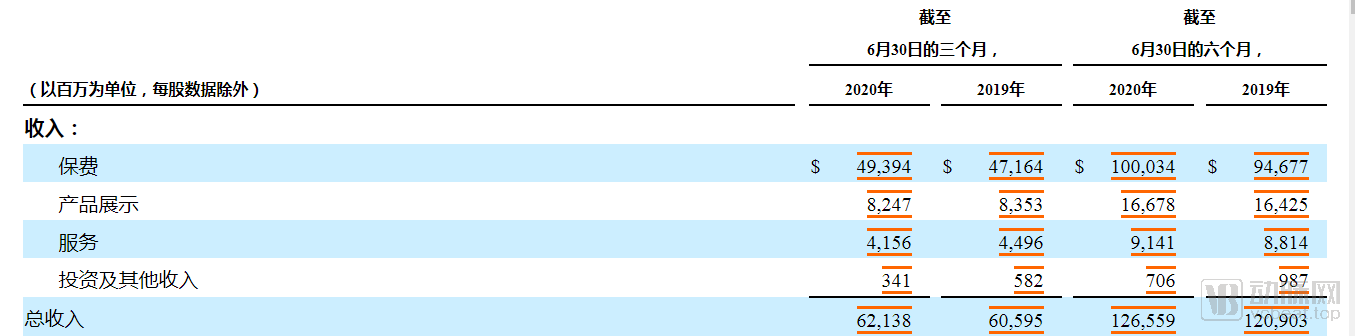
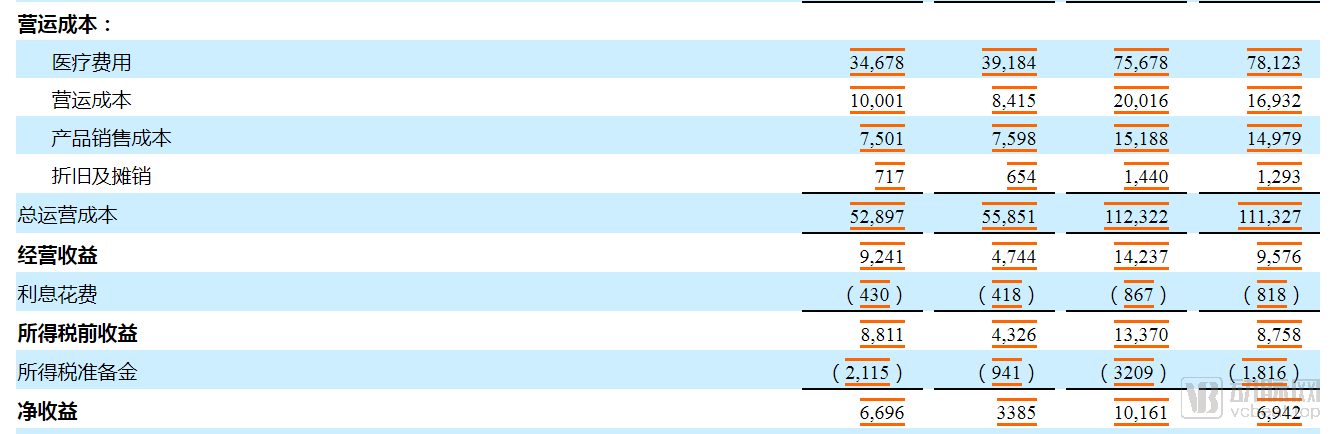
UnitedHealth Group Income Statement
Why has UnitedHealth Group achieved stable revenue growth despite a downturn in the global economy? What adjustments did it make to its business in response to the pandemic? Which segment of the company’s commercial loop generated sufficient returns to offset the declines elsewhere?
UnitedHealth Group comprises six companies: UnitedHealthcare, Ovations, AmeriChoice, Uniprise, Specialized Care Services, and Ingenix.Its core business is deployed across two major segments: the Health Insurance segment (UnitedHealthcare) and the Health Services segment (Optum).
Among these, the health industry chain, as an extension of insurance, mainly consists of three major businesses: health management (Optum Health), health information technology services (Optum Insight), and pharmacy benefit management (OptumRx).
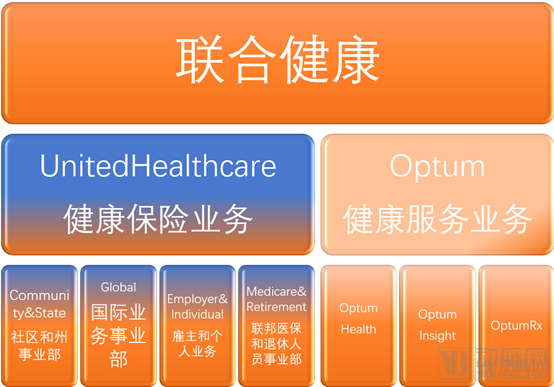
UnitedHealth Group’s Two Core Businesses
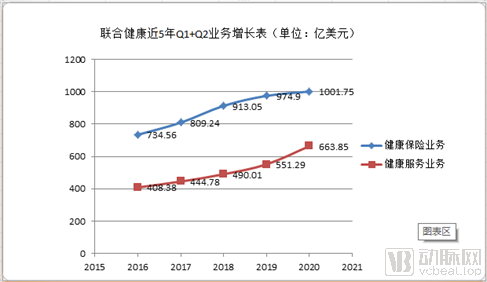
According to UnitedHealth Group's semi-annual report,Compared with the second quarter of 2019, consolidated revenue increased by 3% in the second quarter of 2020. Among them, revenue from the health insurance business grew by 1%, and revenue from the health services business increased by 17%.
The health insurance business comprises four business segments, each serving distinct population groups. The Employer & Individual segment serves 230,000 employer clients across all 50 U.S. states, with its underlying business platforms including insurance companies, Health Maintenance Organizations (HMOs), and Third-Party Administrators (TPAs). It provides health benefit plans and services to large employers, the public sector, small and mid-sized employers, and individual consumers in the United States.
The Medicare & Retiree Division primarily serves individuals aged 50 and older, providing services focused on the prevention and acute care of age-related common diseases, chronic disease management, and other special needs.
The Community & State business unit of UnitedHealth Group’s health insurance operations is dedicated to serving state-sponsored programs that assist individuals who are low-income, have poor health status, or lack employer-sponsored health benefits. Under these state programs, UnitedHealth receives capitated premium payments on a monthly basis. Such state-sponsored programs include Medicaid Plans, the Children’s Health Insurance Program (CHIP), Special Needs Plans (SNPs), and integrated Medicare-Medicaid plans, among others.
The Global Business segment primarily operates in Brazil, where it leverages the local platform Amil to provide health insurance plans to over 4 million individuals and dental insurance coverage to 2 million individuals. The Global Business segment owns 150 hospitals, specialty centers, and various clinics in Brazil and Portugal, and maintains a medical provider network in Brazil that connects 21,000 physicians, 1,800 hospitals, and 7,000 laboratories or diagnostic centers.
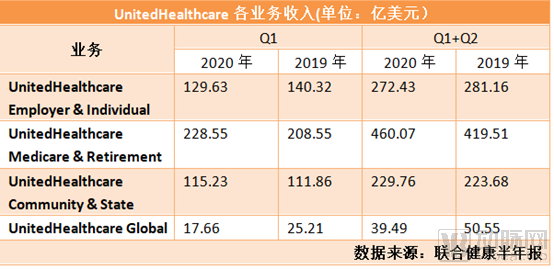
Revenue Performance by Business Segment in Health Insurance
UnitedHealth Group’s health insurance business covers the vast majority of the population, which is one of the reasons why its revenue has been able to grow steadily.However, the impact of the pandemic has led to a rise in unemployment and a loss of prospective customers., so apart from the steady revenue growth in the Medicare & Retirement segment, business performance in all other segments has declined.
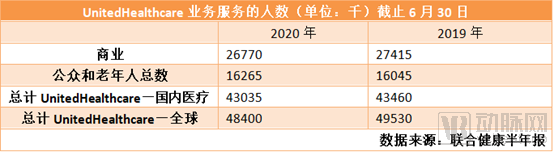
Change in the Number of People Served by Health Insurance Services
The reasons for the 1% increase in health insurance business are as follows:First, the number of individuals served by personal Medicare Advantage plans has increased, with UnitedHealth expanding its coverage in areas such as telemedicine and pharmacy benefits. Second, payment deadlines for certain premiums have been extended for unemployed individuals, which can help reduce customer churn and enhance customer retention to some extent. Third, operational processes have been streamlined, enabling providers to deliver assistance to members more quickly.
Additionally, UnitedHealth Group predicts that consumer demand for care will intensify, particularly in disease prevention, leading to an increase in healthcare expenditures.
Health Services Business
OptumHealth is UnitedHealth’s diversified health and wellness services platform, supporting the physical, mental, and health-related financial needs of 91 million people. It comprises two platforms: MedExpress and Surgical Care Affiliates.
MedExpress operates 240 community hospitals, providing medical services to patients requiring emergency care without appointments; Surgical Care Affiliates runs 200 ambulatory surgery centers and surgical hospitals, offering low-cost, high-value surgical services to patients.
Optum Insight’s core competencies focus on data analytics, information technology, and related fields, helping to improve healthcare quality and enhance the efficiency of healthcare systems. Optum Insight provides service support to healthcare providers (including physicians and hospitals), health insurers, government entities, and life sciences companies.
OptumRx delivers comprehensive pharmacy care services to 56 million people in the United States by supporting home delivery of medications through its network of more than 67,000 retail pharmacies, connecting specialty and community health pharmacies, and providing infusion services.
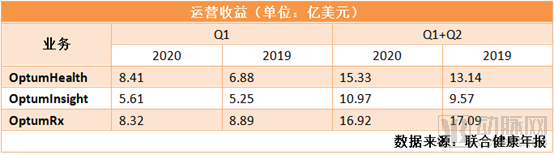
Optum Operating Income
Total operating revenue increased alongside revenue growth in each segment. Although operating earnings for OptumHealth and OptumInsight rose, these gains were partially offset by declining operating earnings at OptumRx.
OptumRx primarily provides medication delivery services to its customers. Although UnitedHealth Group has expanded its pharmacy coverage area,However, the COVID-19 pandemic led to a decline in human traffic, with most people staying at home. This, to some extent, reduced the transmission routes of other viruses, resulting in a significant decrease in prevalence rates.It is reasonable to speculate that this is one of the reasons for the decline in OptumRx’s operating income.
The pandemic has significantly impacted various industries, and UnitedHealth Group is no exception. So why has it still managed to achieve overall revenue growth? The reason lies in its extensive layout and the formation of a closed-loop business ecosystem. If one segment encounters issues, another can quickly respond to reverse the situation.
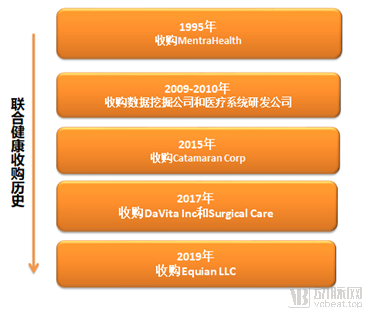
UnitedHealth Group's Acquisition History
In 1988, UnitedHealth Group launched its modern pharmacy benefit management services, offering mail-order prescription drug services to help consumers better control their prescription medication costs. Having addressed the issue of drug costs, UnitedHealth further considered how to extend this convenience to a broader user base. To this end, UnitedHealth embarked on a strategic expansion journey that would span several decades.
Based on UnitedHealth Group's acquisition history,The company’s initial strategic move was to enter the health insurance business.As per capita income continues to rise, people are placing greater emphasis on their physical health and are increasingly willing to invest in maintaining it.
Health insurance companies can gain access to customers' health information. While providing health management services to clients, they can also more accurately determine customer needs.
After UnitedHealth Group expanded into the healthcare sector, its business experienced significant growth, with insured premiums reaching $8.5 billion by the end of 1996. However, this customer growth also introduced management challenges; as the range of covered disease areas expanded, customer profiles became increasingly complex, necessitating further upgrades to the company’s management services. To address this situation, UnitedHealth Group implemented an artificial intelligence-based system to reduce the time and cost associated with processing patient complaints.
In 1998, UnitedHealth Group established subsidiaries that closely aligned with the group’s mission, focusing on specific niches within the health insurance sector and quickly distinguishing themselves. Since then, UnitedHealth Group’s insurance business has expanded to cover a wide range of areas, including prescription drug coverage.
At this stage, UnitedHealth Group realized that the scope of its insurance business could be further expanded, for example, into home care.In 2009, UnitedHealth Group launched the Medical Home program,Committed to helping patients receive care from primary care physicians or a “medical home,” rather than fragmented or episodic care. Based on this concept,UnitedHealth Group partnered with Cisco to establish the first national telehealth network,Enables patients to consult doctors and obtain medical advice without leaving home, while allowing those in remote areas to access healthcare services.
At this stage, UnitedHealth Group’s strategic layout encompasses health management, disease care, and online consultations. However, the company has not rested on its laurels; it has begun to focus on expanding its customer base. To achieve this goal,UnitedHealth Group acquired a data mining company and a hospital system R&D company, integrating them with its existing businesses to form OptumInsight.This provides UnitedHealth Group with a richer data source for studying market demand.
Subsequently, UnitedHealth Group acquired the pharmacy benefit management company Catamaran Corp., doubling its membership base to 65 million. It then proceeded to acquire several surgical care companies, establishing a closed-loop business model integrating health insurance with healthcare services.
UnitedHealth Group’s commercial ecosystem, developed over decades, is designed to cover most of the health scenarios an individual may encounter throughout their lifetime. These include myopia in adolescents, health management for adults, chronic diseases in the elderly, and care needs for individuals with limited mobility.It is precisely because of its extensive coverage that UnitedHealth Group’s cross-regional and cross-national service network has enabled it to achieve steady revenue growth, even amid the impact of the pandemic.
Driven by market demand in China, many Chinese enterprises aspire to build a “UnitedHealth” of China.On the one hand, China has a large population base.There is a large population of patients suffering from hypertension, hyperlipidemia, diabetes, and other conditions, indicating immense potential for the development of China’s health industry;On the other hand, with the intensifying aging of China’s population, the number of individuals diagnosed with chronic diseases is rising rapidly.Surveys indicate that deaths attributable to chronic diseases account for 85% of all deaths in China, with the associated disease burden comprising 70% of the country’s total disease burden.
If Chinese enterprises wish to adopt this model, the challenges they will face include the following:
First, the models differ.China primarily adopts a social health insurance model, mainly targeting the general-income population. The United States employs a commercial insurance model, predominantly serving high-income individuals, thereby enabling quicker realization of profitability. How to achieve rapid revenue growth based on China’s national conditions is a question that Chinese entrepreneurs need to consider.
Second, the uneven distribution of medical resources.Medical and educational resources in rural areas are relatively underdeveloped, screening technologies for chronic diseases are significantly lacking, and public awareness regarding the importance of chronic disease screening remains insufficient. Currently, the number of participants in China’s New Rural Cooperative Medical Scheme has reached 670 million, with a participation rate of 98.80%. Chinese enterprises should focus on extensively promoting the hazards of chronic diseases and expanding their outreach to broaden their customer base, while simultaneously targeting high-income demographics.
Third, some companies in China’s healthcare industry are exhibiting a trend of “e-commerce-ization,” using the internet primarily as a marketing channel without offering low-cost, practical products.What China’s Health Industry Needs to Do IsIntegrate Upstream and Downstream Resources, providing the most cost-effective service models tailored to different patients, rather than merely offering insurance or health supplements.
Integrating upstream and downstream resources presents a significant challenge, but overcoming it will usher in bright prospects. To establish a Chinese version of “UnitedHealth,” resource integration is an inevitable trend; whether through corporate acquisitions or forging long-term partnerships, the goal of resource integration can be achieved.
This may be a solitary and arduous journey, or it may evolve into a landscape of win-win cooperation. As residents’ health awareness strengthens and the trend toward upgraded healthcare consumption becomes increasingly evident, the current fragmented competitive landscape may well be disrupted in the near future.