

How Far Is Brain-Computer Interface Technology from Real Therapeutic Application?
“Human-computer interaction,” “FDA Breakthrough Device Designation,” “the Fitbit in your brain,” “approved for human trials,” “brain chip implantation,” “accurately predicting movement trajectories in experimental pigs”… Yesterday, after Elon Musk announced the latest progress in brain-computer interface (BCI) technology from his neurotechnology company Neuralink, these terms instantly flooded social media feeds.
As one of the key products in Elon Musk’s early foray into the healthcare sector, he took over Neuralink, a company dedicated to developing “neural lace” technology, in 2017. Since then, despite experiencing several rounds of staff turnover, Neuralink has generated new headlines every year. From last year’s “sewing machine-like” robot to this year’s coin-sized brain-computer interface chip, each announcement by Musk regarding brain-computer interfaces has sparked a frenzy.
At yesterday’s press conference, Musk once again linked brain-computer interfaces (BCIs) to mental health disorders. In his speech, he noted that many people may encounter various neurological issues at different stages of their lives, such as memory loss, blindness, deafness, paralysis, depression, insomnia, addiction, epilepsy, stroke, and traumatic brain injury. “The value of Neuralink lies in providing affordable and reliable solutions to these troubling conditions. The feasibility of addressing these issues by implanting electronic devices into the brain has already been medically proven.”
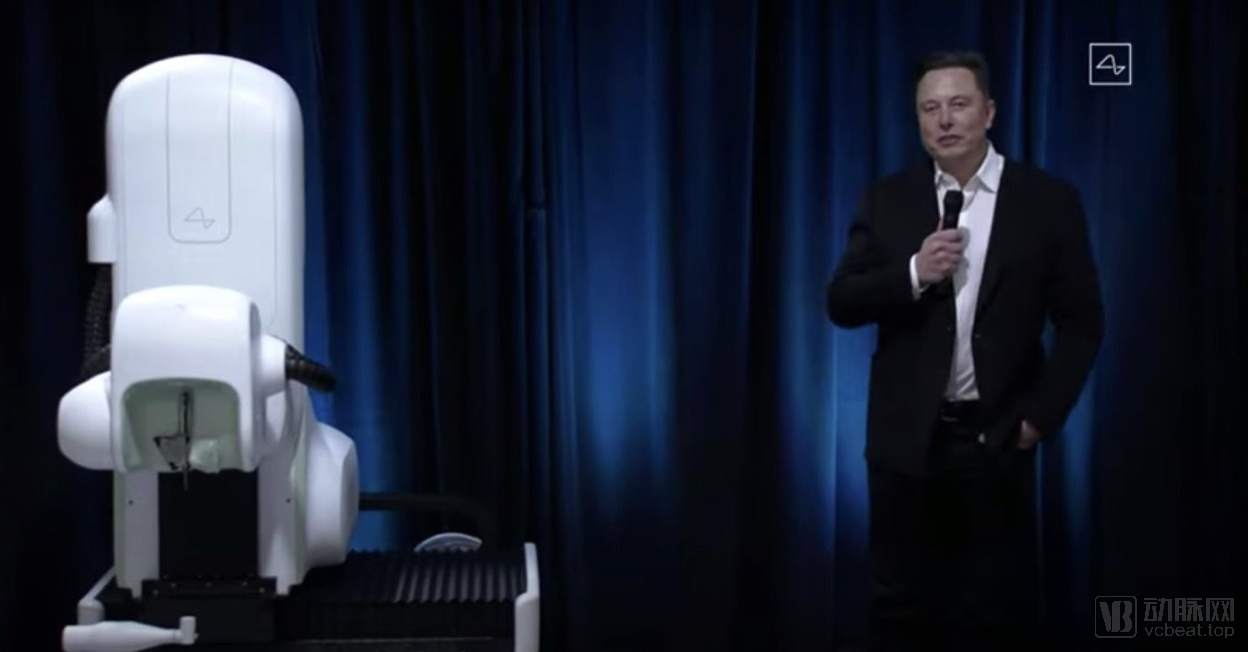
However, the blueprint is promising, but is reality truly as Musk envisions?
According to overseas media reports, Elon Musk’s initial foray into brain-computer interface (BCI) development was driven by his fear of artificial intelligence. He believed that, given the current pace of AI advancement, humanity would soon be dominated by AI and reduced to mere puppets. Consequently, he sought a means for humans to counteract this threat. The only viable solution, in his view, was to enhance human capabilities, leading him to propose an idea even more “science-fiction” than colonizing Mars: cognitive augmentation. Musk has stated, “Humans need to merge with machines and become ‘cyborgs’ to avoid being rendered obsolete in the age of artificial intelligence (AI).”
However, tangible products are now a reality. So, is BCI technology merely a carnival for cyberpunk enthusiasts, or a savior for neurological patients? VCBeat has interviewed multiple companies and experts, synthesizing their viewpoints here in an effort to describe the future development of BCI from a neutral perspective.
From Musk’s perspective, the ideal brain-computer interface (BCI) should not only enable researchers to acquire neuronal signals but also encode specific instructions and transmit them via the BCI to other parts of the body, thereby assisting the brain in executing efferent signaling.
To implement this process, at least four steps must be completed: signal acquisition – signal decoding – re-encoding – feedback.
These four processes may appear simple, but are in fact exceedingly difficult. Merely the first step—“signal acquisition”—has stymied a large number of explorers seeking to strike gold in the field of brain-computer interfaces (BCI).
Neuroscientists often use a stadium analogy to describe the process of acquiring brain signals: From outside the stadium, you might hear background noise and infer from the cheers whether a team has scored; when seated in the uppermost tiers, you can tell which team scored; but only when you sit close enough and have a thorough understanding of the collaborative logic of soccer can you discern precisely what coordinated actions enabled the team to score that goal.
This is also one of the key reasons why Neuralink’s BCI has evolved from a “sewing machine” to today’s “implantable coin”: only by positioning the electrode array sufficiently close to neurons can we acquire signals with sufficiently high resolution.
As can be seen from the video of the pig released by Musk, its implanted electrodes have indeed solved this problem. During the demonstration, staff members read the brainwaves of Pig B in real time and displayed them synchronously on a large screen. The Neuralink device implanted in Pig A’s head was reading electrical currents from neurons associated with its snout; each time the snout made contact with an object, a spike appeared in the brainwave signal.
In the video featuring the second pig on a treadmill, he demonstrated the prediction of movement trajectories using electroencephalogram (EEG) signals. The chart shows that the predicted movement trajectory closely aligns with the actual one.
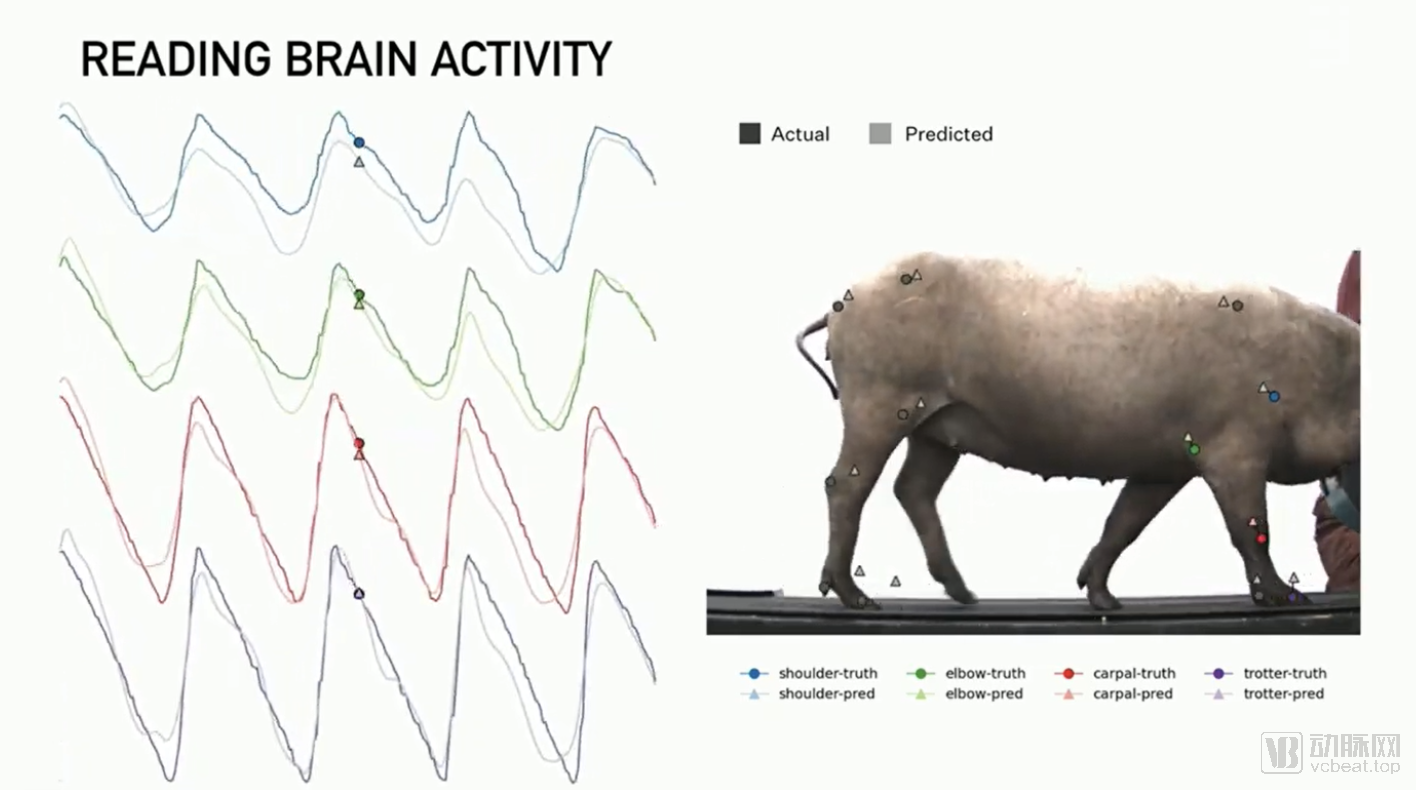
Neuralink has been able to predict the movements and postures of pigs to a certain extent, which means that the signals it collects have reached a fairly high level of accuracy.
However, although Musk has achieved a major breakthrough in signal acquisition, we have not seen significant progress in the second stage of BCI implementation—the signal decoding phase.
“What was disappointing about this press conference was the lack of any progress in neural signal decoding; it merely demonstrated the relationship between limb movements in piglets and neural firing in the brain. There is still a long way to go before implanted brain-computer interfaces (BCIs) can communicate with mobile phones.” Professor Hong Bo, a BCI expert at Tsinghua University, commented: “Research on decoding motor information via BCIs is already quite mature. Institutions such as Brown University and Stanford University in the United States have successfully demonstrated this multiple times in both monkeys and humans. However, although the U.S. FDA previously approved small-scale clinical trials in humans for companies like Cyberkinetics and Blackrock Neurotech, none achieved the expected outcomes.”
“Meanwhile, such research is also being conducted in China, primarily by Zhejiang University and Tsinghua University. Zhejiang University has adopted the Utah electrode array mentioned by Elon Musk in his speeches, successfully implanting it into the cerebral cortex of monkeys and human patients to achieve brain-computer interface (BCI) control of robotic hands. Tsinghua University, in collaboration with the 301 Hospital and Xuanwu Hospital, is conducting research on minimally invasive implanted BCIs in epilepsy patients using a different approach. In this method, recording electrodes are embedded within the skull without penetrating the dura mater, thereby avoiding damage to neural cells and enabling long-term, stable acquisition of intracranial electroencephalogram (iEEG) signals. This approach has already achieved BCI-based typing.”
“It should be noted that both research groups are still in the preclinical trial stage and have not obtained medical device approval. The main technical bottlenecks are the same as those encountered by the Neuralink team, including wireless transmission of neural signals, control of trauma to neural cells, and the long-term safety and efficacy of implanted electrodes,” Professor Hong Bo explained to VCBeat.
Thus, if Musk can resolve the decoding challenge in his upcoming work, the encoding process described in Step 3 may prove less daunting. However, the feedback loop outlined in Step 4 will inevitably remain another formidable obstacle.
The feedback loop involves acquiring environmental feedback information via brain-computer interface (BCI) and then delivering it back to the brain. Typically, we rely on vision, hearing, touch, and audition to obtain environmental information, which is then transmitted to the brain in real time. However, even computer vision technology, which is currently highly popular and widely applied in daily life, remains largely confined to processing two-dimensional images. Issues such as the large volume of three-dimensional imaging data and difficulties in encoding pose significant obstacles in the feedback process.
Therefore, we should indeed celebrate Musk’s successful high-resolution neuronal signal acquisition from this press conference, as precise, high-resolution signals can significantly advance decoding efforts. However, we must also remain rational: BCI algorithms are only one part of the challenge, and signal acquisition is merely a subset of the algorithmic issues—Musk still has a long way to go before achieving mature BCI technology.
Unlike other environments in the human body, Professor Claude Clement of the US Wes Center likens the brain to a coastal jungle: humid, hot, and saline-rich. “This is by no means an ideal place for technology.”
Unlike the oral cavity, gastrointestinal tract, and abdominal cavity, the human brain features a more intricate structure, shrouded in mystery and even regarded as the seat of the “soul.” Implanting a sensor in this region is no easy task. It requires careful consideration of both the brain’s immune rejection response and the durability of the implant to avoid frequent replacements that could cause unexplained intracranial damage. The implant’s chip also demands high-precision manufacturing: on one hand, it must be capable of acquiring and processing information from millions of neurons; on the other, it must be sufficiently compact to prevent compressive injury to surrounding intracranial tissues. In light of these factors, companies must give thorough and deliberate thought to the design of such implants.
The Economist’s article “Implants” described two directions for implant design: first, rethinking current miniaturized conductive electrode technology; and second, moving toward new non-electrical approaches.
Professor Ken Shepard of the Department of Electrical and Biomedical Engineering at Columbia University has leveraged CMOS (complementary metal-oxide-semiconductor) electronics to achieve this. He posits that any penetrating electrode can cause cellular damage; therefore, he sought to develop an integrated device placed on top of the cortex, beneath the meninges covering the brain. In 2018, his first-generation CMOS chip prototype, measuring only 1 cm², incorporated 65,000 electrodes, while the second-generation version is designed to contain one million electrodes. Notably, rather than simply stacking sensors on the chip, he integrated an equal number of amplifiers to convert signals, along with a wireless link to transmit data to a relay on the scalp.
At the time, this chip did not resolve the power supply issue, as placing a device containing numerous hazardous chemicals, such as a battery, within the brain poses significant safety challenges. However, based on the product launch event, Elon Musk appears to have made further progress in this area. Nevertheless, the presentation only stated that the device features wireless charging capabilities without explaining how this functionality is achieved. In previous talks, Neuralink had indicated that its implant’s battery could last for 24 hours and be wirelessly charged like a mobile phone. This claim, however, cannot be verified solely from the video footage.
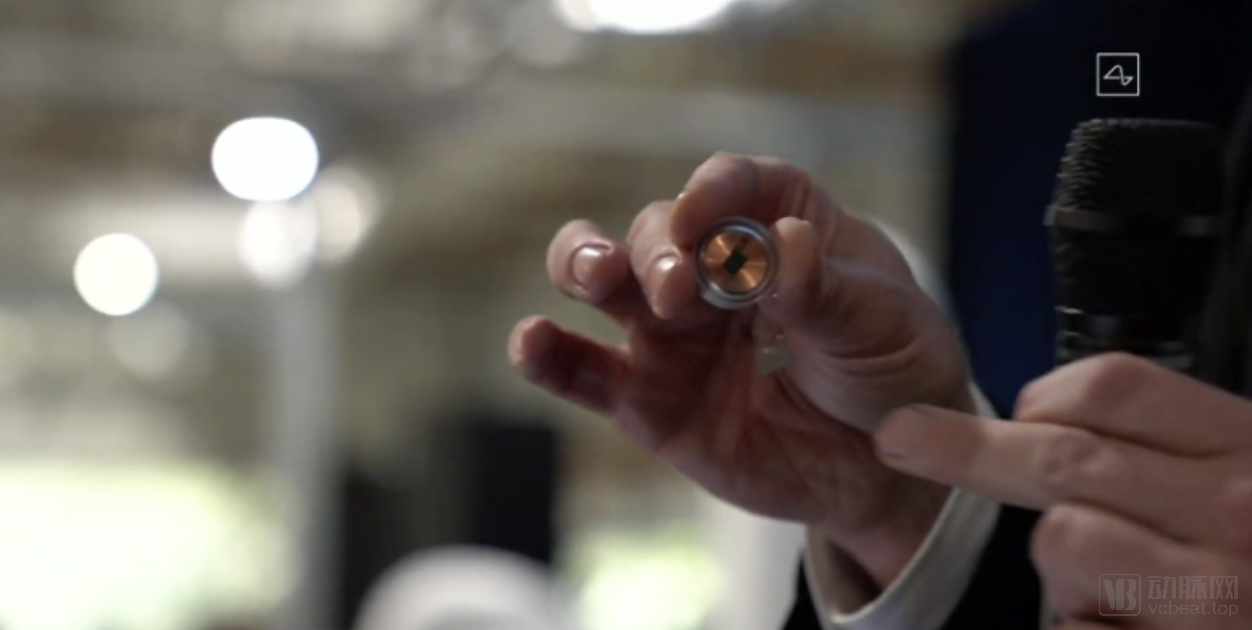
The video only shows the style and size of the implant.
Returning to the topic of implants, approaching from a non-electrical perspective, Dr. Guosong Hong of Harvard University attempted to fabricate a porous mesh made of SU-8 flexible polymer, embedded with sensors and conductive metals. This mesh structure mimics the elastic and soft morphology of neural tissue and allows neurons and other types of cells to grow within it, meaning it can mitigate the brain’s immune response to foreign bodies. Compared with traditional approaches, this solution blurs the boundary between biology and electronics.
Furthermore, a joint team from the School of Medicine and the Department of Microelectronics at Tsinghua University recently employed novel memristor arrays to attempt signal processing for brain-computer interfaces, reducing power consumption by 400-fold. This is likewiseOneA Promising Direction for Addressing the Above-mentioned Challenges.
In addition to the three examples mentioned above, numerous scholars have conducted in-depth research in the field of implants, which will not be elaborated on here. However, from the perspectives of both algorithms and materials, Musk has yet to resolve the key challenges in brain-computer interfaces (BCI).
According to Bloomberg’s analysis, Neuralink uses flexible polymers that are unlikely to remain viable in the human body for 10 years. Dai Shenyi, CEO of NuoNuo Technology, a Chinese provider of comprehensive medical solutions for brain science, told VCBeat: “Objectively speaking, Musk’s approach still falls within the realm of traditional technology. While it can reduce the costs of existing technologies, it remains quite far from achieving actual ‘therapeutic’ applications.”
Although Musk stated that the BCI product received Breakthrough Device Designation from the FDA this July and will proceed to human clinical trials, the risks associated with implantation remain relatively low given its early developmental stage. However, as the technology advances, it raises profound ethical concerns. In cyberpunk enthusiast forums, debates on ultimate BCI scenarios—such as issues of control versus being controlled, and military warfare—are unlikely to reach a consensus even after years of discussion.
This is indeed the case, particularly regarding the feedback loop that brain-computer interfaces (BCIs) must ultimately address. A scholar from Harvard University once stated, “If BCIs mature to the point where researchers can safely induce or reverse a ‘locked-in’ state—where an individual is fully aware of their surroundings but unable to make any movements or take actions—such experiments would be utterly intolerable to modern institutional review boards.”
Professor Hong Bo also raised concerns about the ethical issues surrounding brain-computer interfaces (BCIs). He argued that the ethical implications of implantable BCIs are as significant as those of gene editing, and that corresponding ethical frameworks should be established concurrently with technological development, rather than being addressed only after problems arise.
Judging from current development trends, to better explain ethical issues to regulators, researchers should ideally explore methods for integrating brain-computer interfaces (BCIs) with the brain, enabling both to collaboratively guide human actions. Such collaboration must be interpretable. While such systems might barely address ethical concerns, they will undoubtedly face stringent regulatory scrutiny, let alone clinical trials.
A thought-provoking question can be raised here: Is it possible for China to catch up with Elon Musk in BCI technology and properly address the associated ethical issues? Unfortunately, the answer to both is no.
Let us first address the second issue. Currently, China has not established a special approval pathway analogous to the FDA’s “Breakthrough Devices” program to facilitate the regulatory approval of products such as brain-computer interfaces (BCIs). In contrast, the Green Channel for review at China’s Center for Medical Device Evaluation places greater emphasis on the economic benefits derived from shifts in therapeutic directions and improvements in clinical efficacy brought by innovative devices; Elon Musk’s BCI clearly does not fall within this scope. Furthermore, while China has been unable to catch up with Musk’s technological achievements in the BCI field over an extended period, this does not imply that domestic stakeholders have neglected the development of brain science. In fact, over the five-year period from 2015 to the present, China has surpassed the United States in research on numerous neurological disorders within the realm of clinical neurology.
However, from a macro perspective, foundational sciences such as brain-computer interfaces (BCI) are evidently crucial to human development. It is precisely due to the substantial investment and dedication of numerous scholars in foundational science that we enjoy today’s technological advancements and quality of life. Therefore, Musk’s greatness speaks for itself.
As mentioned above, although China’s BCI technology cannot yet compare with that of the United States, our level of brain science research remains among the world’s leading.
Meanwhile, leveraging our demographic advantages, we will accumulate large-scale data on brain diseases over time, which will help more patients achieve cures—BCI is not the only approach to treating brain disorders.
So, how should China promote the development of brain science? The integration of direction, talent, and industry may be the solution.
I. Direction
Unlike Musk’s grand blueprint, China’s brain research places greater emphasis on the diagnosis and treatment of brain disorders and on brain-inspired artificial intelligence. Around 2019, after more than five years of deliberation, a foundational consensus was reached within China’s scientific community on the “one body, two wings” framework for the national Brain Project.
“The One” refers to the “Cognitive Brain,” focusing on understanding how human cognitive functions originate. Its core lies in elucidating the essence of structural and functional neural networks within cognitive brain regions, aiming to clarify how the brain works.
Academician Mu-Ming Poo, a leader and advocate of the China Brain Project, stated, “To analyze the functions of a computer, we must understand its architecture. Similarly, to understand brain function, we must map the brain’s network architecture. This is known as the ‘Whole-Brain Mesoscale Connectome,’ and it constitutes a key component of our major initiative.”
The two wings point to the two main strategic directions: “brain protection” and “brain creation.”
Among these, “Protecting the Brain” primarily aims to enhance the diagnosis and treatment of major brain disorders, including Alzheimer’s disease, epilepsy, Parkinson’s disease, and depression. In the field of neurological diseases, there is significant potential for the emergence of unicorn companies valued at tens of billions of dollars.
“Brain Creation” is primarily dedicated to the research and development of brain-inspired artificial intelligence, with its core strategic objective being the development of brain-mimicking computers. This initiative will consist of two components: first, the advancement of brain-like devices and architectures; and second, the design and development of brain-like information generation and processing systems.
The immense value of the China Brain Project lies in its sustained implementation over the next five to ten years, which will vigorously promote the deep integration of artificial intelligence and brain science. Its research outcomes will significantly advance the development of brain-inspired artificial intelligence technologies, and breakthroughs in this field will lead a new wave of technological revolution.
Based on this plan, China is making every effort to develop treatments for diseases with a significant social burden, such as Alzheimer’s disease, Parkinson’s disease, epilepsy, schizophrenia, and depression. Today, research into these conditions has made substantial progress.
II. Education
Education determines the future direction of scientific development. As a discipline situated at the intersection of medicine and engineering, brain science faces a critical challenge in China: how to cultivate the necessary talent. Current educational practices see major universities training specialists in discrete disciplines, who then transition into brain science research. This approach lacks strategic foresight and hinders comprehensive development across the entire industry.
To address such challenges, Zhejiang University launched the “Dual-Brain Initiative” in 2018 to promote the integration of brain science and artificial intelligence, and established the School of Brain Science and Brain Medicine in January 2020 to tackle fundamental educational issues.
“Neuroscience is the most challenging frontier discipline and has also been the fastest-growing field internationally in recent years,” said Duan Shumin. “The annual meeting of the Society for Neuroscience in the United States attracts 30,000 to 40,000 attendees, making it the largest academic discipline. However, in China, although regular higher education institutions offer more than 400 undergraduate majors, none of them is specifically in neuroscience.”
“Currently, the majority of graduate students in China’s brain science research programs come from undergraduate backgrounds in biology and biotechnology. They received little to no education in neuroscience-related knowledge during their undergraduate studies, which significantly hinders the conduct of scientific research,” said Duan Shumin. He noted that while most students demonstrated a long-standing interest in brain science during their admission interviews, there were no relevant majors available for them to choose at the undergraduate level.
Therefore, one potential solution to the current dilemma is to guide interested students into science and engineering majors during their undergraduate studies, followed by clinically relevant education at the master’s level.
Only by addressing the most fundamental issue of talent can we engage in more in-depth research on brain science, thereby driving the development of the brain science and medical industry. The model adopted by Zhejiang University undoubtedly serves as a benchmark, and it is hoped that it will guide other universities to further advance their brain science initiatives.
III. Industry
Whether in terms of policy or talent, the ultimate goal is to establish and improve a comprehensive brain science medical industry, making valuable medical technologies accessible to the general public. In fact, over the past decade, a group of dedicated individuals has begun exploring brain science and successfully extended their achievements to fields such as neurological disorders, mental illnesses, and rehabilitation. Among these numerous enterprises, VCBeat has
Taking NeuroXess, NuoNuo Technology, and Zhentai Intelligence as examples, this article provides a brief overview of the development of China’s brain science sector.
NeuroXess: Building the Non-Invasive Brain-Computer Interface System with the Highest Communication Rate
NeuroXess, widely recognized as an industry leader, is the first company in China to commercialize brain-computer interface (BCI) technology. Leveraging the Neural Engineering Laboratory at Tsinghua University, NeuroXess has developed the world’s highest-throughput non-invasive BCI system, securing China a prominent position in the global BCI landscape.
In addition to non-invasive solutions, BrainCo is also developing a minimally invasive closed-loop brain feedback stimulation system. This system employs minimally invasive implantation to prevent infection and support long-term use, integrating signal acquisition and stimulation in a closed loop to achieve intelligent modulation. Taking epilepsy treatment as an example, the system detects characteristic warning signals prior to seizure onset and triggers electrical stimulation to suppress seizures. Meanwhile, the company is also developing an intelligent active brain-computer interface (BCI) rehabilitation system, which will be applicable to rehabilitation for neurological injuries such as stroke and to intervention and treatment for ADHD.
Nuo Nuo Technology: A Medical EEG Data Service Provider Integrating Hardware, Software, and Robust Scientific Research
Aiming to address clinical needs and enhance patient value, Nuonuo Technology has built its product line around medical EEG data services, adopting a development model that integrates both hardware and software with AI algorithms at its core. Dai Shenyi explained to VCBeat: “Initially, we focused solely on algorithms, but we encountered numerous challenges during data acquisition. First, variations in acquisition devices led to quality control issues in EEG data collection. Second, many portable scenarios hold significant application value, yet many manufacturers struggle to rapidly meet this demand and provide technical support for small-scale testing. Third, EEG data must undergo multiple algorithmic transformations to eliminate interference and generate analyzable signals. Capturing signals associated with specific feature values requires a deep understanding of micro-signal processing, which inevitably demands thorough comprehension of the underlying devices.”
Both scenarios and technologies continue to evolve through ongoing exploration. In the future, NuoNuo Technology will persist in exploring new business pathways, deepening collaborations with internet healthcare platforms, pharmaceutical companies, and insurance providers. By leveraging AI capabilities, we aim to facilitate the comprehensive integration of EEG services into all levels of the healthcare system, expanding both the breadth and depth of clinical indications. This effort will not only cover the diagnosis and treatment of traditional brain disorders—such as the differential diagnosis of epilepsy, Alzheimer’s disease, and other neurological conditions—but also promote the broader adoption of medical EEG services across multiple specialties, including psychiatry, pediatric neurology, critical care, and emergency medicine, thereby achieving universal access to advanced healthcare technologies.
Zhentai Intelligence: “BCI + VR + Robotics” Aid Patient Rehabilitation
BCI is a critical necessity in the field of rehabilitative medicine, having long attracted the attention of countless researchers and enterprises. In the 1990s, scientists began conducting related research; in 2000, EEG-based biofeedback products started to be implemented in medical applications; in 2014, Juliano Pinto, a young man with paraplegia, kicked off the World Cup wearing an exoskeleton suit; today, this industry has entered the stage of product commercialization.
Currently, the company’s brain-controlled intelligent rehabilitation solution is primarily used for neurological rehabilitation. In the preclinical research phase, it has been trialed in over 1,000 patients. Studies have shown that after treatment with the brain-computer interface (BCI) system, patients’ cognitive status, motor function, balance, and muscle tone have significantly improved. Moving forward, this solution will gradually expand to cover the full spectrum of rehabilitation training scenarios, including physical therapy and occupational therapy. By leveraging comprehensive EEG data collection and assessment throughout the entire care cycle, the solution aims to provide precisely customized rehabilitation treatment plans for patients.
Returning to the initial question, how far are we from using BCI technology for disease “treatment”? By now, you likely already have your own answers.
Overall, while Neuralink’s breakthroughs are certainly commendable, we should also take a rational view of the challenges and current limitations of brain-computer interface (BCI) technology in medical applications. Therefore, for medical research in China, it may be more pragmatic to focus on “medical-grade BCIs,” prioritize disease diagnosis and treatment, and build comprehensive disease databases.
After all, the medical field may lack Musk’s romanticism.
Step by step—this is the pace and speed that healthcare should embody.