

Hansyl Medical Breaks Import Monopoly with NMPA-Certified Domestic Injection Pen After 8 Years of R&D
A small injection pen may seem unremarkable, yet in China, there are few domestic brands, with the vast majority relying on imports. This situation stems from the fact that the structural design of injection pens is a field with extremely high patent concentration, encompassing over 1,500 patents. The overwhelming majority of these structural designs have been preemptively patented by foreign companies, making development exceptionally challenging.
Across the entire market, injection pens can be considered scarce products. Global patents for injection pens are concentrated in the hands of a few companies, most of which are pharmaceutical firms that do not sell them externally. There are no more than 10 manufacturing companies holding patents for injection pens.
“Fewer players in the field mean we hold a first-mover advantage,” pointed out Chu Yaoqiang, Founder and CEO of Suzhou Hanerxi Medical Device Development Co., Ltd. (hereinafter referred to as “Hanerxi Medical”). In his view, while injection pens may appear to be a niche area, they actually represent a vast blue-ocean market.
After eight years of dedicated research and development since the project’s initiation in 2012, Hanerxi Medical’s cartridge-based injection pen, which features independent intellectual property rights, obtained the medical device registration certificate issued by the National Medical Products Administration (NMPA) in July 2020. In August 2020, the company’s application for a production license was accepted. Chu Yaoqiang, founder and CEO of Hanerxi Medical, stated that the product is currently being actively ramped up for production, with the first-phase annual capacity of pen injectors expected to reach 500,000 units by the end of 2020.
“There is no retreat in entrepreneurship.” This was a phrase that Chu Yaoqiang repeatedly emphasized during the exclusive interview.
Before embarking on his entrepreneurial journey, Chu Yaoqiang was an engineer with over 20 years of executive experience in mold manufacturing and plastic injection molding at renowned multinational corporations. In 2012, after identifying opportunities in the field of injection pens, he resigned from his well-paid position to start his own business.
To develop an injection pen with independent intellectual property rights, he remained steadfast on the front lines of research and development for eight years. At the most difficult point, his team went without salaries for four consecutive years, and he invested nearly all of his personal assets into the project.
Injection pens are specialized high-precision syringes designed for medications in cartridge vials. Their key features include precise dosed injection, enabling self-administered healthcare, and offering safe and convenient use. Applications encompass self-management of chronic diseases (e.g., insulin and growth hormone), precision medication delivery (e.g., interferons, various cellular therapies, gene therapies, and biologics), as well as premium aesthetic injections used in consumer healthcare settings.
Taking the chronic disease sector, specifically diabetes, as an example, there is a market demand for injection pens exceeding RMB 10 billion. According to data from the International Diabetes Federation (IDF), the prevalence of diabetes stands at 11.3%, with 30% of patients requiring treatment via injection pens. Based on these figures, the global demand for injection pens ranges from 200 million units (for standard reusable pens) to 2.5 billion units (for disposable pens), corresponding to a market size of RMB 12–50 billion.
The market size is encouraging, and Chu Yaoqiang and his team are full of passion and confidence in the research and development of injection pens. However, after conducting comprehensive market research, Chu Yaoqiang and his team found that the difficulty of developing injection pens exceeded their expectations, which once put them in a difficult situation. "More than 200 structures in the basic patents have been preemptively registered by others. It is very difficult to create and develop from scratch," said Chu Yaoqiang.
In an effort to find a breakthrough, he approached numerous design firms for collaboration. Regrettably, 99% of them declined, and the remaining 1% ultimately came to nothing.
“I am not one who believes in fate. I believe that we have sufficient technical reserves and have conducted very detailed research; we will surely rely on our own efforts to achieve the breakthrough from ‘0’ to ‘1’,” said Chu Yaoqiang.
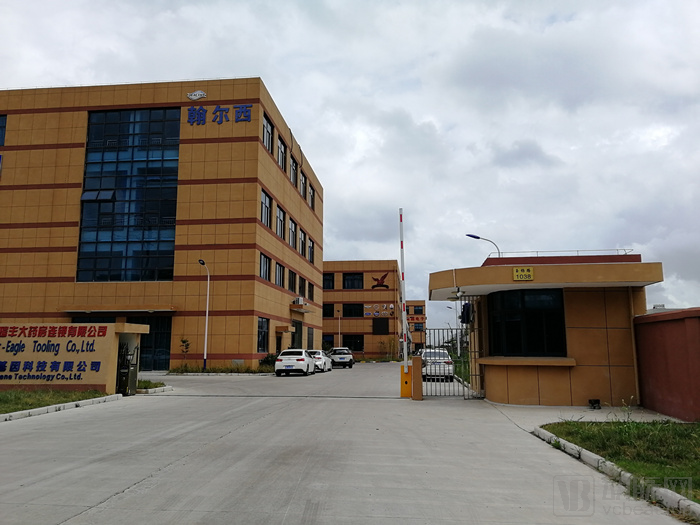
(Hansel Pen Injector Production Base)
In 2014, Suzhou Hanerxi Medical Device Development Co., Ltd. was officially established, dedicating itself to the research and development of pen injectors with a focus on the development of drug delivery devices. After countless days and nights of relentless research, in January 2015, Chu Yaoqiang led his team to successfully develop the first-generation injection pen, which was then transferred to Chengji Biology (later acquired by HanYu Pharmaceutical) for RMB 4.2 million. By the end of 2016, Hanerxi completed the development of the second-generation injection pen. This injection pen also became the only product in China with full independent intellectual property rights.
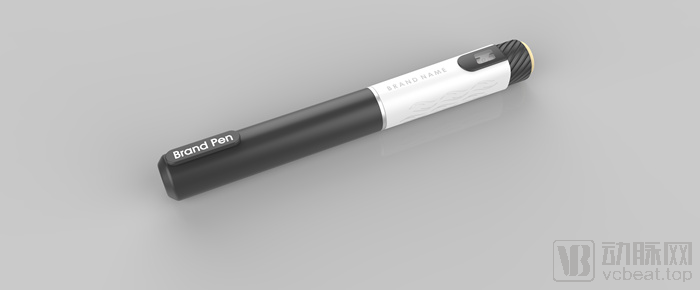
(Hansyr Injection Pen)
“Persistent research, development, and iteration are driven by our customers’ trust and encouragement,” Chu Yaoqiang pointed out. During the development of the first-generation product, team members resigned one after another, leading him to consider abandoning the project at one point. However, a pharmaceutical company executive approached him, urging him and his team to persevere, as the company had a strong need for injection pens. If domestically produced devices could replace imported ones, it would significantly reduce costs and eliminate supply quantity constraints.
Customer pain points are at the core of product value. From 2016 to 2017, Hanerxi continued to increase its R&D investment, filed four invention patent applications, and consistently strengthened its layout of core intellectual property rights. In June 2018, Hanerxi secured an investment of several million yuan from CCB International. At this stage, Hanerxi entered a period of rapid growth.
“Ignorance breeds fearlessness; I’ve made it to where I am today purely on sheer determination,” said Chu Yaoqiang.
After securing funding, Hanerxi continued to invest in research and development. In August 2019, the Hanerxi injection pen passed all registration testing items at the Jiangsu Institute for Medical Device Testing. In June 2020, Hanerxi commissioned a well-known domestic patent firm to conduct a comprehensive global patent landscape analysis. The findings indicated that the Hanerxi injection pen system incorporates multiple innovative technologies, breaking the overseas monopoly on injection pen systems.
Behind mature technology lies the power of a cohesive team. Hanerxi’s team comprises elite professionals from fields such as engineering and materials science. Qiu Dan, Technical Director at Hanerxi, holds a Master’s degree in Mechanical Design from Northwestern Polytechnical University and brings over 20 years of product R&D experience in medical device design from renowned foreign enterprises.
Lin Lin, Chief Operating Officer and Co-Founder, graduated from Wuhan University. She previously served as a Senior Finance and Asset Manager at a renowned foreign enterprise, with a proven track record of leading the planning of EMS factories, and possesses over 10 years of executive experience in multinational corporations. Zhu Qunyi, Deputy General Manager of Operations at Hanerxi, graduated from Nanjing University of Aeronautics and Astronautics with a Master’s degree in Structural Design. He is the founder of multiple Chinese factories for foreign enterprises and has over 30 years of experience in corporate operations management.
Hong Lei, Sales Director at Hanerxi, graduated with a major in Medicinal Chemistry from the Department of Medicinal Chemistry at China Pharmaceutical University and possesses over 30 years of experience in drug R&D and sales. Li Tao, General Manager of Kunshan Hanerxi, majored in Mechanical Design at Nanjing Agricultural University, has more than 20 years of experience working in foreign enterprises, and previously served as General Manager of a China factory for a well-known U.S.-owned company, bringing extensive expertise in corporate operations.
Through the team’s concerted efforts, the Hanerxi pen injector was successfully submitted for regulatory review in November 2019. In July 2020, it received approval from China’s National Medical Products Administration (NMPA) and obtained a Class II medical device registration certificate. In August 2020, the company secured joint capital injection from the Kunshan High-Tech Zone Government and CCB International.
So, what are the features of the injection pens produced by Hanerxi, which insists on independent research and development?
Chu Yaoqiang introduced that this independently developed injection pen by Hanerxi utilizes high-lubricity core materials, providing a smooth injection experience. Its foundational structure is originally developed and covered by expandable structural patents. In addition to scale display for dose adjustment, it features tactile operation capability. For the standard model with a replaceable cartridge design, the pen is engineered for 5,000 injections, ensuring precise delivery for over 2,000 uses. The disposable pen model is designed for 500 injections, guaranteeing accurate delivery for more than 100 uses.
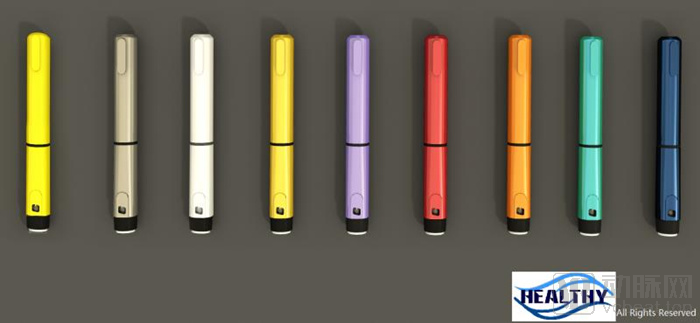
(Han'erxi Pen Injector, Multi-Color Options for Pharmaceutical Companies)
Meanwhile, the product is fully owned with independent intellectual property rights and can be customized into any dosage or fixed-dose variants. It is generally suitable for drugs such as insulin, interferon, growth hormone, cosmetic injections, and Gonal-F.
In addition, the company’s fully automatic injection pen is the first of its kind launched in China and holds independent intellectual property rights. This product features an upgraded design based on Hanerxi’s core patents, utilizes a bidirectional unlocking clutch technology, and provides vibration and audible indicators. It is designed for 5,000 injections, ensuring precision for over 2,000 uses. The disposable pen variant is designed for 500 injections, ensuring precision for over 100 uses. Its overall technological level surpasses that of domestic manufacturers producing generic pens.
Following the product’s approval for market launch by the NMPA, Hanerxi is currently actively preparing for production. Chu Yaoqiang revealed that the company expects to complete China’s first automated production line for pen-style injectors in 2021, achieving an annual capacity of 24 million disposable injection pens and establishing a low-cost component supply system.
Meanwhile, Hanerxi will collaborate with global manufacturers of injection pen production equipment to implement a production plan for 150 million injection pens, with pricing that will challenge the global injection pen price structure. “Hanerxi’s goal is to strive to become the largest injection pen manufacturer in China within five years,” Chu Yaoqiang told us.