

Gene Therapy Unlocks Boundless Potential, Yet Three Major Challenges Remain: An Interview with Song Gaoguang of Northern Light Venture Capital

Northern Light Venture Capital
Venture Capital Firms
In December 2017, Luxturna, a gene therapy for inherited retinal dystrophy developed by Spark Therapeutics, was officially launched in the United States as the first FDA-approved gene therapy. The year 2017 is also regarded as the inaugural year of industrialization for gene therapy. In the first two months of 2020 alone, seven investigational gene therapy drugs worldwide received orphan drug designation. With the FDA issuing its final six guidance documents on gene therapy manufacturing and clinical development of products, the industry widely views 2020 as a landmark year for gene therapy.
From “Year One” to a “Breakout Year,” gene therapy appears to have taken only three years. Behind this rapid ascent lie nearly three decades of continuous exploration and accumulation by gene therapy technical teams, as well as the strategic investments and acquisitions made by multinational pharmaceutical giants. Since 2016, major multinational pharmaceutical companies—including Pfizer, Novartis, Gilead, Roche, and Johnson & Johnson—have acquired gene therapy projects developed by biotechnology firms, aiming to secure advantageous positions in the emerging arms race for gene therapy.
The mutual reinforcement between multinational pharmaceutical companies and biotechnology firms has undoubtedly accelerated the research, development, and commercialization of gene therapies. According to Deloitte statistics, by the end of 2019, more than 27 cell and gene therapy products had been launched globally, with approximately 990 companies focusing on this field, and two gene therapy drugs successively approved for market launch.
The wave of gene therapy reached China with a lag of approximately two years. Nevertheless, biotechnology companies such as Wujiahe, Obio Technology, Aoyuan Heli, Belief BioMed, NeuroLune, and Xiyuan Biotech; large biopharmaceutical enterprises including Staidson, Northland Biotech, and Essex Bio-Technology; and even industrial conglomerates whose core business is not pharmaceuticals, such as Yaoji Technology, have all participated in laying out pipelines related to gene therapy. Data indicate that cell and gene therapy in China is gaining global favor, with more than 170 international multicenter clinical trials (mostly Phase II and Phase III studies) initiated between 2017 and 2019.
At present, gene therapy has long become a fiercely contested arena for private equity investors. According to incomplete statistics from VCBeat, over the past year, more than 15 financing and investment deals in gene therapy projects have been completed globally, ranging from tens of millions of RMB to over USD 100 million across Series A to Pre-C rounds. These investments span areas such as transgenic technologies (primarily adenoviral vector-based gene therapies), gene editing technologies, and cell and gene therapy CDMOs. Recently, Akouos, a biopharmaceutical company focused on gene therapies, has also filed for an IPO on the U.S. stock market.
In the view of Mr. Song Gaoguang, Executive Director at Northern Light Venture Capital, the current fervor surrounding gene therapy is only to be expected; however, its rapid pace of development has exceeded the expectations of him and his team.
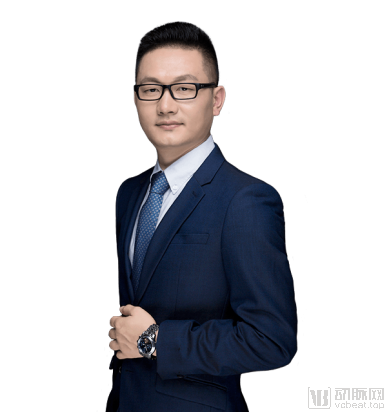
Mr. Song Gaoguang, Executive Director of Northern Light Venture Capital
In 2016, Song Gaoguang joined Northern Light Venture Capital. Prior to this, he had worked for many years at Staidson Biopharma, one of the earliest companies in China to develop gene therapy drugs. That same year, Northern Light Venture Capital’s healthcare team observed the rapid growth of gene therapy overseas and began to deconstruct the industry chain, identify key technologies, and track representative figures.
Between 2018 and 2020, Aurora Venture Capital completed angel-round capital increases for Belief Medicine, Nuofusi, and NGGT, thereby establishing a comprehensive layout spanning from early-stage genetic element engineering to downstream manufacturing processes. Notably, Belief Medicine and Nuofusi rank among the leaders in China in terms of technology platform maturity and clinical trial data, respectively.
Over the years, Song Gaoguang has reviewed nearly all moderately mature gene therapy projects both domestically and internationally, with certain overseas initiatives leaving a profound impression on him. In 1999, the gene therapy industry suffered a severe setback, bringing global commercialization efforts to a near standstill. “We observed that some teams persisted in their academic and related clinical explorations. Their accumulated expertise in technical research, understanding of disease mechanisms, preliminary investigations into clinical treatments, and improvements and scale-up of manufacturing processes have, to some extent, spurred the renewed prosperity of gene therapy.” To his delight, although a gap remains compared with overseas counterparts, a small number of Chinese gene therapy companies have begun to rival global leaders in recent years. This is also a key reason why Northern Light Venture Capital has accelerated its strategic investments in this sector over the past three years.
Since the 1970s, the industrialization of gene therapy has undergone three developmental stages: initial exploration (1970–1990), frenzied growth (1990–1999), and tortuous progress (1999–2012), followed by a renewed boom (post-2012). According to Song Gaoguang’s analysis, global interest in gene therapy gradually intensified from 2012 and 2017 onward, primarily because drug approvals provided preliminary validation that this technology could indeed offer new solutions for certain human diseases.
In Song Gaoguang’s view, global gene therapy R&D and commercialization are still in their early stages. Exploring the safety and efficacy of technical platforms, as well as the stability of manufacturing processes, remains a key challenge for the industry. In contrast to the fervor in investment and financing, no blockbuster gene therapy drugs have yet emerged. According to Spark Therapeutics’ financial reports, Luxturna generated less than $30 million in sales revenue in the first nine months of 2019.
“Constrained by the current state of technological platforms and manufacturing processes, gene therapy projects both in China and abroad are primarily focused on rare diseases with small patient populations. Early sales performance does not necessarily reflect the overall future market potential of the technology,” pointed out Song Gaoguang. “Investment in gene therapy should prioritize the maturity of the underlying technology platform and its future growth potential.”
When deciding to launch its first gene therapy project with BeiNiao Medicine, Aurora Venture Capital had anticipated that gene therapy would become a hot investment target for domestic investment firms between 2020 and 2021. Song Gaoguang admitted that making forward-looking investment decisions is quite challenging, as it follows an entirely different logic from conventional investments in large-molecule or small-molecule drugs. He pointed out that the growth of gene therapy projects requires substantial funding, necessitating a concerted effort on the capital side. This means combining close monitoring of international advancements with seizing domestic opportunities, strategically positioning early while estimating when these projects will gain recognition from domestic investors. More importantly, it is crucial to comprehensively consider the maturity level of the gene therapy industry and the time cycle required for future industry development.
Song Gaoguang told VCBeat that by deconstructing the gene therapy industry chain, Northern Light Venture Capital has made targeted investments to address the three major challenges in the gene therapy sector.
First, the scientific foundation is weak. Although gene therapy technology has undergone multiple iterations, there have been few scholar teams in China previously dedicated to related research. The limited accumulation of scientific achievements has resulted in domestic innovation teams lacking technical advantages in genetic element modification and vector selection, which are precisely the critical initial stages for the industrialization of gene therapy.
As early as 2015, Song Gaoguang became acquainted with the two core founders of Belief BioMed. Dr. Xiao Xiao, a tenured professor at the University of North Carolina in the United States, had participated in pioneering research on using adeno-associated virus (AAV) as a gene vector. At that time, Therapeu Bamboo, founded by Dr. Xiao, transferred its core patents to Pfizer, after which he returned to China to establish Belief BioMed. Over the following two years, Northern Light Venture Capital closely monitored the product development progress of Dr. Xiao’s team. When Belief BioMed obtained its initial batch of non-registration clinical trial data, Northern Light decisively entered as an angel investor.
Second, there is a scarcity of talent for industrialization. In China, the talent pool for gene therapy—ranging from project leaders to young professionals in product development—lags far behind that of the United States and the European Union. “As a result, even projects with robust underlying technologies may fail to be fully commercialized,” pointed out Song Gaoguang. “At times, we observe many emerging gene therapy companies in China that have secured substantial capital, established management frameworks, and introduced projects, yet struggle to advance them due to the lack of frontline execution personnel.”
In 2018, when Aurora Capital invested in Nuofo Biopharma, the latter had already completed a non-registered clinical trial involving nine participants, positioning it as a pioneer in gene therapy within China. In May 2020, Professor Li Bin’s team, the founders of Nuofo Biopharma, announced data from an international gene therapy clinical trial (NCT03153293) conducted between 2017 and 2018 in China and Argentina. The trial included 159 patients with Leber's Hereditary Optic Neuropathy (LHON) and, according to publicly available information, represents the largest-scale gene therapy clinical trial for this ocular disease globally to date.
Third, the maturity of downstream manufacturing processes remains insufficient. The stability of manufacturing processes and production capacity are critical factors influencing the late-stage commercialization of gene therapies. Song Gaoguang pointed out that among domestic gene therapy companies, there is currently no team capable of managing the entire workflow from early-stage R&D, mid-stage regulatory filings, and clinical trials to product launch and commercial sales. Based on this gap, Northern Light Venture Capital selected professionals with industrialization experience to form a team and incubated it, completing its third strategic move in the gene therapy sector—the investment in Suzhou NGGT Biotechnology Co., Ltd. (NGGT). NGGT was co-founded by scientists and entrepreneurs with extensive industry accumulation in the field of gene therapy. The team members, in particular, possess long-term accumulation and successful end-to-end experience in the large-scale preparation and manufacturing of viral vectors for gene therapies at both clinical trial and commercial marketing stages. Large-scale manufacturing processes for viral vectors represent one of the significant barriers in the gene therapy industry chain, where NGGT holds a distinct competitive advantage.
Summary of Aurora Venture Capital's Investment Strategy in the Gene Therapy Sector: We Identify the Following Key Points:
First, focus on the implementability and scalability of the technology platform;
Second, consider the industrialization talent for early-stage projects;
Third, conduct an in-depth analysis of the key points and challenges within the industry chain, and proactively execute strategic layout;
Fourth, seize technological trends and proactively position for breakthrough advancements.
Regarding future investment planning, Song Gaoguang pointed out that many sub-sectors within gene therapy are worthy of in-depth strategic positioning, and Northern Light Venture Capital will continue to closely monitor technological advancements and industrialization progress in these areas.
For instance, gene augmentation—a mature technology in terms of industrialization at this stage—involves using vector-based delivery to supplement proteins deficient in the body. Other approaches, such as gene silencing and gene activation, are also effective modalities of gene therapy. Diverse mechanisms of action and therapeutic strategies represent new directions for future commercialization, and Aurora Venture Capital is actively tracking high-quality global projects in this field.
For another example, 80% of gene therapies in current clinical studies utilize adeno-associated virus (AAV) vectors, yet the capacity of AAV is inherently limited. By employing other viral vectors, such as adenoviruses or lentiviruses, and leveraging them to construct new technological platforms, it may be possible to treat a broader range of diseases. This represents a key area of future focus for Northern Light Venture Capital.
References:
Pfizer Bets on Gene Therapy Again: $600 Million to Tackle Rare Liver Disease
Two Consecutive Deaths in AAV Gene Therapy Trials: Takeda “Pivots,” While Gilead, Roche, Novartis and Others Enter the Billion-Dollar Market—What Lies Ahead?