

Zhongjia Hengtai Advances Cardiovascular Health Management Through Endothelial Function Testing – A Highlight from Zhangjiang Gaoke 895 Startup Camp
895 Venture Camp is an innovation and entrepreneurship service brand created by Zhangjiang High-Tech (Stock Code: 600895). Guided by its original aspiration to focus on industries, optimize resources, and empower innovation, it builds a robust entrepreneurial cluster through the joint support of partners in capital, technology, media, and other fields.
Zhongjia Hengtai is one of the high-quality projects in the Healthcare Special Session of the 895 Startup Camp (Season 9).
VCBeat has curated a series of in-depth features on high-quality healthcare projects from the 895 Startup Camp. We welcome you to follow our coverage. If you are interested in any of the projects featured, please feel free to contact us directly.
Mr. Zhang Jie, founder of Zhongjia Hengtai, is the former Executive Vice President of MicroPort Scientific Corporation, with extensive experience in the operational management of high-end cardiovascular interventional medical device companies. Mr. Zhang is also a healthcare angel investor, having invested in rising star startups such as Esil Medical, Newpulse Medical, and Weimi Medical. Through his mentorship of early-stage medical device companies—including Fourier Intelligence’s exoskeleton robots, Bansheng Medical, and Shecheng Medical—at the 895 Innovation Camp, he has come to deeply appreciate the significant value of full-lifecycle health management in optimizing both the supply side of medical services and patient prognosis.
Regarding cardiovascular diseases, Mr. Zhang Jie believes that health monitoring should be shifted upstream, initiating health management at the earliest possible stage of cardiovascular pathology. In the diagnosis and treatment workflow for cardiovascular diseases, in-hospital processes such as diagnosis and therapy have seen significant improvements in effectiveness and accessibility, driven by the continuous introduction of cutting-edge technologies and the substitution of imported products with domestically produced alternatives in recent years. In contrast, pre-hospital care (including health education, early risk detection, and intervention) and post-discharge care (including functional recovery and disability prevention) remain relatively underdeveloped.
Mr. Zhang Jie pointed out that risk factors for various cardiovascular diseases, such as hypertension, ultimately lead to arterial endothelial damage, which can progress to atherosclerosis and even cardiovascular events. If the extent of vascular endothelial damage can be quantified, it would enable more accurate assessment of disease risk and facilitate appropriate interventions. The EF5000 Vascular Endothelial Function Tester, independently developed by Zhongjia Hengtai, calculates the Endothelial Function Index (EFI) by measuring changes in peripheral arterial tone during reactive hyperemia. The EFI is used to assess vascular endothelial function and serves as a quantitative indicator for the early stages of atherosclerosis.
According to Mr. Zhang Jie, the Zhongjia Hengtai team initiated the development of the EF5000 after learning from cardiologists at Ruijin Hospital that clinicians were deeply distressed by the year-on-year increase in cardiovascular disease patients in China, along with a growing trend toward younger onset. They emphasized that the key to addressing cardiovascular diseases lies in the timely detection and scientific intervention during the asymptomatic early stages, yet there has long been a lack of reliable and user-friendly early detection equipment in Chinese medical institutions. In response, the Zhongjia Hengtai team conducted a systematic review of early detection technologies, patents, and products for cardiovascular diseases both domestically and internationally. Subsequently, through clinical collaboration with Ruijin Hospital and by integrating resources from multiple parties, they successfully developed an innovative medical device with independent intellectual property rights and superior performance.
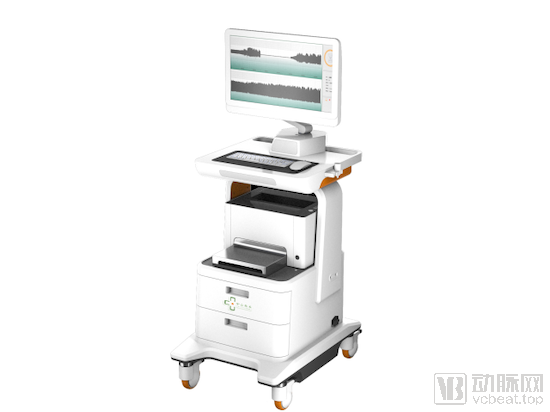
(Zhongjia Hengtai's Vascular Endothelial Function Tester)
In June 2019, Zhongjia Hengtai’s endothelial function tester became the first of its kind to receive approval from the Shanghai Medical Products Administration. In January 2020, the company obtained a Medical Device Production License, allowing the product to be launched as a Class II medical device. Despite not yet having established a comprehensive sales network, the EF5000 received purchase intentions from multiple Grade A tertiary hospitals, including Ruijin Hospital, immediately upon its market launch. Mr. Han Baobao, Marketing Manager at Zhongjia Hengtai, told VCBeat that the company is accelerating production capacity integration, with the first batch of mass-produced EF5000 units soon to be released to the market. Mr. Zhang Jie stated that in the future, Zhongjia Hengtai will establish innovative business models and payment solutions for the EF5000, continuously extending its reach to primary healthcare institutions to meet the growing demand for proactive health management among high-risk populations for cardiovascular diseases.
Vascular endothelial cells (VECs) are a thin layer of epithelial cells that are tightly connected to form a barrier between the blood and vascular smooth muscle. A study published in Nature in 1980 demonstrated that the vascular endothelium is involved in angiogenesis, regulation of vascular tone, anticoagulation and promotion of fibrinolysis, inflammatory responses, and regulation of lipid oxidation and deposition. Upon vascular endothelial injury, changes occur in bioactive substances in the blood, leading to vasoconstriction and spasm, platelet and leukocyte aggregation and adhesion, lipid deposition, vascular smooth muscle hyperplasia, and vascular remodeling, ultimately resulting in atherosclerosis and cardiovascular events. The 1998 Nobel Prize in Physiology or Medicine was awarded to three scientists, including Furchgott, for their discovery of the role of vascular endothelium and nitric oxide in regulating blood vessels and blood flow.
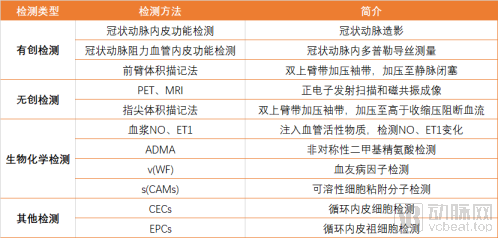
(Methods for Assessing Vascular Endothelial Function)
Endothelial dysfunction is the obligatory pathway through which cardiovascular risk factors lead to cardiovascular disease; it represents both the earliest and a reversible stage of the disease. By assessing endothelial function, one can determine whether current lifestyle habits and physiological status are causing vascular damage. Furthermore, when combined with other biomarkers, this assessment can significantly enhance the predictive accuracy for future cardiovascular disease and cardiovascular events. Over the past few decades, an increasing number of researchers have focused on developing technologies for endothelial function testing, leading to the emergence of various detection methods, including invasive, non-invasive, and biochemical assays.
Among these, acetylcholine provocation testing under coronary angiography is a traditional method for assessing vascular endothelial function and is considered the “gold standard,” frequently used in clinical research and for definitive diagnosis. However, its clinical application is limited due to its invasive nature, high cost, and elevated risk. Clinically, brachial artery flow-mediated vasodilation (FMD) assessment using ultrasound technology is also employed to reflect the capacity of endothelial cells to release nitric oxide. Nevertheless, the FMD method is highly dependent on the operator’s experience and skill level, resulting in suboptimal consistency of test results; therefore, it has not yet been widely adopted in clinical practice.
The EF5000 employs a detection principle similar to that of FMD and also utilizes a non-invasive approach. However, by acquiring physiological data through a fingertip sensor, it effectively reduces reliance on operator expertise, thereby facilitating the acquisition of high-quality test results.
In practice, the EF5000 is used in conjunction with a blood pressure monitor to measure changes in peripheral arterial tone during reactive hyperemia and output an Endothelial Function Index. Unlike traditional detection methods, which can only identify disease signals after organic lesions such as vascular fibrosis and calcification or luminal stenosis have occurred, the EF5000 employs specialized algorithms to capture subtle variations in peripheral arterial tone following endothelial injury, thereby detecting pathological changes at an earlier stage of disease progression.
With the advancement of the Healthy China strategy and the intensifying aging of China’s population, the transition from traditional medical diagnosis and treatment models to full-lifecycle health service models has become an inevitable requirement for transforming the country’s economic development pattern. Public data indicate that chronic diseases currently account for 89% of all annual deaths in China and approximately 70% of daily healthcare expenditures.
Furthermore, according to statistics from the "Report on Cardiovascular Diseases in China 2017," cardiovascular disease had become the leading cause of death in both urban (42.61%) and rural (45.01%) areas of China in 2015. Between 1990 and 2015, the mortality rate from cardiovascular disease among Chinese urban and rural residents continued to rise. Mr. Han, a manager in the marketing department, believes that the combination of several factors—including the lack of specific early symptoms of cardiovascular disease, low public awareness of health management, insufficient early detection methods in hospitals and physical examination institutions, and the absence of specialized health management services targeting the early stages of cardiovascular disease in China—are significant reasons behind this upward trend.
“Health management must form a closed loop, encompassing goal setting, screening, population stratification, health guidance and intervention, outcome verification, and goal adjustment,” stated Manager Han. “Scientific interventions require continuous improvement through the PDCA (Plan-Do-Check-Act) cycle, supported by a large workforce of enthusiastic, highly qualified professionals and complementary professional equipment. Medical-grade early cardiovascular disease screening devices like the EF5000 will gradually expand from tertiary hospitals to health checkup centers and community settings, assisting physicians in addressing the clinical challenge of early identification of high-risk populations for cardiovascular disease.”

(EF5000 Application Environment)
In fact, during the initial market promotion pilot, the EF5000 not only gained recognition from clinical experts but also received positive feedback in community applications. For endothelial function testing using the EF5000, subjects simply need to wear an inflatable cuff and a fingertip sensor, sit comfortably on a sofa, close their eyes, and wait quietly for 15 minutes. A skilled healthcare professional can operate two devices simultaneously, independently completing tests for two subjects. The testing cost is significantly lower than that of invasive methods, better meeting the practical needs of primary healthcare institutions and physical examination centers. “Guided by endothelial function testing, community residents have generally expressed willingness to adjust their lifestyle habits, and follow-up test results have shown improved endothelial function in many residents,” Manager Han told VCBeat.
In the future, Zhongjia Hengtai will continue to enhance product performance and iteratively upgrade its offerings in response to the specific needs of diverse application scenarios. By empowering preventive healthcare with advanced technology, the company aims to assist numerous hospitals and health management institutions in raising public awareness of chronic disease management and improving intervention outcomes.
Writing Reference:
Furchgott R F,Zawadzki J V.:The obligatory role of end of othelial cells in the relaxation of arterial smooth muscle by acetylcholine.
Pei Jingjing, Shen Xiaomei: Detection Methods and Significance of Vascular Endothelial Function