

PathoCore Medical Technology Files for IPO: Empowering Grassroots Hospitals with Remote Consultation and Department Co-Construction
“Our goal is to help pathology departments in primary care hospitals grow, provide comprehensive solutions for pathology departments, and support the development of the pathology industry in China,” said Yang Min, founder of Beijing Yizhiben Medical Technology Co., Ltd. (hereinafter referred to as “Yizhiben”).
Yang Min is a pathologist with over 20 years of professional experience. She previously served as the head of the Cytology Laboratory in the Department of Pathology at PLA General Hospital (301 Hospital). Yi Zhi Ben marks her second entrepreneurial venture. Her first startup endeavor was in 2006, when she co-founded Huaxia Pathology Network alongside several fellow pathologists during her spare time. The platform once stood as China’s largest academic and cultural exchange community for pathology professionals, reaching a valuation of RMB 150 million.
During her time working in China, she repeatedly provided pro bono assistance to pathology departments at grassroots hospitals. The conditions she witnessed in these departments left a deep impression on her. “Many grassroots hospital pathology departments have only one or two pathologists. Despite harsh conditions and slow development, they remain committed to their work,” Yang Min told VCBeat. This experience also served as the motivation for her second venture into entrepreneurship.
In 2016, she resigned from her position at Dorevitch Pathology in Melbourne, Australia, and returned to China to formally launch her entrepreneurial venture. At her invitation, Professor Zheng Jie from the Department of Pathology, Peking University Health Science Center/Department of Pathology, Peking University Third Hospital, and Professor Ding Huaye from the Department of Pathology, the Seventh Medical Center of the Chinese PLA General Hospital, joined as co-founders. Additionally, more than 100 experts and scholars from pathology departments of major Grade A tertiary hospitals both domestically and internationally, including those in Beijing, joined as business partners. Pathology experts from home and abroad have gathered at Yi Zhi Ben, pioneering a new model of collaborative entrepreneurship.
After a year of preparation, the first collective entrepreneurial platform for pathology professionals in China was established in 2017, marking the official founding of Yi Zhi Ben. Yi Zhi Ben positions itself as “an enabler for pathology departments in primary care hospitals and a pioneer in precision diagnostic services for tumor pathology.”
Yang Min pointed out that the core of Yi Zhi Ben is to create incremental value by focusing on the foundation of medicine—pathology, thereby bringing value to the industry.
Pathological diagnosis, as the “gold standard” for disease diagnosis, plays an indispensable role in clinical treatment. Pathology, a foundational discipline with a century-long history, has evolved from merely providing qualitative assessments to guiding precision medication. Despite its critical role in clinical practice, the development of pathology departments in China remains far from ideal.
Among the 31,000 hospitals currently in China, 12,000 are public and 19,000 are private. There are over 4,900 pathology departments nationwide, and there is an urgent need to improve the diagnostic accuracy of pathology departments in primary care hospitals. The existing problems include:
I. Severe Shortage of Authoritative Expert Consultation Services. There is substantial demand for pathological diagnosis services, yet high-quality pathological medical resources are primarily concentrated in major cities such as Beijing and Shanghai. Many primary-care hospitals have underinvested in their pathology departments, resulting in outdated equipment that hinders the development of these departments.
II. The situation regarding pathology talent is exceptionally severe. Data disclosed at the 25th Academic Conference of the Pathology Branch of the Chinese Medical Association and the 9th Annual Pathology Conference revealed that there are over 17,000 pathologists and more than 13,000 pathology technicians in China. Compared with developed countries such as the United States, there is a substantial shortfall, with an actual demand exceeding 100,000 professionals.
From the demand side: the number of patients continues to rise, imposing higher requirements for precise pathological diagnosis. In 2018, there were 5.292 million new cancer cases in China, with complex and difficult cases increasing year by year, creating an urgent need for the most accurate pathological diagnostic results. Meanwhile, in the face of high cancer incidence, a surge in patients, difficulties in accessing medical care and obtaining confirmed diagnoses, high treatment costs, and poverty caused by illness, there is an urgent need to improve the level of pathological diagnosis.
“China accounts for one-quarter of the world’s cancer patients, creating a substantial demand for pathology services. The key pain points we currently face are twofold: first, the challenges pathologists encounter in delivering precise diagnoses; and second, the difficulties patients experience in obtaining accurate diagnostic results. These were the two primary issues we aimed to address when establishing Yi Zhi Ben,” pointed out Yang Min.
Yang Min introduced that Yi Zhi Ben primarily empowers the pathology departments of primary care hospitals through a dual approach: online remote consultations and offline departmental co-construction.
In the field of remote consultation, Yi Zhiben has established an International Remote Pathology Center, provincial-level regional pathology consultation centers, and municipal-level regional pathology consultation centers. The International Remote Pathology Center is located at Beijing Aerospace General Hospital, integrates digital slide scanners from both domestic and international sources, and boasts a network of over 100 consultation experts from China and abroad. The Shanxi Cancer Hospital serves as a provincial-level regional pathology consultation center. Municipal-level regional pathology consultation centers include the First Central Hospital of Baoding, Hebei; the Affiliated Hospital of North China University of Science and Technology; and the Linfen Central Hospital in Shanxi. Yi Zhiben is currently assisting other provinces in establishing provincial- and municipal-level remote pathology consultation centers on an ongoing basis.
The remote consultation experts at Yi Zhi Ben are a group of pathology specialists from top-tier hospitals, including the Chinese People's Liberation Army General Hospital (301 Hospital), Peking Union Medical College Hospital, Peking University People's Hospital, Beijing Jishuitan Hospital, Southwest Hospital of the Third Military Medical University, Xijing Hospital of the Fourth Military Medical University, Air Force General Hospital, and Fudan University Shanghai Cancer Center.
“Due to limited equipment, pathologists at primary-care hospitals are unable to perform certain complex diagnoses. They can transmit digitally scanned slides to us or mail the pathology slides for review by our authoritative experts, who then issue diagnostic reports. This approach largely addresses the insufficient diagnostic capabilities of pathologists in primary-care hospitals,” introduced Yang Min.
On the Yizhiben Remote Consultation Platform, primary-care pathologists can upload scanned pathology diagnostic materials to the cloud and, through the pathology consultation platform, directly connect with more than 100 pathology experts from renowned hospitals across China at any time to seek their assistance in consulting on challenging cases.
Meanwhile, to address the limitations in equipment and diagnostic capabilities at primary-care hospital pathology departments, pathologists can leverage Yi Zhi Ben’s remote consultation services when handling complex intraoperative frozen section diagnoses, thereby reducing the turnaround time for diagnostic reports from the usual 5–7 days to under 30 minutes.
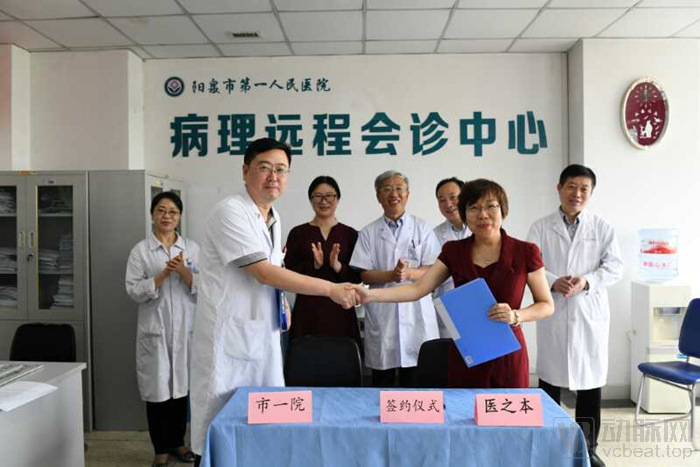
(The First People's Hospital of Yangquan City, Shanxi Province, Officially Signs Agreement for Its Remote Pathology Consultation Center))
“By establishing a three-tier telepathology consultation center, we aim to comprehensively meet the needs of primary-care hospitals and patients at large,” said Yang Min. Currently, leveraging its extensive pool of expert resources, Yi Zhi Ben has completed remote diagnoses for thousands of difficult and complex cases as well as intraoperative frozen section analyses, and has established collaborations with more than 50 hospitals—a figure that continues to rise.
Offline, Yi Zhi Ben helps grassroots hospital pathology departments address development challenges through targeted departmental co-construction.
“We begin by providing comprehensive solutions to hospital pathology departments, tailoring development strategies to each institution’s specific circumstances. We offer all-around support spanning diagnostic quality improvement, talent development, launch of new testing services, and consumables supply. ‘Whatever grassroots hospital pathology departments lack, we provide. Issues fundamental to medical practice—such as poor management, staffing shortages, lagging technical capabilities, outdated equipment, and imprecise diagnoses—can all be addressed. If additional expertise is needed, we can arrange for senior specialists to be stationed on-site; if equipment upgrades are required, we can facilitate the introduction of top-tier devices at low cost,’ said Yang Min.”
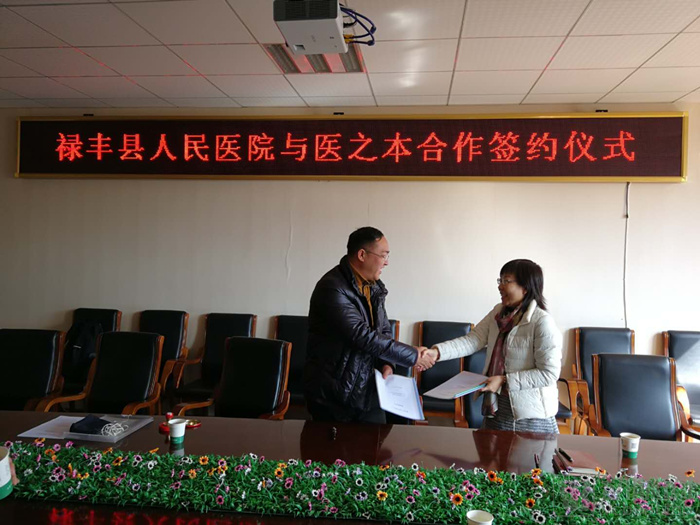
(Yunnan Lufeng County People's Hospital Signs Agreement with Yizhiben to Co-establish Pathology Department)
Leveraging its robust technological capabilities and talent pool, Yi Zhi Ben has currently signed contracts with nearly 10 primary care hospitals. It has helped these hospitals’ pathology departments overcome challenges such as the lack of access to new techniques and services like intraoperative frozen section pathology, and has tangibly enhanced their pathological diagnostic capabilities through remote pathology consultations.
“Among our partners is a public tertiary Grade A hospital whose pathology department’s technical operations were still largely manual. After Yi Zhi Ben stepped in, we prioritized digital transformation for the department. ‘We engaged a highly renowned healthcare IT software company to introduce a state-of-the-art information system and carry out comprehensive upgrades. The digitalization process is expected to be fully completed next month, making this pathology department the first in northern China to achieve paperless operations. In addition, we have recruited several technicians to help launch new testing programs, and we have hired and rigorously assessed outstanding pathologists to increase the number of diagnostic physicians. Meanwhile, we have established a remote pathology consultation platform, bringing in remote services from more than 100 top-tier consulting experts to comprehensively enhance diagnostic capabilities,’ said Yang Min.”
In addition to its efforts in remote pathology consultation and departmental co-construction, Yi Zhi Ben offers a range of services, including agency services for pathology consultation referrals for cancer patients; slide-reading sessions organized by the Pathology Branch of the Chinese Medical Promotion Association and the Breast Pathology Group of the Beijing Medical Association to support the professional development of pathologists; large-scale public welfare live-streaming events featuring pathology experts; the Yi Zhi Ben Education Channel; the Ai You Hao Doctor platform, which meets the demand for remote medical consultations; and pathology sales cooperation and agency services.
“What sets us apart from other companies is that we are a group of entrepreneurial pathologists driven by ideals and passion,” emphasized Yang Min. Since the beginning of this year, Yi Zhi Ben has provided over 400 free lecture videos for pathologists, benefiting more than one million viewers.
Finally, Yang Min stated that pathology is a high-barrier discipline and an experience-based field, with a lengthy training cycle for physicians; it takes 10 years to cultivate an excellent pathologist. To succeed in entrepreneurship within the pathology industry, one needs not only passion but also perseverance. Currently, Yi Zhi Ben has achieved the breakthrough and transformation from 0 to 1, attained financial self-sufficiency, and gained market recognition for its business model.
In the future, “Yi Zhi Ben” aims to serve 1,000 or even thousands of hospitals, assist more primary-care physicians and patients, promote the development of pathology, and contribute to the national effort to decentralize medical resources.