

Kailian Medical Files for IPO: Innovating to Improve Patients' Lives

Kailian Medical
High-end Medical Device R&D, Production, and Sales Company
Within just six years of its establishment, Kailian Medical has focused on diabetes and endocrine disorders, leveraging its proprietary micro-infusion and control technologies as the core of its product development. By integrating biosensors with internet-based healthcare solutions, the company has developed closed-loop systems tailored to the needs of patients with chronic diseases and successfully launched five core products: the next-generation insulin pump LePump, the Kailian Inno Hormone Pump, the Xtratop Smart Medication Box, the InnoPen Electronic Injection Pen, the InnoTouch Patch Pump, and the Kailian Cloud Management Platform. A review of Kailian Medical’s background reveals that its team has witnessed and participated in the entire evolution of the insulin pump market in China.
In 2000, Xiali taxis were ubiquitous on the streets and alleys of Beijing, priced at RMB 80,000–90,000. At that time, insulin pumps, which had just entered the Chinese market for the first time, were similarly priced. In the same year, Li Yin, co-founder of Kailian Medical, joined this vibrant industry, never imagining that she would remain dedicated to the insulin pump business for more than two decades. Leveraging her Master’s degree in Medicine and her commitment to patients with chronic diseases, she established a novel education and service system for this emerging business. She introduced an innovative concept centered on value-added services and patient care, pioneering a patient-centric hotline service and regular user follow-up model. The service and education framework she built for Medtronic’s insulin pump and continuous glucose monitoring (CGM) product lines remains in use to this day.
In 2004, Huang Xiaomin returned to China after completing his IT studies abroad and rejoined his former employer, Medtronic, marking the beginning of his engagement with the company’s diabetes business. Having previously worked as a physician, Huang had also held positions at international medical giants such as Johnson & Johnson, Sanofi, and Boston Scientific. As the first member of Medtronic’s marketing team for its diabetes division in China, he devised the initial market strategy for Medtronic’s insulin pumps, spearheaded the launch of the Model 712 insulin pump, and successfully advocated for the U.S. headquarters to customize the “Yi Pump” specifically for the Chinese market. He also submitted the Model 722 closed-loop pump system for approval, thereby establishing Medtronic’s three-tier product portfolio—a structure that has remained in place for the past 15 years. Following the emergence of domestically produced insulin pumps, Huang proposed to the U.S. headquarters a dual-brand strategy involving acquisitions to develop an insulin pump truly tailored to Chinese patients; however, the proposal was deemed too ahead of its time and was not approved by headquarters.
In Beijing in the year 2000, two engineers with diabetes, unable to afford the high cost of imported insulin pumps, were spurred into action and resolved to pioneer the domestic production of insulin pumps in China. They gradually assembled R&D and manufacturing teams to engage in reverse engineering and production. A few years later, they succeeded in launching the first domestically produced insulin pump—Shengtang. However, due to a lack of experience in market operations, they soon encountered financial difficulties.
In 2008, MicroPort Medical pursued a diversified development strategy and successfully invited Huang Xiaomin, who had previously left the diabetes care sector, to return. By acquiring Shengtang’s insulin pump business, MicroPort rapidly established its diabetes care division. This move facilitated the integration of the marketing and service team behind the first imported insulin pump with the R&D and manufacturing team responsible for the first domestically produced insulin pump in China. Following optimization, this first domestic pump was reborn as the “Fire Phoenix” and relaunched on the market. Meanwhile, Huang Xiaomin also led his team to achieve a breakthrough in the field of rare diseases. In collaboration with Shanghai Ruijin Hospital, they launched a pituitary hormone pump that effectively treats patients with Kallmann syndrome, a groundbreaking achievement that garnered significant attention within the industry at the time.
Although the business presents significant growth opportunities, Huang Xiaomin still harbors some regrets. The domestic insulin pump market remains dominated by “me-too” designs, largely relying on design technologies from Medtronic’s products developed over two decades ago. His long-held aspiration to develop novel insulin pumps tailored for Chinese patients with diabetes has persisted, and this desire has grown increasingly strong alongside the rising number of diabetic patients in China.
In the spring of 2014, Kailian Medical was established in Zhangjiang, Shanghai. The founder, Huang Xiaomin, initiated the micro-drug infusion technology project. Soon thereafter, professionals from R&D, production, quality control, marketing, and service departments were once again brought together. Liu Maohe, Vice President of R&D, was a core figure in the first generation of domestically produced insulin pump technology in China and holds multiple Chinese invention patents. Zhang Jingdong, Vice President of Production, has over 30 years of experience in consumer electronics and medical device R&D, and served as a production manager for the first generation of domestically produced insulin pumps in China. Yan Xinneng, Vice President of Quality System Registration, has more than 10 years of experience in medical device quality, registration, risk management, software lifecycle management, and related system consulting and training. Li Yin, Vice President of Operations, is responsible for medical affairs, market promotion, and customer education.
This is a team that has witnessed the emergence and development of insulin pumps and continuous glucose monitoring (CGM) systems in the Chinese market. Its members have journeyed together from international giants and privately listed companies to launching their own venture. Each individual brings extensive experience and a passion for innovation. Years of collaboration have fostered strong synergy among the team, while a shared vision serves as the driving force behind their united efforts. They remain committed to their original mission: to create an insulin pump that is both user-friendly and affordable for Chinese patients.
This entrepreneurial venture holds profound significance for Huang Xiaomin and his team, as it marks the first time they have integrated their long-held vision into a product. Their goal is to create pump products with innovative breakthroughs in China—developing high-quality, user-friendly pumps that are affordable for the vast majority of patients.
After three years of dedicated research and development, Kailian Medical has unveiled its independently developed next-generation insulin pump—the LePump. This product not only features a minimalist and stylish design but also incorporates significant technological innovations. In terms of design, it adopts a completely new structural concept, replacing the traditional small black-and-white screen with a color OLED display. The spring-loaded buttons, long criticized by users, have been replaced with touch-sensitive controls. Additional features include automatic basal rate distribution and bolus estimation. Notably, the LePump is the first insulin pump with built-in Bluetooth functionality, enabling convenient and efficient access to pump data and facilitating better management of the treatment process.
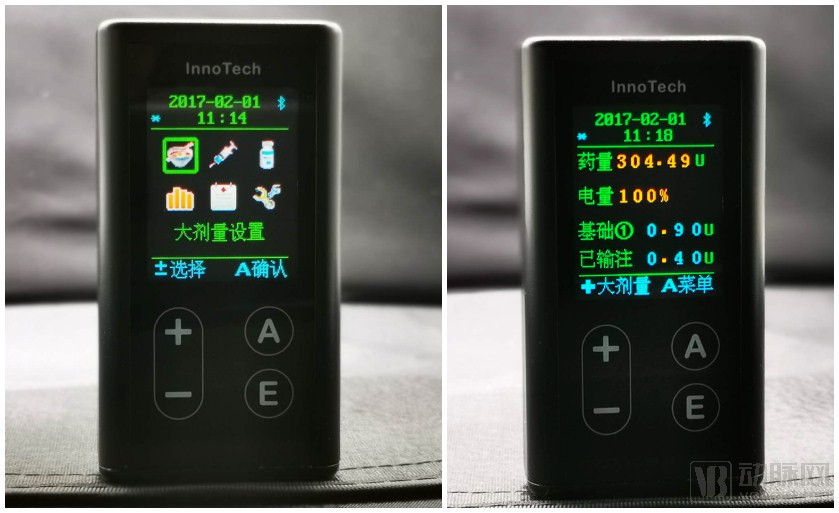
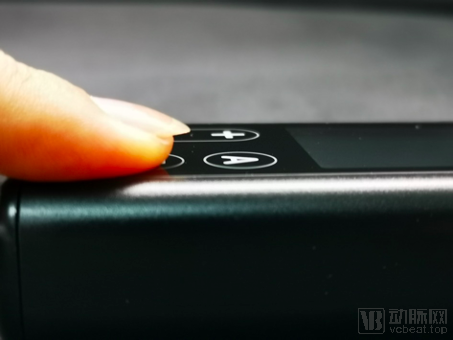
(LePump—Next-Generation Smart Insulin Pump)
Meanwhile, Kailian Medical has joined forces with its partners, investing substantial human and material resources to diligently develop a cloud-based chronic disease management system and mobile app. The company aims to offer these as value-added services to patients, with the ultimate goal of genuinely improving their quality of life.
The path to innovation demands arduous effort, and Kailian’s commitment to innovation has been forged through countless trials. Take the improvement of replacing the traditional small black-and-white screen with a color OLED display and touch keys on its insulin pump as an example. Initially, this design faced significant challenges; although it enhanced the patient experience, achieving low power consumption proved to be a major hurdle. Increasing battery capacity would have added weight to the device, triggering a cascade of systemic design complications. In contrast, in the European and American markets, Medtronic’s new 670G and Tandem’s t:slim X2 both adopted color screens and Bluetooth technology, with the X2 further incorporating a touchscreen to deliver a superior user experience. This time, Kailian independently arrived at these innovative technologies simultaneously with these industry leaders and integrated them into its product design, marking a shift from imitation to genuine “Created in China.”
Pursuing innovation also serves as a stepping stone to new opportunities. In the past, insulin pumps lacked Bluetooth functionality, rendering their data an “isolated island” that remained entirely underutilized. “I believe medical devices should not be cold pieces of hardware. Especially now, with technological advancements making it possible to digitize medical treatment devices, the continuous uploading of treatment data holds greater value for both treatment process management and therapy optimization,” said Huang Xiaomin. When Kailian Medical embarked on the development of its LePump in 2014, it coincided with the inaugural year of internet-based healthcare in China. Leveraging accurate insights into product trends, Huang Xiaomin and his team innovatively proposed integrating Bluetooth technology into the pump device. This strategic move established a technical barrier for Kailian Medical, laying the groundwork for its comprehensive expansion into cloud-based services for chronic disease device management.
A crucial step in the development of LePump was clinical validation. With the support of renowned endocrinology experts for innovative products, a multicenter comparative trial between LePump and the Medtronic 712 was jointly conducted by the Chinese PLA General Hospital, Beijing Chaoyang Hospital, and other medical institutions. Its strong performance secured regulatory approval for market launch.
Yan Xinneng, Vice President of Quality Systems, stated: “The timing of Kailian’s product development, validation, clinical trials, and registration was remarkably ‘fortuitous,’ as nearly every phase coincided with changes in the regulations or standards applicable to that stage, making the journey ‘arduous at every step.’ Fortunately, Kailian had developed a comprehensive plan from the outset. When challenges arose, the team collaborated closely and proactively implemented improvements, successfully completing the registration process.”
“This summer of 2020, three ‘Kailian babies’ are already in the womb, and new life will arrive in the spring!” Huang Xiaomin once said excitedly. The parents of these babies include a male with IHH, a female with IHH, and a patient with polycystic ovary syndrome (PCOS). After years of unsuccessful treatment for infertility, Kailian’s newly developed therapy brings hope to this group, marking a brand-new breakthrough for Kailian in this field.
“Adhering to clinical needs and patient perspectives, and leveraging physicians’ compassion and rigor alongside engineering innovation and breakthroughs to refine products that offer true cost-effectiveness and benefit the public—this is the belief and goal of Kailian Medical,” emphasized Huang Xiaomin.
Ten years ago, during clinical research at Shanghai Ruijin Hospital, clinicians introduced Huang Xiaomin to a special patient group. These young men in their twenties had delicate features but lacked secondary sexual characteristics and were infertile. Moreover, they exhibited symptoms typical of aging diseases, such as osteoporosis and metabolic abnormalities, despite being in the prime of youth. They were suffering from an extremely rare condition known as Kallmann syndrome. Statistical data indicate that the incidence of Kallmann syndrome is approximately 1 in 8,000 among males and 1 in 40,000 among females. Due to its status as a rare disease and the limited profit margins, other manufacturers were unwilling to engage in the development of therapies for this condition.
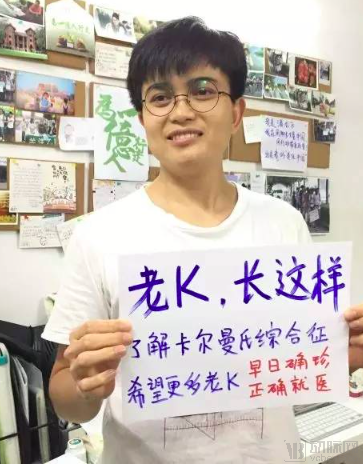
(Long Fei, a patient with Kallmann syndrome and founder of the Lao K Home Alliance)
“Patients with Kallmann syndrome generally have a poor quality of life and represent an under-recognized population. After encountering them, we realized that having the opportunity to help them constitutes a responsibility,” said Huang Xiaomin. This sense of responsibility not only drove the development of the first-generation hormone pump but also initiated a decade of companionship and mutual support between his team and these patients. Long Fei is the founder of “Old K’s Home,” a Kallmann syndrome alliance, and was the first person to courageously step forward in the media to raise awareness about this condition. Huang Xiaomin has actively supported the alliance’s activities, providing strategic advice to Long Fei and dispatching his team to join them in hiking campaigns to promote disease awareness. To address the needs of this rare disease community, he is also planning a cloud-based electronic medical record system to help patients better manage their condition.
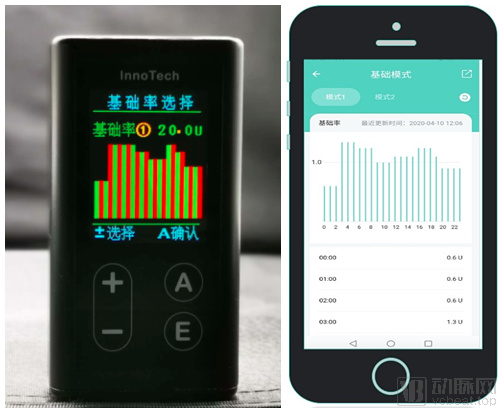
“Leveraging its solid technical foundation in micro-infusion, Kailian Medical completed the development of a new-generation pituitary hormone pump after its establishment. ‘The Kailian Inno Pump features a specially developed pulse infusion mechanism, offers intelligent capabilities, and supports Bluetooth data transmission. We have also specifically developed an electronic medical record (EMR) management system to truly achieve efficacy management,’ pointed out Huang Xiaomin. Despite these technological innovations and the simultaneous development of cloud-based EMR functionality, the new-generation hormone pump offers a higher cost-performance ratio.”
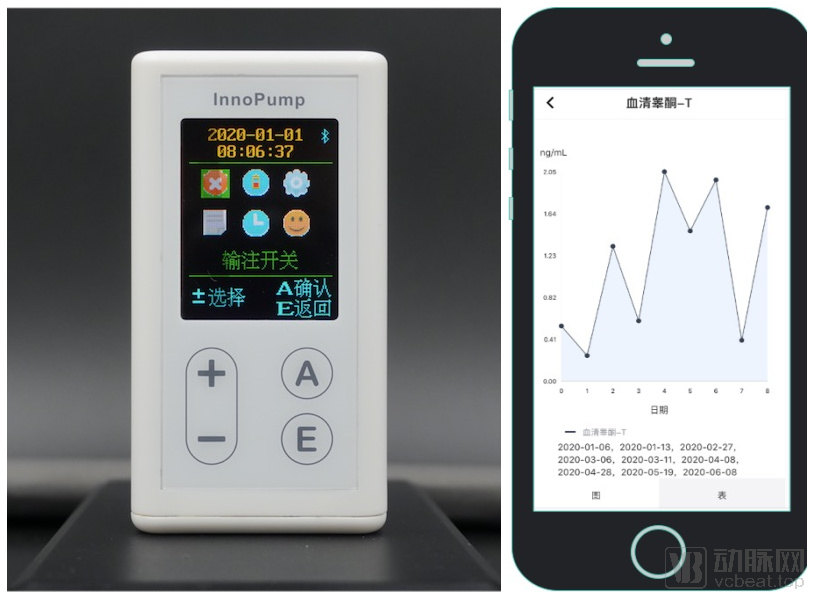
(Kailian InnoPump—Next-Generation Smart Hormone Pump (left), Hormone Pump Treatment Efficacy Management App (right))
“We believe that the ‘spirit of craftsmanship’ is not merely about pursuing ‘perfection’ in products,” said Liu Maohe, Vice President of R&D at Kailian Medical, in an exclusive interview. He pointed out that during the product planning phase, in addition to meeting applicable product standards and ensuring successful registration, consideration should also be given to the cost-performance ratio of raw materials to maximize the reduction of patients’ purchase costs. This is precisely the principle that Kailian Medical has always upheld. In September 2019, this product received approval from the National Medical Products Administration (NMPA) for market launch. It attracted significant attention upon its release and established collaborations with numerous renowned hospitals in the fields of endocrinology, gynecology, and andrology. Within just six months, there were continuous reports of new lives being brought into the world.
“There was once a patient who successfully gave birth after using our product. He specially wrote to thank us, expressing great excitement in his words. We are delighted and reassured that our efforts are truly helping to improve their lives,” said Huang Xiaomin. Through continuous exploration in the field of endocrinology, Kailian Medical has also begun a series of strategic initiatives in the area of infertility treatment.
The outbreak of the COVID-19 pandemic this year has spurred significant new reflections within the healthcare industry. For instance, the explosive growth of internet-based healthcare during the pandemic signals that online platforms will become a key strategic frontier in the future. Li Yin, co-founder of Kailian Medical, believes that cloud-based deployment for chronic disease management devices will become a critical competitive advantage for enterprises. In response, Kailian Medical has ushered in a new era of cloud services for chronic disease management devices, emphasizing that “cloud connectivity” will be an essential feature of its products. Leveraging Bluetooth data transmission, this product not only facilitates convenient disease management for patients but also tightly integrates and connects four key stakeholders: tertiary hospitals, physicians, patients, and primary care institutions. This creates a robust closed-loop system for out-of-hospital treatment and care.
(Cloud Service—Pump data is uploaded to the mobile phone and cloud via Bluetooth)
Whether for diabetes or rare diseases, the disease course is likely to last a lifetime. During periods outside the hospital, patients require even more attentive and continuous health guidance and care. Li Yin introduced that in upgrading its product services, Kailian Medical first maximized the migration of services to online platforms, including basic product-related services; secondly, it optimized synchronized monitoring of device operation and management of patient disease progression; and finally, it established a care network for diabetes and rare diseases.
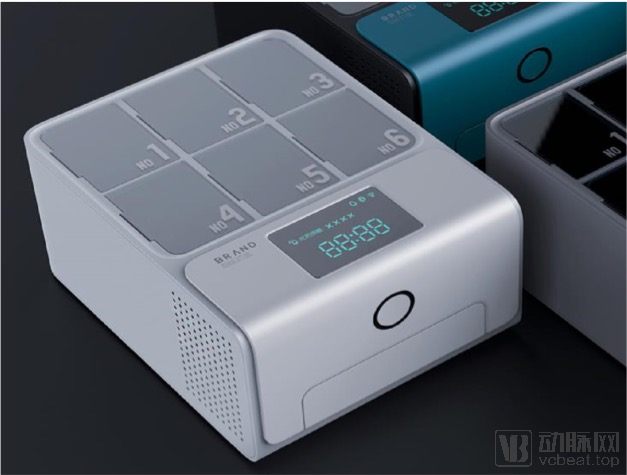
(Therapeutic Drug Management—Xtratop Smart Pillbox)
“This represents a breakthrough in our disease treatment and management, and it is also where our competitive advantage lies,” emphasized Li Yin, Vice President of Operations at Kailian Medical.
A successful enterprise cannot thrive without a strong and capable team.
The team at Kailian Medical comprises experts from the fields of medicine and engineering, with nearly 20 years of industry experience in diabetes care and ownership of core underlying technologies for chronic disease management devices. The team’s robust capabilities in hardware, software, and services, along with their deep insights into insulin pumps and hormone pumps, have established significant industry barriers for Kailian Medical in the field of micro-drug infusion devices.
Series B investor Stodo Capital once commented: “The Kailian team is the first in China to independently develop and manufacture insulin pumps. They possess extensive experience in the field of drug infusion and demonstrate strong capabilities in original technological innovation. Product quality and stability are critical to treatment safety, and the barriers to entry in this sector are high. We are optimistic that their intelligent solutions can enhance the efficiency of current chronic disease management and reduce the total cost of treatment.”
As the earliest developer and promoter of insulin pumps in China, they once defined the performance standards for insulin pumps in the country, initiated expert consensus, established marketing models and educational service systems for insulin pumps, and even set pricing strategies. Many concepts and ideas originated from this team.
Adhering to the “craftsman spirit” to refine products is a hallmark of the Kailian team, as well as a lesson learned from years of industry experience. Zhang Jingdong, Vice President of Production, stated, “Our craftsmanship is reflected in our professional skills and product quality. Our goal is to focus on doing every task and every detail well, truly creating high-quality, affordable medical products for the Chinese people.”
In the office and home of Huang Xiaomin, founder of Kailian Medical, one can often find various newly released electronic products taken apart, including smartphones, smartwatches, remote-controlled toys, and small drones. Most numerous, however, are dozens of models of insulin pumps from more than ten brands. He jokingly refers to himself as a “fanatic medical device enthusiast.” It is likely this curiosity and desire for exploration, cultivated since childhood, that will determine Kailian’s future development and path of continuous innovation.
“Although our current products are quite good, we still strive to break through and create even better ones,” Huang Xiaomin told us.
Regarding future development, Huang Xiaomin shared that Kailian Medical will continue to deepen its expertise in diabetes, rare diseases, and infertility, striving relentlessly to improve patients’ quality of life.
Not long ago, at the 10th-anniversary celebration of Xiaomi, its founder unveiled new products and shared design philosophies for smart home ecosystems. Kailian Medical aspires to make home-based management of chronic diseases the most valuable component of smart home systems in the near future. While smart home appliances offer convenience, AI-driven chronic disease management delivers safety and health. Admittedly, medical devices for chronic disease diagnosis and treatment are far more complex than ordinary household appliances and subject to stricter safety requirements. Realizing home-based chronic disease management will demand arduous innovation, yet the path to achieving any dream has always been challenging—requiring relentless forward momentum.
From developing comprehensive treatment solutions for patients with diabetes, to introducing innovative “pituitary hormone pump” therapy for individuals with Kallmann syndrome in the field of rare diseases, and now bringing curative hope to those struggling with infertility, Kailian Medical has never ceased its strides on the path of innovation—striving to address more patient needs and create better lives for them.
“Amidst the wind and waves, there will be a time to ride; hoist the sails high and cross the vast sea.” Kailian Medical, now setting sail, is accelerating its momentum.