

From Class I New Drug to Immune-Boosting Supplements: Exploring SAGH Biopharmaceutical Group's Industrial Layout and Superantigen Innovation
In 1999, a Class I new drug named "Staphylococcal Enterotoxin Injection" was approved for marketing, becoming China's first approved biologic product and currently the world's only superantigen biologic agent, as well as one of the most potent biological immunomodulators known.
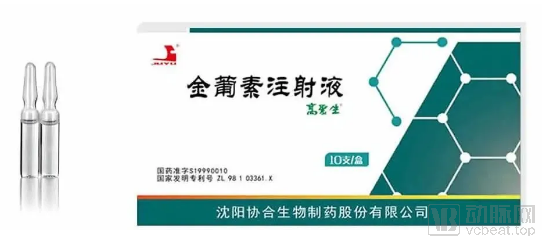
Staphylococcus aureus Injection
One Stone Stirs Up a Thousand Waves: What Exactly Are Superantigens? Not only can they assist in radiotherapy and chemotherapy for patients with malignant tumors, but they are also used for delayed union and nonunion of fractures, having received authoritative recognition from the National Medical Products Administration. This "miraculous" antigen was first proposed in 1989 by Swedish-American scientist White, referring to special antigens that trigger an immune response in the human body that is exponentially greater than that induced by ordinary antigens.
As a pioneer in the field of superantigens, Union Biopharm Group, the developer behind “Staphylococcal Enterotoxin Injection,” holds the exclusive patent for this superantigen. After more than two decades of development, Union Biopharm Group’s industrial layout has expanded from initial new drug R&D to cover the field of immune-boosting health supplements. The group has established a subsidiary, Union International Biotechnology (Guangzhou) Co., Ltd., dedicated to market expansion for its health supplement brand (the BM brand).
VCBeat (WeChat ID: vcbeat) conducted an exclusive interview with Dr. Han Yingguang, General Manager of Xiehe Bio, to explain the origins and development of superantigens for its readers, while also highlighting Xiehe Bio’s industrial layout and position in the industry.
In the 1980s, Western researchers discovered that cancer patients infected with Staphylococcus aureus developed bacteremia. Following successful treatment of the bacteremia, the patients’ tumors spontaneously regressed. Subsequent investigations into this phenomenon revealed that Staphylococcus aureus naturally possesses potent immune-activating capabilities.
“Staphylococcus aureus can secrete a class of special proteins that exert a potent immunostimulatory effect, inducing the activation of dormant immune cells. The scope of immune cell activation by these proteins far exceeds that of conventional antigens,” said Dr. Han Yingguang. “If this class of special proteins secreted by Staphylococcus aureus is extracted, these components are essentially superantigens.”
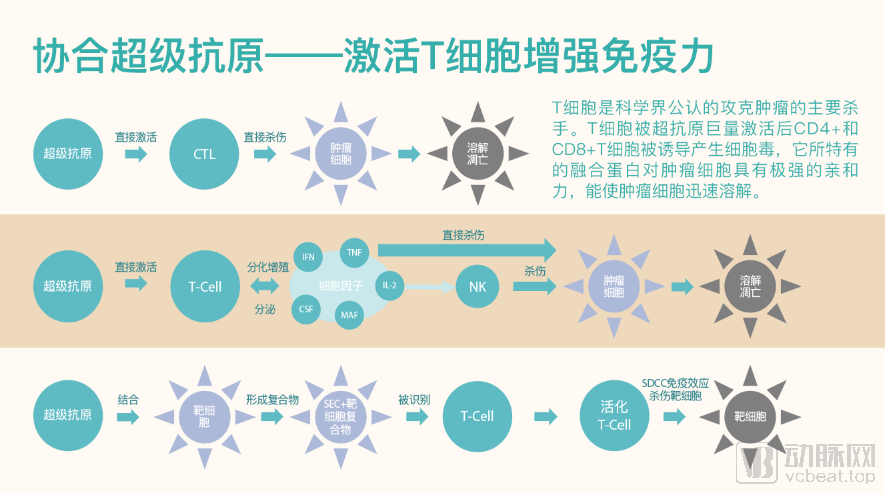
Mechanism of Action of Xiehe Superantigen
Why can superantigens activate human immune cells exponentially more than conventional antigens?Dr. Han Yingguang clarified this doubt: “The activation of immune cells by ordinary antigens requires a precise binding process, akin to the interaction between a lock cylinder and a key, where one-to-one paired recognition is necessary for activation; in contrast, the special proteins secreted by Staphylococcus aureus can be understood as directly prying open the lock cylinder with a ‘stick,’ employing a simple and direct activation mechanism.”
It is precisely due to this unique activation mechanism that superantigens can efficiently activate immune effector cells—including T lymphocytes, B lymphocytes, natural killer (NK) cells, and lymphokine-activated killer (LAK) cells—at very low doses (in the nanogram range). This activation subsequently induces the release of cytotoxic immune mediators such as interferons, tumor necrosis factor, interleukin-2, and colony-stimulating factors. These immune mediators are capable of eliminating both endogenous and exogenous antigens, including viruses, bacteria, senescent cells, and tumor cells. Furthermore, superantigens can exert direct cytotoxic effects against tumor cells by activating T cells.
Xiehe Biotech’s core technology leverages low-toxicity Staphylococcus aureus, utilizing space technology, bioengineering, and genetic engineering techniques to produce superantigen products primarily composed of Staphylococcal enterotoxin C subtype proteins, peptides, and amino acids.
Xiehe Bio primarily through continuousFive Shenzhou Spacecraft Missions Carried Microbial Strains for Space BreedingScreening and subculturing of low-toxicity, high-efficiency bacterial strains were conducted, and technical solutions—including protein modification and monoclonal antibody binding—were developed and investigated to ensure product safety. Guided by superantigen theory, these efforts aim to enhance tumor-killing efficacy.
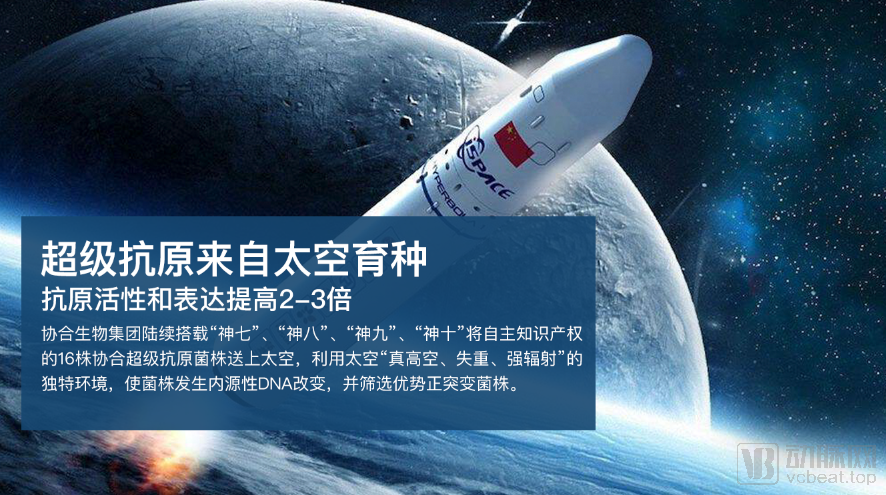
Five Shenzhou spacecraft missions carried microbial strains for space mutagenesis breeding
Experimental evidence from Xiehe Bio demonstrates that superantigens affect dormant immune cells in the human bodyActivation range reaches 10–40%(i.e., 10–40 dormant cells are activated per 100), whereas common conventional antigens, such as bacteria, viruses, tumor cells, Cordyceps, and Ganoderma lucidum spore powder, can only activate a mere 0.01% of immune cells (i.e., only 1 out of every 10,000 dormant immune cells is activated). Therefore, superantigens exhibit extremely potent immunostimulatory efficiency, being that of conventional antigens2,000–50,000×。
Due to the potent immune-activating effects of superantigens, Staphylocin Injection, developed by Xiehe Bio based on this mechanism, has demonstrated significant therapeutic efficacy with minimal side effects since its market launch. It is widely used in oncology treatment, as an adjunct to radiotherapy and chemotherapy, for managing tumor-related complications such as pleural and ascitic effusions, and in orthopedics for conditions including fractures, nonunion, avascular necrosis of the femoral head, and osteoporosis, as well as for severe refractory ulcers and diabetic ulcers.
Dr. Han Yingguang introduced that during previous global infectious disease outbreaks, Jinpusu Injection demonstrated outstanding performance, playing an active role in the prevention and treatment of HIV/AIDS, SARS, Ebola virus disease, Middle East Respiratory Syndrome (MERS), and COVID-19.
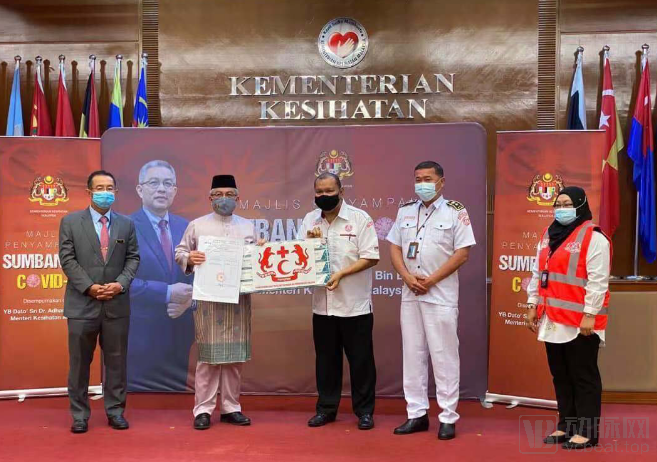
Malaysia’s Ministry of Health Officially Accepts Xiehe Superantigen Staphylococcal Enterotoxin Drug
In 2020, amid the outbreak of the COVID-19 pandemic, 19 hospitals in Hubei Province utilized Staphylococcal Enterotoxin A Injection for disease prevention and control, serving as a protective shield for healthcare workers. On May 20 of the same year, more than 20 leading medical experts submitted a proposal to the Internal Reference of People’s Daily, advocating for the widespread application of Union Biopharma Group’s Staphylococcal Enterotoxin A Injection as a broad-spectrum vaccine against SARS-CoV-2.
“Superantigen product Staphylococcal Enterotoxin Injection has been widely applied in clinical practice for over 20 years. Its mechanism of action and therapeutic efficacy are well recognized, posing no significant challenges in terms of awareness or promotion. Currently, the primary focus is on re-evaluating and upgrading the product’s indications, dosage forms, and routes of administration,” introduced Dr. Han Yingguang.
Xiehe Biotech Group is currently organizing a re-evaluation and re-submission for Staphylococcal Enterotoxin Injection, encompassing high-level confirmation of efficacy, clarification of indications, exploration of multiple routes of administration, and submission for oral formulations. This initiative has been officially launched and is expected to be completed within three years, facilitating the re-launch of Staphylococcal Enterotoxin as a pharmaceutical product with superantigen properties.
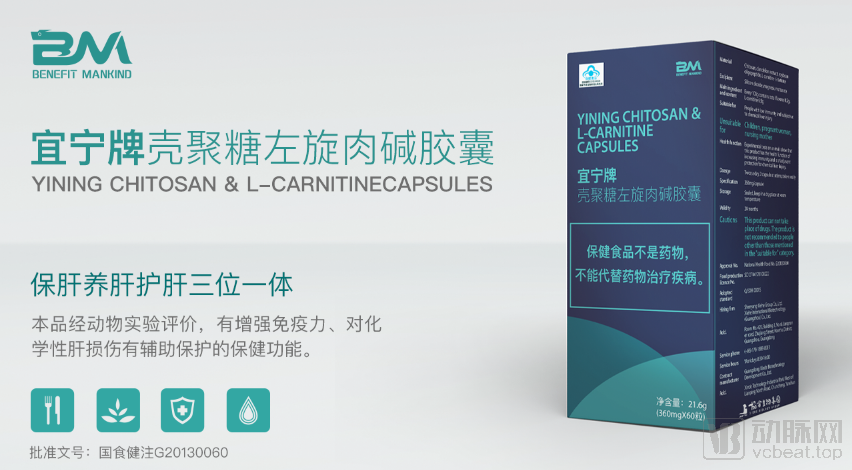
Xiehe Biological Group's BM Brand Health Supplements
Meanwhile, the BM brand (BM: Benefit Mankind) health supplement series from Xiehe Biological Group was officially launched in 2019. This series contains superantigen components and, when administered via oral mucosal absorption, delivers potent immune-enhancing effects. It demonstrates significant efficacy in addressing various sub-health conditions, diseases caused by immune deficiency, and immune decline resulting from various illnesses. Currently, it is in the initial stage of market promotion and strategic deployment.
Regarding the future, Xiehe Bio Group has initiated projects to develop a new generation of Class I biological novel drug, gene-recombinant 2M-118, as well as an HIV therapeutic agent using Staphylococcal Enterotoxin C2 (SEC2) as the raw material. The company’s long-term development strategy remains rooted in cutting-edge biotechnology, continuously driving theoretical and product innovation, and leveraging scientific research to propel market growth.
It is reported that Xiehe Biotech’s Guangzhou branch is located in Guangdong Medical Valley, a key pharmaceutical industrial park in Guangdong Province. With numerous industry peers situated there, the location facilitates easier information exchange and collaboration expansion.