

Zhang Lei of Hillhouse Capital: China's Life Sciences Sector Is in a Cambrian Explosion Phase, Firmly Betting Big on Healthcare and Biotech
At the 2020 HKEX Biotech Summit held online on September 1, Zhang Lei, Founder and CEO of Hillhouse Capital, and Charles Li, Chief Executive Officer of the Hong Kong Exchanges and Clearing Limited (HKEX), engaged in an insightful dialogue on the opportunities and challenges facing the global biotechnology industry amid the pandemic, how investors can support the innovative development of pharmaceutical companies, and how technological innovation empowers the healthcare sector.
Zhang Lei believes that investment in the biopharmaceutical sector must adhere to a long-termism philosophy. Unlike other industries, many biopharmaceutical companies remain unprofitable or even generate no revenue for extended periods; however, from a long-term perspective, this sector is certain to produce world-class, exceptional companies.
When asked about Li Xiaojia’s perspective on talent development in the current macro environment, Zhang Lei expressed optimism while also voicing his hope for further improvements. “We need not only highways but also small boats and submarines to reach the other shore,” Zhang Lei stated. He believes that individuals should not be constrained to a single, uniform path; rather, greater innovation and a multi-pathway mindset are essential to successfully cultivating talent.
When discussing Hillhouse’s strategic investments in the pharmaceutical, healthcare, and broader health sectors in recent years, Li Xiaojia stated, “Long-termism is most strongly embodied by Hillhouse. Zhang Lei is not only a thinker and a doer, but also a responsible citizen and a builder of society.”
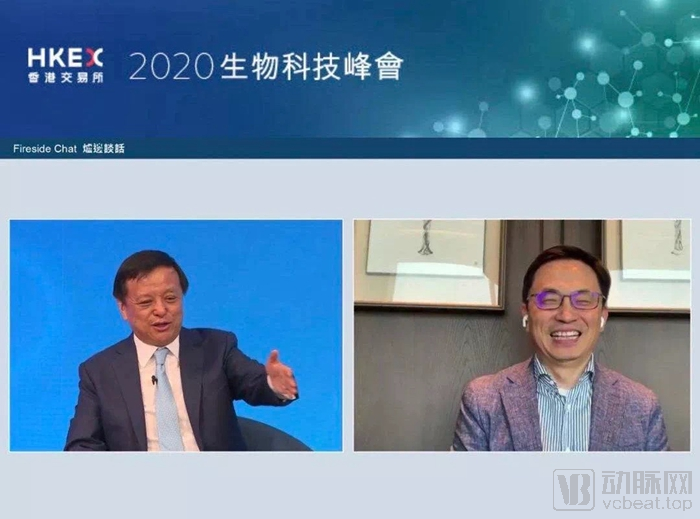
Below is a compelling dialogue between Li Xiaojia and Zhang Lei on long-termism.
Li Xiaojia: Could you provide a macro-level overview of Hillhouse’s investment philosophy in the biotech sector? Specifically, how do you identify opportunities within the broader global trends and strategic directions of biotechnology development?
Zhang Lei: I often say that the biotech sector requires a more long-term perspective; without a commitment to long-termism, there would be no opportunities in biotech investment. When we first started investing in the internet sector, we told people that these companies were not profitable. How could one dare to invest in unprofitable companies? That stage was called “pre-profit.” It was only after we began investing in biotech that we understood what “pre-revenue” truly means—companies that generate no revenue at all. If a company has no revenue, how can it possibly engage with the capital markets?
Hillhouse began investing in the pharmaceutical, healthcare, and broader health industries around 2012. The four years from 2012 to 2016 were relatively “lonely,” with few peers joining us in this space. It was only in recent years that the sector experienced an explosion of growth, underscoring the need for a long-termist ecosystem.
BeiGene is a company we have invested in since its Series A round, when its valuation was under $100 million; it now boasts a valuation exceeding $20 billion. We have participated in eight consecutive funding rounds for the company. In fact, during the first three or four rounds, it generated little to no revenue, which demonstrates that without a long-term investment philosophy, one cannot succeed in life sciences investing. We refer to two types of externalities:
The first externality is that life sciences help society as a whole improve productivity, representing the relationship between 1 and 0. Without health and a high quality of life, everything else amounts to zero.
The second externality lies in the development of capital markets, including initiatives undertaken by the Hong Kong Stock Exchange. These efforts have generated significant positive externalities by facilitating faster integration of biotechnology companies with capital markets, thereby enabling the establishment of a self-sustaining ecosystem. This success is attributable to favorable timing, geographic advantages, and strong human collaboration.
Li Xiaojia: Could you please elaborate on your view of the current development stage of China’s life sciences sector? How can its integration with capital help address global governance and R&D challenges within the Chinese context? Hillhouse has made substantial investments in China. Please share your insights by comparing China with the global landscape, highlighting areas where China is leading and those where it still has considerable ground to cover.
Zhang Lei:We are firmly committed to making substantial investments in the broader health and medical sectors, having already invested RMB 120 billion in this industry. This year, we established Hillhouse Ventures to continue prioritizing biopharmaceuticals and medical devices as key investment directions, driven by our recognition of the immense value in this field. On one hand, there remains a vast unmet need among patients; on the other, breakthroughs in life sciences and biotechnology are accelerating. In a word, life sciences and biotechnology are entering a “Cambrian” era characterized by an explosion of technological and product innovation.
We aim to support early-stage teams in this field, leveraging technological innovation to deliver safer, more efficient, and cost-effective pharmaceuticals, medical devices, and healthcare services. By addressing more unmet patient needs and enhancing their sense of accessibility, we strive to create greater value together.
China’s life sciences and biotechnology sectors are in a Cambrian explosion phase. A diverse array of species has emerged, driven by robust regulation, a market economy, and an IDM (Integrated Design and Manufacture) model akin to that of the semiconductor industry, which facilitates socialized division of labor. For instance, ecosystem-level enterprises such as WuXi AppTec and Tigermed, in which we have invested, provide CRO and CDMO services to biotechnology companies, effectively serving as incubators for all firms and fostering a healthy ecosystem.
Furthermore, there are scientists who operate independently and focus on innovation. For instance, Xiaodong Wang, co-founder of BeiGene, is an academician at the National Institute of Biological Sciences, Beijing. What delights us most is not seeing scientists transform into entrepreneurs, but rather witnessing them remain dedicated to their scientific pursuits—achieving great success without needing to become entrepreneurs. This exemplifies the benefits of specialized division of labor in society.
We recently invested in another company founded by an academician, bringing in high-quality resources to enable him to focus on his core competencies while we provide multi-dimensional support. Hillhouse’s investment team comprises fewer than 100 people, whereas its post-investment management team has over 150 members who dedicate themselves to assisting entrepreneurs on a daily basis. Many tasks do not require the entrepreneurs’ direct involvement, reflecting the benefits of specialized social division of labor. This IDM (Integrated Development and Management) model represents a significant leap forward.
Furthermore, I believe that increasing attention is being paid to the development of basic science. A significant dividend we have enjoyed in recent years—though I am not sure if you, Xiao Jia, have noticed it—is that while people often say China’s demographic dividend has disappeared, the expansion of higher education enrollment has supplied a large pool of high-quality talent to this industry. Many have yet to recognize the substantial “quality-of-population” dividend, which has indeed been a driving force.
Li Xiaojia: From an investor’s perspective, not everyone can adhere to long-termism. You can sense that some initiatives take a considerable amount of time to yield tangible results, with many being sacrificed along the way. In such a critical field—one that profoundly impacts the quality of life and health for millions of households and each individual—is participation limited to only a select few?
Zhang Lei: This is a major misconception. Why? Because for true long-termism to be sustainable, the most critical factor is broad participation; only then can the path grow ever broader.
Why is this matter so important? Because if only institutions like Hillhouse were involved, there would be no problem, and we could continue our work. However, the world needs broader participation, with stakeholders engaging at different stages. I often say that who you journey with is more important than the distant destination you aim to reach. Moreover, as you proceed, different partners may join you at each stage.
In terms of investment, as you pointed out, Hillhouse Capital typically commits substantial capital, making it less suitable for the smallest enterprises. This year, we have established a separate brand called Hillhouse Ventures, which focuses exclusively on earliest-stage investments. The minimum investment size for Hillhouse Ventures is RMB 2 million, allowing us to invest with less than several hundred thousand US dollars. This was not feasible under Hillhouse Capital previously; now, we can allocate a few million RMB to support your initial steps and help you move forward.
In this case, Hillhouse Ventures must first address a critical challenge: the journey from 0 to 1, which I refer to as “crossing the Valley of Death.” This is an arduous phase. The Valley of Death represents the stage of going from zero to one; startups must navigate through it, and the entry of investors can help them advance further. However, after progressing for a while, they may realize that the traditional IPO framework—designed for conventional enterprises rather than innovative ones—requires companies to be profitable before listing. If we have to wait another two years for profitability to emerge, along with maintaining a certain growth rate, how can we possibly encourage long-termism?
Therefore, at that time, few people were willing to plan for outcomes 10 or 20 years down the line. However, the capital market can be segmented. With such segmentation, some investors focus on early-stage ventures, concentrating on the “valley of death” phase from 0 to 1, such as Hillhouse Venture Capital. For growth-stage investments, private equity (PE) firms like Hillhouse Capital step in, followed closely by secondary market participation. On average, it takes biotech companies 10 to 20 years to truly generate substantial revenue or profit streams. This underscores the critical need for long-term-oriented investors to remain committed and supportive throughout this journey.
"If Hillhouse Venture Capital helps companies cross the 'valley of death,' and then Hillhouse Capital invests in them during their growth phase, it can relatively quickly bring in the capital market."
I believe that the Hong Kong Stock Exchange, the STAR Market, and the ChiNext Board are no longer merely capital markets; they serve as a grand stage for scientists to showcase their brilliance and demonstrate their contributions to society. These platforms also play a role in educating the public and promoting the scientific spirit, while demonstrating respect for scientists. In the past, we only respected scientists after they had been elected as academicians. Now, young scientists can gain recognition through their creativity and research, allowing the market and the public to truly appreciate and understand the achievements and significance of their scientific work. Furthermore, as mentioned earlier, we assist these scientists without requiring them to relinquish their scientific identities; they can continue their work as researchers. Therefore, I consider this development to be epoch-making in its significance. I maintain that the Hong Kong Stock Exchange, the STAR Market, and the ChiNext Board are not just capital markets but rather a vast stage enabling all scientists to display their talents and societal contributions, thereby drawing greater public attention. The resulting social impact far outweighs the incremental capital they bring.
The Hong Kong Stock Exchange, the STAR Market, and the ChiNext Board have introduced two highly beneficial innovations here:
The first innovation: applying first principles.
What is the purpose of establishing a stock exchange? By asking this question, we realize that its role may not be limited to serving companies that are already profitable; it also aims to serve investors, who have diverse needs at different stages. This represents a significant innovation.
The second innovation lies in its social impact. We have embraced the guiding role of the capital market, which steers us toward long-termism and fosters innovation. It is innovation that matters; if what is being led consists solely of outdated practices, it will garner no support.
The principles of value investing go far beyond the traditional concept of an “economic moat.” There is only one true moat: whether you, as an entrepreneur or scientist, can continuously create value for society. Monopoly does not create value; rather, it is the ability to continually generate value that matters. Therefore, I believe we need to redefine the philosophy of value investing. Value investing is not merely about having stable revenues; its essence lies in the capacity to relentlessly and sustainably create long-term value for society. If you deliver such long-term value, the capital markets will eventually reward you. Conversely, if you fail to create societal value and rely solely on monopoly power, society will ultimately hold you accountable.
Li Xiaojia:I am confident that all attendees here have gained immense value from this conference. Zhang Lei is both a thinker and a doer; he has always regarded himself as a responsible citizen and a builder of society. Long-termism finds its strongest embodiment in Hillhouse, and we can see in you a high-level, resolute, and tangible realization of this philosophy. Three years ago, we launched our Biotech Summit here, making history together, and today is no different. Thank you, Zhang Lei, for your insights!