

Freenome Submits IPO Prospectus: Pioneering Multi-Omics Blood Test for Early Cancer Detection Capable of Identifying Tumor Location and Malignancy

Freenome Holdings
Disease Screening Product Developer

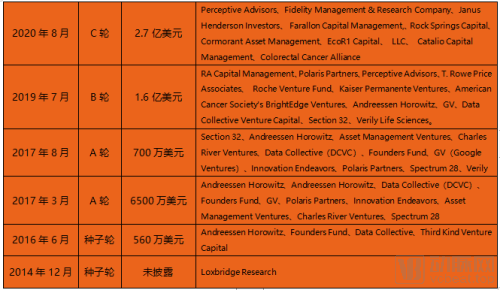
Recently, VCBeat (WeChat ID: vcbeat) learned thatBiotech Company Freenome Completes $270 Million Series C FinancingThis round of financing was led by Bain Capital Life Sciences and Perceptive Advisors.
Additionally, new investors including Fidelity Management & Research Company, Janus Henderson Investors, Farallon Capital Management, and Section 32 participated in the follow-on investment.
Company PlanUse the funds to advance the PREEMPT CRC clinical trial of its blood test for colorectal cancer screening and detection of precancerous lesions, as well as a pipeline of blood tests for the research and development of early detection and early intervention for other cancers.
Freenome was founded in South San Francisco, United States, in 2014. As an emerging liquid biopsy diagnostic biotechnology company,It is dedicated to diagnosing whether patients have cancer by analyzing cell-free DNA in the blood.Compared with traditional cancer detection methods, Freenome’s testing approach is more convenient and minimally invasive, while also providing early warnings of cancer, thereby pulling back patients who have already set one foot in the door of death.
Identifying Industry Pain Points, Screening for Early-Stage Cancer
In 2014, Gabe Otte, who was then engaged in academic research, realized that early detection and treatment of cancer could save the vast majority of patients’ lives. At that time, the medical community already recognized that “liquid biopsy” of blood could detect cancer-specific biomarkers; however, commercially available tests primarily focused on monitoring disease progression in diagnosed cancer patients and assessing their response to therapy.
Is there a technology capable of screening for cancer in its early stages? Driven by this idea, Gabe Otte, Charlie Roberts, and Riley Ennis, who possessed deep expertise in molecular biology and computer science, quickly found common ground and co-founded Freenome in 2014.
As the Chinese saying goes, “The great waves wash away the sand.” During their growth, enterprises often face developmental hurdles due to various challenges, such as insufficient funding or a shortage of talent. Although the number of companies engaged in liquid biopsy research cannot be described as overwhelmingly vast, it is nonetheless substantial.
In 2017, a large number of liquid biopsy companies emerged worldwide. What technological advantages enabled Freenome to stand out? Otte observed that most companies engaged in liquid biopsy research were unable to precisely pinpoint the location of cancer growth, accurately assess the level of threat posed by the cancer to the human body, or determine how cancer cells would respond to therapeutic interventions.
“Compared with other competitors, our technology can answer more questions about cancer. We not only identify the type of cancer, but also determine whether the cancer cells are benign or malignant and pinpoint their specific location.“said Otte, co-founder and CEO of Freenome.”
What sets Freenome apart is that,In addition to seeking DNA information in blood, the company also explores the information contained in other chemical substances in blood.Freenome believes that these chemicals may also contain information on the presence of tumor cells.
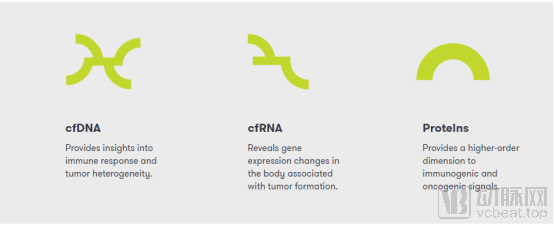 Three Chemical Substances That May Contain Physical Health Information
When tumor cells are present in the human body, they destroy immune cells and other normal cells, while chemical substances containing cancer-related information are also released into the bloodstream. Based on this understanding, Freenome has built an adaptive genomic engine platform—the multiomics platform.
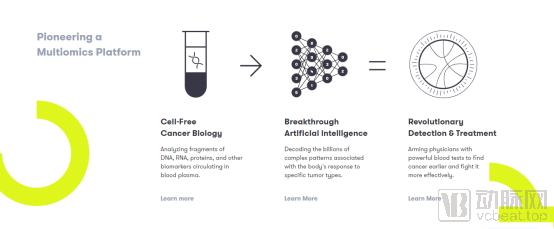 Multi-omics testing platform determines the presence of cancer cells through blood tests
Freenome’s multi-omics platform detects key biological signals from routine blood draws. The platform integrates cfDNA, methylation, and protein assays with advanced molecular biology and machine learning technologies to characterize early-stage cancer. Furthermore, rather than relying solely on tumor-derived markers for identification, the platform combines multidimensional profiles of both tumor- and immune-derived features to achieve early cancer detection.
By leveraging technical methods, dynamic genetic information is extracted from blood. Algorithms are then used to match the genetic information from the blood sample with data in a database, ultimately determining the likelihood that the individual has cancer.Not only for cancer detection, the test can also serve as a health monitoring system for the human body, helping people make better health choices and achieve precision medicine.
Furthermore, multi-omics platforms can store detected genetic information in their proprietary knowledge bases to train machine learning algorithms. This means that the more tests are conducted, the more precise and detailed the results become. By automatically storing and categorizing information from previously tested samples and matching new samples against this database, these platforms can not only assess disease risk or health status but also identify the specific location and type of cancer. Through multi-omics platforms, users can analyze genetic health in the most extensive and comprehensive manner possible, helping to detect every potential early sign of cancer.
At the company’s inception, Otte used Freenome’s early-stage diagnostic test to diagnose his father with prostate cancer. In the period that followed, the company made prostate cancer detection a key focus of its testing portfolio, and Otte aimed to bring the test to market.
The results of the prostate cancer test bolstered Otte’s confidence in the company’s technology, prompting him to turn his attention to colorectal cancer—the second most common fatal cancer after lung cancer. In 2020, the American Cancer Society estimated that there were more than 150,000 new cases in the United States alone.
Building on its prostate cancer testing platform, Freenome rapidly developed an early detection platform for colorectal cancer. To validate the accuracy and efficacy of this platform in the early detection of colorectal cancer, it was necessary to analyze a large number of samples through clinical trials and use data to substantiate the platform’s effectiveness. How could sufficient samples be obtained for testing? At this juncture, Freenome’s desire for strategic partners reached its peak.
As of 2017, Freenome has collaborated with 25 research institutions worldwide, including the Moores Cancer Center at UC San Diego Health, the University of California, San Francisco (UCSF), and Massachusetts General Hospital (MGH), and has processed thousands of samples.Freenome has also partnered with five pharmaceutical companies to validate whether the company’s software can serve as a potential solution.
Extensive trial data have made Freenome a favorite among investors. In 2017, Freenome completed its Series A financing, with the funds used to advance the progress of clinical trials.The company also attracted investment from Verily, the life sciences division of Alphabet, Google’s parent company.This financing will enable Verily to partner with Freenome to jointly develop the company’s products. Meanwhile, to accelerate product development, Verily has established a dedicated laboratory for this purpose in South San Francisco.
As clinical trials progressed, Freenome identified new biomarkers, such as changes in the immune and metabolic profiles of cfDNA and other analytes. These biomarkers are more reliable for early cancer detection and can be assessed in a cost-effective manner.
To further validate the effectiveness of its multi-omics platform, Freenome actively sought partnerships for testing in the following years. In 2018, Freenome established collaborations with the Curie Institute, Biognosys, Health Decisions, and QIAGEN.
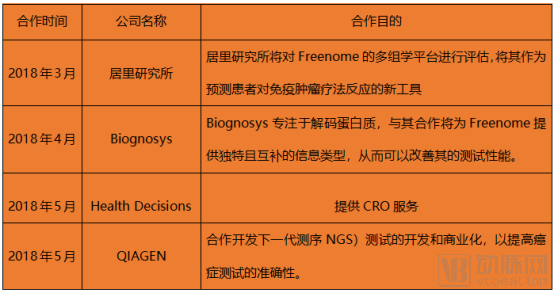 Some of Freenome’s Partners
In the same year, Freenome also partnered with the Medical University of Graz in Austria to establish a laboratory dedicated to researching biomarkers such as cell-free DNA (cfDNA) and other compounds in the blood. This collaboration primarily aims to advance early detection and personalized treatment. Additionally, the partnership has received financial support from the Austrian government, the amount of which has not been disclosed.
Through multi-party collaboration, the efficacy of the multi-omics platform was tested and its performance optimized, enabling Freenome to obtain satisfactory trial data.In October 2018, Freenome presented and shared raw data from a prototype blood test for colorectal cancer (CRC) screening at the annual meeting of the American College of Gastroenterology.According to the published trial data, the multi-omics platform achieved 85% sensitivity with 85% specificity.
 Chief Medical Officer Girish Putcha (right) and ML Research Engineer Nathan Wan presenting data at the American College of Gastroenterology meeting in Philadelphia
Furthermore,The data from this trial further demonstrate the importance of a novel cross-validation method in mitigating the effects of various confounding factors.Although machine learning can help identify other hidden patterns in high-dimensional datasets, it is also susceptible to the influence of irrelevant factors. Therefore, the importance of eliminating irrelevant factors is self-evident.
Freenome employs a cross-validation procedure that directly stratifies confounding factors. By repeatedly partitioning the data into distinct groups or “folds” for testing and training, this approach fully isolates the effects of technical artifacts or specific variables, thereby facilitating the acquisition of accurate and robust trial data.
To expand its laboratory infrastructure and advance to the next phase of clinical trials, Freenome completed a Series B financing round in July 2019. Concurrently, Freenome submitted its colorectal cancer screening application to the U.S. Food and Drug Administration (FDA) and the Centers for Medicare & Medicaid Services (CMS) for review.
By 2019, multi-omics platform technologies had matured. Recognizing their potential in hematologic cancer detection, ADC Therapeutics entered into a new collaboration with Freenome. Under this partnership, Freenome leveraged its multi-omics platform to monitor patient responses to ADCT-402, a CD19-targeted antibody-drug conjugate.
In January 2020, Freenome announced trial data from a prospective, multicenter clinical study, which presented the results of testing for early-stage colorectal cancer.
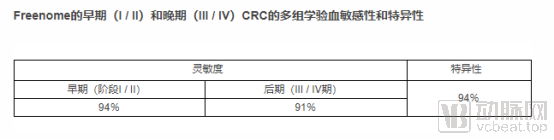
Freenome compared the results of this trial with those of the traditional fecal immunochemical test (FIT). Among subjects with paired blood and stool samples,Freenome's multi-omics blood test demonstrated 100% sensitivity and 96% specificity for CRC,FIT demonstrated a sensitivity of 67% and a specificity of 96%. “The performance of FIT in our study is consistent with that observed in other large prospective studies, which makes our findings even more exciting,” said Girish Putcha, M.D., Chief Medical Officer at Freenome.
However, Freenome was not satisfied with such data. In May this year, Freenome decided to launch its PREEMPT CRC clinical trial. PREEMPT CRC is a prospective clinical trial by Freenome that will enroll 14,000 patients to validate its multi-omics blood test for colorectal cancer (CRC) screening and FDA approval. This study primarily focuses on colonoscopy screening in the asymptomatic general population aged between 45 and 85 years.
It is worth noting that Freenome is ambitious in the early detection of cancer. “Freenome was founded to cure all cancers and diseases. Part of our platform focuses on understanding and characterizing the immune system and its responses to various diseases,” said Otte.
Admittedly, Freenome’s multi-omics platform has yielded promising trial results for the early detection of colorectal cancer. However, the etiologies of various cancers and diseases are diverse, and their treatment modalities differ significantly. Freenome still has a long way to go to realize its ambitions.
At this stage, Freenome is still conducting clinical trials to accumulate sufficient data. Years of accumulated clinical trial data and multiple strategic partnerships will pave the way for its commercialization, as compelling trial results will help attract customers and partners, while these partnerships will further expand its customer base.
Genetic testing in China emerged in 2008, but its widespread adoption was hindered by prohibitively high costs. In 2015, genetic testing technology was included in the “New Health Technology for Public Benefit Project,” and the genomics industry was officially elevated to a national strategic priority. Consequently, numerous companies and institutions engaged in genetic testing-related businesses sprang up rapidly.
However, China’s genetic testing market is significantly polarized, featuring benchmark enterprises such as BGI Genomics and Berry Genomics, alongside numerous startups that remain in their early stages. As a crucial component of precision medicine, the genetic testing industry enjoys highly favorable growth prospects. Driven by rapid economic development and its large population, China has witnessed swift advancement in genetic testing, with the industry’s market size reaching RMB 78.271 billion in 2019.
Currently, most genetic testing companies in China are concentrated in Beijing, Shanghai, and Guangdong. This is because these three regions have long been hubs for talent; when an area boasts a rich pool of skilled professionals, the emergence of enterprises follows naturally. Moreover, since 2015, Beijing, Shanghai, and Guangdong have successively introduced multiple policies to promote the development of the genetic testing industry.
 Relevant Policies Issued by Beijing, Shanghai, and Guangdong
Among them,The Mass Market for Consumer-Grade Genetic Testing Products Is Vast, as it is primarily targeted at individual consumers. It holds promise to become a household staple akin to 999 Ganmaoling.
However, the consumer-grade genetic testing industry still faces significant challenges, including severe product homogenization and regulatory lag, while relevant laws and regulations remain imperfect. How can this industry achieve rapid growth? For enterprises, the key lies in focusing on the research and development of proprietary genetic testing technologies and, like Freenome, demonstrating technical feasibility through extensive trial data to become an industry benchmark. For the state, it is essential to improve relevant laws and regulations and strengthen policy support to drive industry development.
After Product R&D Is Completed, How Can EnterprisesEnsure the Security of User Genetic DataThis is also a thought-provoking issue. While genetic testing can help prevent cancer and reduce the incidence of hereditary diseases, human genomic data constitutes human genetic resources; improper use of such data may have implications for national biosecurity. In this regard, enterprises and even nations need to develop specific genomic data management systems to prevent the misuse of genetic data.