

I-Mab Announces Nearly $3 Billion Global Strategic Collaboration with AbbVie and Completes $418 Million PIPE Financing Led by Hillhouse Capital

NovaBridge Biosciences
Biological Agent Developer
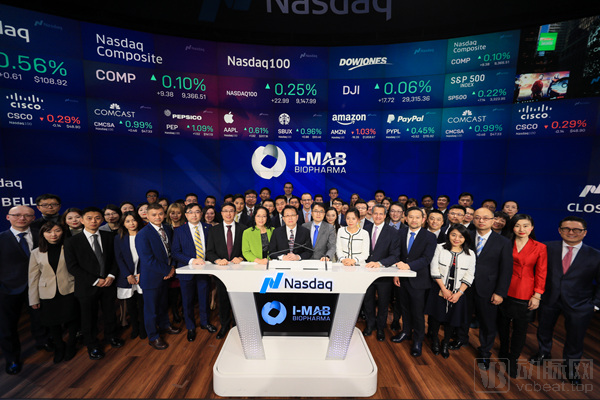
VCBeat (WeChat Official Account: vcbeat) has learned that Tianjing Biotechnology (Nasdaq stock code: IMAB), the first Chinese innovative drug company to go public in 2020, recently announced a global collaboration agreement with AbbVie, an international biopharmaceutical giant. Under this agreement, Tianjing Biotechnology will receive a total of $1.94 billion in upfront and milestone payments. The two parties will collaborate globally on the research, development, and commercialization of lemzoparlimab (TJC4), a highly differentiated CD47 monoclonal antibody independently developed by Tianjing Biotechnology. Meanwhile, Tianjing Biotechnology has completed a $418 million private placement financing led by Hillhouse Capital.
Tianjing Biotechnology is an innovative pharmaceutical company founded in 2016. Since its establishment, Tianjing Biotechnology has experienced rapid growth:
Signed the Greater China rights to MorphoSys's CD38 monoclonal antibody TJ202 in 2017;
Secured two rounds of financing in 2017 and 2018, amounting to $120 million and $220 million, respectively;
At the end of 2019, I-Mab Biopharma was listed as the sole Chinese immuno-oncology startup on the “Top 10 Immuno-Oncology Startups” global list published by GEN, a renowned international biopharmaceutical media outlet.
Listed on the NASDAQ in the United States in January 2020, it became the first Chinese biopharmaceutical innovator to list on U.S. stocks since 2017.

VCBeat has learned that,Tianjing Biotechnology also announced that it has signed a final subscription agreement with a consortium led by Hillhouse Capital, and will raise $418 million through a private investment in public equity (“PIPE”) transaction., this represents the largest financing in the global biotechnology sector over the past five years (excluding financings involving strategic investments), and is also the highest single investment amount ever secured by a Chinese biotechnology company.
The investor consortium for this transaction was led by Hillhouse Capital Group (“Hillhouse”), with GIC (Government of Singapore Investment Corporation) as a key investor. Other participating investors included prominent Asian and U.S. biotechnology investment funds such as Avidity Partners, OrbiMed, Octagon Capital Advisors, Invus, Lake Bleu Capital, Perceptive Advisors, Cormorant Asset Management, Sphera Healthcare, and Alyeska Investment Group. In addition, Hillhouse will have the right to nominate one representative to I-Mab’s board of directors.
I-Mab Biopharma has long been a favorite among investors. A review of its fundraising history shows that the company secured substantial financing in nearly every year since its inception. This consistent capital inflow has enabled I-Mab to continuously invest heavily in the research and development of innovative biologics. As of September 7, 2020, I-Mab’s stock price had risen from $12.50 per share on its listing day to $35.77 per share, representing an increase of 186.16%.
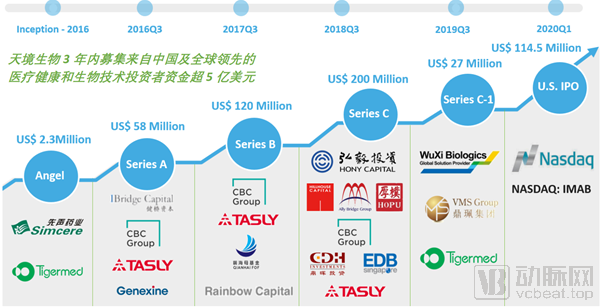
Tianjing Biotech's Financing History

In terms of business collaboration,I-Mab and AbbVie (NYSE: ABBV) jointly announced that the two parties have established an extensive global strategic collaboration for the development and commercialization of lemzoparlimab。
Under this strategic collaboration, I-Mab will receive an upfront payment of $180 million from AbbVie, along with a $20 million milestone payment upon the availability of Phase I clinical trial results. Additionally, I-Mab will be eligible to receive up to $1.74 billion in milestone payments for the lemzoparlimab program, comprising $840 million tied to clinical development and regulatory approval milestones, with the remainder based on sales milestones. Furthermore, I-Mab will retain a fixed percentage royalty on global net sales of lemzoparlimab. This transaction represents the largest deal ever in the CD47 field and stands as one of the most significant out-licensing agreements involving a Chinese biotechnology company. Through this partnership, I-Mab will secure substantial funding to advance its innovative drug pipeline and global clinical trials, as well as to expand its commercialization capabilities in China.
Furthermore, according to Zhu Jielun, Chief Financial Officer of Tianjing Biotechnology, AbbVie holds a highly favorable view of Tianjing Biotechnology’s R&D pipeline, particularly two bispecific antibodies currently in the clinical CMC stage. Should AbbVie exercise its priority negotiation rights for these two bispecific antibodies, Tianjing Biotechnology would receive additional upfront and milestone payments of no less than $1 billion, bringing the total value of this collaboration to nearly $3 billion.
Dr. Zang Jingwu, Founder of Tianjing Biotechnology, stated, “The strategic collaboration reached with the international pharmaceutical company AbbVie serves as the strongest testament to our commitment to developing globally innovative biologics. Adhering to global standards in the development of innovative biologics, our partnerships with top-tier global pharmaceutical companies demonstrate that Tianjing Biotechnology’s innovative advantages—from drug targets to molecules—have gained international recognition. We believe that innovation will inevitably translate into value; this collaboration has converted innovation into value nearing USD 3 billion. Tianjing Biotechnology has set a strong example by upholding global standards for innovation and realizing the transformation of innovative value.”
CD47 is a transmembrane glycoprotein overexpressed on tumor cells. This molecule binds to the receptor SIRPα on the surface of macrophages, transmitting a negative regulatory “don’t eat me” signal, thereby enabling tumor cells to evade macrophage-mediated phagocytosis. Therefore, CD47 antibody drugs can eliminate tumor cells by blocking the CD47-SIRPα signaling pathway. However, the CD47-SIRPα pathway is widely present in various cells; for example, CD47 expression on red blood cells decreases progressively as they mature, allowing macrophages to effectively clear senescent red blood cells from the body.
Therefore, conventional CD47 antibodies bind to red blood cells while clearing tumor cells, leading to their phagocytosis by macrophages and causing severe anemia in clinical settings.
Lemzoparlimab is a highly differentiated CD47 monoclonal antibody independently developed by I-Mab and is part of the company’s global product pipeline, currently in Phase I clinical trials. This antibody binds stably to a unique epitope on the CD47 molecule present on the surface of tumor cells. Meanwhile, this same binding region on CD47 molecules expressed on red blood cells is heavily shielded by glycan chains, enabling Lemzoparlimab to selectively target tumor cells without inducing red blood cell agglutination. This mechanism significantly mitigates the risk of severe anemia associated with CD47 antibody therapies in clinical trials, offering substantial benefits to patients worldwide.