

Johnson & Johnson and Microsoft Collaborate to Advance the Future of Digital Lung Cancer Diagnosis and Treatment
Lung cancer has long been one of the most challenging types of tumors to overcome and currently ranks as the tumor type with the highest incidence and mortality rates worldwide. For many years, major healthcare companies involved in oncology diagnosis and treatment around the globe have taken it upon themselves to conquer lung cancer, continuously driving innovation across all aspects of its diagnosis and management.
The advancement of digital technologies is gradually driving transformation in the healthcare industry. In the field of lung cancer, digital solutions such as digital pathology, AI-based medical imaging, surgical robots, and precision radiotherapy are being closely integrated with clinical applications, progressively permeating every stage of lung cancer diagnosis and treatment. Consequently, digital enterprises that were not previously focused on the healthcare sector are increasingly turning their attention to this industry.
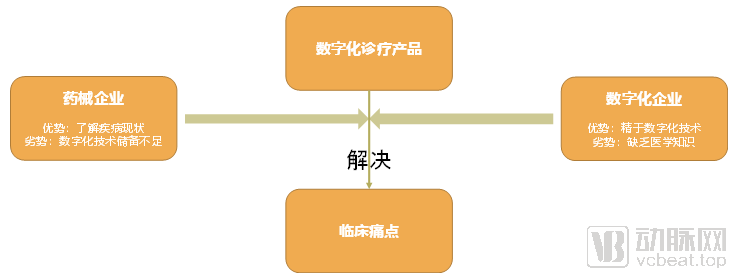
The healthcare industry possesses a profound understanding of disease mechanisms and clinical pain points but lacks sufficient capability in developing digital products; conversely, digital enterprises excel in applying digital technologies yet lack specialized expertise in the medical field.
Therefore, in the transition toward digital diagnosis and treatment, the healthcare industry stands on the left, while digital technology companies stand on the right. The two sides are moving toward each other, seeking to identify points of convergence, break down inter-industry barriers, and collaborate closely to ultimately achieve the digital transformation of diagnosis and treatment.
Therefore, we recently held a dialogue with Johnson & Johnson and Microsoft, focusing on the digital diagnosis and treatment of lung cancer. By approaching the topic from different perspectives, we openly explored the development direction of China’s medical digital transformation.
On September 17, we will continue this discussion by hosting an exclusive online forum dedicated to lung cancer, structured around four key modules, to explore new application scenarios for digital technologies in the healthcare industry (for detailed forum information and participation instructions, please see the end of this article).
Johnson & Johnson is one of the most comprehensive and widely diversified healthcare companies in the world, with operations spanning three major sectors: medical devices, pharmaceuticals, and consumer health. The company maintains an open, humble, and inclusive approach to innovation. Today, innovative breakthroughs are no longer confined to any specific country or region; disruptive innovations can emerge from anywhere in the world. Johnson & Johnson’s mission is to identify these innovators and their promising ideas, then collaborate across its pharmaceutical, medical device, and consumer health divisions to transform these concepts into products and technologies that deliver tangible benefits to patients. Amidst the sweeping trend of digital transformation in healthcare, Johnson & Johnson’s unique position within the industry imbues it with a distinct sense of mission. The company is also making relentless efforts to advance the digital transformation of healthcare in China.
From the establishment of the Lung Cancer Initiative to the launch of China’s first Lung Cancer QuickFire Challenge by JLABS in 2019, and through a range of Ethicon thoracic surgical devices addressing patient needs, Johnson & Johnson has been committed to advancing the prevention, interception, and treatment of lung cancer in China and around the world.
In 2018, Johnson & Johnson established the Lung Cancer Initiative, a cross-business unit focused on innovation in lung cancer, particularly breakthroughs in digital innovation. In a previous interview with Wang Dan, then Head of Johnson & Johnson Innovation in Asia Pacific, she highlighted the Lung Cancer Initiative alongside the World Without Disease Accelerator as two significant, cross-business teams within J&J’s medical innovation portfolio. This underscores the importance of the Lung Cancer Initiative in Johnson & Johnson’s broader efforts to drive innovation across the healthcare ecosystem.

Dr. Jennifer Yang, Head of Johnson & Johnson Lung Cancer Center, China
“We can already see the key pain points in the field of lung cancer. The main reason why lung cancer still ranks among the top cancers in terms of both incidence and mortality is that approximately 70% of patients are already at stage III or IV when diagnosed. At this stage, achieving a cure remains challenging, even though we now have an increasing number of treatment options,” Jennifer explained to us.
Prevention, Interception, and Cure are the three core pillars of the Johnson & Johnson Lung Cancer Center. Building on this foundation, the center provides tailored treatments and solutions for three distinct populations: individuals at high risk for lung cancer, patients with early-stage disease, and those with advanced-stage cancer.
During the Prevent stage, certain symptoms in individuals susceptible to lung cancer, such as small pulmonary nodules, are closely associated with the development of the disease. Early detection and subsequent intervention and treatment of these symptoms before lung cancer develops can spare this population from the burden of the disease. Similarly, during the Intercept stage, early screening and diagnosis of patients with early-stage lung cancer can lead to cure through existing therapeutic modalities. In the Cure stage, if both Prevent and Intercept measures fail and the tumor is already at an intermediate or advanced stage upon detection, therapeutic interventions can provide phased treatment support.
The Johnson & Johnson Lung Cancer Center focuses on the application of digital technologies, primarily in the areas of Prevention and Interception, with the aim of preventing lung cancer or enabling its early detection through digital means. To achieve this goal, the Johnson & Johnson Lung Cancer Center is accelerating progress by fostering close collaboration both internally and externally.
For instance, during the Prevention phase, the Johnson & Johnson Lung Cancer Center is collaborating with J&J’s Consumer Health division to develop a suite of mobile applications designed to help smokers better understand the health risks associated with smoking, thereby supporting smoking cessation. As smokers constitute one of the largest groups at high risk for lung cancer, reducing the incidence rate within this population would significantly control the overall occurrence of lung cancer.
Another example is that in the intercept phase, digital medical robot products have gained favor from Johnson & Johnson. In February 2019, Johnson & Johnson announced the acquisition of Auris Surgical Robotics for $3.4 billion. The company's core product is an endoscopic robot used in the diagnosis and treatment of pulmonary diseases. Compared to traditional surgical techniques, endoscopic surgery involves smaller incisions, making it particularly suitable for frail patients who cannot tolerate the trauma and pain associated with conventional surgeries. In June 2016, Auris’s ARES endoscopic robot received approval from the U.S. FDA for diagnostic and therapeutic use in patients.
“According to incomplete statistics, the majority of patients with small pulmonary nodules actually have benign conditions. Clinically, when a patient’s nodule is smaller than 3 cm, it can sometimes be difficult for physicians to determine whether the nodule is benign or malignant. To err on the side of caution, these patients may all undergo corresponding surgical interventions; however, even minimally invasive procedures can have certain impacts on lung function. The advantage of Auris’s other endoscopic robotic product, Monarch, lies in its ability to localize pulmonary nodules more precisely and reach target sites more effectively than traditional bronchoscopes, thereby enabling high-precision biopsies. This helps physicians better differentiate between benign and malignant pulmonary nodules, reducing unnecessary surgical treatments,” said Jennifer.
In addition to internal innovation and mergers and acquisitions, Johnson & Johnson is also actively seeking collaboration opportunities with startups. The channels for communication between Johnson & Johnson and startups in China are the Johnson & Johnson Asia Pacific Innovation Center and JLABS@Shanghai.
As one of the world’s four major innovation hubs, Johnson & Johnson’s Asia Pacific Innovation Center, based in Shanghai, is rooted in Asia. Leveraging an Open Innovation model, it integrates J&J’s resources, expertise, and regional advantages across the Asia-Pacific region and globally to engage in diverse collaborations with Chinese enterprises on breakthrough healthcare solutions, including those for lung cancer. JLABS@Shanghai, Johnson & Johnson’s innovation incubator, is the first JLABS established outside North America and remains the largest to date. Within its first year of operation, JLABS@Shanghai has onboarded 42 startups. These companies have undergone rigorous screening by Johnson & Johnson and demonstrate forward-looking vision and strong potential for rapid growth.
When Johnson & Johnson launched the JLABS Shanghai project in 2018, it simultaneously initiated the Lung Cancer QuickFire Challenge. The aim was to identify startups sharing the same goals as lung cancer diagnosis and treatment centers, thereby jointly accelerating advancements in this field. Johnson & Johnson placed significant emphasis on this initiative. Melinda Richter, Global Head of Johnson & Johnson Innovation – JLABS, visited Shanghai and provided up to $750,000 (approximately RMB 4.77 million) in funding, along with one-year residency rights at JLABS Shanghai, to the three innovators who ultimately stood out.
These three teams work in close collaboration, flexibly adopting different partnership models tailored to the stage and needs of partner companies, to maximize support for their growth and deliver breakthrough healthcare innovation solutions to lung cancer patients as rapidly as possible.
Among the digital enterprises featured on the right, Microsoft, as a global leader in the digital sector, has in recent years continued to focus on digital innovation in healthcare, leveraging its foundational technology solutions to empower innovative digital products in the healthcare field.

Zhang Qiang, Head of Product Marketing Strategy for the Healthcare Industry, Microsoft China
Although Microsoft has not been active in the healthcare sector for long, it has always maintained close ties with the medical industry. For instance, the Bill & Melinda Gates Foundation, established by Microsoft founder Bill Gates, has consistently been active in global investment and financing activities within the healthcare field.
“As an enabler of digital transformation in the healthcare industry, Microsoft leverages its extensive experience and technological platform advantages to provide the pharmaceutical industry with optimal pathways for digital transformation, facilitating a smooth transition. Microsoft’s strengths in digital tools and artificial intelligence are increasingly being integrated into the healthcare sector, delivering newer and better digital solutions,” said Zhang Qiang, Head of Product Marketing for the Greater China Health Industry at Microsoft China and Head of Microsoft AI Country Plan.
Microsoft’s core digital products for the pharmaceutical industry primarily consist of four major segments: Microsoft Azure, Dynamics 365, Microsoft 365, and Power Platform. These four products mutually reinforce one another to form an integrated platform, constituting Microsoft’s “four pillars” of digitalization.
Among these, Azure serves as the core service, providing foundational technical support including cloud technologies; Dynamics 365 and Microsoft 365 are upper-layer applications primarily focused on delivering productivity platforms for enterprises. The rapid development of Microsoft 365 and Dynamics 365 will drive the growth of Azure, while Azure’s expansion ensures the reliability and stability of its services. Furthermore, as a scalability model, Power Platform offers excellent extensibility and acts as a bridging tool connecting Microsoft’s other three categories of digital products.
“At Johnson & Johnson, we champion a corporate culture of diversity and inclusion. Our team members hail from various countries and regions around the world. We are committed to building a team grounded in our Credo, characterized by diversity, inclusion, and innovation, while fully unlocking and leveraging the unique strengths and excellence of each individual—such as fostering female leadership within our innovation ecosystem. Among the companies housed in JLABS, 17% are women-led,” said Jennifer.
A casual remark made by Jennifer during the conversation caught Zhang Qiang’s attention. Johnson & Johnson’s culture of “Diversity and Inclusion” aligns closely with Microsoft’s internal emphasis on “Diversity and Inclusion.” Microsoft already boasts a high proportion of female managers, and this year the company is actively seeking external partners to engage in mutual discussion and exchange on Female Leadership Skilling.
“As a digital company, Microsoft offers numerous digital solutions aimed at helping women and other vulnerable groups eliminate inequality. We look forward to collaborating with Johnson & Johnson on this topic for more in-depth discussions,” said Zhang Qiang.
This open and inclusive corporate culture has also enabled global industry leaders such as Microsoft and Johnson & Johnson to consistently seek partners on an equal footing. Johnson & Johnson leverages its Innovation Centers and JLABS as windows for external collaboration, while Microsoft is also actively pursuing cooperative opportunities in the healthcare sector. Many of Microsoft’s partners have already implemented solutions in specific clinical care scenarios.
“In addition to its powerful cloud-based AI capabilities, Microsoft’s advantage also lies in its edge computing capabilities. We have many partners who leverage Microsoft’s IoT and edge computing technologies to connect products with clinical care scenarios, thereby integrating vast amounts of data within healthcare settings. This data can provide continuous support for clinical diagnosis and treatment,” said Zhang Qiang.
Regarding what types of companies are eligible to partner with Johnson & Johnson, Jennifer also offered her interpretation: “In the past two years, we have observed a growing number of domestic startups shifting their focus toward more cutting-edge medical innovations. Johnson & Johnson continues to closely monitor the development of these startups. For instance, we have established in-depth collaborative relationships with Legend Biotech in Nanjing and HitGen in Chengdu. Our evaluation and selection of partners are primarily based on three key factors: First, we assess the unmet needs that these startups genuinely aim to address—determining whether their efforts are driven purely by technological pursuit or are truly focused on solving the challenges faced by patients and consumers. Second, we examine the differentiation of their technology, specifically its innovativeness. Since the journey from concept to product is lengthy, we must adopt a forward-looking perspective to evaluate whether the product will remain competitive after its market launch. Additionally, we consider whether the potential partnership aligns with Johnson & Johnson’s internal strategic priorities.”
Although one is based in the West and the other in the East, it is evident from their dialogue that Johnson & Johnson and Microsoft are both embracing an open and inclusive approach, leveraging leading domestic solutions to participate in the digital transformation of China’s healthcare industry.
As the conversation drew to a close, both parties appeared eager for more. On September 17, from 14:00 to 16:00, Microsoft will continue its collaboration with Johnson & Johnson to host an exclusive online forum on lung cancer, inviting additional industry guests.
Forum Link:https://mic.arcdmi.com/url/healthcare
