

Beijing and Yangtze River Delta Experts Convene with WeDoctor to Advance Full-Scale Digital Integration in Healthcare Services
Since the beginning of this year, spurred by the COVID-19 pandemic, the digitalization of healthcare services has accelerated at an unprecedented pace. Public acceptance of integrated online-offline healthcare services has risen rapidly, and a series of supportive policies introduced by the state have injected new momentum into industry development. Data shows that the number of internet hospitals established from January to May 2020 already approached the total for all of 2019. How to effectively synergize the resources and clinical expertise of medical institutions, the cutting-edge academic achievements of research institutes, and the industrial integration and service delivery capabilities of enterprises is a core issue in the development of digital health.
On September 4, the symposium on “Digital Technologies Empowering Innovative Applications in Healthcare Services,” jointly organized by the Advanced Institute of Information Technology at Peking University and the digital health platform WeDoctor, was held at WeDoctor Group’s headquarters in Hangzhou. More than 30 authoritative experts from academia and industry, including representatives from Peking University and Zhejiang University, shared their explorations and practices in the field of digital health and interpreted industry development trends.
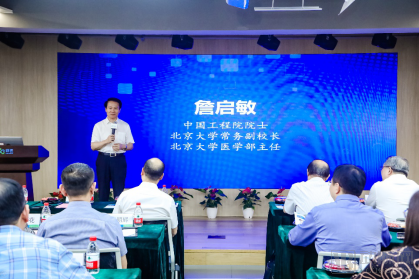
“Digital health is playing an increasingly important role in the healthcare sector. The healthcare system, reshaped by digital technologies, will play a leading and supportive role in various aspects, including the prevention and control of major diseases, full-lifecycle health management, and addressing the challenges of difficult and costly access to medical care for the general public.” At the outset, Zhan Qimin, Executive Vice President of Peking University and Academician of the Chinese Academy of Engineering, expressed his views on the foundational supporting role of digital health in the medical and healthcare industry.
At the symposium, experts engaged in vigorous discussions on the comprehensive digitalization of healthcare services and the subsequent integration following digital transformation. They provided an in-depth outlook on the current and future landscape of digital health, detailing its application achievements in three key areas: public health, whole-course disease management, and the enhancement of primary healthcare service capabilities.
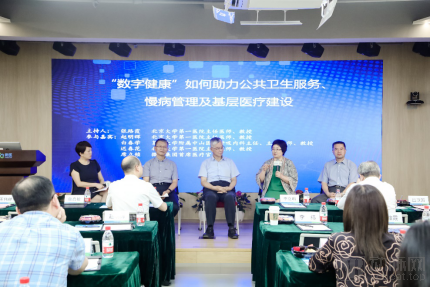
In the field of public health, the foundational supporting role of digital health in family doctor contracted services and epidemic prevention and control has been vividly demonstrated. Li Liming, a Boya Distinguished Professor at Peking University and an Academician of the Eurasian Academy of Sciences, pointed out that health issues have become global challenges, particularly in the face of the COVID-19 pandemic, which requires new business models such as digital health platforms to address them. Liao Jieyuan, Chairman of WeDoctor, noted that digital health platforms have become a necessary supplement to the healthcare system in responding to public health emergencies. It was reported that WeDoctor’s “Real-Time Assistance Platform for COVID-19,” launched during the pandemic, attracted more than 68,000 doctors to provide free online consultations, peaking at 280,000 online service encounters in a single day. At the height of the outbreak, WeDoctor Internet General Hospital handled 97% of the online follow-up visits for chronic disease patients in Wuhan.
“Digital health is not merely about remote and online services; rather, it leverages digital technologies to connect and empower the entire healthcare ecosystem—both online and offline—encompassing patients, physicians, and technical staff, and facilitating a series of processes such as diagnostic testing and pharmacotherapy.” Professor Chi Chunhua, Chief Physician at Peking University First Hospital, is one of the registered physicians on the “Real-Time Assistance Platform for COVID-19.” Unable to serve on the front lines, she joined the WeDoctor platform during the most severe phase of the epidemic, providing internet-based support to China’s nationwide anti-epidemic efforts.
Digital Health Offers Comprehensive Solutions for Full-Course Management of Chronic DiseasesProfessor Li Liming from Peking University stated that health management and disease management constitute a continuous process. Only by integrating prevention, medical treatment, and rehabilitation through digital health platforms can we truly achieve the transition from “treatment-centered” to “health-centered” care. Furthermore, Lu Weiguo, Party Secretary and President of Women’s Hospital, Zhejiang University School of Medicine, proposed that digital upgrading of the traditional maternal and child healthcare system could facilitate the establishment of systems such as online record creation and post-discharge follow-up management. In the future, diseases like ovarian cancer are expected to achieve full-course management, similar to diabetes and hypertension.
“Establishing a digital health model through digital health platforms to achieve standardized operations in disease management is key,” introduced Liao Jieyuan. WeDoctor’s Internet-based Medical Consortium for Chronic Diseases has implemented a tripartite service system involving health managers, family physicians, and specialist experts. This model has been deployed in multiple regions across Shandong Province and Tianjin, enabling comprehensive management of 25 types of chronic diseases. Furthermore, by integrating basic medical insurance with commercial health insurance, the consortium is gradually establishing a unified payment system that combines both public and private coverage.
Addressing the weaknesses in the primary healthcare service system, particularly the challenges in implementing family doctor contract services, Professor Chi Chunhua believes that digital health will play a significant role in family doctor services, making follow-up, prevention, and management of common and chronic diseases more convenient and effective. Xi Lisuo, Chief Medical Officer of WeDoctor Group, stated that digital health has achieved vertical integration within the healthcare service system. WeDoctor has established grassroots medical consortia integrating county, township, and village levels, led by hospitals at or above the secondary level, in many regions across China, helping local areas achieve digital upgrading of primary healthcare services.
At the symposium, experts discussed collaborative mechanisms among academia, clinical practice, and industry, reaching a consensus on promoting digital health as the “new infrastructure” of the healthcare sector. Liao Jieyuan remarked at the event, “In the past six months, changes in public and physician behaviors, along with the implementation of our policies, have surpassed those of the previous six years.” This high-level dialogue, hosted by the digital health platform WeDoctor and bringing together China’s academic and industrial sectors, has pressed the “accelerator button” for the digitalization of medicine and medical services, as well as for the integration of key elements in healthcare delivery.