

Yuge Medical: A Pioneer in China's Internet Healthcare Model Driving Tiered Diagnosis and Treatment Across 104 Cities and Counties
In Lei Jun’s words, “Even a pig can fly if it stands at the eye of the storm.”
Under the clear guidance of policy, the internet healthcare industry has remained at the forefront since its inception in 2014, continuously attracting new entrepreneurs. However, based on the current product offerings of various companies, the majority possess the capability to build platforms, while some are able to assist hospitals or medical consortia in implementing prescription circulation and reallocating medical resources.However, only a small fraction of enterprises are capable of assisting hospitals in operating internet platforms to ensure the entire system functions effectively.
If the entire system fails to operate effectively, healthcare will descend into chaos, resulting in significant loss of medical resources. The strain on medical resources witnessed during the recent COVID-19 pandemic serves as a testament to this issue.
To unlock the true value of internet hospitals, operators must leverage digital platforms to extend high-quality medical resources to the grassroots level, thereby addressing disordered healthcare delivery through tiered diagnosis and treatment and further improving the efficiency of medical resource utilization.
In the integration of medical resources,Dalian Yigu Technology Co., Ltd. (hereinafter referred to as “Yuge Medical”)Offers unique insights and innovative concepts.
When the pandemic struck in 2020, Yuge Medical responded swiftly, leveraging its years of accumulated expertise within the industry,In collaboration with Professor Liu Baoyan, Chief Researcher and Director of the Data Center at the China Academy of Chinese Medical Sciences, we designed and developed a “Home Isolation + Internet” contactless medical care and medication delivery service management and supervision platform, achieving effective integration of medical resources through tiered diagnosis and treatment.
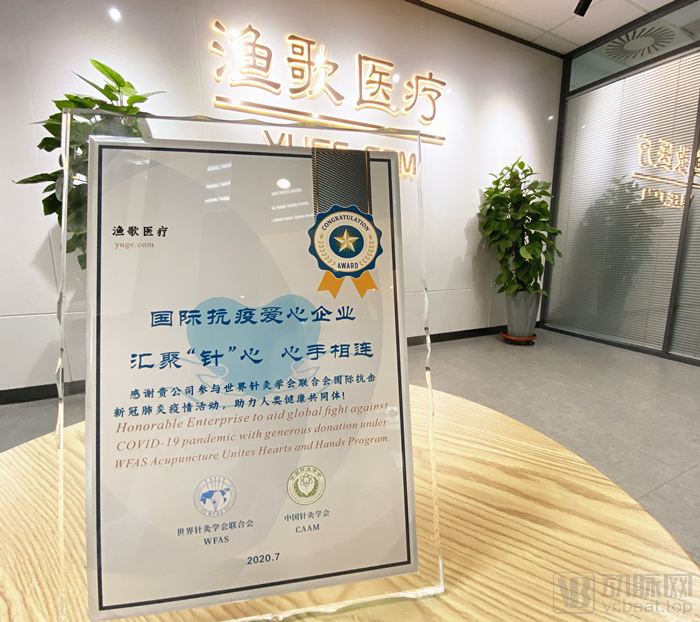
International Enterprises with Compassion in the Fight Against the Pandemic
Opportunity always favors the prepared.
The reason why Yuge Healthcare was able to stand out from numerous internet healthcare entrepreneurs and respond quickly,First,Because the company closely follows the national policy on tiered diagnosis and treatment, it is committed to building a healthcare internet platform that originates from within the public system, thereby eliminating the "unlicensed" and disordered nature of the healthcare internet industry.Second,The company offers comprehensive solutions for regional tiered diagnosis and treatment, the development of medical alliances/medical consortia, and regional smart healthcare.
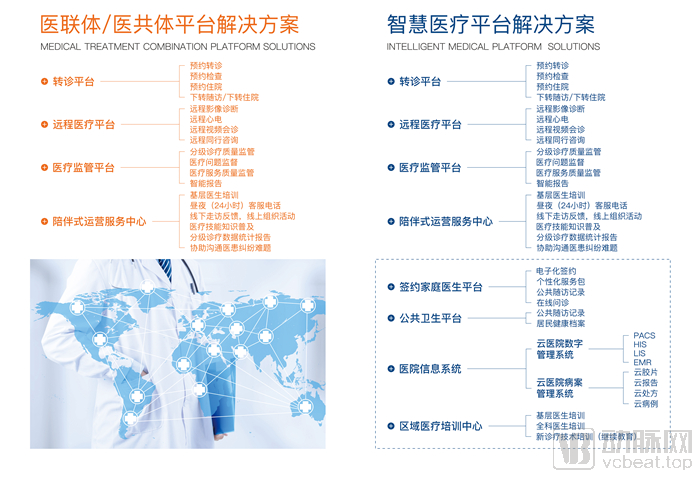
Yuge Medical Overall Functional Modules
This success is attributable to Chen Weidang, founder of Yuge Medical, whose keen insights into the healthcare industry stem from his education at Peking University Health Science Center and years of hospital work experience, which have enabled him to accumulate profound medical expertise and extensive healthcare resources. Furthermore, his master’s degree in computer science from a renowned U.S. university, coupled with his professional experience at PayPal and Facebook, has equipped him with a dual perspective spanning both healthcare and IT.

Chen Weidang, Founder of Yuge Medical
From the early days of telemedicine to the current proposal of medical consortia, Chen Weidang has identified “disordered healthcare” as an urgent issue that needs to be addressed.
“While patient needs are undoubtedly important, the key to addressing them lies in streamlining medical processes through internet hospitals and implementing a tiered diagnosis and treatment system. This will also become a major direction for future development, creating numerous opportunities in areas such as medical consortia and the digitalization of healthcare data,” said Chen Weidang.
Since its establishment in 2012,The Yuge Medical team actively conducted field visits to investigate the current state of healthcare in China, deeply studied the National Health Commission’s direction for deepening healthcare reform, and ultimately established their product development strategy, outlining their pathway for building a tiered diagnosis and treatment system.
Yuge Healthcare believes that the development of internet hospitals is akin to water flowing from higher to lower elevations under the influence of gravitational potential energy. Only by channeling high-end medical resources down to the grassroots level, empowering primary care institutions, and enabling specialists to focus more on complex and refractory cases can the orderly allocation and interconnectedness of medical resources be truly achieved.
Meanwhile, compared with urban residents, patients in primary care settings have a less clear understanding of health management and may become a future burden on the national medical insurance system. As the state intensifies its efforts to control medical insurance expenditures, shifting resources and services to the grassroots level has become a major strategic direction. The tiered diagnosis and treatment model can effectively break down the barriers between tertiary hospitals and primary care institutions, thereby facilitating the integration and sharing of medical resources.
"Expanding into grassroots levels and implementing tiered diagnosis and treatment have become effective strategies for the deployment of Yuge Medical's products."
In 2014, Yuge Medical entered the tiered diagnosis and treatment sector through referral services, establishing a web platform, iOS and Android apps, and a WeChat official account. In 2015, in collaboration with Tieling County Central Hospital, it successfully received its first referred patient via the Yuge Medical tiered diagnosis and treatment platform.
In 2016, Yuge Medical facilitated the implementation of the tiered diagnosis and treatment pilot program in Hebi City, Henan Province. In 2017, Mianyang City in Sichuan Province was added as a pilot site for tiered diagnosis and treatment. Within four weeks, the system was deployed and became operational in 70 secondary-level and above hospitals across more than ten districts and counties. Additionally, a cooperation agreement was signed with Fushun Central Hospital to establish the city’s first “Two-Way Referral Information Platform.”
Subsequently, Yuge Medical deployed its remote imaging, remote ECG, and family doctor systems at medical institutions such as Tieling County Central Hospital, Zizhong County Traditional Chinese Medicine Hospital, and Jingdong County in Yunnan Province, addressing the uneven distribution of medical resources.
Currently, Yuge Medical has established solid partnerships with government bodies, health commissions, medical insurance agencies, the New Rural Cooperative Medical Scheme (NRCMS), and healthcare institutions at all levels. Leveraging its foundation within the public sector, it provides integrated tiered diagnosis and treatment services, pioneering new regional workflows for such care. Furthermore, Yuge Medical has secured collaborations with Aier Eye Hospital, BGI Genomics, Sanofi, the China Professional Medical Consortium for Infectious Diseases, and China Life Insurance, with its services implemented across 104 cities, districts, and counties in 12 provinces throughout China.
It has 108,275 households and 310,108 residents enrolled in family doctor contracts, with a cumulative total of 491,623 referrals, 84,064 remote imaging requests initiated, and 19,012 remote ECG tests conducted, providing health management services to over 3.3 million patients.
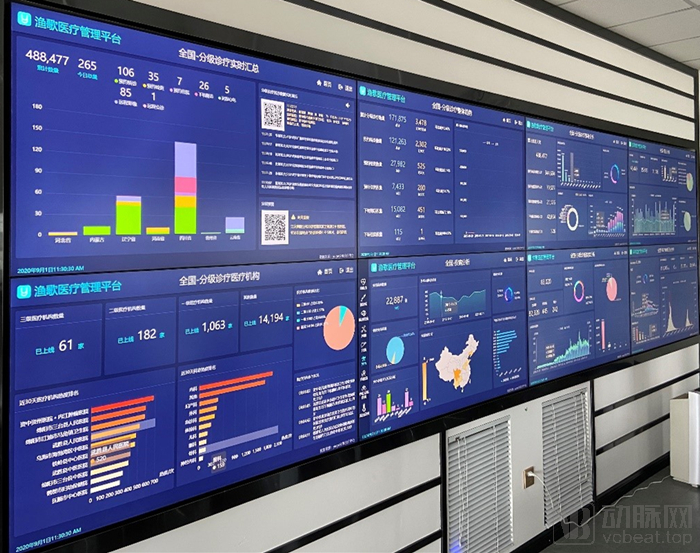
Summary of Data Monitoring for Tiered Diagnosis and Treatment
Yuge Healthcare closely follows the national tiered diagnosis and treatment policy. Leveraging its team’s cross-disciplinary, composite expertise, the company has efficiently developed internet technologies including mWEB, mLINK, and mHIS®, providing comprehensive solutions for regional tiered diagnosis and treatment, the construction of medical consortia/medical communities, and regional smart healthcare.
Human-centered experience design is one of the highlights of the Yuge Medical Referral Platform.Yuge Healthcare has not neglected user experience by focusing solely on creating “hard” products. Instead, building on a solid technological foundation, it tracks and collects user data to gain insights into metrics such as session duration and feature preferences. These insights inform adjustments to platform design, reducing the learning curve, enhancing user stickiness, and thereby improving overall platform efficiency. By leveraging internet-driven strategies, the company enables its product to achieve viral growth.
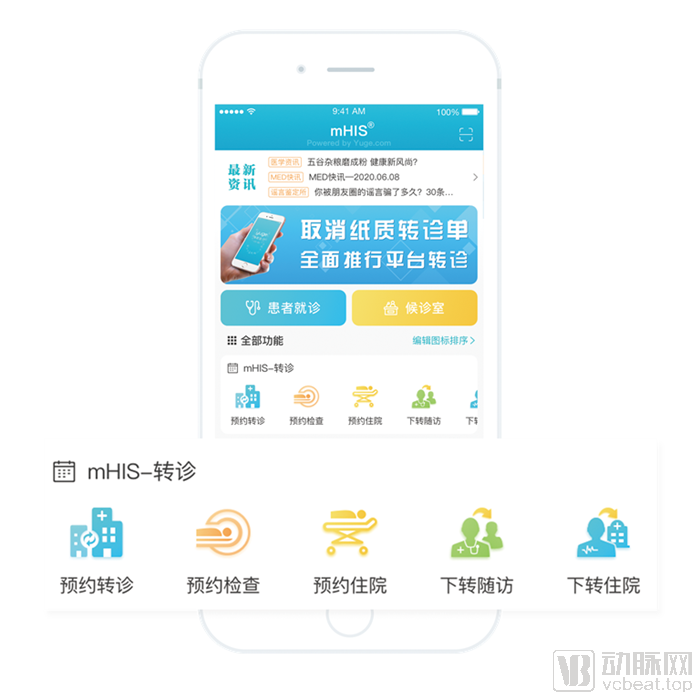
Yuge Medical Referral Platform
Its appointment and referral function,It enables a more rational allocation of medical resources through initial consultations at primary care facilities, addressing challenges in healthcare resource utilization such as patients flocking to specialist outpatient clinics at tertiary hospitals for both minor and major conditions, resulting in difficulties in securing appointments and patient overcrowding.To provide patients with efficient, precise, and convenient medical services, enabling experts to focus on complex and refractory diseases.
Developed by Yuge MedicalmLINK and mWEB technologies enable medical devices within a region to be opened up by tertiary hospitals for reservation and shared use by primary care physicians, thereby assisting in diagnosis and maximizing the utilization of medical resources.
Leveraging internet and cloud technologies, Yuge Medical enables real-time synchronization of information. All data can be instantly notified to hospitals, physicians, and patients. Its online portals for “downward referral” and “follow-up” facilitate vertical collaboration among physicians at all levels, enabling joint management of the health of patients in the rehabilitation phase.
To increase the bed turnover rate at tertiary hospitals, Yuge Medical has established a uniqueExclusive "Online Order-Grabbing Mode" for Hospitalization Appointments, enabling primary care physicians to simultaneously schedule hospital beds across multiple departments of higher-level hospitals for patients, thereby prompting these institutions to improve service quality, enhance their competitiveness within the region, and maximize the utilization of medical insurance funds.Make healthcare resources more organized through the power of the internet.
ForTo further streamline the orderly circulation of medical resources, enabling healthcare resources and technologies to rapidly flow from large tertiary hospitals to villages, townships, and counties via the internet, thereby empowering grassroots healthcare., Yuge Medical has built a telemedicine platform.
Chen Weidang told VCBeat: “Although economic development will further drive the decentralization of medical equipment to primary care settings, the cultivation of clinical skills among primary care physicians remains a gradual process. We hope to leverage the internet as a tool,”Disseminate high-end medical resources, knowledge, pharmaceuticals, and technologies from Beijing, Shanghai, and Guangzhou to lower-tier regions, thereby reducing learning costs and misdiagnosis rates at the grassroots level.。”
Developed by Yuge MedicalTele-Imaging Diagnostic SystemThis brings great convenience to patients. They no longer need to visit large tertiary hospitals for examinations, as precise imaging screening can be performed at primary healthcare institutions.
Primary care hospitals need only transmit medical images to tertiary hospitals via a remote imaging system, enabling the diagnostic teams at the tertiary institutions to issue imaging reports within 3–5 minutes and thereby deliver prompt diagnostic results. The implementation of this system not only effectively increases the utilization rate of diagnostic equipment at the primary care level but also further empowers grassroots facilities, enhancing their operational efficiency and reducing misdiagnosis rates.
Guided by the core philosophy of “orderly circulation of medical resources,” Yuge Medical has further developed systems for remote electrocardiography, remote video consultations, and remote peer consultation.Among these features, remote ECG monitoring is user-friendly, enabling primary care physicians to easily collect and upload ECG data and receive intelligent diagnostic results within 60 seconds. Meanwhile, the Yuge Medical mobile app simultaneously pushes ECGs, medical images, and reports to patients, allowing them to view their reports online and thereby optimizing the clinical consultation process.
Meanwhile, electrocardiograms, imaging studies, and reports will be permanently stored in patients' medical records, thereby reducing information maintenance costs.
During this interview with VCBeat, it was also learned that Yuge Medical has developedTelemedicine Video Consultation System. This constitutes a major hardware foundation for enabling high-end medical resources to reach the grassroots level, facilitating effective exchange and learning between tertiary hospitals and primary care institutions, assisting primary care hospitals with ward rounds, and allowing a single physician to manage multiple patients during epidemics.
This system not only supports multi-user video, voice, and text communication but also features an electronic collaborative whiteboard, file sharing, and screen sharing, effectively enhancing diagnostic capabilities and healthcare standards at the primary care level.
ItsRemote Peer Consultation System, enabling primary care physicians to consult specialists in a targeted manner, achieving vertical coordination between different levels of care, and promoting the decentralization of medical resources. Primary care physicians need only input a description of the patient’s condition to initiate a peer consultation; they will then receive professional advice from senior specialists after the latter have reviewed the submitted information.
Overall, the systems developed by Yuge Medical are built around the core principle of medical informatization: “the orderly circulation of medical resources.”By integrating tiered diagnosis and treatment with telemedicine, high-end medical resources are circulated to primary care levels, with equipment deployed to grassroots facilities. The system’s unified cloud-based maintenance and data cloud storage, along with seamless interoperability, not only eliminate the need for specialized operations and maintenance personnel—thereby reducing maintenance costs for medical institutions—but also prevent the financial burden on patients caused by redundant examinations.
As Li Tiantian, founder of DXY, stated, “The healthcare industry is by no means one that can be rapidly matured or cleared out by capital alone; enterprises without solid medical resources and a unique business model are destined to fail.”
Chen Weidang shares a similar understanding with Li Tiantian. His many years of experience in the healthcare industry have given him a profound appreciation for the importance of medical resources. In its early years, Yuge Healthcare spent five years providing its products free of charge to hospitals and government agencies, thereby accumulating medical resources and refining its offerings.Upholding his unique understanding of internet healthcare, he left the public sector to immerse himself in grassroots settings, driving bottom-up healthcare informatization.
Although internet hospitals are akin to "pigs flying in the wind," entering the field still requires two key elements: medical resources and a unique business model; otherwise, when the trend passes, the pigs will no longer be able to fly.
As Chen Weidang understands it, “Internet healthcare provided by those without medical expertise cannot truly be called Internet healthcare,” since Internet healthcare is not synonymous with the Internet itself. Yuge Medical’s practices in this field have offered us new perspectives.
Currently, Yuge Medical is advancing a new round of financing to further develop its system.