

Amwell and GoodRx: Billion-Dollar Revenue Internet Healthcare Platforms Reveal Key Insights Amid Pandemic IPOs

Amwell
Internet Medical Service Platform

GoodRx
Prescription Drug Search and Price Comparison Platform
The Development of Internet Healthcare Platforms in the United States Is Showing a Positive Trend.
On August 24, telemedicine solutions provider American Well (Amwell) filed for an initial public offering (IPO). Shortly thereafter, on August 26, GoodRx Holdings (GoodRx), an online platform dedicated to providing users with affordable prescription medications, also filed for an IPO.
Also in August, MDLIVE, a provider of telemedicine services, announced plans to file for an initial public offering (IPO) early next year.
In addition, Teladoc, the leading U.S. telehealth company (listed in 2015), announced in early August that it would acquire digital health company Livongo Health for $18.5 billion, thereby merging with the latter.
These consecutive developments have served as a much-needed shot in the arm for the industry. Meanwhile, the overseas IPO filings by companies such as Amwell and GoodRx have prompted further reflection on the evolution of digital health.
So, what interesting information have these two companies applying for IPOs revealed?
Unlike domestic internet healthcare platforms that compete with medical institutions for patient resources, Amwell has a clear understanding of its positioning. It does not aim to replace existing healthcare providers but rather to empower them, helping them deliver higher-quality and more convenient services.
Amwell, by serving offline health systems, medical institutions, and health plans (personalized management service programs designed for social groups and individuals as part of the healthcare industry’s cost-containment efforts), customersProvide IT technical support services to facilitate the rapid deployment of telemedicine solutions.
Amwell also offersNot Just an Information Technology PlatformIt’s that simple. Considering customer needs, they have also prepared surgical carts with integrated audio and video capabilities, medical service kiosks, and more for the aforementioned clients.Carepoints Hardware. In addition, when Amwell’s customers are unable to provide telehealth services within their own capabilities, they can also leverageThe AMG Organization Affiliated with Amwell, providing on-demand access to a network of over 5,000 healthcare providers for delivering online telemedicine services to their patients.
Through Amwell’s information technology platform, Carepoints hardware, and the AMG organization, clients can rapidly deploy telemedicine services.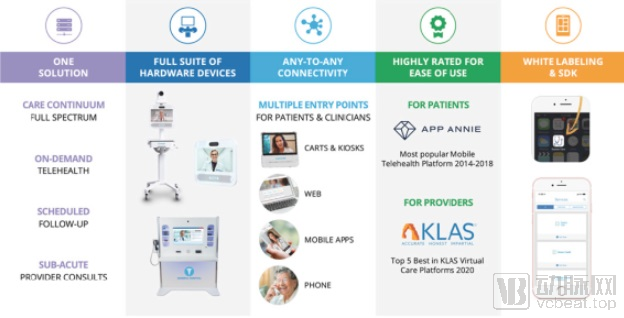
Overview of Solutions Provided by Amwell
1. Revenue Model: Primarily driven by platform subscriptions and AMG services
When deploying a comprehensive solution for healthcare providers, Amwell can generate revenue from the three aforementioned aspects: platform, services, and hardware.
FirstIt is the Amwell information technology platform. The platform itself encompasses a wide range of telehealth functionalities and is designed for scalable expansion. The Amwell platform supports two primary pathways: the home-based pathway, where patients typically connect with online physicians via telemedicine from their homes; and the hospital-based pathway, which includes services provided by hospital physicians to patients as well as inter-physician consultations and communications. The platform is suitable for diverse clinical settings.
Amwell provides comprehensive management software, clinical workflows, Carepoint hardware, and system integration. By offering specialized workflow and hardware solutions, Amwell enables healthcare providers to deliver continuous online remote care. Healthcare clients can embed the Amwell platform into their own platforms and workflows, and they can even use the SDK provided by Amwell to independently embed, integrate, or customize the system.For example, by integrating with the Amwell platform, patients can access services, while its clients can initiate telehealth visits through their own EHR (Electronic Health Record) systems and achieve seamless integration of the Amwell platform with their payer eligibility and claims systems. Healthcare providers can prescribe medications, deliver treatment, make referrals, and perform other clinical tasks within their familiar platforms.
Amwell covers a wide range of services, from primary and urgent care in home settings to advanced specialized consultations in hospital settings, such as stroke care and telepsychiatry.It categorizes corresponding medical conditions into modules, requiring clients to subscribe to relevant modules for targeted service delivery. Currently, it supports over 40 medical service modules.For example, a health plan might initially select the urgent care module but later add the behavioral health module to meet employer needs. Subscription fees for these condition-specific modules account for a significant portion of Amwell’s revenue.
II.It is the AMG organization affiliated with Amwell.The AMG platform offers a clinical network comprising more than 5,000 healthcare providers, covering numerous fields such as urgent care, behavioral health therapy, acute psychiatry, lactation consulting, and nutrition. It provides nationwide coverage across all 50 U.S. states and delivers online services 24/7.Currently, AMG has been recognized by the National Committee for Quality Assurance (“NCQA”) and the Utilization Review Accreditation Commission (“URAC”) for their telehealth certification programs.
We can regard the AMG organization as a value-added service segment.It enables some of its clients to deploy telemedicine services without hiring full-time physicians. Furthermore, AMG can serve as a supplementary resource for other clients during nights, weekends, and other periods of high consultation demand, or when cases exceed their in-house medical expertise.Amwell’s customers are required to pay per use when utilizing AMG services.
3.It is Carepoint hardware.Carepoint hardware, such as surgical carts and service kiosks designed for clinical and community settings, enables patients to access telemedicine services through video, voice, and other interactive features.Healthcare providers can choose whether to integrate the Amwell platform during deployment, but as long as they adopt its hardware, Amwell can generate revenue from it.

Surgical Trolley
2. During the pandemic, did Amwell’s revenue double while its losses also doubled?
A comparison may be insightful. Ping An Good Doctor, the first listed internet healthcare company in China, has seen favorable overall business development trends due to the pandemic, with narrowing losses; its net loss decreased to RMB 213 million, representing a 22.1% year-on-year reduction. Meanwhile, Amwell, a provider of telehealth technology solutions, appears to be experiencing widening losses.
In the first half of 2019, its revenue was $69 million, with a net loss attributable to the parent company of $41 million. In the first half of 2020, its revenue reached $122 million, while the net loss attributable to the parent company amounted to $111 million. From an annual perspective, Amwell’s full-year revenue in 2018 was $114 million, with a net loss attributable to the company of $53 million; in 2019, its full-year revenue was $149 million, with a net loss attributable to the company of $87 million. Its financial data appear to indicate that as revenue grew, losses also increased.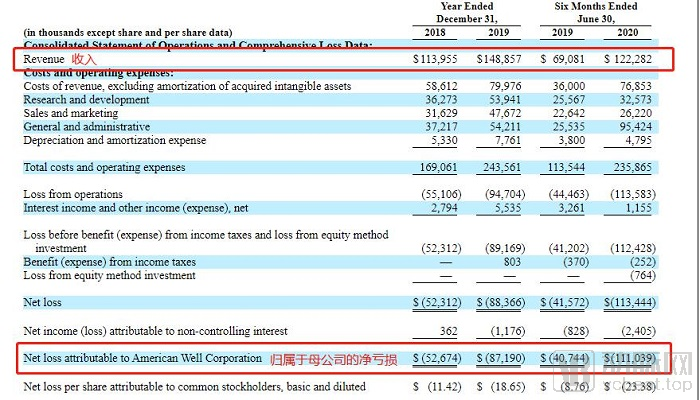
However, a close examination of the financial data in the table reveals that while research and development expenses and sales and marketing expenses remained within normal fluctuations as part of total costs, operating expenses increased. Operating expenses amounted to USD 36 million in the first half of 2019 and rose to USD 76.853 million in the first half of 2020; this magnitude of change appears reasonable considering factors such as the pandemic.
However, the most significant change came from general and administrative expenses, which surged from $25.535 million in the first half of 2019 to $95.424 million in the first half of 2020. In fact, stock-based compensation expenses were also included in operating losses, with this portion reaching as high as $72.096 million in the first half of 2020. This accounts for the substantial fluctuation in general and administrative expenses.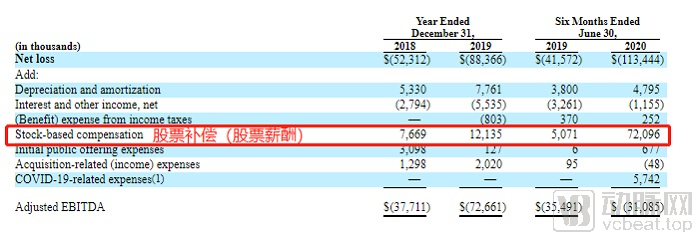
Amwell has outlined its revenue sources in its summary of the business model, breaking them down by each customer segment.
In fact, as of the end of June 2020, Amwell partnered with as many as 55 health plan clients to provide digital care program support, covering 36,000 employers and a population of nearly 80 million. Meanwhile, it also established collaborations with more than 150 of the largest health systems in China, spanning over 2,000 hospitals.
Regarding the revenue section, it mentionsSubscribers to the platform’s subscription services include health systems, health plan clients, and others.Subscription fees for health systems are typically charged based on preliminary forecasts of the net revenue generated from patient treatment within their systems; however, if consultation volumes exceed the maximum stipulated in the contract, the associated consultation fees will increase in the second year. For health plan clients, recurring subscription fees are primarily determined by their member count.
According to statistics, the subscription revenue generated by the health system segment in the first half of 2019 and the first half of 2020 was $17.9 million and $23.6 million, respectively. The subscription revenue from health plan clients in the first half of 2019 and the first half of 2020 was $14.9 million and $16.6 million, respectively.
Amwell is also collaborating with innovators, providing targeted chronic disease management and sleep therapy services to manufacturers such as Philips.In the first half of 2019 and the first half of 2020, collaborations with Innovator generated revenues of $6.1 million and $6.0 million, respectively.
As part of the value-added AMG services, the aforementioned health systems and health plan clients may utilize these offerings. These services are typically billed on a per-use basis, with fees ranging from $59 to $800. Additionally, access to these services requires subscription to specific modules; for instance, health systems must subscribe to the remote psychiatry module.In the first half of 2019 and the first half of 2020, AMG Services generated revenues of $18.5 million and $62.5 million, respectively.
Carepoints Hardware ServicesIt generated $11.7 million in revenue in the first half of 2019 and $13.6 million in the first half of 2020.
From the composition of revenue, we may perhaps see the impact brought by the pandemic,AMG service fees and platform subscription fees account for the majority of its revenue. In particular, AMG service revenue experienced substantial growth in the first half of 2020.This is closely related to the surge in demand for online medical consultations during the pandemic.
In the United StatesDuring January to March, when the epidemic situation was relatively stable, its page views reached 700,000. In contrast, during March to June, when the situation became severe, its page views surged to 2.2 million.In April, its daily page views reached as high as 40,000, compared with 2,900 during the same period last year. Even earlier, in January and February, its daily page views stood at only 5,500.
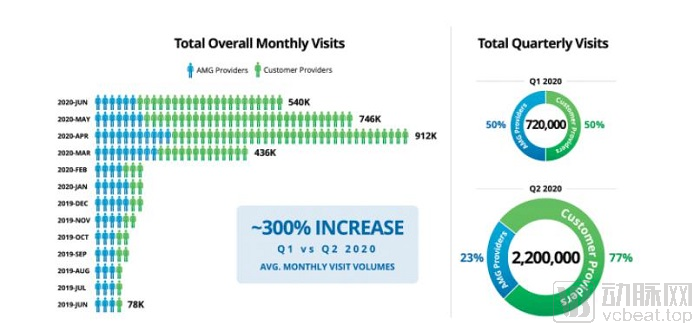
InAmid a nearly tenfold surge in traffic, the activity level of its service providers also increased ninefold., ultimately keeping the service wait time within 10 minutes. It could be said that the pandemic not only drove users to adopt remote consultations but also encouraged more service providers to utilize telemedicine. From March to June, the average monthly active number of healthcare service providers increased by 300%, while the average monthly active number of users grew by 400%.
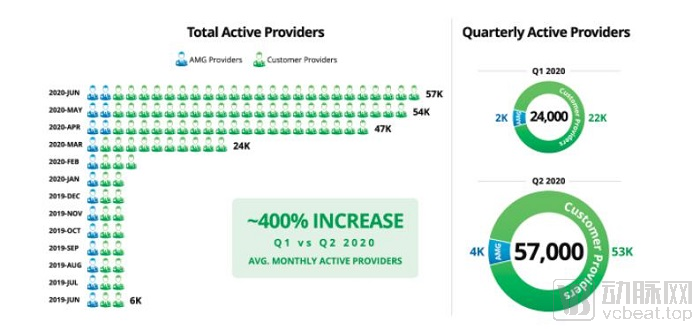
However, Amwell also revealed a very interesting piece of data:Since its establishment in 2006, it has provided a cumulative total of 5.6 million consultations, with as many as 2.9 million consultations conducted in the first half of 2020 alone.Perhaps for this reason, companies remain concerned about the future development prospects of telemedicine.
They are concerned that the temporary policies supporting the development of telemedicine may be rescinded. In China, as pandemic prevention and control have become normalized, the policies promoting internet-based healthcare during the epidemic have also been institutionalized. However, previous policies in the United States were largely provisional measures and are likely to be repealed as the pandemic situation stabilizes. Benefiting from relevant policies,During the pandemic, regulatory and reimbursement barriers to telemedicine development in the United States were significantly reduced. Healthcare systems also promoted virtual consultations to protect healthcare workers from infection and ensure that patients with other conditions could receive treatment, leading to a surge in visit volumes.
Once the relevant policies are rescinded, reimbursement for telemedicine services for health insurance beneficiaries will once again be restricted. Nevertheless, Amwell remains optimistic about its development prospects, believing thatOnce users embrace the concept of telemedicine, visit volumes and visit-related revenue will not experience a significant decline., and re-enforcing HIPAA regulations would force many other telemedicine platforms that emerged during the pandemic to exit the market, thereby reducing competition.
3. Google Purchases $100 Million in Common Stock and Provides Cloud Platform Support
The IPO filing stated that on August 22, two days before Amwell submitted its IPO application, Google entered into a stock purchase agreement with Amwell. Amwell issued $100 million worth of common stock to Google, classifying the transaction as a “Google investment.”
This transaction was not a simple cash deal; Amwell also entered into a strategic partnership with Google. Prior to this collaboration, Amwell utilized Amazon’s cloud services. Under the agreement with Google, the tech giant will enable support for Amwell Home and Amwell Now on the Google Cloud Platform by 2021, allowing video access without any downloads. Through this partnership, Amwell will become a global telehealth solutions partner on the Google Cloud Platform.
In practical terms, this transaction is far more complex than a simple migration of Amwell from Amazon Web Services to Google Cloud Platform.Amwell’s previously deployed projects have focused on acute care and behavioral health, while chronic disease management is not its strength.
AI-driven intelligent decision-making will play a significant role in many areas, including chronic disease management and health guidance.In the field of artificial intelligence, Google is unquestionably a leader. Rather than saying that Google selected Amwell, it is more accurate to say that Amwell has embraced Google, a frontrunner in AI technology. This move holds significant importance for Amwell’s future development and even for its competition with Teladoc, which has been publicly traded for many years.
1. Why Did GoodRx Enter the Market for Low-Cost Prescription Drugs?
Perhaps nothing is more unforgettable than personal experience. GoodRx co-founder Doug Hirsch has personally experienced the healthcare environment that Americans may encounter:Under unchanged conditions, existing premiums are rising, charges are becoming increasingly high, and the bill amounts that users need to pay are growing larger. However, the medical services available to patients are decreasing.
In fact, what initially infuriated Doug Hirsch was simply being asked by a pharmacist to pay $450 for a prescription medication. Although he had insurance, he hesitated and ultimately chose to leave. Eventually, he discovered that prescription drug prices varied across different pharmacies. However, when he attempted to compare prices online, he found that no price-comparison tools existed.The entire healthcare system is not only complex but also lacks transparency, leaving patients completely unable to determine how much they should pay for treatment.
As he complained to Trevor Bezdek, now his co-founder at GoodRx, a flash of insight struck, leading to the creation of a tool designed to address the prevailing situation. Prior to this, they had conducted a meticulous observation of the entire market.
Unlike in China, the high cost of medical consultations and expensive prescription drug prices in the United States lead to approximately 30% of prescriptions being left unfilled. As many as two-thirds of Americans avoid or delay purchasing prescription medications due to high costs. Furthermore, one-quarter of the U.S. population lacks a primary care physician.Each year, a typical American household spends up to $5,000 on health insurance premiums and out-of-pocket expenses.
For uninsured individuals, routine medical care can quickly drain their finances. AndAs insurance costs and deductibles rise, the number of underinsured individuals has increased significantly, and more people are left without any coverage. Most Americans have less than $1,000 in savings, leaving a large portion of the population unable to afford the cost of doctor visits and prescription medications.
GoodRx initially gained fame for helping consumers find low-cost prescription drugs. Over time, it has gradually evolved into a tool that enables millions of Americans to access affordable healthcare.GoodRx has reduced out-of-pocket costs for generic drugs by more than 70%. Users can redeem its promo codes (akin to coupons) at 70,000 pharmacies nationwide across the United States.
Following its acquisition of HeyDoctor in 2019, the company launched GoodRx Care, a service that users can access without needing insurance, a prescription, or even registration.On the platform, users can obtain an online medical consultation within one hour for just $20; it currently supports consultations for over 150 medical conditions.In a 2017 survey, the average wait time for in-person appointments among patients in 15 major U.S. metropolitan areas was as high as 24 days.
Through GoodRx,U.S. users have saved approximately $20 billion, and more than 18 million people have gained access to care they previously could not afford.GoodRx also continuously collaborates with physicians and pharmacists, providing research and tools to enhance their treatment capabilities. Through GoodRxHelps, the company partners with clinics across the United States to offer free prescriptions and certain medical services to patients in need.
GoodRx’s original mission was to provide affordable healthcare services to every American. In the process, it also recognized its own market value.GoodRx envisions its solution addressing an $800 billion market, which comprises a $524 billion prescription drug market, a $30 billion pharmaceutical manufacturer solutions segment, and a $250 billion telehealth market.
In fact, judging from its financial data, GoodRx still has a long way to go.
2. Prescription drug transaction revenue accounts for over 90% of total revenue, with profitability sustained for multiple consecutive years
An interesting observation is that while internet-based telehealth service providers such as Amwell continue to operate at a loss, GoodRx has been consistently profitable. According to its financial data,GoodRx had already achieved profitability as early as 2016., followed by continuous annual growth in profits.
In 2016, its annual revenue was $99 million, with a net profit of $8 million; in 2017, its annual revenue reached $157 million, with a net profit of $29 million; in 2018, its annual revenue was $250 million, with a net profit of $44 million; and in 2019, its revenue amounted to $388 million, with a net profit of $66 million. Since 2016, GoodRx has maintained a compound annual growth rate (CAGR) of 57%.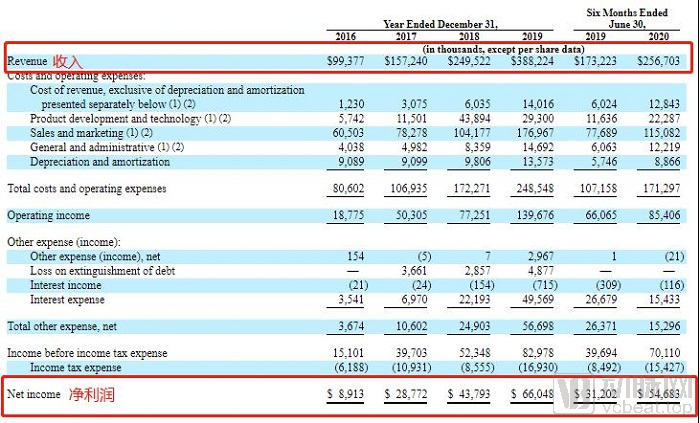
Building on its initial offering of low-cost prescription drugs to users, GoodRx has also been gradually expanding the scope of its business, includingProviding users with remote medical services, offering membership subscription services to help them access greater discounts on medications, and delivering solutions for pharmaceutical manufacturers.
In GoodRx's total revenue,Revenue from prescription drug transaction fees remains the largest contributor to total revenue. In 2019, this revenue accounted for 94% of total revenue, and in the first half of 2020, it represented 91% of total revenue for that period.Moreover, the nature of prescription drugs dictates that most patients will choose to repurchase.
UsuallyAfter users use the codes provided by GoodRx to fill their prescriptions and obtain discounted prescription drugs, GoodRx collects fees from PBMs (Pharmacy Benefit Managers).PBMs possess strong drug price negotiation power, enabling them to negotiate with pharmaceutical manufacturers and influence prices through contracts with pharmacies and health insurers. When GoodRx facilitates a prescription drug purchase, it earns revenue by charging either a percentage of the fees received from PBMs under contractual agreements or a fixed amount per transaction.Simply put, for a prescription drug priced at $20, the pharmacy may receive $14, the Pharmacy Benefit Manager (PBM) takes $6, and GoodRx takes a portion of that $6.
Having established a solid reputation, GoodRx also launched its subscription product.In 2017, it launched its first subscription product, Gold, and in 2018, it added a second subscription product, Kroger Savings.Users can save more money by subscribing to products. Among them, the second subscription product is a collaborative project between GoodRx and Kroger, with a portion of the fees provided to Kroger. However, regarding the subscription segment, GoodRx has not disclosed the actual number of users, merely stating thatCompared to the end of 2018, the number of subscribers by the end of June 2020 was 15 times higher, and the first-year contribution from consumers of subscription-based products was approximately twice that of consumers of prescription-based products.
After accumulating a large user base through the former two, it also became possible for it to collaborate with pharmaceutical manufacturers and provide them with solution-based products. In fact,Among GoodRx users, 20% are searching for brand-name drugs, which are often subject to various restrictions and can be prohibitively expensive for patients. Pharmaceutical manufacturers offer affordability solutions for patients, such as copay cards, patient assistance programs, and other savings options.GoodRx earns fees from pharmaceutical manufacturers by integrating their programs into the platform to promote and market products to users.GoodRx stated that its product promotion revenue more than tripled in the first half of 2020 compared to the same period last year.
GoodRx also realized during its development that,Nearly 20% of consumers search for medications without a prescription. In light of this, the company acquired HeyDoctor in 2019 to provide users with telehealth services. In 2020, it launched the GoodRx Telehealth Marketplace, integrating third-party healthcare providers to serve users.Through these services, the burden of medical consultations for consumers has been reduced, with HeyDoctor’s consultation fees starting at approximately $20. After completing an online consultation, users can choose to obtain their prescriptions and medications at retail pharmacies that accept GoodRx codes, or opt to have their prescriptions mailed by third-party partners (for an additional fee). GoodRx also generates revenue by directing traffic to third-party telehealth service providers.
In fact,GoodRx, which relies heavily on prescription transactions, has also recognized its inherent vulnerabilities: its ability to offer discounted prices depends on pharmacy benefit managers (PBMs). In response, GoodRx has been continuously expanding its network of PBM partners and collaborating with multiple PBMs to prevent any single PBM from dominating its revenue streams., through continuous efforts, the share of total revenue contributed by its three largest PBM partners has declined year over year, dropping from 61% in 2018 to 55% in 2019, and further to just 48% in the first half of 2020.
Meanwhile, as consumers in the market are easily influenced by traditional factors—such as the accessibility of pharmacies and testing institutions, and insurance coverage—they tend to make purchasing decisions for healthcare products based on these considerations.GoodRx also continuously educates users through advertising campaigns, informing them of more affordable ways to purchase medications.GoodRx has seen a year-over-year increase in its advertising expenditures, with spending from 2015 to 2019 amounting to $28 million, $57 million, $71 million, $89 million, and $164 million, respectively. This upward trend is likely to persist for an extended period.
Even with an awareness of these issues, a more challenging situation still awaits them.As U.S. healthcare reform deepens, it may further drive the integration of pharmacies and PBMs, potentially impacting GoodRx’s business even more.These developments continue to rattle GoodRx’s nerves. For the company, the future remains largely dependent on how policy evolves.
3. The Dual Impact of the Pandemic on GoodRx
As GoodRx is no longer a pure platform for finding low-cost prescription drugs,The impact of the pandemic on GoodRx has also been complex.
We can glean insights from its activity data. GoodRx provided the average monthly active users from 2016 through the first half of 2020. The data shows that, starting from 2016Its monthly active users (defined as users who utilized its discounted prescription drug purchasing services at least once during the month, excluding subscribers) showed a consistent upward trend; however, there was a certain decline from March to June 2020, dropping from 4.875 million in January–March to 4.418 million.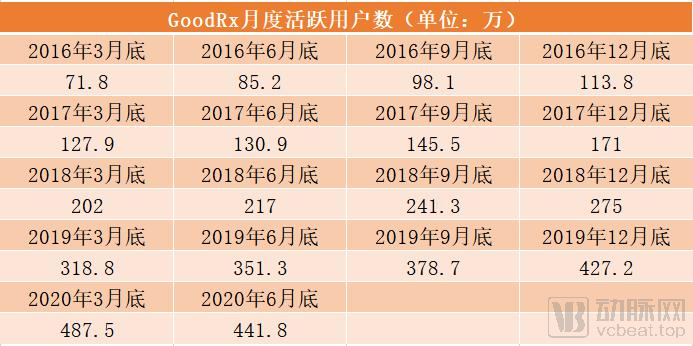
The impact of changes in the number of active users was not significantly reflected in the financial data. In the first half of 2019, its revenue was $173 million, with a net profit of $31 million; in the first half of 2020, revenue reached $257 million, and net profit reached $55 million. The pandemic appeared to have had no significant impact.
Actually,GoodRx itself does not offer medication mail-order services.(State laws impose certain restrictions on the mailing of prescription medications),Users must personally visit a pharmacy to obtain their medications.During the pandemic, the number of patients receiving in-person consultations from healthcare providers dropped significantly, with treatments for certain patients even being delayed or reduced. The closure of pharmacies and other enclosed venues further compounded these issues, collectively dampening users’ willingness to utilize healthcare services.In theory, this impact should be reflected in the financial data. However, another aspect of the pandemic’s impact on GoodRx may have offset it.
Its telemedicine services seized development opportunities during the pandemic.Initially, after acquiring HeyDoctor, GoodRx aimed to streamline its end-to-end process of consultations and prescription issuance. In practice, HeyDoctor also became another user acquisition channel for GoodRx. According to its statistics, HeyDoctor conducted more than 1,000 consultations per day in the second quarter of 2020. Since the launch of its third-party remote healthcare provider initiative, the GoodRx Telehealth Marketplace, over 200,000 medical visits and tests have been completed. After these visits, more than 10% of HeyDoctor users filled their prescriptions at pharmacies using GoodRx discount codes. GoodRx also hopes that its gradually expanding mail-order prescription service will further increase the number of prescription consumers on its platform.
Despite the rapid growth of telemedicine services during the pandemic, GoodRx has expressed concerns. It stated that the current telemedicine industry faces intense competition, and HeyDoctor’s pricing may not hold a competitive advantage. To effectively address this competition, HeyDoctor may need to maintain low profit margins."Rising costs may weigh on GoodRx's overall profit margins in telehealth services."However, to complete its own value chain, GoodRx has no choice but to expand into this business segment.
Amwell, which started by providing internet-based medical technology solutions, remains unprofitable; GoodRx, which began as a platform for finding low-cost prescription drugs and has been consistently profitable, now worries that its integration of telemedicine services is dragging down its overall profit margin. In these two contrasting case studies of digital health companies, the development of internet-based telemedicine still appears to be fraught with significant uncertainties.
As user perceptions shift, the industry, despite facing certain challenges, still presents significant opportunities. A study from the University of Michigan may well dispel the current gloom.In this survey, the University of Michigan conducted a comparative study on the changes in attitudes toward telemedicine among older adults (aged 50–80) in the United States before and during the pandemic.From these data, the risks and opportunities are clearly evident.
From May 2019 to June 2020, the proportion of elderly individuals participating in telemedicine increased from 4% to 30%. Although a significant portion of the population still prefers in-person consultations as their first choice, they will opt for online medical consultations when unable to visit hospitals.
During the peak of the pandemic in the United States from March to June, more than half of the individuals using telemedicine services did so because their doctors canceled in-person consultations, forcing them to opt for online visits. ButEncouragingly, 30% of the population has made telemedicine their first choice. The level of privacy concern among the elderly has also decreased from a high of 49% in 2019 to 24%.Moreover, the number of telehealth service providers is also increasing, with 62% of respondents reporting that at least one of their healthcare providers offers telehealth services, compared to 14% in 2019.
The pandemic has not only prompted healthcare providers to offer telemedicine services, but also compelled elderly individuals who had never previously used such services to adopt them.Compared with 2019, the proportion of elderly people who have never used telemedicine services decreased by 11%, currently standing at only 17%. However, at the same time, two-thirds of the population still believe that the quality of telemedicine consultations is poor.
How to provide better telemedicine services remains a question that telemedicine service providers need to consider. However, whether it is due to imperfect policy development, inadequate technical support, insufficient public acceptance, or other issues, the fact that challenges persist indicates that the industry has not yet taken shape and that there are significant development opportunities in this field. Internet healthcare will also usher in new development as it addresses these dilemmas, moving towards a more promising future.