

Panasonic Extends Care to Bathrooms, Marking a New Venture into Health with Smart Wellness Products
Science fiction films have repeatedly depicted futuristic bathroom designs, such as mirrors that assess your previous night’s sleep quality simply by you standing in front of them, or floors that transmit body fat percentage data to mobile devices upon being stepped on. These once-unimaginable scenes are now becoming reality with the advent of technologies such as the Internet of Things (IoT) and non-invasive sensors.
Panasonic has recently launched two new products—the second-generation all-in-one health monitoring device and a sterilizing spray—contributing its expertise to the future of holistic health in the bathroom space.
“Your body fat level is on the high side. We recommend reducing your intake of high-oil, high-calorie foods and starting your exercise routine with daily walks.” When you stand in front of the Magic Mirror developed by Panasonic, it offers such prompts to help you manage your health. Behind these warm and caring words lies Panasonic’s philosophy of the “Cycle of Health Creation,” a concept that permeates the research and development of every one of its health-related products.
So, what exactly is this concept?
Wei Yun, Head of Panasonic’s Sanitary Ware Products, told VCBeat: “Our starting point is to meet the lifestyle habits of different generations. Ideally, we aim to leverage IoT, AI, and cloud technologies to identify users’ health issues from various aspects, including external environment, diet, sleep, and biometric data, and subsequently provide them with effective solutions for improving their lifestyle habits. After proposing these improvement plans, we can further verify the improved health status, identify subsequent issues, and recommend healthier lifestyles, thereby enhancing users’ physical well-being and achieving a ‘cycle of health creation.’”
Beneficial concepts always lead to healthy products. Building on this foundation, Panasonic has iteratively upgraded its all-in-one health monitoring device, developing the second-generation model that integrates 14-item urinalysis with body composition, electrocardiogram (ECG), heart rate, and blood oxygen saturation monitoring.
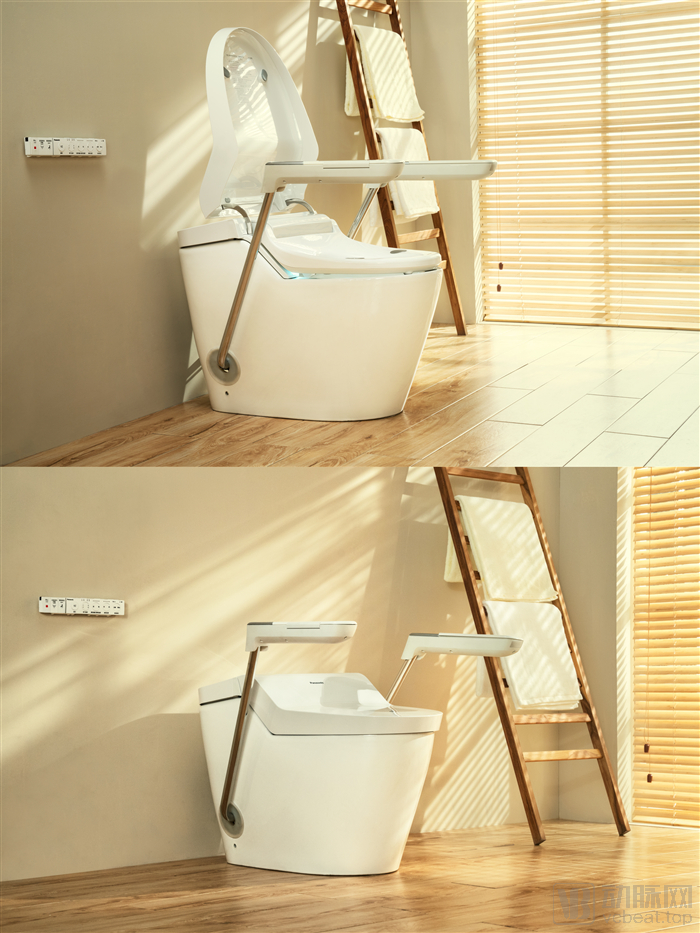
Second-Generation Integrated Health Kiosk
This health monitoring device significantly simplifies the process of tracking physiological metrics. Users simply place their fingers on the toilet’s armrests; after fingerprint recognition, the device rapidly measures body fat, electrocardiogram (ECG), heart rate, and blood oxygen saturation. Results can be viewed instantly on the newly added LCD screen on the armrest or accessed via a mobile app to review health history, enabling families to keep close track of changes in their members’ health status.
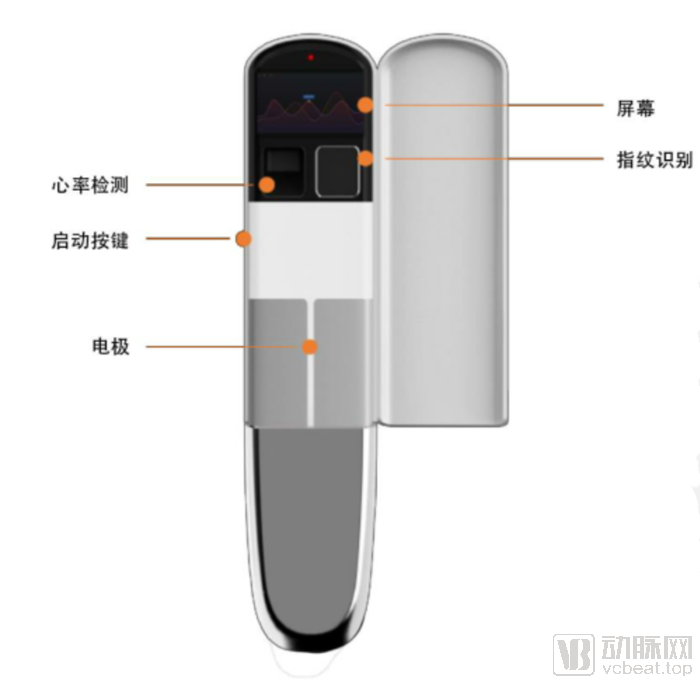
Toilet Grab Bar
The health monitor’s detection module has obtained Class II medical device certification, ensuring professional-grade accuracy. Its urinalysis capabilities cover 14 parameters: vitamin C, calcium, bilirubin, nitrite, urobilinogen, glucose, ketones, leukocytes, specific gravity, pH, occult blood, protein, creatinine, and microalbumin. These indicators are strongly correlated with common conditions such as liver disease, urinary tract infections, ketoacidosis, pregnancy-related issues, kidney disease, and diabetes. By alerting users to early abnormalities in these metrics for timely confirmatory diagnosis, the device plays a significant role in preventive healthcare.
Panasonic’s enhancements to its bathroom products represent not merely an upgrade, but a profound insight into contemporary societal health needs.
As Wei Yun noted, Panasonic began focusing on smart connected products in 2015, collaborating with various platforms and leveraging IoT technology to successfully develop products capable of “remote” operation and “smart connectivity.” However, technological breakthroughs do not necessarily resonate with consumers. To identify users’ true desires for smart living, Panasonic conducted in-depth market research. If the findings were to be summarized in a single sentence, it would be that people remain most concerned about their own health.
This research directly influenced Panasonic’s strategic shift. Leveraging its technological advantages, Panasonic decided to pivot toward the bathroom and general health sector, aiming to meet consumer health demands through smart bathroom solutions.
From the post-90s generation, who have begun to prioritize wellness and fitness—epitomized by the trend of “clubbing with a thermos”—to China, which is progressing along the path of population aging (according to United Nations demographic statistics, China is expected to enter an aged society between 2024 and 2026), health has become a topic of significant public concern in contemporary society.
According to an analysis by iiMedia Research, data on the average monthly expenditure on health supplements among Chinese elderly in the first half of 2020 shows that 36.36% spent less than 500 yuan per month, 27.62% did not purchase any health supplements at all, and 20.99% spent between 500 and 1,000 yuan per month. Additionally, 12.72% and 3.31% spent 1,001–2,000 yuan and more than 2,000 yuan per month, respectively.
Meanwhile, the “Spring Festival Health Gift Consumption Trends” report, jointly released by AliHealth and Alibaba Data this year, shows that the post-90s generation has become the main force in health-related shopping, with their per capita health spending during this year’s New Year Shopping Festival increasing by 19 yuan.
Based on the data above, it is evident that concern for physical health has become an essential necessity for both the elderly and young to middle-aged adults. Panasonic’s keen insight into market demands, combined with the medical expertise of its R&D team, has positioned the company at the forefront of the industry. Amidst an increasingly aging population and the growing prominence of “remote” and “home-based testing,” Panasonic’s newly launched health device, which enables self-testing at home, holds particular significance.
Wei Yun told VCBeat, “Compared with other home medical testing devices, the second-generation all-in-one health kiosk has overcome the challenge of low user engagement in home self-testing. Users no longer need to take off their socks to step on a body fat scale or go through complex self-testing procedures; instead, they can complete passive, unobtrusive measurements as part of their daily routines.”
Panasonic’s design for the second-generation all-in-one health kiosk not only addresses the industry-wide challenge of low user engagement with medical devices by enabling unobtrusive, passive measurement of physiological indicators during everyday activities, but also turns concepts such as at-home self-testing and telemedicine from high-level designs into tangible realities, seamlessly integrating them into daily life.
Regarding the future, Lu Ruidong, Head of Technology at Panasonic Sanitary Ware, stated: “Beyond addressing basic physiological needs, the bathroom space is also a place where people can feel relaxed. It serves not only as a sanctuary for physical well-being but also for mental health. Therefore, in addition to the in-depth development of hardware functionalities such as motors and data systems, we will adhere to the core philosophy of ‘Understanding Your Body, Caring for You.’ By integrating scenario-based applications and psychological considerations, we aim to provide holistic care for both body and mind, delivering an enhanced user experience. To bring a better quality of life to our users, we remain committed to continuous innovation and improvement.”
If the second-generation all-in-one health kiosk is set to create a better way of life for people, then Panasonic’s newly launched sterilizing spray extends this vision of an enhanced lifestyle into another dimension.
By applying ultrasonic welding, overmolding, and waterproofing technologies, Panasonic has given the sterilizing spray a sleek, screw-free design. Its visible water tank is crafted through Panasonic’s flexible use of two-shot molding. By leveraging the properties of different materials—combining a chemically resistant outer shell with a high-strength inner tank material—Panasonic has created a more durable water tank, thereby extending the service life of the sterilizing spray.
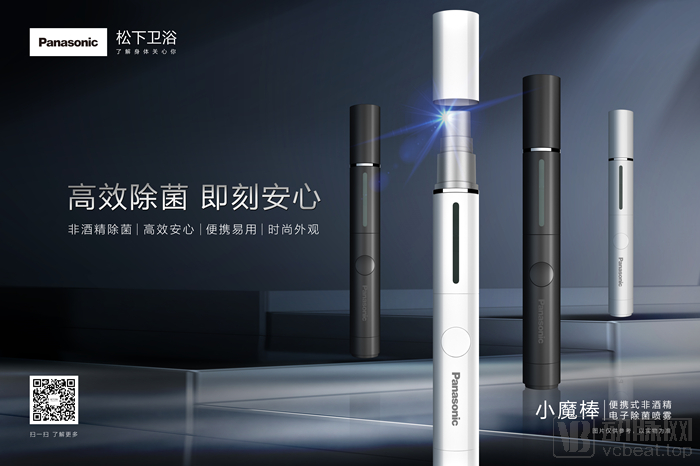
Electronic Sterilizing Spray: Little Magic Wand
Meanwhile, Panasonic has also taken into account the potential wear and tear caused by carrying the sterilizing spray. Oxidation-resistant ABS material is used for user-contact parts such as the cap, water tank, housing, and battery cover, eliminating concerns about corrosion or damage from oxidative ions. Its user-friendly LED indicator design allows users to more conveniently monitor battery life and usage status. This series of user-centric designs by Panasonic fully embodies its core philosophy: “Understand your body, care for you.”
According to VCBeat’s analysis, the current market still faces several major pain points in the use of disinfectant alcohol:
1. Ordinary disinfectant alcohol kills bacteria by coagulating bacterial proteins, but it is highly irritating.
2. High-concentration sterilizing ions possess strong oxidizing properties and may cause irritation when applied directly to humans or animals.
3. Regular alcohol is volatile; a decrease in purity will lead to reduced efficacy, rendering it ineffective for disinfecting bacteria.
4. Alcohol is flammable, posing risks for children, and is inconvenient to carry in settings such as subways, airplanes, and trains; use immediately
5. The pandemic-era rush to buy alcohol led to supply shortages
To address these pain points, Panasonic has developed a solution through its research and development of sterilizing spray technology.
Panasonic utilizes multi-stage electrolyzed water technology to generate hypochlorous acid, producing non-irritating sterilizing ions capable of eliminating over 99% of bacteria. Building on this inherently non-irritating disinfection process, Panasonic adds a dual layer of safety by incorporating intelligent safety detection. This system continuously monitors the solution concentration in real time, ensuring that disinfection occurs under conditions safe for human health, thereby addressing the issue of strong irritation associated with alcohol-based disinfectants.
The three-electrode bidirectional electrolysis design effectively enhances the efficiency of sterilizing ion generation, enabling the production of sterilizing ions within one minute for effective bacterial elimination. Its single-use refill cartridge allows for on-demand loading of the sterilizing solution, thereby avoiding the reduced efficacy associated with prolonged storage of alcohol-based products. Furthermore, unlike flammable alcohol, this sterilizing spray is non-flammable, offering a purer, more natural, and portable solution that meets consumer demands for external hygiene and health.
Lu Ruidong, Head of Sanitary Technology at Panasonic, told VCBeat: “In fact, we began exploring use cases for our antibacterial spray three years ago. We observed that individuals who frequently travel are highly concerned about external environments, hygiene, and their personal health; however, disinfectants such as alcohol are prohibited from being carried on board, presenting a pressing contradiction that needed to be addressed. Additionally, there is insufficient attention paid to the demand for children’s disinfection products, leaving this market segment largely untapped. Therefore, we decided to develop this antibacterial spray suitable for users across different generations.”
Opportunity favors only the prepared. The strategic decision made three years ago enabled Panasonic to respond swiftly when the pandemic struck, launching sterilizing sprays that were exported to numerous countries. This move addressed critical market pain points during the outbreak, including alcohol shortages and allergic reactions to alcohol among some consumers.
Unlike the futuristic scenes depicted in past science fiction films, Panasonic has broken away from such formalistic product constructs through its design philosophy, emphasizing instead that humanity, daily life, and nature are what truly matter. By integrating machines and technology seamlessly into the background of everyday living, Panasonic makes intelligence an inherent state of future life. Leveraging IoT technology, it offers holistic lifestyle solutions with a caring touch, using technology to restore life to its healthiest and most natural state.
Panasonic’s decision to enter the broader health and wellness sector is not only a strategic move aligned with market demand, but also a testament to its commitment to shaping a healthier living environment for humanity in the future.
While many possibilities may still exist for the future direction of healthcare, it is worth considering whether Panasonic’s significant foray into the broader health sector could bring about changes in the niche market of medical self-testing.