

Allvas Medical Completes Nearly RMB 100 Million Series A Funding, Aims to Become the 'Da Vinci' of Endovascular Intervention
AOPENG INTELLIGENCE
Developer and Manufacturer of Endovascular Interventional Surgical Robots
VCBeat (WeChat ID: vcbeat) learned at the earliest opportunity that,Shanghai Aopeng Medical Technology Co., Ltd. (“Aopeng Medical”), a company specializing in endovascular interventional surgical robots, recently announced the completion of its Series A financing round, raising nearly RMB 100 million.It is reported that the funds from this round of financing will be primarily allocated to three areas: initiating human clinical trials, investing in research and development of software and hardware, and obtaining CE certification.
In less than three years since its establishment, Aopeng Medical has successfully secured three rounds of financing, sufficiently demonstrating investors’ confidence in the company and the endovascular interventional surgical robotics sector.
The Huge Opportunities in the Blue Ocean Market
Aopeng Medical, established in 2017, specializes in the research, development, and manufacturing of medical robots. Its flagship product is an endovascular interventional surgical robot that integrates advanced concepts such as high-end manufacturing, artificial intelligence, and 5G technology. This surgical robot is widely applicable to coronary interventions, neurointerventions, peripheral vascular interventions, and oncological interventions.
Head of Aopeng MedicalHe told VCBeat, “Endovascular interventions are not yet perfect. From a physician’s perspective, robotic assistance is needed to enhance the quality of these procedures. This is precisely why Aopeng Medical was founded—we aim to fill this market gap and contribute our expertise to cardiovascular interventional surgery.”
In fact, whether viewed from the perspective of the international market or the domestic market, a huge market lurks behind vascular interventional procedures.
On August 8, 2019, Siemens Healthineers announced the acquisition of Corindus Vascular Robotics, a company specializing in robotic-assisted vascular intervention procedures, for $1.1 billion. This strategic move into the field of endovascular interventional robotics underscores Siemens’ strong confidence and ambition in this sector as a leading medical device giant.
Data from brokerage research reports further corroborate this point.Data show that from 2010 to 2018, the use of coronary stents in percutaneous coronary intervention (PCI) procedures in China increased year by year. In 2019, the number of PCI procedures performed in China approached one million.
Overall, due to the widespread adoption of percutaneous coronary intervention (PCI), the number of cardiac stents used in China is expected to rise steadily. In the future, as population aging intensifies, this figure will continue to grow at a relatively high rate. Not only is the volume of cardiovascular PCI procedures increasing rapidly, but the number of patients with cerebrovascular diseases in China is also on the rise. In 2019, the number of neurointerventional procedures in China exceeded 120,000 cases, with an annual growth rate of over 30%.
In the long term, the market size of China's neurointerventional sector will reach the current volume of coronary intervention procedures.
Meanwhile, neurointervention, as an emerging and effective approach for treating severe cerebrovascular diseases, represents a critical market demand for surgical robots to assist physicians in delivering precise treatments, with substantial future market potential.
At present, China’s vascular intervention sector remains in a phase of rapid development. There is substantial room for import substitution and innovative R&D, with domestically produced interventional consumables poised to accelerate their growth and gradually increase their replacement of imported devices.
Aopeng Medical has targeted this dormant market by pioneering the development of a domestically produced endovascular interventional surgical robot. It provides endovascular interventional treatment solutions for patients with cardiovascular diseases, peripheral vascular diseases, cerebrovascular diseases, and other vascular tumors, as well as for specialists in cardiology, vascular surgery, interventional radiology, neurology, and neurosurgery, thereby addressing the pain points associated with traditional endovascular interventional procedures.
A Decade of Accumulation Builds Innovative Technology to Address the Pain Points of Traditional Surgery
Unresolved Pain Points in Traditional Endovascular Interventional Procedures Span the Preoperative, Intraoperative, and Postoperative Stages:
First, physicians often rely on experience and a “trial-and-error” approach, lacking visualized preoperative planning. Intraoperative selection of stent quantity and specifications depends on subjective judgment, without 3D real-time intraoperative navigation or imaging support, making precise operation difficult to achieve.
Secondly, endovascular interventional procedures are diverse and complex, resulting in a prolonged learning curve.
Third, if tremors, displacement, or excessive rotation occur due to the surgeon’s manipulation during the procedure, it may lead to postoperative sequelae for the patient.
Fourth, complex cases in cardiovascular and cerebrovascular interventional procedures often involve prolonged operative times, during which medical staff are exposed to radiation throughout the entire process. Consequently, physicians face significant radiation hazards, and the wearing of heavy lead aprons can lead to musculoskeletal injuries.
Leveraging nearly a decade of prospective foundational technology research and reserves, Aopeng Medical has developed China’s first general-purpose vascular interventional robotics platform. By integrating robotics and artificial intelligence (AI) technologies, the system enables AI-driven disease assessment, AI-based surgical planning, and semi-automatic to fully automatic procedure execution, thereby making remote and precise cardiovascular and cerebrovascular interventional surgeries possible.
Vascular interventional robots can reduce radiation exposure to the lowest possible level, allowing interventional cardiologists to perform procedures from outside the catheterization laboratory. Whether the cardiologist operates the entire procedure independently or enlists the assistance of an assistant, the advent of vascular interventional robots reduces the required surgical personnel to just two individuals. In contrast, traditional percutaneous coronary intervention (PCI) procedures typically require three to four operators working at the bedside. The emergence of vascular interventional robots not only safeguards physicians’ health but also enhances hospital operational efficiency.
Vascular interventional robots can perform surgeries with precision and efficiency. Their master-slave collaborative robotic arm design allows operators to control the movement of catheters and guidewires via joysticks, filtering out hand tremors. To address potential surgical inaccuracies caused by the physician’s tactile “feel,” Aopeng Medical has developed a high-sensitivity force feedback amplification feature that magnifies fine movements to achieve refined operational control.
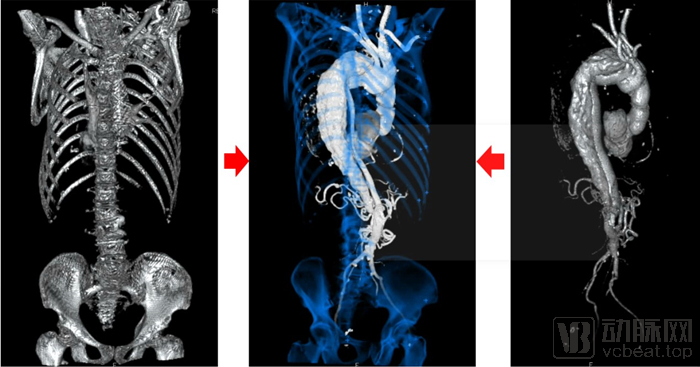
Furthermore, this surgical robot integrates a 3D navigation system to assist surgeons in accurately assessing the target stent length and position. It also provides precise preoperative planning and an intuitive visualized operation interface, thereby reducing surgical complexity and further enhancing procedural precision.
The fusion of DSA (Digital Subtraction Angiography) with preoperative CT imaging provides virtual reality 3D visualization, path planning, and navigation for endovascular interventional procedures.
Currently,Aopeng Medical has completed in vitro testing and animal trials.At the main console, the surgeon controlled the interventional robotic system for surgery by manipulating two joysticks. During the procedure, catheter and guidewire delivery and rotation were smooth and stable, achieving success in both coronary and peripheral vascular interventions.
In the future, with the advancement of AI, 5G, and other technologies, Aopeng Medical will continue to refine its existing endovascular interventional surgical robot project, upgrade and iterate its products, enable remote vascular interventional procedures, and support tiered diagnosis and treatment.
If successfully implemented in clinical practice, the vascular interventional surgical robot independently developed by Aopeng Medical will significantly alleviate the shortage of high-quality interventional medical resources in minimally invasive diagnosis and treatment, thereby narrowing the gap in clinical technology between large and small hospitals in China. Furthermore, leveraging its existing technological reserves, the company has also developed surgical robots for other medical departments.
Compared with the only endovascular interventional surgical robot companies currently available internationally (Siemens' CorPath surgical robot in the United States and Robocath's surgical robot in Europe),No similar surgical robots have entered the clinical and registration approval stages in China.
From the perspective of industrialization and regulatory approval progress, Aopeng Medical has completed product type testing, initiated clinical trials in 2021, and plans to launch China’s first vascular interventional robot product within three years for use in coronary and peripheral vascular interventional procedures.
To prevent its core technologies from being imitated by competitors, Aopeng Medical has secured patent and software copyright protections, filing more than 20 patents.
Leveraging Core Corporate Values to Attract Multidisciplinary Professionals in Support of R&D
Aopeng Medical’s technological R&D advantages and its forward-looking vision of industry demands have attracted numerous professionals in the field, forming a technical engineering team that integrates scientific research with industrialization. Such a team has made it possible for Aopeng Medical to achieve continuous technological iteration in product development and constantly launch an innovative product pipeline.
The core design philosophy of the endovascular interventional surgical robot stems from brainstorming sessions between the Aopeng Medical team and scientists and clinicians from universities and hospitals, characterized by continuous communication and close integration of industry, academia, research, and clinical practice to facilitate medical translation.
With nearly two decades of experience in the vascular intervention industry, the core team at Aopeng Medical has gained precise insights into the market demand for endovascular interventional surgical robots, as well as the immaturity of interventional procedures, which have only been practiced for 30 years. Based on these observations, Aopeng Medical was the first in China to initiate the research and development of endovascular interventional surgical robots, helping physicians improve the quality of interventional surgeries.
Aopeng Medical’s head told VCBeat, “From the perspectives of physicians, R&D professionals, and market demand alike, endovascular interventional surgical robots are an urgently needed product within the industry. Moreover, we not only have a product but also possess distinct advantages in market penetration.”
Aopeng Medical has assembled senior R&D and sales management talent from leading medical enterprises both in China and abroad, and has established strong collaborative partnerships with the cardiology, vascular surgery, and neurosurgery departments of multiple renowned hospitals across China.
Unlike typical technology startups, Aopeng Medical established a R&D model characterized by deep involvement of physicians and scientists, as well as close integration between marketing/sales and research and development, right from its inception. Medical experts regularly participate in the company’s R&D meetings, and are introduced at every critical stage of the product development process to conduct product evaluations and testing validation. This approach ensures that Aopeng Medical’s products can be rapidly promoted and adopted upon market entry, precisely addressing urgent clinical needs, while also laying the groundwork in advance for product registration applications, marketing, and channel management. This will also becomeA Major Advantage for Aopeng Medical in Winning the Market.
As the head of Aopeng Medical stated, “So many experienced professionals from diverse specialties have joined this project because they all recognize that endovascular interventional surgical robots can truly bring transformative change to the industry.”
By developing, manufacturing, and promoting minimally invasive interventional surgical robots, Aopeng Medical addresses the issues of radiation exposure to physicians and surgical precision during interventional procedures. This improves physicians’ working conditions, effectively reduces occupational injuries, enhances surgical quality, and lowers patient surgical risks, thereby bringing transformative change to interventional surgery.
In the future, as major industry players enter the field of vascular interventional surgical robots, Aopeng Medical’s years of accumulated experience and first-mover advantage will provide it with greater room for growth, positioning it as the “Da Vinci” of vascular intervention and leading the transformation of clinical vascular interventional procedures.