

WeDoctor Recognized as 'Exemplary China-EU Digital Pandemic Response Case', Driving Digital Health Development in the Post-Pandemic Era
On September 14, 2020, the “2020 Excellent Cases of China-EU Digital Anti-Epidemic Response,” selected under the guidance of the European Commission and jointly organized by the China Center for Urban Development and the French Prospective and Innovation Foundation, was officially released at the Smart China Expo and China-EU Green Smart City Summit held in Chongqing.
Fifty-three digital anti-epidemic practices from enterprises and cities in China and Europe were recognized as outstanding case studies, covering seven areas: epidemic prevention, epidemic control, effective treatment, livelihood protection, resumption of work and production, policy support, and urban governance. It is understood that these outstanding cases were selected by the organizing committee from applications submitted by more than 30 provinces and municipalities across China, over 50 enterprises, as well as 25 cities and regions in 13 European countries, including the United Kingdom, France, Germany, and Italy.
WeDoctor was the earliest digital health company to engage in the fight against the epidemic through digital technologies. Its “Global Anti-Epidemic Platform” and the “Tianjin Model” for epidemic prevention and control, jointly submitted by the Tianjin Municipal Cyberspace Administration and WeDoctor, were both selected as “2020 Excellent Cases of Digital Anti-Epidemic Cooperation between China and Europe.” Zhang Songqi, Senior Director of Public Relations and Communications at WeDoctor, stated in his summit presentation that WeDoctor opened up an “air battlefield” against the COVID-19 pandemic for both domestic and international efforts through three campaigns: “Real-Time Assistance via Nationwide Free Clinics,” “Supporting Local Governments in Digital Epidemic Prevention and Control,” and “Sharing Chinese Experience with the World.”

It is reported that at the onset of the outbreak, WeDoctor launched the “Real-Time Relief Platform for COVID-19,” providing innovative anti-epidemic services in China, including free online consultations, online medication purchases, and drug delivery. These measures effectively triaged patients, screened for mild cases, and reduced the risk of cross-infection during patients’ visits to medical facilities. As of September 14, more than 68,000 doctors had joined WeDoctor’s “Real-Time Relief Platform for COVID-19,” which had delivered over 2.21 million free consultations and recorded more than 150 million total visits.
With cities as the primary entities, during the pandemic, WeDoctor assisted 152 counties (districts) across 15 provinces in establishing digital anti-epidemic platforms, providing online free consultations and monitoring services. In Wuhan (Hubei), Tianjin, Tai’an (Shandong), and other locations, it innovatively implemented one-stop services such as follow-up consultations and medication purchases for chronic diseases, online medical insurance payments, and home delivery of medications, effectively ensuring local patients’ access to necessary medicines during the outbreak.
Among these, the “Tianjin Model” for epidemic prevention and control, jointly submitted by the Tianjin Municipal Cyberspace Administration and WeDoctor, was selected as a representative of urban anti-epidemic practices in the “Outstanding Digital Anti-Epidemic Cases between China and Europe.” This model has also driven the digital upgrading of a series of initiatives, including tiered diagnosis and treatment, providing Tianjin residents with efficient and convenient online consultation, follow-up visits, and medication purchase services. WeDoctor’s practice in Tianjin has also been recommended to other regions by the National Health Commission through an official letter.
While supporting China’s domestic epidemic response efforts, WeDoctor further leveraged the advantages of its digital health platform by launching the “Global Anti-Epidemic Platform” to address the escalating international pandemic. This initiative provides high-quality, efficient, and accessible anti-epidemic services worldwide and shares with the global community the prevention, control, diagnosis, and treatment experience accumulated through China’s epidemic response practices.
It is reported that WeDoctor’s “Global Anti-Epidemic Platform” provides overseas Chinese and international friends with services such as online consultations, popularization of epidemic prevention and control knowledge, psychological assistance, and experience sharing by professional medical personnel. To date, it has served 3.26 million people in more than 220 countries and regions. During this period, the “Global Anti-Epidemic Platform” was recommended by more than 170 Chinese embassies and consulates abroad.
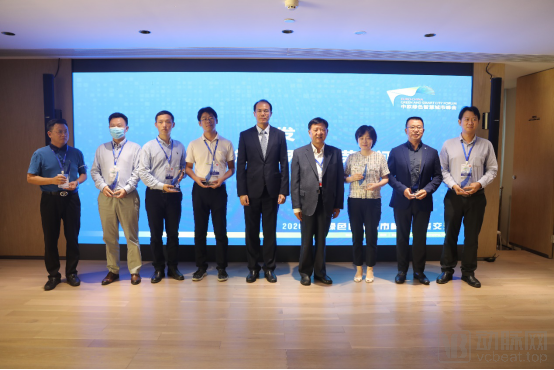
“This epidemic has promoted the development of digital health services from various aspects, including user habits, physician behavior, pharmaceutical distribution, hospital management, and government attitudes, making it an important component of the healthcare system.” Zhang Songqi introduced on-site that the outstanding cases of digital anti-epidemic efforts show that medical and health services are migrating online in an all-round and large-scale manner, accelerating the realization of a complete closed loop involving healthcare, pharmaceuticals, insurance, cloud testing, and data.
At the summit, Jean-Pierre Raffarin, former Prime Minister of France, Special Envoy of the French President to China, and Chairman of the Prospective and Innovation Foundation; Wu Cunrong, Executive Vice Mayor of Chongqing Municipality; Shen Chi, Deputy Director of the China Center for Urban Development; and Rudolf Niessler, Director-General of the European Commission’s Directorate-General for Regional and Urban Policy, delivered addresses both online and offline on the theme “Post-Pandemic Era: New Urban Governance.”
On June 22 this year, Chinese President Xi Jinping pointed out during a video meeting with European Council President Charles Michel and European Commission President Ursula von der Leyen that since the outbreak of the COVID-19 pandemic, China and the EU have supported and assisted each other. The Chinese side is willing to work together with the European side to promote more stable and mature China-EU relations in the post-pandemic era, reaching a higher level.
The summit released the “2020 Excellent Cases of Digital Epidemic Prevention and Control in China and Europe,” an innovative initiative by both sides to strengthen exchanges of technical experience in combating the epidemic, deepen dialogue and cooperation on global public health governance, and promote the building of a community of common health for mankind. Government leaders, experts, scholars, and corporate representatives from China and Europe further shared and discussed the selected digital epidemic prevention cases, providing valuable insights and considerations for future cooperation between China and Europe in related fields in the post-pandemic era.