

Yixi Bio: Programming Microbial Synthesis with Gene Circuits to Unlock China's Billion-Dollar HMO Market
No longer merely replicating or mildly modifying inherent cellular functions, synthetic biology provides researchers with a pair of "magic hands" capable of freely manipulating genes.
In the 1970s, genetic engineering technology was proposed, enabling "exogenous" nucleic acids to establish themselves within specified host cells, thereby allowing stable inheritance according to human design, with the expression of new products or the manifestation of new traits.
If genetic engineering technology unlocks the expression capabilities of host cells, then synthetic biology builds upon this foundation by establishing and modifying “genetic circuits” within host cells to artificially intervene in their synthetic capabilities, thereby achieving controllable expression of exogenous nucleic acids within the host cells.
The establishment and engineering of genetic circuits have unlocked the potential for modular regulation in synthetic biology, laying a technical foundation for the high-yield, efficient synthesis and industrial-scale production of complex biomolecules.
Nanjing Yixi Biotechnology Co., Ltd., established in 2019, is a technology and product provider specializing in the field of synthetic biology. Drawing inspiration from natural life processes—including viruses, bacteria, and eukaryotes—the company leverages synthetic biology technologies to design and construct modular genetic circuits that do not exist or have not yet been discovered in nature. By regulating the biosynthesis of natural pharmaceutical and food ingredients as well as diagnostic and therapeutic agents, Yixi Biotechnology achieves high-efficiency, high-yield industrial-scale production.

Liu Zhenyun, founder of Yixi Biotechnology, spent his undergraduate and doctoral years at Peking University by the Weiming Lake. Beginning with research on mRNA methylation during his doctoral studies, he delved into the principles of gene regulation. He later transitioned to applied research in gene regulation within the industry, exploring CAR-T cell therapy and oncolytic virus genetic engineering. His work focuses on manipulating the spatiotemporal regulation of multiple genes to optimize anti-tumor effects.
Doing practical work was Liu Zhenyun’s original aspiration in founding Yixi Biotechnology, and it also served as the starting point for his transition from basic research to applied research.
Nanjing Yixi Biotechnology Co., Ltd. discovered in its tumor-related research that human milk oligosaccharides (hereinafter referred to as “HMOs”) found in breast milk may help cancer patients alleviate immunosuppressive infections induced by chemotherapy. Further investigation revealed the current state of the global HMO market.
China currently faces a situation of import dependence for human milk oligosaccharides (HMOs). Globally, there are only five suppliers from four countries: Germany, the Netherlands, Denmark, and the United States. Research-grade HMOs cost as much as 500 yuan per gram, while China’s annual demand for HMOs is expected to exceed 14,600 metric tons, with the Chinese HMO market reaching 30–60 billion yuan.
Liu Zhenyun quickly assembled a small, elite core team, adhering to the principle that technology is the core competitive advantage. More than half of the core members were in R&D roles. He referred to it as the “Wild Rabbit” team: although it could not match the strength of lions and tigers, its survival capabilities in the wild far exceeded those of larger animals.
Yixi Biotechnology’s “Hare” Team upholds the spirit of overcoming stronger opponents with weaker forces, while maintaining a strong sense of speed, crisis awareness, and flexibility to rapidly respond to various challenges and opportunities at any time.The initial scale-up of industrialized HMO production serves as the best testament to the capabilities of Nanjing Yixi Biotechnology’s “Hare” team.
In just one year, Yixi Biotechnology has successfully established China’s first genetically modified strain platform based on modular underlying technology, with a strategic layout in pharmaceuticals (biological therapy, gene therapy, and active pharmaceutical ingredients) and the biosynthesis of bioactive substances. Leveraging its genetically modified strain platform, Yixi Biotechnology has already achieved the biosynthesis of 2'-FL, the primary component of human milk oligosaccharides (HMOs).

In the synthesis of complex biomolecules, traditional chemical methods often suffer from significant pollution, challenges in removing isomers and epimers, and high costs. Biosynthesis offers a novel pathway for producing complex biomolecules, securing a strategic advantage in industrialization due to its high efficiency and minimal environmental impact.
However, simple biosynthesis also faces numerous challenges. For instance, the agricultural cultivation of natural compounds incurs substantial costs in terms of labor and time; wild-strain biofermentation suffers from low yields and poor stress resistance due to the lack of efficient enzymatic synthesis and metabolic pathways in the strains.
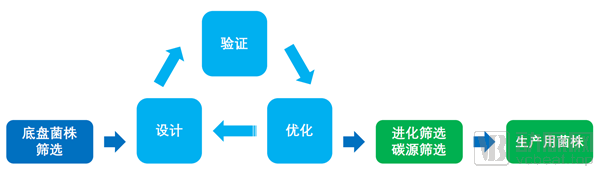
Schematic Diagram of the Working Principle of Yixi Biotechnology’s GMM Platform
Yixi Biotechnology, leveraging synthetic biology and integrating high-throughput omics technologies, genomics, gene editing, and metabolic engineering, has establishedGenetically Modified Microorganism Platform (hereinafter referred to as the “GMM Platform”), thereby achieving optimization of biosynthetic pathways and microbial strains, as well as their industrial-scale production.
Simply put, when utilizing microorganisms as hosts for the synthesis of exogenous bioactive substances, it is essential to balance the high-yield production of target molecules with the viability of the microbial host, thereby achieving sustained microbial survival and high-output yields of the target molecules.
The GMM platform developed by Yixi Biotechnology utilizes key enzymes from microbial chassis synthesis and metabolic pathways as genetic circuit components,Design and Build Microbe-Specific Genetic Circuit Diagrams, by means of genetic engineering to modulate the positive strength (expression enhancement) and negative strength (expression suppression) of each enzymatic component), under the premise of ensuring the healthy proliferation of microorganisms,Improve the yield of target molecules and reduce synthesis costs。
Taking HMO synthesis as an example, the chassis strain undergoes initial screening, followed by several cycles of genetic circuit design, validation, and optimization. Subsequently, carbon source screening is conducted to reduce costs, ultimately yielding the optimal production strain.
Furthermore, once such genetic circuits are generated, the constructed modular components exhibit high controllability, similar to the commonly used lac operon. Their positive and negative regulation can be extended to the biosynthesis of other target molecules, enablingThe GMM platform offers exceptional application flexibility, expanding its range of use cases.
Nanjing Yixi Biotechnology Co., Ltd. starts from the biosynthesis of human milk oligosaccharides (HMOs) and targets four major application scenarios—biosynthesis of bioactive substances, industrial enzyme synthesis, disease diagnosis, and disease treatment—to expand its market share.
Nanjing Yixi Biotechnology Co., Ltd. has currently established five product and technology pipelines. Among them, 2'-FL, one of the two most important molecules in human milk oligosaccharides (HMOs), has completed design analysis and experimental validation, entering the delivery and production phase. In the future, Nanjing Yixi Biotechnology will target the field of oncolytic virus design and production, mapping and optimizing the genetic circuitry of viral vectors to design "smart" oncolytic viruses that respond to stimuli in the tumor microenvironment, thereby providing new approaches for cancer therapy.
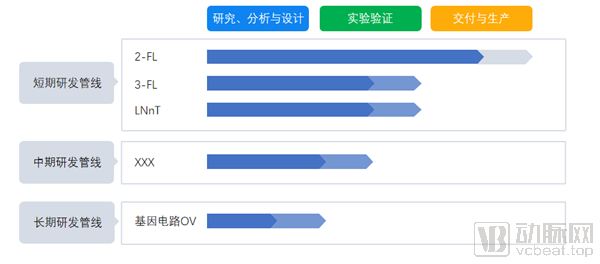
Yixi Biologics Product Pipeline

Filing for patented technologies is one of the key strategies employed by Yixi Biotechnology to establish technical barriers within the industry. Liu Zhenyun stated that the company is currently advancing its intellectual property layout, having already submitted four patent applications, with several additional patents in the stage of preparing application materials.
In China, the National Center for Food Safety Risk Assessment released a draft for public comment on the commercial production of human milk oligosaccharides (HMOs) in 2016; however, as of now, no enterprise has submitted production standards. In contrast, in Western developed countries,2'-FL is the only HMO ingredient that has achieved commercial-scale production to date. Nanjing Yixi Biotechnology Co., Ltd. has selected 2'-FL as its inaugural product, which holds strong market potential for export trade.。
Therefore, Nanjing Yixi Biotechnology Co., Ltd. will actively collaborate with leading industry players through models such as technology licensing and R&D contracts to advance the commercial production standards for human milk oligosaccharides (HMOs) in China. Meanwhile, the company will also engage in close cooperation with fermentation enterprises, food additive manufacturers, and dairy-related companies to pave the way for the industrialization of HMO-producing strains, jointly promoting the large-scale industrial production of HMOs.