

CVRx Files for IPO Following $390.6M in Funding to Advance Barostim neo™ for Hypertension and Heart Failure

CVRx
Cardiovascular Device Developer
CVRx was founded in Minneapolis in 2001.As a medical device company, it primarily develops implantable devices for the treatment of hypertension and heart failure.The company has developed the second-generation minimally invasive implantable system, Barostim neo™, for the treatment of heart failure or hypertension.Barostim neo™ is currently available in more than 20 countries worldwide.
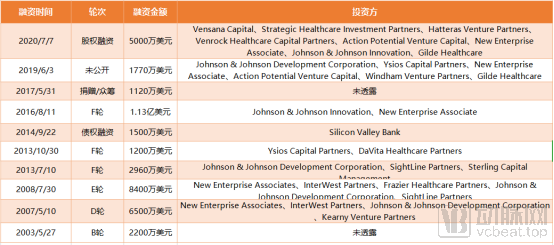
Recently, VCBeat (WeChat ID: vcbeat) learned that CVRx completed a $50 million equity financing round., this round of financing was led by Strategic Healthcare Investment Partners and Vensana Capital, with participation from Hatteras Venture Partners, Venrock Healthcare Capital Partners, Johnson & Johnson, New Enterprise Associates, Gilde Healthcare, and Action Potential Venture Capital. The proceeds will be primarily used for the commercialization of BAROSTIM NEO in the United States.
The Capricious Founder, the Conscientious Successor
In 1999, Robert Kieval co-founded a medical technology incubator with two investment partners. Leveraging this momentum, he established CVRx, Inc. two years after the incubator’s inception and served as its President and Chief Executive Officer.
However, as someone passionate about research, managing the company consumed a significant amount of Robert’s time and energy, preventing him from fully dedicating himself to the research endeavors he loved.In 2006, Nadim Yared succeeded Robert in his role, while Robert assumed the position of Vice President and Chief Technology Officer of the company.Since then, Robert has focused on the research and development and expansion of CVRx’s technologies, seeking new directions for the company’s applications and products.
Previously, Yared served as Vice President of Medtronic Navigation, a leading global provider of integrated image-guided surgery products. In 2002, Yared joined GE Medical Systems, where he worked for approximately ten years, assuming increasingly significant roles, including Vice President of GE’s European X-ray business.
Leveraging his extensive management experience, Yared successfully persuaded the CVRx board of directors that he was the most suitable candidate for CEO. Upon assuming the role, Yared remarked that he initially lacked confidence.
Because CVRx’s initial goal was to lower blood pressure, a field crowded with startups attempting to treat hypertension by ablating renal nerves. Yared said he knew CVRx’s approach was more effective, but he recognized that excessive competition would only hinder the company’s growth. If renal denervation succeeded, CVRx would likely cannibalize the market; if it failed, it would affect public perception of using devices to treat hypertension.
Yared is deeply aware that CVRx needs to change its strategy for long-term development.Yared decided to focus the company’s efforts on heart failure.CVRx had research ideas in this field since its early days, but the company abandoned them due to concerns that it could not compete with cardiac resynchronization therapy developed by large medical technology companies.
As for the reason behind shifting focus to hypertension, the primary driver was the urgent need in the United States for a novel therapeutic approach to curb the rising prevalence of hypertension. Hypertension affects approximately 65 million people in the U.S. alone.
It is estimated that in 2007, one in every eight deaths worldwide was attributable to hypertension. Furthermore, hypertension doubles the mortality rate among patients with stroke, coronary heart disease, and other vascular diseases. Approximately 25% of patients with hypertension are unable to achieve blood pressure control through pharmacological therapy.
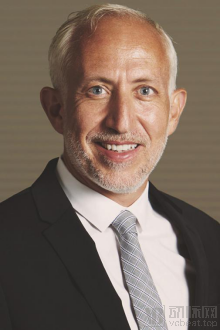
Current President and Chief Executive Officer, Nadim Yared
Treating Heart Failure by Leveraging the Body’s Own Pressure and Blood Pressure Regulation Systems
Before Yared assumed his role at the company, CVRx rapidly developed a medical implantable device—the Rheos™ System—benefiting from its founder’s background as the creator of a medtech incubator. The system works by delivering mild electrical signals to modulate the body’s blood pressure regulation mechanisms, thereby lowering blood pressure. It is indicated for patients whose hypertension cannot be adequately controlled through medication and lifestyle modifications.
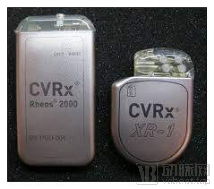
Rheos™ System
The Rheos System comprises three components: a small pulse generator implanted beneath the clavicle; two leads implanted in the left and right carotid arteries, respectively, and connected to the pulse generator; and the Rheos Programmer System, an external device used by physicians to adjust the activation energy output from the generator.
During operation, the device delivers microcurrents to activate the blood pressure regulation system, which then sends signals to the brain indicating elevated blood pressure.Then, the brain sends signals to various parts of the body, including the blood vessels, heart, and kidneys, to lower blood pressure.
In 2006, when Yared joined the company, the device began clinical trials in Europe and the United States. It received CE Mark approval in 2007. Leveraging the clinical trials conducted in Europe and the United States, the company was able to commence sales in Europe. The successful entry into the European market significantly bolstered CVRx’s confidence, prompting it to focus on advancing the Rheos Pivotal Trial in the United States.
The success or failure of this trial will determine whether CVRx’s implantable device can obtain FDA premarket approval (PMA). The significance of this is self-evident. Following the conclusion of the trial, CVRx published the results in the Journal of Hypertension, which showed that patients’ blood pressure was significantly reduced after 12 months of using the Rheos system. Among the trial participants, 13 patients experienced an average reduction of 39 mmHg in systolic blood pressure and 26 mmHg in diastolic blood pressure.
CVRx demonstrated the efficacy and safety of its device using real-world trial data, swiftly securing approval for commercialization in the United States. Did it stop there? Certainly not. Yared had always hoped that CVRx would focus its research efforts on heart failure. Over the next few years, CVRx dedicated itself to R&D, aiming to develop an implantable device specifically for heart failure.
On a day in August 2011, CVRx launched its second-generation implantable device, Barostim neo™, to improve heart failure symptoms and enhance quality of life.Compared with the first-generation device, Barostim neo™ features a new unilateral 1 mm electrode and a newer, smaller, and more advanced stimulator, enabling more targeted and effective treatment of the condition. These improvements will reduce surgical time and extend the device’s service life.
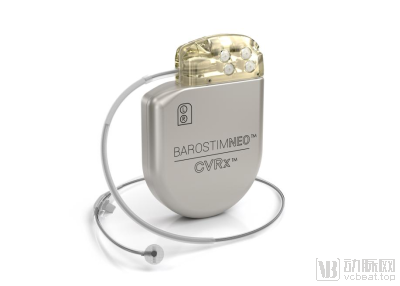
Barostim neo™
Mode of Action: Barostim neo™ delivers signals via leads to specialized cells in the carotid artery, thereby activating the body’s baroreceptors. The baroreceptors then transmit processed signals to the brain, which responds by issuing commands to the heart, kidneys, and blood vessels, resulting in vasodilation.
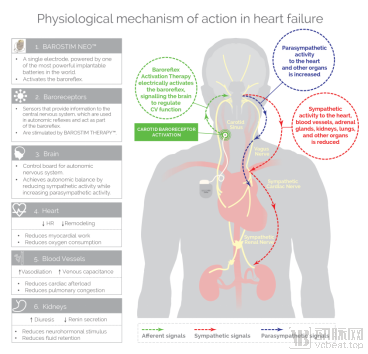
Mechanism of Action of Barostim neo™
Barostim neo™, like the first-generation device, operates throughPrickStimulating the body's own systems to treat diseases.During operation, microcurrent stimulation is applied to the body’s baroreceptors, inducing vasodilation and thereby facilitating systemic blood flow. Meanwhile, it helps regulate heart rate, reduces cardiac workload, and improves renal function.
However, the Barostim neo™ device has its own requirements for patients.Condition 1: Primarily targets patients who have undergone pharmacological therapy but have not experienced significant improvement in quality of life. Condition 2: Requires the patient’s ejection fraction to be ≤35%.Patients who meet these two criteria can use Barostim neo™ to improve their quality of life.
The Product Has Received Marketing Approval in Europe and the United States Consecutively
In 2015, CVRx released a set of randomized controlled clinical trial data for Barostim neo™, with the results presented at the 2015 Heart Rhythm Society annual meeting. The data showed that patients’ quality of life improved significantly after six months.
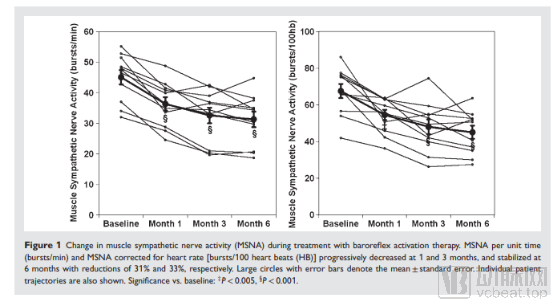 Clinical Trial Results
In September of the same year,Based on clinical trial data for the Barostim neo™ implantable device, it has received CE approval from the National Standards Authority of Ireland (NSAI) and is authorized for commercialization in Europe.In the subsequent years, CVRx patiently conducted clinical trials to accumulate more data, with results consistently confirming the safety and efficacy of the Barostim neo™ device.
In 2019, the FDA’s Center for Devices and Radiological Health (CDRH) authorized the marketing of CVRx’s Barostim neo™ implantable device following its review of the company’s Phase III randomized controlled clinical trial data.
Device R&D and Disease Management Must Proceed in Parallel
Whether it is the advent of new drugs or the development of medical devices, all serve to demonstrate that the essence of medicine is to enable every individual to live a healthy life. With continuous advancements in medical science, an increasing number of innovative devices and therapeutic targets are being discovered. In the field of device-based therapy for heart failure, several implantable devices for the treatment of heart failure have been successively developed in recent years.
Research on medical devices for heart failure is currently in full swing,In March last year, the first subject was successfully enrolled in the clinical trial of Tongxin Medical’s CH-VAD product.As of June last year, four clinical cases had been completed at Beijing Fuwai Hospital and Central China Fuwai Hospital; all four patients had been discharged in good condition.
In May this year, at a press conference held by Wuhan Union Hospital, it was announced that the team led by Dong Nianguo, Director of the Department of Cardiac and Great Vessel Surgery at the hospital, had independently developed and manufactured a passive cardiovascular device—the atrial shunt.The first human implantation surgery in China has been successfully completed; the patient recovered well and was discharged shortly thereafter.In June this year, Xinrui Medical's left ventricular isolation device entered the clinical stage.
However, the management phase following treatment should not be overlooked, as patients cannot immediately resume normal life after diagnosis and treatment. They often experience recurrent fluctuations between stable disease and acute exacerbations of instability. Such recurrent episodes lead to progressively worsening myocardial damage, thereby increasing mortality rates.
It can thus be seen that,In addition to treatment modalities, disease management for patients post-treatment is also required.Continuous cardiac monitoring and timely response are required to maximize the stability of the patient’s condition.
In this regard,In April this year, Novartis partnered with Tencent to launch an intelligent management platform named “Heart Care Xiao Ai (AI).”, patient needs-oriented and intelligent management-centered, helping patients achieve considerate and convenient self-management of their diseases.
Health management will become an indispensable part of residents’ lives in the future, with chronic disease management, cancer care, and disease prevention poised for rapid development. Currently, a growing number of people are prioritizing wellness and paying close attention to subtle health issues.
With the growing awareness of health management among residents, it is foreseeable that this will bring significant room for growth to the health management industry.The Chinese government is currently intensifying efforts to promote and encourage public health awareness, while domestic enterprises need to rapidly establish a presence in various niche segments of the health management sector.