

Matrix Partners China's Decade-Long Healthcare Investment Strategy: Full-Spectrum Portfolio and Logic Unveiled
Across all investment sectors, Matrix Partners China stands out as a highly distinctive player. In the internet industry, Matrix broke away from the conventional practices of traditional USD-denominated funds, eschewing a “sniper” approach in favor of broad industry coverage and assembling an investment team with diverse backgrounds. These unconventional strategies at the time yielded substantial returns and enhanced reputation in the internet sector, empowering Matrix with greater confidence and capability to place bets in other tracks.
Zhang Ying (Founding Managing Partner of Matrix Partners China) has stated that the success and wealth generated by their past focus on the mobile internet have empowered Matrix Partners to press forward with greater confidence, daring to invest in more inspiring sectors such as new drug development, aerospace, and hard technology. Meanwhile, he regards the eventual failure of these frontier investments as a high-probability event, while viewing financial success as a low-probability outcome. It is the firm’s outstanding investment performance in other sectors that gives Matrix Partners the resilience to withstand failures in frontier exploration.
This marks one of the rare occasions in recent years that Matrix Partners China has openly revealed its ambitions in the biopharmaceutical sector. In fact, Matrix Partners China has been focusing on the healthcare industry since its inception. Its portfolio companies are distributed across four key segments: digital health, medical devices and diagnostics, innovative drugs, and healthcare services.
Peijia Medical, which listed in Hong Kong this year, is an early-stage portfolio company that Matrix Partners China has invested in since its Series A round. Last month, the company was also included in the Hang Seng Composite Index. However, behind this spotlight lies Peijia’s years of diligent cultivation within the industry. Xu Chuansheng, Founding Managing Partner of Matrix Partners China, stated that while strategically positioning itself in the biomedicine sector, Matrix’s 90-member post-investment team is also committed to providing more comprehensive and meticulous value-added services, striving to assist and support entrepreneurs in areas such as recruitment, government relations, and emergency medical care.
For the venture capital community, Matrix Partners China is synonymous with innovation. External expectations for its investments extend beyond fundraising scale and return rates; there is also an anticipation that Matrix will stay ahead of the market curve. In the healthcare sector, how has Matrix Partners China dared to be a pioneer? VCBeat attempts to analyze the investment strategy of this firm, known for being “just as generous with capital, but uniquely cool,” within the healthcare landscape.
Healthcare is a sector in which Matrix Partners China has continuously increased its investments. A review of the firm’s healthcare portfolio reveals that its investments span four major areas: digital health, medical devices and diagnostics, innovative drugs, and healthcare services, with more than 75 portfolio companies.
Over the years, Matrix Partners China has expanded its coverage across an increasingly broad range of niche sectors within the healthcare industry. The firm has made strategic investments spanning multiple stages of the healthcare value chain, from drug development to patient-provider connectivity. In terms of investment scale, the amounts committed have been steadily increasing.
According to Matrix Partners China’s 2019 year-end review, healthcare accounted for 15% of its new investment categories. In 2020, the proportion of healthcare deals among Matrix Partners China’s new investments surged significantly, reaching approximately 35%, underscoring the firm’s strong confidence in the healthcare sector.
Why Matrix Partners China Has Delved Deeper into the Healthcare Sector: Yu Zhiyun, Managing Director of Matrix Partners China, stated, “As a comprehensive fund, Matrix Partners China has had a strong appetite for healthcare investment from top to bottom since its inception. Many people are unaware that Zhang Ying actually majored in chemistry; he has worn a lab coat, raised laboratory mice, performed DNA extraction, and conducted research on multiple sclerosis.”
In recent years, the sector that Matrix Partners China has invested in most heavily is innovative drugs. Public data shows that since 2018, it has maintained a pace of investing in four to five companies annually in this field, with a total of more than ten innovative drug enterprises invested.
For years, Matrix Partners China’s most preferred sector has been digital health. Of the more than 60 healthcare companies it has invested in, digital health ventures account for half, totaling over 30. From 2014 to 2020, as digital health went from peak to trough and then into a period of adjustment, Matrix Partners China was arguably the only firm in the industry that maintained such consistent investment in the sector.
Why Does Matrix Partners China Remain Bullish on Digital Health? Perhaps it is because the digital health sector shares many similarities with the mobile internet sector, where Matrix Partners China previously achieved significant success. Matrix Partners China views digital health as a track with the potential to generate “excess returns.” By “excess returns,” it refers to identifying companies with sustained growth within an industry that is itself experiencing continuous expansion, thereby achieving excess returns through the compounding effect of both factors.
Furthermore, in the medical device sector, Matrix Partners China has demonstrated a mature and prudent investment strategy; although its deal volume is relatively modest, it has successfully backed multiple industry-leading enterprises. In the healthcare services sector, Matrix Partners China has invested in leading companies across various sub-sectors, including health check-ups, family medicine, dentistry, and rehabilitation.
 Matrix Partners China’s Investment Cases in the Healthcare Services Sector (Data sourced from the VCBeat database; the table records only Matrix Partners China’s initial investment round)
From the perspective of investment rounds, as an early-stage institution, Matrix Partners China’s investments are mostly in angel and Series A rounds prior to Series B, with investment amounts typically in the tens of millions of RMB. Its consistent focus on early-stage ventures and substantial support are relatively rare in the industry.
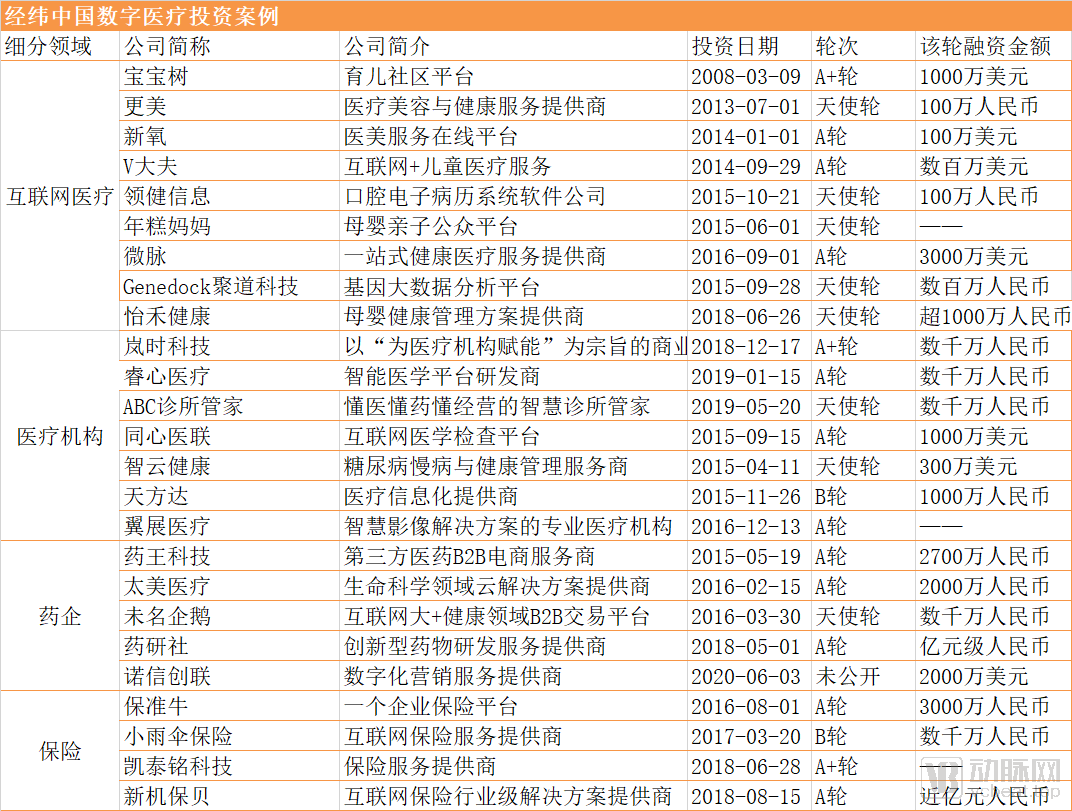
Data sourced from the VCBeat database; the table records only the first investment round by Matrix Partners China.
Among Matrix Partners China’s healthcare investments, the most prominent is its commitment to digital health.
Digital healthcare is a relatively nascent sector. Compared with investments in pharmaceuticals and medical devices, it carries greater uncertainty, making it difficult to assess the challenges of digital transformation in the healthcare industry and its future growth ceiling. Consequently, investing in digital healthcare is no less challenging than investing in innovative drugs and medical devices.
In the digital healthcare sector, Matrix Partners China identified and invested early in leading domestic companies such as So-Young, Gengmei, Zhiyun Health, Taimei Medical Technology, Drug Research Club, Weimai, and Nuoxin Chuanglian.
From the distribution of investment cases, it can be seen that Matrix Partners China’s investments in digital health companies have penetrated nearly every niche scenario within healthcare, covering numerous sectors such as internet-based healthcare, healthcare informatization, medical big data, and artificial intelligence in healthcare.
Beneath the seemingly broad and fragmented distribution, Matrix Partners China has in fact developed a comprehensive theoretical framework for digital health investments. In the article “The RMB 6 Trillion Healthcare Industry Chain: Opportunities and Quadrant Shifts in New Healthcare Services” published by Matrix Partners China, Sun Linghao, Vice President of Matrix Partners China, proposed that “New Healthcare Services” redefine digital healthcare, dividing the main providers of digital healthcare services into four quadrants: insurance, healthcare institutions, pharmacies, and pharmaceutical companies. The Matrix Partners healthcare investment team focuses on these four quadrants to identify companies that leverage technology to enhance industry efficiency.
Regarding investment criteria, Sun Linghao mentioned that Matrix Partners China typically evaluates a company’s investment value from three perspectives:
First, focus on market size multiplied by EBITDA, then multiplied by IRR.. If it is a new model with better EBITDA, the initial acceleration is very rapid. Some companies can achieve more than twofold growth in the first one to two years, which is exceptionally fast for B2B companies.
Second, focus on genuine EBITDA improvement.. For many businesses, achieving a 3%–5% increase in EBITDA is no small feat. Matrix Partners China focuses on the essence of business: Does it truly represent advanced productive forces? Does it genuinely embody new production relations and new models of benefit distribution?
Finally, there is the founder’s comprehensive capabilities. As in other sectors, Matrix Partners China also places significant emphasis on a founder’s overall competencies, including technological innovation prowess, fundraising ability, strategic decision-making, execution capability, and team-building skills.
From 2014 to 2015, when digital health was at its peak, Matrix Partners China, like most industry participants, held high expectations for the sector. However, instead of following the initial wave of highly hyped companies, Matrix invested in a cohort of “late-mover” companies that gained competitive advantage through strategic timing.
Take Smart Health as an example. When Matrix Partners China invested in Smart Health, the chronic disease management sector was in the midst of the “Hundred Sugars War,” with over 100 apps targeting diabetes alone. Although Smart Health was not the earliest entrant in the diabetes space during this period, it has since emerged as the undisputed industry leader.
Yu Zhiyun stated, “Kuang Ming demonstrates exceptional capabilities in fundraising and monetization. He also possesses strong integration skills, enabling effective synergy between the medical and internet teams.”
Matrix Partners China firmly believes that before understanding the value of digital health, it is essential to first understand the industries and needs of the customers served by digital health solutions.
Sun Linghao stated, “The founders of digital health companies we invest in are typically deeply rooted in a specific niche of the healthcare industry for many years and possess thorough industry familiarity. For instance, Yanyanshe, which serves large pharmaceutical enterprises both domestically and internationally, must have its founder first gain a profound understanding of the pain points faced by clients in clinical trials. This insight enables the provision of products and services that address customer needs, thereby truly enhancing efficiency and creating value.”
Looking ahead, Matrix Partners China will continue to refine and update its investment thesis while maintaining a strong focus on digital health investments. Although the era of unfettered growth in digital health has passed and the advantages of leading enterprises are becoming increasingly prominent, Matrix Partners believes that there remains significant room for improvement across the entire “new healthcare services” industry chain.
Take the blue-ocean market of health insurance as an example. The commercial insurance sector abroad has developed rapidly, giving rise to industry giants such as UnitedHealth Group. In contrast, this market in China remains largely untapped. While major insurers are certain to seize this significant opportunity, it does not mean that startups have no chance at all. Therefore, Matrix Partners China will continue to seek out such investment targets, uncovering market demands that large corporations overlook.
Currently, Matrix Medical’s investment team consists of only six members; however, the number of investors at Matrix Partners China who are actively invested in digital health projects exceeds six. Leveraging the advantages of its comprehensive fund structure, Matrix Partners China can collaborate across multiple teams to source digital health opportunities. For instance, Taimei Medical Technology was jointly identified through the collaboration between the Matrix Medical team and the Enterprise Services team.
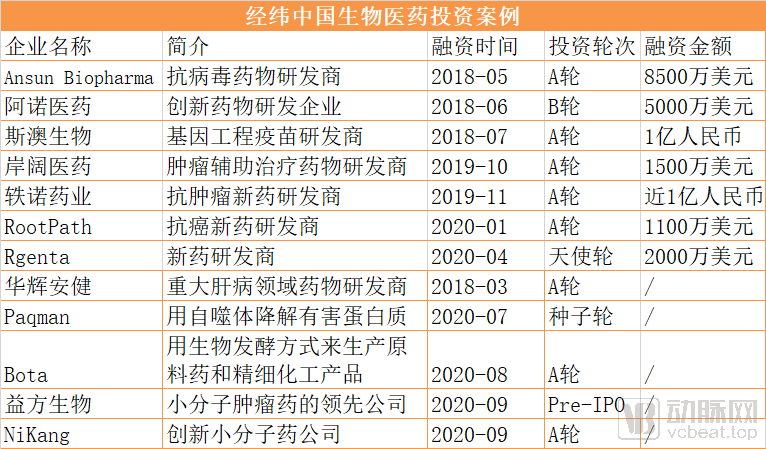
Data sourced from the VCBeat database; the table records only the first investment round by Matrix Partners China.
A review of Matrix Partners China’s healthcare portfolio reveals a clear trend: its focus on innovative drugs. Although not heavily publicized, Matrix has in fact been making deep investments in this sector for the past three years.
The development of innovative drugs in China has evolved from the early stages of simple introduction and follow-on imitation to a phase of independent innovation. Matrix Partners China also hopes to identify the true driving forces behind innovation in the second half of drug R&D.
Several domestic and international innovative drug companies invested by Matrix Partners China include Ansun, Arno Therapeutics, Ankang Pharma, Yinuo Pharma, RootPath, Rgenta, Huahui Anjian, Paqman, Bota, Yifang, and NiKang, with a primary focus on first-in-class products.
Ansun Biopharmais a clinical-stage biopharmaceutical company dedicated to developing first-in-class innovative biologics that address the most urgent and unmet clinical needs in the field of respiratory infections.
Anno Biopharmais a clinical-stage global biopharmaceutical company dedicated to developing differentiated, innovative immuno-oncology therapeutics. Currently, all three of Anora Pharmaceuticals’ clinical-stage drug candidates are in-licensed from external partners. Ankua Pharmaceuticals is a novel drug R&D company focused on first-in-class innovative adjuvant cancer therapies, aiming to address the high incidence of side effects associated with cancer treatment.
InnoPharmais a startup focused on the research and development of first-in-class novel drugs, with therapeutic areas covering diabetic complications, oncology, and immune-mediated inflammatory diseases.RootPathIts core technological advantage lies in its powerful new target discovery platform. The platform provides a range of services, including single-cell analysis, tumor diagnostics, and immunotherapy.Rgentahas established a unique platform for the discovery and screening of RNA-related targets, dedicated to developing RNA-targeted therapeutics against disease-associated undruggable targets, thereby addressing unmet clinical needs.
Huahui AnjianIts founder is a world-class expert on hepatitis B, who discovered the receptor for the hepatitis B virus and, based on this finding, identified a biologic drug with the potential to achieve a complete cure for hepatitis B.PaqmanLeveraging the Mechanism of Autophagosome-Mediated Protein Degradation in Humans to Degrade Harmful Large Proteins for the Treatment of Genetic Diseases.BotaProduction of Active Pharmaceutical Ingredients (APIs) and Fine Chemical Products via Biological Fermentation.Innovent BiologicsA leading company in small-molecule oncology drugs.NiKangSpecializes in developing innovative small-molecule drugs targeting challenging therapeutic targets.
From the perspective of investment layout, Matrix Partners China’s investment logic aligns with the development trajectory of China’s innovative drug industry mentioned above.
Yu Zhiyun stated, “In the era of simple importation, license-in was also a viable business model; we have even invested in one such company. Early on, pursuing license-in deals involved relatively low costs and allowed for the selection of promising product candidates. However, if companies pursue license-in strategies at this stage, they are likely to incur substantial costs only to end up with a rather mediocre product.”
“In the past, relying solely on domestic innovation was sufficient to capture a certain market share. For instance, even among the top five or six domestic PD-1 inhibitors, companies could still secure profitable returns, partly because PD-1 represents a major therapeutic category. From the perspectives of national reimbursement and healthcare system costs, such domestically driven innovations will continue to present opportunities for a considerable period. However, in the next phase, the boundary between domestic and international innovation is expected to become increasingly blurred.”
Our optimism regarding global innovation stems from the development trends within China’s industrial landscape. From the perspective of technological evolution in biomedicine, Matrix Partners China aims to identify next-generation technologies across various niche sectors.
In the high-risk, high-barrier biopharmaceutical industry, although Zhang Ying has stated that Matrix Partners China views failure as an inevitability in this sector, this does not mean that the firm engages in reckless speculation. In the biopharmaceutical field, only by having a thorough grasp of the direction of technological development can one truly identify the areas where opportunities emerge.
Yu Zhiyun stated, “There is no doubt that innovative drugs carry inherent risks. We manage these risks by leveraging our understanding of technological evolution. For instance, in the two major fields of gene therapy and cell therapy, first-generation companies have already secured product approvals; therefore, we invest in second-generation products, which maintain strong innovativeness while presenting more controllable risks. Additionally, Matrix Partners China adopts a broader approach to investment stages in the innovative drug sector. Some innovative drug companies command high valuations despite having no revenue yet; from the perspective of corporate development stages, they still fall within the early-stage focus of our attention.”
Regarding the valuation bubbles and fierce competition for projects that have emerged in the innovative drug sector in the post-pandemic era, Dr. Yu Zhiyun stated that it is easy for bubbles to form during an industry’s rapid growth phase. Just as crossing a river inevitably creates some splashes, the internet industry experienced similar dynamics over the past two decades. In the long run, there is no doubt that innovative drugs will become a significant component of China’s national economy. As with the development of the internet, the path involves first closing the gap and then achieving surpassing leadership. In the field of innovative drugs, China still lags significantly behind the West. Given that the industry is currently undergoing rapid expansion, the presence of certain bubbles is normal.
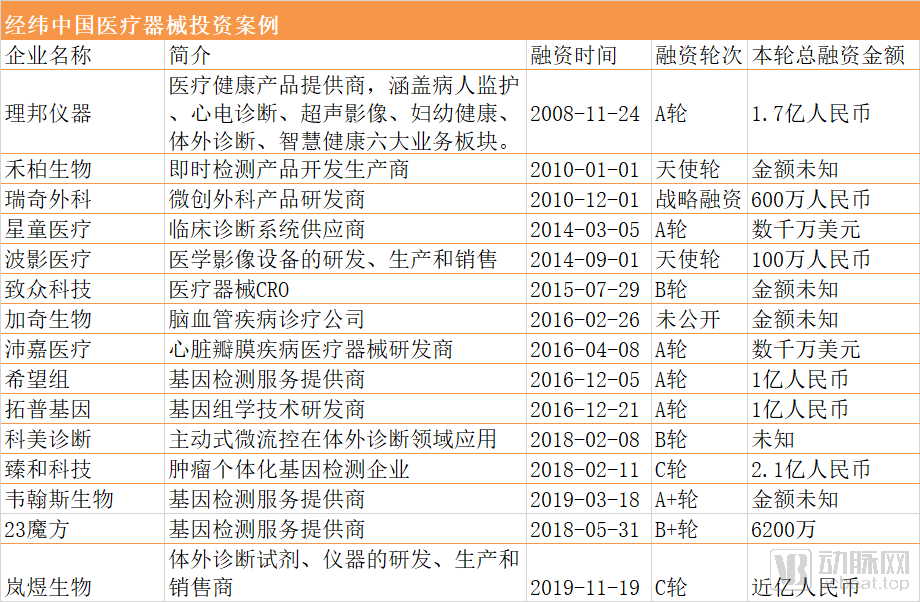
Data sourced from the VCBeat database; the table records only the first investment rounds made by Matrix Partners China.
In the medical device sector, Matrix Partners China has invested in leading domestic companies such as Edan Instruments, Peijia Medical, Rich Surgical, Kemei Diagnostics, Starkey Medical, Zhenhe Technology, and Lanyu Biology. As in the innovative drug field, Matrix Partners China is also practicing long-termism in the medical device industry.
Take Peijia Medical, which listed on the Hong Kong Stock Exchange this May, as an example. As the Series A investor in Peijia, Xu Chuansheng and Yu Zhiyun, Founding Managing Partners of Matrix Partners China, have been deeply involved since day one of evaluating the project, accompanying Peijia Medical from obscurity to industry leadership.
In the fields of digital health and innovative drugs, Matrix Partners China is willing to take risks, which aligns with its inherent nature and also stems from the high uncertainty inherent in these two sectors. However, in the medical device sector, Matrix’s style is relatively conservative. The characteristic of new drug investment is that while the risks are high, the upside potential is equally significant. Matrix believes that medical devices follow a different investment logic, as the biggest challenge in their development is the limited market ceiling for individual products.
Yu Zhiyun believes that each sub-sector presents its own challenges, with the medical device sector primarily constrained by the limited market ceiling for single-product categories. As an experienced investment firm, Matrix Partners China prioritizes determining whether an opportunity is “small but beautiful” or “large and beautiful.”
How to Identify Markets with Genuine Growth Potential: A Large Patient Population Is a Necessary but Not Sufficient Condition for a Large Market. Simply selecting a disease with high incidence does not guarantee long-term success; the key challenge lies in gaining insights into clinical trends.
In an interview, Dr. Yu Zhiyun shared the following example: In China, many people do not seek medical attention unless they are suffering from a life-threatening condition. In contrast, overseas healthcare practices show that individuals tend to seek medical care when their quality of life is affected. Taking joint replacement as an example, elderly Chinese individuals often choose to endure mobility limitations. However, in the United States, many people opt for joint replacement surgery once their ability to walk is impaired.
In addition to a large patient base, the product must also have high technical content, with companies holding pricing power over it and future unit prices remaining relatively high.
He added, “Take Peijia Medical as an example. The cardiac interventional valve and neurointerventional sectors in which it operates both feature a large patient population and high technological barriers. This is also why the three or four companies in the cardiac interventional valve sector have all performed well.”
In reviewing investment strategies in the healthcare sector, Yu Zhiyun stated that a critical factor for investors is recognizing that every opportunity has its optimal time window. Matrix Partners China believes the ideal entry point coincides with either a technological inflection point or a market turning point.
“Whether in the sectors of innovative drugs, medical devices, or healthcare services, China’s vast population base means there is ample room for improvement across many areas of the medical market. However, certain improvements may take up to 20 years to fully realize. As an investment institution, once you identify an opportunity, do you enter in the first year or wait until the tenth year? Thus, timing is critically important in investment,” said Sun Linghao.
In fact, Matrix Partners China’s team has always possessed a strong healthcare DNA. As previously mentioned, Zhang Ying holds a Master’s degree in Biotechnology from Northwestern University. He conducted research for three years at the Urology and Neurology Research Institute within the Veterans Affairs Medical Center at the University of California, San Francisco. During this period, his work primarily focused on human genetics and bioinformatics, aiming to discover gene therapies for cancer and immune diseases. His investment portfolio includes iKang Healthcare Group and Edan Instruments.
Xu Chuansheng, another founding managing partner, had previously invested in Kanghui Medical before joining Matrix Partners China, bringing with him extensive experience in healthcare investment. Xu pays close attention to entrepreneurial ventures led by Chinese scientists, but he is also acutely aware that the journey from the laboratory to clinical trials, and ultimately to the development of a drug or therapy, is a lengthy process. Scientific research capability is merely the first step in biopharmaceutical entrepreneurship; thereafter, founders must consciously work to progressively refine their company’s entire business system. During this transition, Matrix Partners provides scientists not only with capital but also post-investment assistance in recruiting talent for finance, management, and sales roles, offering comprehensive support for corporate operations.
In interviews with investors from Matrix Partners China, they consistently demonstrate a profound professional commitment to healthcare investment, while also showcasing the unique creativity and imagination characteristic of Matrix Partners China.
In healthcare investments, Matrix Partners China will, as in other sectors, remain focused on the Chinese market and continue to deploy capital steadily. In terms of investment stage, Matrix Partners China will stick to early-stage investing in the healthcare sector. As Zhang Ying stated, early-stage investing has become increasingly precarious, yet he remains deeply passionate about it. Matrix Partners China is not only willing to share the peaks of success with entrepreneurs but also committed to standing by them through ups and downs and setbacks.