

Genecast Announces Multi-Cancer Early Screening Roadmap at CSCO 2020 Satellite Symposium, Unveiling Liver and Lung Cancer Breakthroughs
On September 19, 2020, the 23rd National Clinical Oncology Conference (CSCO) was held online, bringing together leading oncology experts from China and abroad to engage in academic exchanges on the latest advancements in the field of oncology.
As a leading enterprise in the field of early cancer screening, Berry Oncology unveiled its strategic roadmap for expanding from single-cancer to multi-cancer early screening and diagnosis at the conference. Over the next three to five years, the company aims to deliver research outcomes for the early screening and diagnosis of 5 to 8 high-incidence, high-risk cancers in China, while advancing the industrial commercialization of these corresponding projects. Additionally, it shared its forward-looking clinical research findings in multi-cancer early screening and diagnosis.

On August 16, 2020, PreCar’s first commercialized product, Laisining®Premiered on the Health Client of People's Daily, with over 2 million views. Laisining®While Berry Oncology, the developer behind the technology, has gained widespread industry recognition, Mr. Zhou Jun, CEO of Berry Oncology, also stated that the company has established its own strategic roadmap for early screening and diagnosis of multiple cancer types. At the CSCO Early Cancer Screening Satellite Symposium, Mr. Zhou shared Berry Oncology’s vision and conceptual framework for its future multi-cancer early screening roadmap.
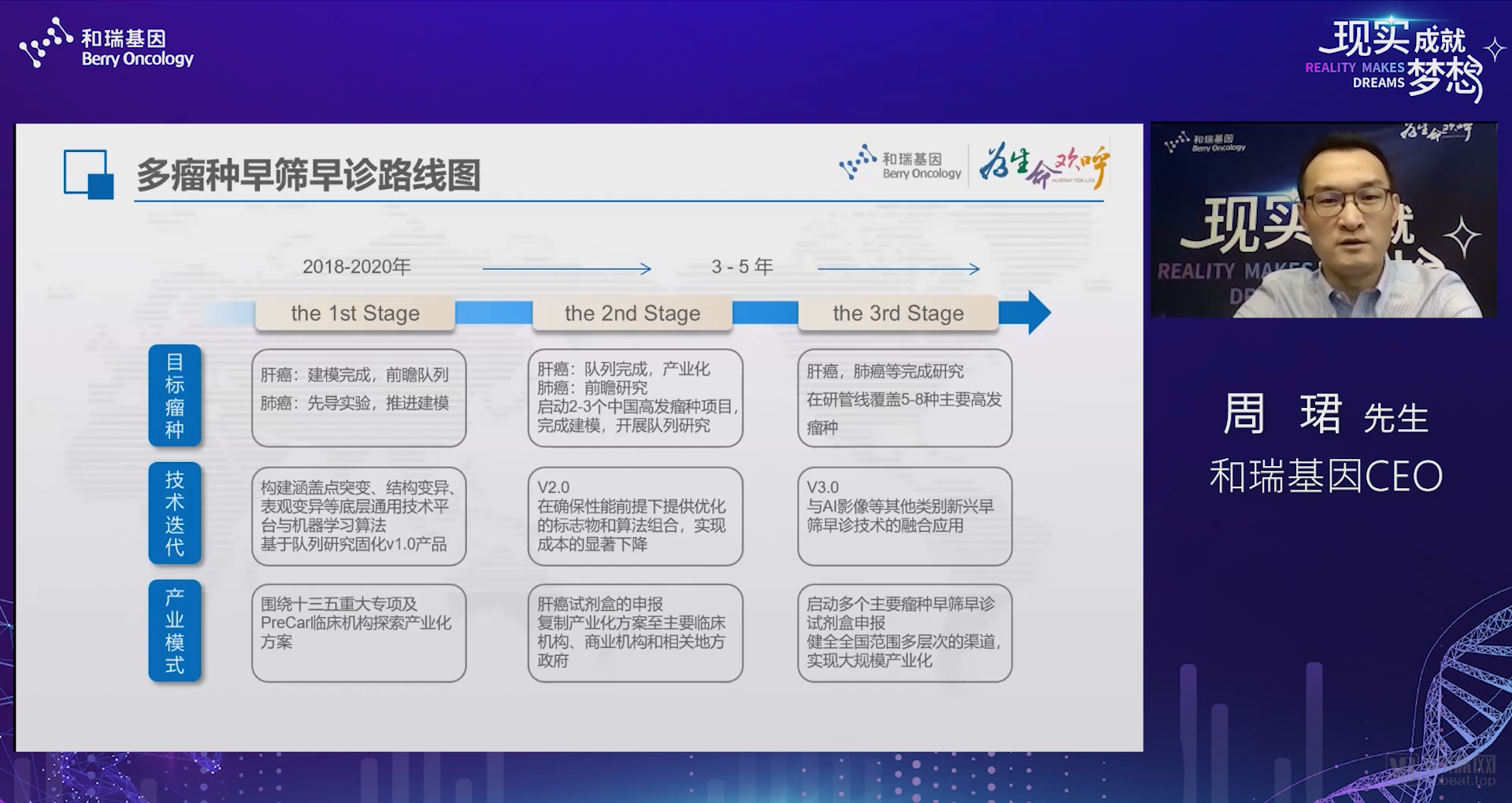
Berry Oncology's Roadmap for Early Screening and Diagnosis of Multiple Tumor Types
At the conference, Mr. Zhou Jun stated, “Berry Oncology has established a universal underlying technology platform capable of early screening and diagnosis for multiple cancer types. We aim to expand from early screening for a single cancer type to multiple cancer types, ultimately achieving early screening and diagnosis for all cancers, thereby helping all tumor patients receive precise treatment.”
In its early years, Berry Oncology remained dedicated to the early screening and diagnosis of liver cancer, achieving remarkable results. Its prospective ultra-early warning screening project for liver cancer, involving a cohort of 10,000 participants (known as the PreCar project), has been rolled out across multiple centers in China. With new research advancements emerging annually, it has become a significant event drawing considerable attention within the industry.Berry Oncology has progressively evolved from retrospective studies to large-scale prospective cohort research, expanding its exploration from a single tumor type to multiple tumor types. The company is also transitioning from pure scientific research toward the comprehensive industrialization and commercialization of its innovations.
Starting with early screening and diagnosis of liver cancer and continuously expanding coverage to more tumor types, Berry Oncology revealed at its satellite symposium on early cancer screening that its detection technology has already shown promising results in the early screening and diagnosis of pulmonary nodules.

Since the launch of the PreCar project for early liver cancer screening, Berry Oncology has actively advanced its progress, achieving encouraging milestone accomplishments. At the Berry Oncology satellite symposium on early tumor screening, Professor Chen Lei from the National Liver Cancer Science Center/Shanghai Eastern Hepatobiliary Surgery Hospital shared the latest findings of the PreCar project.
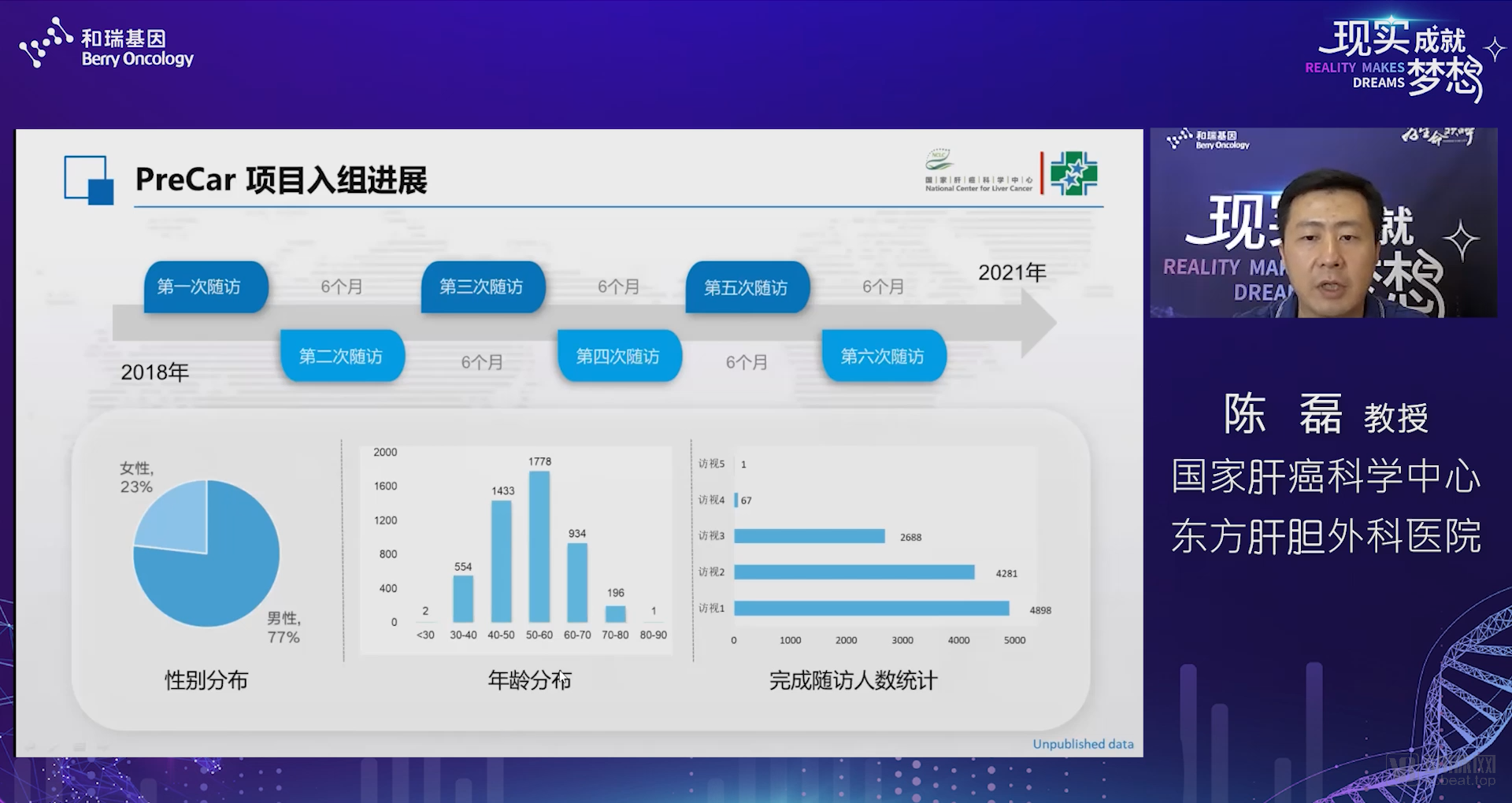
Professor Chen Lei Presents Latest Progress on the PreCar Project at the Conference
“To date, we have managed over 5,000 patients with liver cirrhosis, the vast majority of whom are between 40 and 70 years of age,” said Professor Chen Lei. “We employ next-generation sequencing technology based on cell-free DNA to mine and analyze multi-dimensional omics data from patients’ plasma cell-free DNA.”Both screening specificity and sensitivity were significantly higher than those of alpha-fetoprotein (AFP)-based testing..” It is reported that the NGS testing technology applied in this early screening solution for liver cancer,Its screening efficacy is more than three times higher than that of tests based on alpha-fetoprotein (AFP) and protein induced by vitamin K absence or antagonist-II (PIVKA-II).. When combined with multiple screening modalities, this technology enables more precise personalized cancer screening.
In addition to further advancing the PreCar project and accumulating clinical data, Berry Oncology has developed, relying on this project,Laisining: The First Early Screening Application Product for Liver Cancer®R&D has been completed and implemented, enabling more precise, non-invasive detection of very early-stage hepatocellular carcinoma risk in patients, with a 6–12 month earlier warning compared to traditional detection methods., thereby securing a valuable time window for effective clinical intervention in high-risk populations for liver cancer. Furthermore, among patients with small hepatocellular carcinoma who tested negative in traditional serological screening, the positive detection rate of cfDNA was 54.5%, demonstrating that Laisining® can also significantly enhance the accuracy of clinical screening for small hepatocellular carcinoma.

Lung cancer is the leading cause of cancer-related mortality, accounting for nearly one-quarter of all such deaths. Consequently, there is a significant clinical need for timely and effective early screening and diagnosis of lung cancer.
Currently, low-dose spiral CT is the commonly used method for early screening of lung cancer in clinical practice. However, spiral CT screening is a double-edged sword,Detection is only feasible in patients with a significant risk of lung cancer. For benign liver cirrhosis nodules smaller than 4 mm, the false-positive rate is extremely high, reaching up to 95%., thereby significantly increasing healthcare costs due to spiral CT screening and imposing a substantial medical burden.
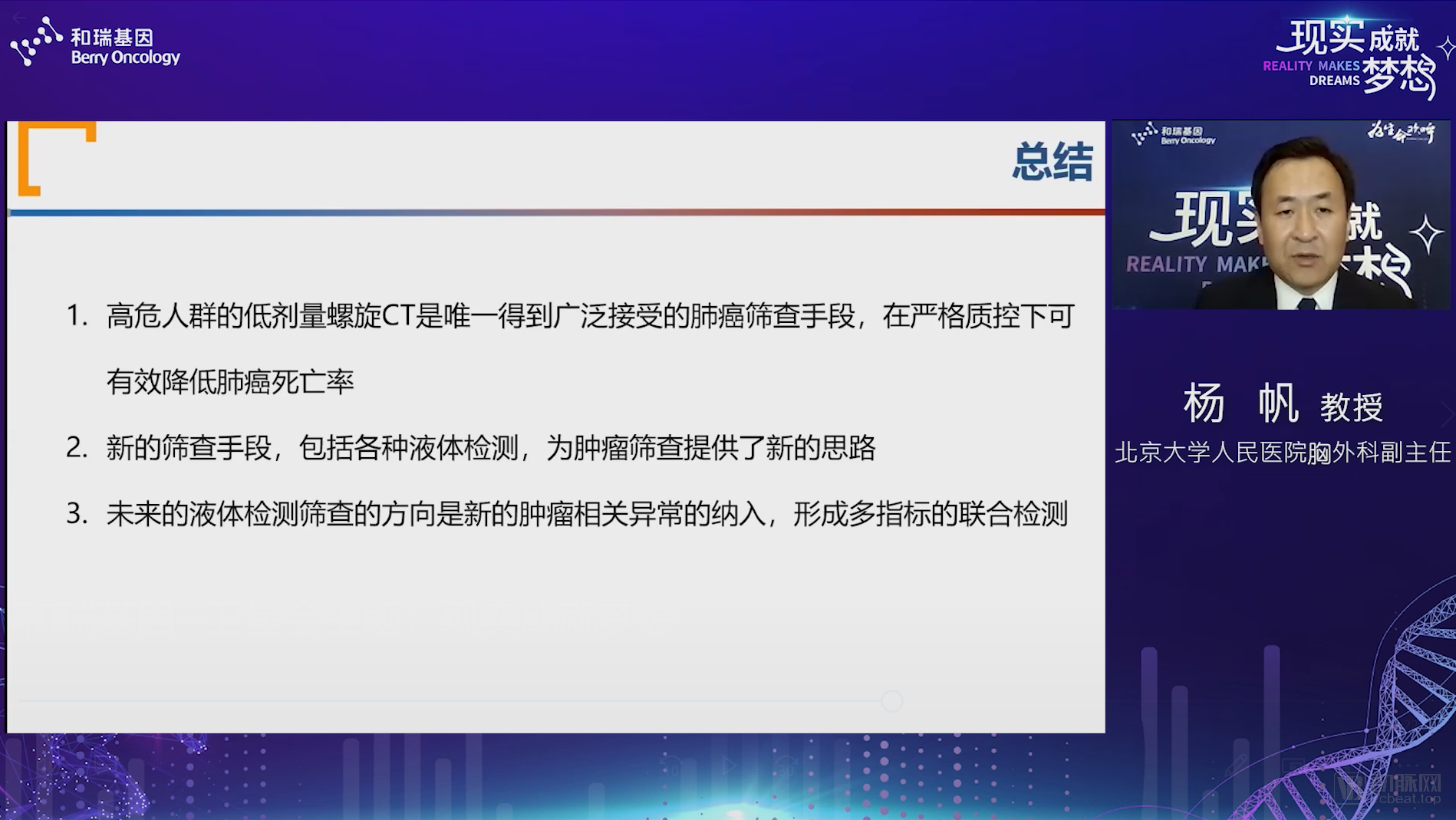
Professor Yang Fan Shares Insights on Early Screening for Lung Cancer at the Conference
The high cost and low benefit of low-dose spiral CT screening have highlighted significant pain points, driving an urgent market need for new screening methods. “Integration with imaging represents a crucial future direction, and liquid biopsy offers a completely new approach,” said Professor Yang Fan from Peking University People’s Hospital at the conference. “Liquid biopsy can detect various tumor-derived markers circulating in the body, including circulating tumor DNA (ctDNA) and exosomes, truly aiding in the screening of malignant tumors and addressing the issue of false positives in early lung cancer screening.”
However, the level of circulating DNA in patients is extremely low, with a half-life of only 20 minutes, which poses another technical challenge for early screening technologies that use ctDNA as a tumor marker for detection. “If a person tests negative on imaging studies, even if mutant genes are detected, it cannot be conclusively determined that the individual has lung cancer. This is also a major pain point in clinical lung cancer testing,” added Professor Yang Fan.In the future, it will undoubtedly be necessary to combine multiple detection methods. I believe that integrating liquid biopsy screening with conventional imaging techniques to form a multi-parameter combined assay is the key to overcoming this major challenge.”
Fortunately, Berry Oncology has been deeply engaged in the field of early cancer screening for many years. Benefiting from its long-term accumulation of clinical tumor screening technologies, its early screening and warning solutions have already met clinical needs. It has shown particular promise in the early screening and diagnosis of pulmonary nodules, helping doctors and patients to timely and effectively warn against the onset and progression of early-stage lung cancer, thereby improving the early screening rate for lung cancer.

"From liver cancer to lung cancer, this marks the beginning of Berry Oncology's expansion from a single tumor type to multiple tumor types. Multi-tumor coverage has always been Berry Oncology's strategic deployment. At the conference, Mr. Zhou Jun also proposed an important 'One-Three-Five' summary based on this, outlining Berry Oncology's strategic path for the next three to five years."First, we will continue to solidify our “One Coverage” strategy: establishing a general-purpose underlying technology platform that encompasses various new general computing technologies and is built upon artificial intelligence. Second, over the next three to five years, Berry Oncology aims to deliver research outcomes for the early screening and diagnosis of 5 to 8 types of high-incidence, high-risk cancers prevalent in China, while advancing the industrial commercialization of the corresponding projects.”
Berry Oncology initially focused on early screening and diagnosis for a single cancer type. However, with the accumulation of clinical data in precision oncology screening and continuous upgrades to its detection technologies, the company has achieved early screening for multiple cancer types and launched multi-specificity products. Since its inception, Berry Oncology has remained committed to its mission of “enabling early diagnosis and treatment for all cancers and ensuring precise therapy for every patient,” making continuous strides in the fields of early cancer screening and diagnosis as well as precision diagnosis and treatment across the entire disease course. It is believed that as Berry Oncology’s early screening initiatives are further implemented and applied in clinical practice, they will benefit more cancer patients and accelerate the rapid development of China’s early cancer screening industry.