

Harmonious Gene's Large-Panel NGS Testing Drives Precision Oncology: A Prospectus Overview
From clinical oncology to tumor pathology research, an increasing number of tumor-associated mutant genes have been identified. The variability and complexity of tumor genomics necessitate more in-depth molecular subtyping studies, thereby ushering in the era of molecular oncology. Large-panel next-generation sequencing (NGS) has become a prevailing trend in this field, as it enables more comprehensive detection of tumor-related mutations, marking the advent of precision diagnosis and treatment for cancer patients.
At the 2020 CSCO Annual Meeting, Berry Oncology hosted a satellite symposium themed “Rui Bian: Embracing a New Future—Large Panel Testing Empowering Precision Oncology Diagnosis and Treatment.” The session highlighted the clinical applications and research advancements of Berry Oncology’s large-panel testing in immunotherapy and targeted therapy. Its outstanding product advantages and industry achievements sparked extensive discussion among numerous experts.
Among the various molecular diagnostic techniques for tumors, traditional detection methods represented by IHC and FISH have low sensitivity and can only detect specific types of genetic variations. Meanwhile, gene detection technologies represented by first-generation sequencing/PCR fail to meet the clinical need for precise molecular subtyping of tumors due to their limited detection sites.
In contrast, next-generation sequencing (NGS) offers overwhelming advantages by enabling simultaneous detection of multiple genes and loci with speed, convenience, and accuracy. Large-panel NGS testing is increasingly becoming the trend in clinical companion diagnostics and is seeing broader application. At this satellite symposium, Professor Liu Anwen from the Second Affiliated Hospital of Nanchang University also advocated for the use of large-panel testing.
“NGS technology offers numerous advantages, whether in terms of testing convenience and accuracy or in monitoring patient drug resistance. EvenIn several pan-cancer indications and international guideline consensuses, it is explicitly emphasized that drugs based on molecular subtyping advocate for large-panel testing.“...to provide patients with the best possible treatment,” added Professor Liu Anwen. “Large-panel testing will become a major trend in future NGS testing. Existing literature has shown that”Approximately 37% of cancer patients can benefit from large-panel testing., whereas small panels account for only 7%. This substantial disparity has a non-negligible impact on clinical practice.”
The advantages of large-panel testing over small-panel testing are self-evident: first, large-panel testingMore Comprehensive Genetic Loci; 2. Large-panel results canTo Provide Reference for Precision Medication in Clinical Practice; 3. Large-panel testing canTo reduce costs and save time for patients, while exploring potential opportunities for greater patient benefits.。
At this conference, Professor Lu Shun from Shanghai Chest Hospital affiliated with Shanghai Jiao Tong University also acknowledged, “Large-panel testing provides more comprehensive information and a more complete solution. It offers highly valuable reference for clinical diagnosis and treatment in the areas of immunotherapy and targeted therapy.”
Large-panel testing canCovers a more comprehensive panel of target-related genes, overcoming the limitations of hotspot detection, and enables the assessment of TMB, TNB, MSI, as well as immune-positive and immune-negative associated genes., providing a reference basis for immunotherapy and assisting clinicians in making more accurate personalized diagnostic and treatment decisions.
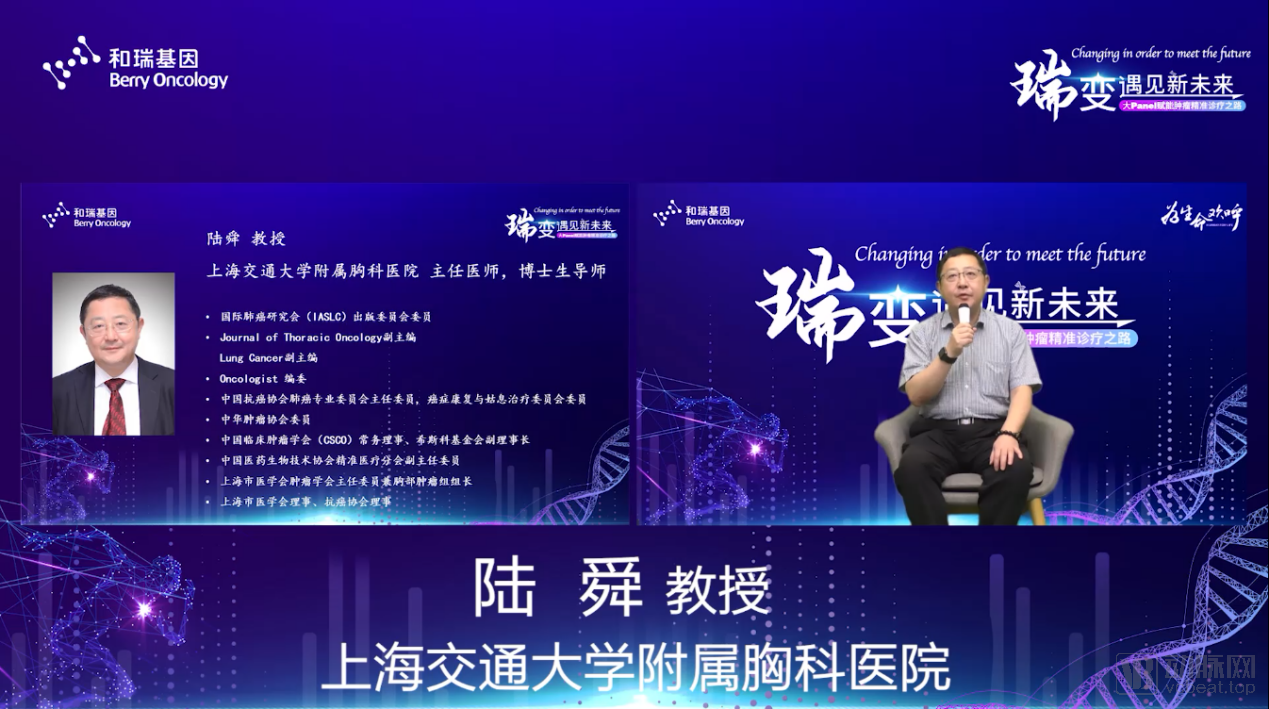
Professor Lu Shun Delivers a Speech at the 2020 CSCO Berry Oncology Satellite Symposium
As large-panel testing is more comprehensive and accurate, it facilitates the identification of novel rare mutations during clinical individualized diagnosis and treatment, thereby enabling more precise pharmacological interventions for patients.
Recently, Berry Oncology collaborated with Professor Liu Anwen to identify rare mutations through large-panel testing, guiding precision medication and achieving significant therapeutic benefits for the patient. The relevant experience was also published inThe internationally renowned oncology journal Journal of Thoracic Oncology (IF=12.46)。
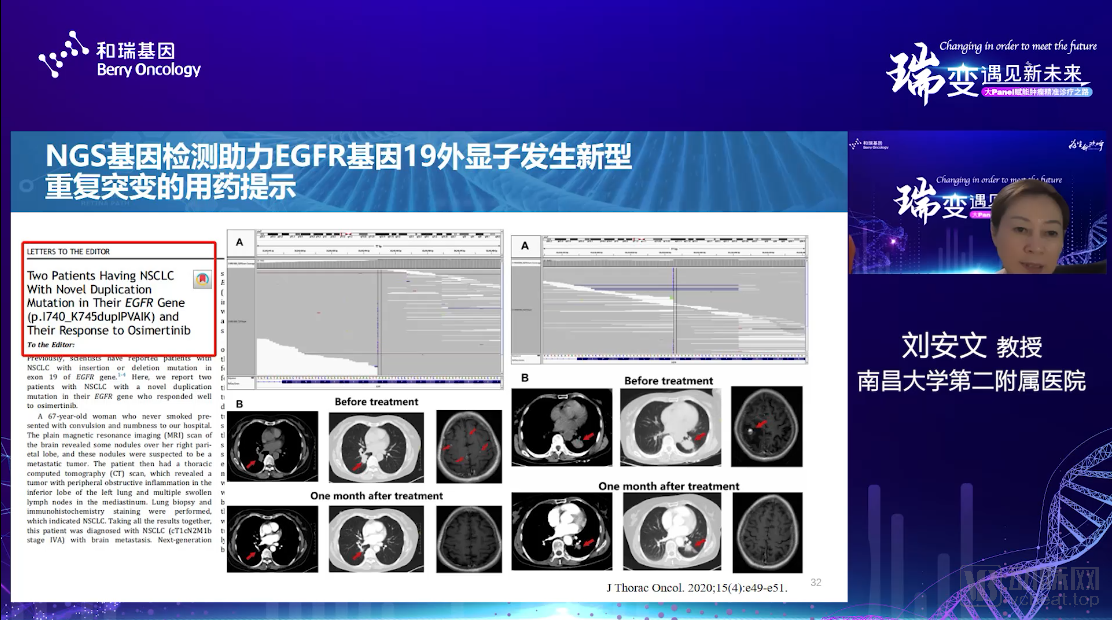
Professor Liu Anwen delivered a lecture on “Application and Progress of Genetic Testing in Targeted Therapy for Lung Cancer”
“Two patients with metastatic lung cancer, in whom rare mutations were detected via Berry Oncology’s large-panel testing, experienced disappearance of brain metastases and shrinkage of pulmonary lesions following subsequent clinical treatment, thereby restoring their hope for survival.” Professor Liu Anwen also shared this case at the conference.
In addition to comprehensive targeted genes and immune-targeted related genes, large-panel testing can even reflect genetic information related to tumor hereditary risk, variant types, and clinical medication, ultimately enabling the acquisition of multiple genetic alteration results from a single large-panel test. Furthermore, clinicians can dynamically monitor large-panel test results to provide safer and more accurate medication guidance, thereby maximizing patient benefit.
“Companion diagnostics constitute a fundamental and critical component in the treatment of patients with multiple tumors. Domestic companies are already capable of providing such companion diagnostic services; Berry Oncology’s ‘He Quan An’ comprehensive large panel for solid tumors covers the whole exome and demonstrates high concordance with tumor mutational burden (TMB) testing,” stated Professor Zhu Bo.
Berry Oncology’s large-panel testing is powered by the company’s globally patented cSMART technology. Its high efficiency, sensitivity, and quantitative capabilities meet the technical requirements for monitoring neoantigens in peripheral blood. The assay covers the full exonic regions of 638 genes, with a detection scope exceeding 3 million bases, achieving a concordance rate of up to 0.99 with whole-exome sequencing (WES) for tumor mutational burden (TMB) assessment, thereby laying a technological foundation for clinical research in immunotherapy.
It is worth mentioning that,Berry Oncology’s cSMART Technology Facilitates Personalized Tracking of Neoantigens: Clinical Research Findings Gain Authoritative Recognition and Are Published in the Prestigious International Scientific Journal *Advanced Science* (IF = 15.804), opening up new horizons for precision immunotherapy.
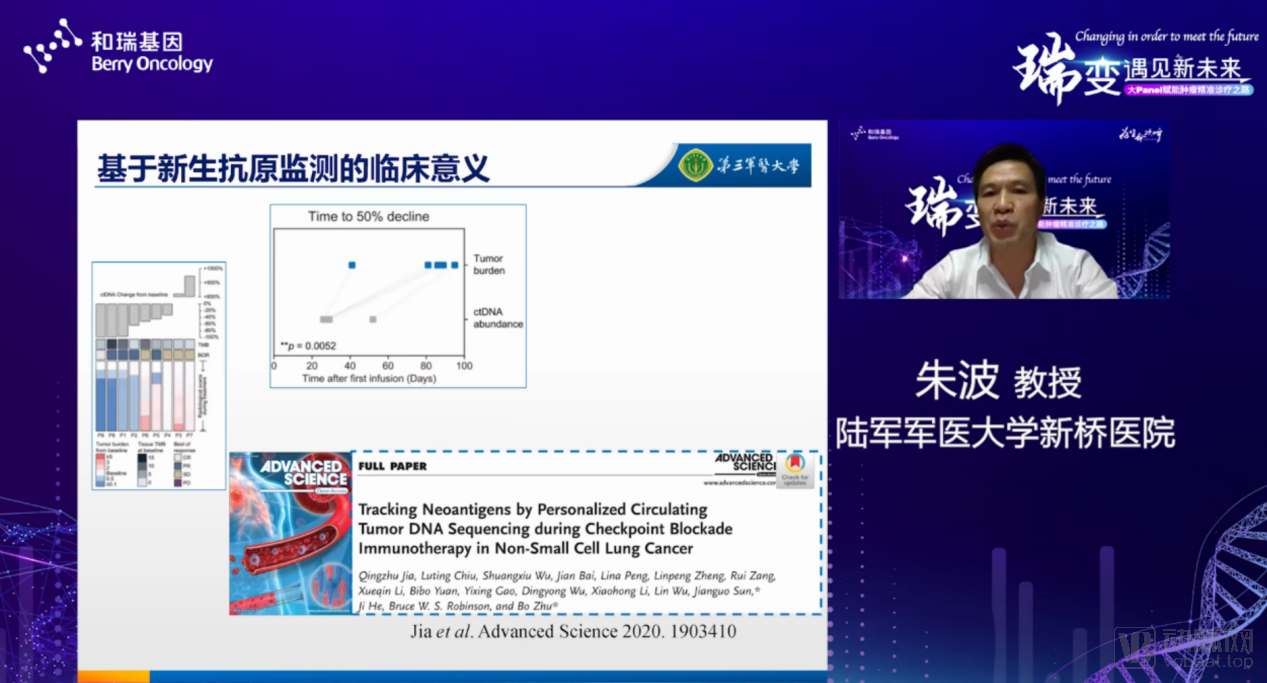
Professor Zhu Bo Delivered a Lecture on “Precision Diagnosis and Treatment of Lung Cancer Based on Neoantigens”
It is reported that Berry Oncology’s large-panel testing comprehensively covers mutation genes recommended by clinical guidelines, as well as 42 fusion genes associated with approved drugs and those under clinical trials. The company’s independently developed high-sensitivity SVscan algorithm enables bioinformatic analysis of fusions at both the DNA and RNA levels, increasing the detection rate of fusion variants by approximately 26.7%. This approach overcomes the low sensitivity inherent in DNA-only testing. By employing dual-level “DNA + RNA” testing, the method reduces false-negative results, ensures precision in patient testing and medication selection, and enables more patients to receive accurate diagnoses and thereby benefit from targeted therapies.