

AI Empowering Lung Cancer Care: Digital Transformation Breakthroughs Across Four Key Dimensions
The advancement of digital technologies is gradually driving transformation in the healthcare industry. In the field of lung cancer, digital solutions such as digital pathology, AI-powered medical imaging, surgical robots, and precision radiotherapy are being closely integrated into clinical practice, increasingly permeating every stage of lung cancer diagnosis and treatment. Consequently, digital enterprises that were not previously focused on the healthcare sector are paying growing attention to this industry.
Lung cancer has long remained one of the most challenging malignancies to overcome, and it currently ranks as the tumor type with the highest incidence and mortality rates worldwide. For many years, leading healthcare companies engaged in oncology diagnosis and treatment have taken on the mission of conquering lung cancer, continuously driving innovation across all aspects of its diagnosis and management.
Recently, the second online exclusive forum of Microsoft’s “AI-Powered Healthcare Assistance: Transformation and Breakthrough” series, aimed at supporting the digital transformation of the healthcare industry, was successfully held online. Participating experts focused on four themes related to the digital transformation of lung cancer diagnosis and treatment, exploring new digital scenarios in this field from various perspectives, including improving diagnostic and therapeutic efficiency, empowering healthcare industry stakeholders through digitalization, achieving personalized diagnosis and treatment, and reshaping the broader health ecosystem.
Before the conference commenced, Zhang Qiang, Head of Product Strategy for the Healthcare Industry at Microsoft China, first introduced to the attendees the primary objectives of the forum and Microsoft’s strategic focus within the healthcare sector. Microsoft has targeted five Industry Priority Scenarios (IPS): empowering patients and the general public, accelerating innovation in medical research and development, safeguarding healthcare information security, optimizing the experience of healthcare professionals, and establishing agile operational processes. Moving forward, Microsoft will continue to empower these five IPS through its intelligent cloud platform.
Following the opening of the forum, Keren Priyadarshini, General Manager of Microsoft’s Life Sciences and Health Industry for Asia-Pacific, and He Lei, General Manager of Microsoft’s Healthcare Industry for Greater China, first presented to the attendees Microsoft’s strategic layout in the healthcare sector and its vision for empowering healthcare.
In her presentation, Keren echoed the five major Intelligent Patient Services (IPS) introduced by Zhang Qiang and demonstrated Microsoft’s enabling capabilities across various scenarios through multiple collaboration cases between Microsoft and other healthcare enterprises. Specifically regarding lung cancer, Keren used a concrete example to clearly illustrate how artificial intelligence technology facilitates early screening for lung cancer.
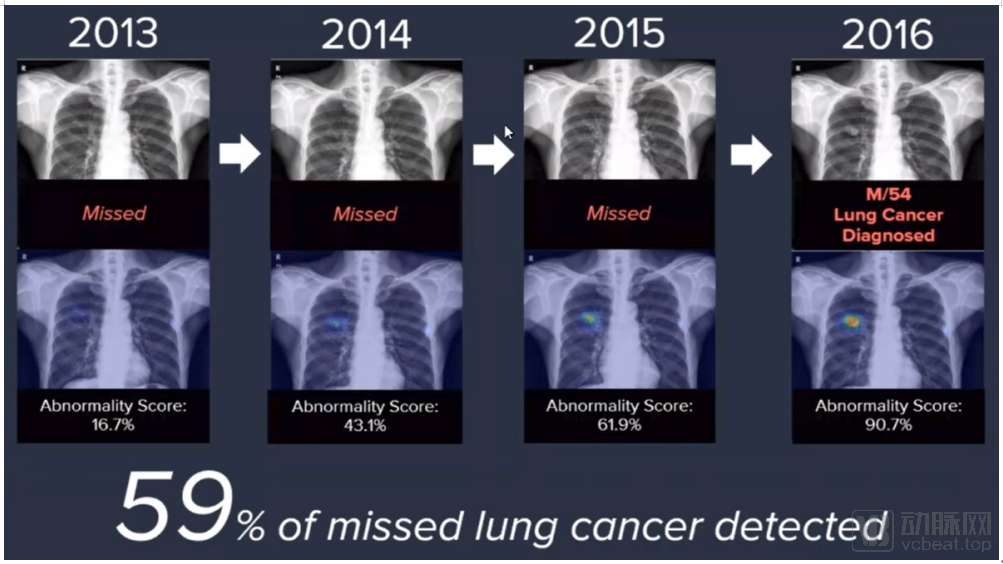
Case Study on Lung Cancer Screening Shared by Keren
In this patient’s four-year medical record, routine image interpretation failed to detect any abnormalities during the first three years, whereas artificial intelligence technology had already identified the lesion area in the second year (2014) and provided a risk index of 43.1%.
“AI is not intended to replace doctors in the future. For instance, in this case, AI serves more as a second reader, acting as an excellent tool for physicians and pathologists during early screening,” said Keren.
He Lei summarized Microsoft’s focus on the digital transformation of the healthcare industry into three key areas: first, supporting the research and development of products related to precision medicine; second, enhancing the work efficiency of healthcare professionals through Microsoft’s products and solutions; and third, improving the overall quality of healthcare services.
In He Lei’s presentation, equally compelling case studies were presented.
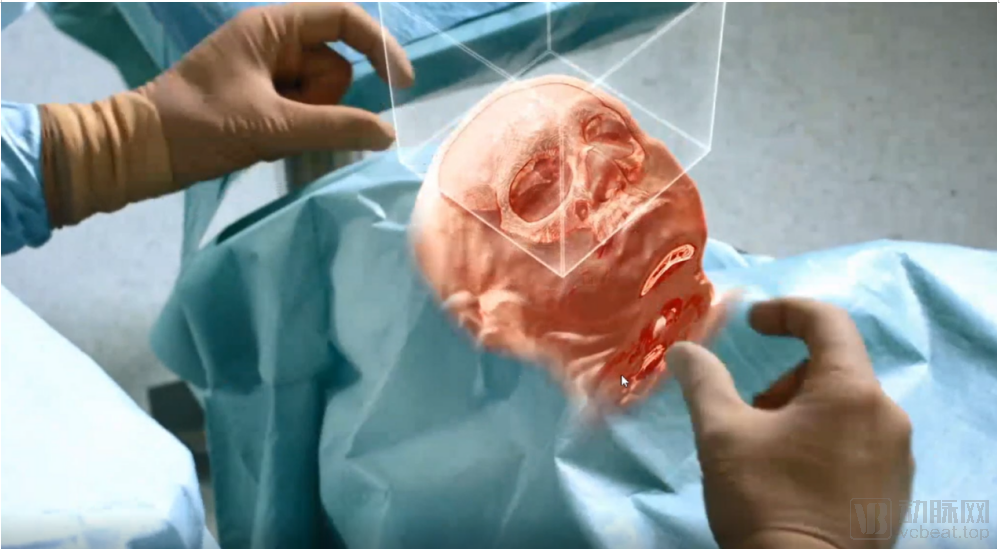
Microsoft HoloLens Promotional Video
Microsoft’s HoloLens offers virtual reality interaction that, in addition to driving transformative changes in medical education, holds significant application value in surgical planning, doctor-patient communication, and surgical collaboration.
“Microsoft is a company with a platform mindset, so we place greater emphasis on enhancing our platform capabilities to unleash its productivity. On one hand, we focus on improving clinical diagnosis and treatment; on the other, we are committed to exploring cutting-edge research areas. We hope to work together with end users and ecosystem partners to further advance this platform-based collaboration,” said He Lei.
Johnson & Johnson is one of the most comprehensive healthcare companies in the world, with a broad business footprint spanning three major sectors: medical devices, pharmaceuticals, and consumer health. In 2018, Johnson & Johnson established the cross-sector Lung Cancer Initiative, focusing on innovations in lung cancer care, particularly breakthroughs in digital innovation. The Initiative centers on three key pillars—Prevent, Intercept, and Cure—to deliver treatments and solutions tailored to three distinct populations: individuals at high risk for lung cancer, patients with early-stage disease, and those with intermediate to advanced-stage disease.
The Johnson & Johnson Lung Cancer Center focuses on the application of digital technologies, primarily in the areas of Prevention and Interception, with the aim of preventing lung cancer or enabling early detection through digital means. To achieve this goal, the Center is accelerating progress through close collaboration both internally and externally. For instance, during the Prevention stage, the Johnson & Johnson Lung Cancer Center is partnering with J&J’s Consumer Health division to co-develop a suite of mobile applications designed to help smokers better understand the health risks associated with smoking, thereby supporting smoking cessation efforts.
For another example, during the Intercept phase, Johnson & Johnson favored digital medical robotics products. “According to incomplete statistics, most patients with small pulmonary nodules actually have benign conditions. Clinically, when a patient’s nodule is less than 3 cm, it can sometimes be difficult for physicians to determine whether the nodule is benign or malignant. To err on the side of caution, these patients may all undergo corresponding surgical interventions; however, even minimally invasive procedures can have certain impacts on the lungs. The advantage of Auris Health’s Monarch endoscopic robotic system lies in its ability to localize pulmonary nodules more precisely and reach target sites more effectively than traditional bronchoscopes, enabling physicians to perform high-precision biopsies. This helps better differentiate between benign and malignant pulmonary nodules, thereby reducing unnecessary surgical treatments,” said Jennifer Yang, Head of Johnson & Johnson’s Lung Cancer Center in China.
In terms of treatment regimens, many new lung cancer drugs, such as Johnson & Johnson’s Tecentriq, which was recently approved in China this year, offer favorable patient assistance programs; however, the out-of-pocket costs for patients remain relatively high. Beyond inclusion in the national medical insurance scheme, what other payment solutions will be available for such products in the future?
Commercial insurance may hold the answer to this challenge. Typically, insurers require applicants to be in good health at the time of enrollment. However, Ms. Naya Chu, Director of the Medical Health Management Department at AIA Life Insurance, believes that as diagnostic technologies continue to mature, insurance institutions can explore providing coverage for populations at relatively higher risk. Specifically in the context of lung cancer, such as for individuals with small pulmonary nodules, insurers have the opportunity to offer high-quality coverage at a relatively affordable price to these high-risk users. This can be achieved by leveraging digital platforms to manage patient risks and collaborating with pharmaceutical companies to ensure ongoing access to necessary medications.
“We have also seen many digital solutions. However, after communicating with the medical team, we found that these solutions still have certain flaws. Such solutions actually require stronger underlying digital technologies and more data accumulation to continuously refine the product. We also look forward to seeing Microsoft’s supportive role in the research and development of digital solutions in this area in the future,” said Naya.
The possibilities envisioned by Ms. Naya are already being explored by some pioneers.
Diannei Technology leverages its AI-driven risk assessment capabilities for nodular lesions to empower the insurance industry, providing specialized coverage for individuals with small pulmonary nodules. “Individuals with pulmonary nodules are typically classified as substandard risks and are ineligible to purchase critical illness insurance, yet they have a heightened need for such protection. In collaboration with China Life, Diannei has pioneered ‘Fei An Bao,’ a product specifically designed for this demographic. The core technology employs artificial intelligence algorithms to analyze CT images, predicting lung cancer risk to facilitate pre-underwriting. This allows most individuals with small pulmonary nodules to secure coverage at relatively affordable premiums, while a small number of high-risk cases are identified and refunded accordingly. As a result, the majority of this population can obtain enhanced protection at a lower cost,” said Ge Liang, founder of Diannei Technology.
In addition, Diannei Technology has been committed to leveraging AI to provide comprehensive solutions for the full-course management of lung cancer. At the forum, Ge Liang also shared the core pain points in lung cancer diagnosis and treatment identified by Diannei Technology, which exist in three key scenarios: screening and diagnosis, surgical assessment, and efficacy prediction. 1. How to avoid both missed diagnoses and misdiagnoses during screening; 2. The critical preoperative questions: whether to perform surgery and how to proceed with the operation; 3. How to quantitatively evaluate treatment efficacy, and whether efficacy can be predicted prior to treatment. Addressing the pain points in these three stages, Diannei empowers physicians through digitalization and provides corresponding solutions.
Beyond insurance, the recently concluded COVID-19 pandemic has prompted a large number of pharmaceutical companies to recognize the importance of digital transformation. In this process, digital marketing has emerged as the top priority for pharmaceutical enterprises undergoing digital transformation.
According to Gao Jianfei, Founder & CEO of MedPeer, digital marketing has undergone a three-stage evolution. In the first stage, pharmaceutical companies began using various digital marketing tools in a fragmented manner starting ten years ago. In the second stage, with the rise of internet healthcare, pharmaceutical companies engaged in scattered collaborations with third-party internet healthcare platforms or outsourced the development of WeChat official account platforms. The current third stage can be described as the post-pandemic era, where the COVID-19 outbreak in 2020 significantly accelerated the pace of digital transformation for pharmaceutical enterprises.
“By the third day of the Lunar New Year, our entire company had already resumed work. Due to the pandemic, medical representatives were unable to visit physicians, and offline academic conferences could not be held, leading to a surge in requests from numerous pharmaceutical companies. These enterprises urgently needed to launch online digital marketing platforms. As a result, we have been continuously helping these clients achieve their digital marketing transformation this year,” said Gao Jianfei.
As the integration between digital technologies and the pharmaceutical industry deepens, we are already witnessing the widespread adoption of many digital technologies in clinical diagnosis and treatment.
In the realm of diagnostics, Zhao Zheng, Senior Director of the Clinical Marketing Department at Dian Diagnostics’ Market Center, believes that lung cancer diagnosis and treatment have undergone four stages of evolution: from macroscopic observation of tissues, to the application of pathological techniques, followed by the integration of genetic testing technologies, and finally, to the current era, which incorporates the detection of additional immune-related targets. The depth of lung cancer testing continues to deepen in tandem with the expansion of its scope.
“At present, many of the large-panel tumor tests we conduct generate data volumes reaching several gigabytes. By aggregating these data and performing bioinformatics analyses, we can identify more biomarkers associated with lung cancer, thereby enabling more patients to receive personalized precision medicine,” said Zhao Zheng.
Guo Yanwei, Director of the Oncology Department at the Fifth Affiliated Hospital of Zhengzhou University and Vice Chairman of the Lung Cancer Professional Committee of the Henan Respiratory and Critical Care Society, recalled a product that left a lasting impression on him last year: “At that time, a company demonstrated software for virtual navigation-guided puncture. Previously, our biopsy procedures were largely performed ‘blind,’ often resulting in deviations. Such inaccuracies carried the risk of injuring vital organs, blood vessels, or nerves. However, the integration of artificial intelligence–based virtual navigation with mixed reality technology has significantly enhanced the precision of needle punctures.”
Guo Yanwei also highlighted the opportunities for applying digital technologies in ablation procedures. Similar to the challenges faced in needle biopsy, the primary limitation of thermal ablation lies in the difficulty of clearly visualizing the ablation margins. In the future, if artificial intelligence can leverage thermal sensing to delineate ablation boundaries with clarity, it will enable physicians to control the ablation process with greater precision.
Many speakers expressed their anticipation for Microsoft’s increased efforts in the healthcare sector. The digital transformation of the healthcare industry relies on robust underlying digital technology platforms, which form the foundation of Microsoft’s empowerment of the healthcare sector.
In fact, Microsoft has also been deeply engaged in the healthcare industry. Dr. Eric Chang, Corporate Vice President of Microsoft Research Asia, introduced the achievements and development directions of Microsoft Research Asia in the healthcare sector from three perspectives.
First, regarding datasets. The vast amounts of data required to train artificial intelligence (AI) necessitate significant time investment from clinicians for annotation, which undoubtedly increases their workload. “Therefore, we began exploring AI technologies ten years ago, particularly so-called weakly supervised learning methods, to enable the use of data with incomplete or imperfect annotations for training AI systems. In this area, we have achieved considerable progress.”
Second, regarding samples requiring microscopic examination, Microsoft Research Asia is collaborating with other institutions to leverage deep learning in assisting physicians with the classification of pathological specimens, thereby improving accuracy.
Third, in the field of immunology research, Microsoft Research Asia is also collaborating to analyze immune system responses using digital methods, thereby enabling more effective cancer screening.
Regarding what Microsoft will do in the future, Zhang Qiang, Head of Product Strategy for the Greater Health Industry at Microsoft China, explained the “Three Bs” in Microsoft’s strategy: “The first B is Better Care, which means providing patients with better diagnostic and treatment solutions; the second B is Better Experience, meaning that on the basis of the first B, we hope patients can enjoy a better healthcare experience; the third is Better Insight.”
For Better Care, Microsoft’s solutions enable healthcare teams to achieve enhanced collaboration, provide more automated workflows through the Power Platform, and facilitate continuous patient monitoring via Internet of Things (IoT) technology. For Better Experience, Microsoft helps physicians gain insights into patients’ conditions outside the hospital setting, thereby improving the efficiency of doctor-patient communication. In terms of Better Insight, Microsoft aims to leverage its technological platform to connect and structure multidimensional data across the healthcare industry, ultimately empowering the sector through big data analytics.