

Weibaobao: Empowering Hospital IT Departments with Practical, Homegrown Management Software – Trusted by China's Top Tertiary Hospitals
In February 2023, Weibaobao launched its self-developed “Magic Mirror” low-code development platform. Integrating rapid application development, form design, workflow engine, code generator, and large-screen dashboard design, the platform enables low-code development and reduces coding workload by 70%. Through visual operations such as drag-and-drop of development components, application systems can be rapidly generated to meet users’ informatization needs, allowing them to focus more on business value rather than code development.
The Hospital Information Department serves as a load-bearing wall within the hospital: inconspicuous yet indispensable.
As the information department of a healthcare institution, the most fundamental responsibility of the Hospital Information Department is to ensure the normal operation of hospital information systems. With the rapid development of smart healthcare and connected hospitals, the work undertaken by the Hospital Information Department is no longer limited to the “logistical” functions of simply maintaining computers, handling network cables, and reinstalling operating systems. Instead, it has expanded to include essential new informatization initiatives designed to support hospital operations, improve efficiency, and optimize workflows.
Furthermore, hospital informatization is a crucial avenue for supporting the “New Healthcare Reform,” and the Information Department bears responsibility for the overall planning, construction, and operation of this informatization process.
WeiBaobao was born against this backdrop. In less than four years, it has been deployed in more than 400 hospitals across China. According to the Fudan University Hospital Rankings, 20 of the top 50 hospitals in China have adopted WeiBaobao.
In 2007, after obtaining his master’s degree in computer science from Shandong University, Wang Chunlei joined the Information Department of a local tertiary Grade A hospital. Wang recalled that the work in the hospital’s Information Department was highly diverse, encompassing software, hardware, networking, communication and coordination, as well as promotion and outreach, thereby providing excellent training for one’s comprehensive professional capabilities.
In 2012, Wang Chunlei was recruited as a distinguished talent to teach at a university. Although he left the hospital, he has maintained close ties with his former colleagues there. “I am deeply grateful to my former colleagues at the hospital; that experience of working in a hospital setting played a significant role in my entrepreneurial journey.”
The Information Technology Department is responsible for the hospital’s digital transformation, yet it still relies on manual record-keeping within its own operations. “With numerous and miscellaneous tasks, we are busy throughout the year, but struggle to quantify our workload when preparing year-end summaries. Moreover, low efficiency significantly hinders subsequent issue feedback and data analysis.” In a single sentence, Director Zhu Weiguo of Peking Union Medical College Hospital pinpointed the pain point of the IT department: while the department drives informatization across the entire hospital, its own internal management remains non-digital—akin to tailoring clothes for others while having none to wear themselves.
As the scope of hospital information systems continues to expand and the workload of hospital IT departments steadily increases, the IT department—long accustomed to “treating” other clinical departments—now needs a prescription of its own.
Weibaobao is built upon the ITIL IT operations management framework, tailored to the unique requirements of the healthcare industry. It encompasses a comprehensive suite of functional modules, including IT operations management, project management, requirements management, task kanban, asset and consumables management, inspection and maintenance, departmental scheduling, work logs, and performance evaluation. Currently, Weibaobao serves over 400 clients. “Peking Union Medical College Hospital in the North, Xiangya Hospital in the South, West China Hospital in the West, and Qilu Hospital in the East are known as the ‘Four Heavenly Kings of Chinese Healthcare.’ Three of these four prestigious institutions are our clients.”
Wang Chunlei believes that Wei Bao Bao has gained the favor of top-tier Grade A tertiary hospitals for three reasons:
First, in terms of product design, WeiBaoBao places greater emphasis on convenience and practicality. For instance, its operations and maintenance management module is not simply a software suite developed based on ITIL standards. “Processes that are too rigid will be perceived as overly cumbersome, leading to poor user adoption. Moreover, ITIL is a foreign standard and may not be well-suited for local application.”
Second, WeiBaoBao has developed numerous features tailored to the specific needs of hospitals, such as project management, requirements management, scheduling management, repair submission management, contract and invoice management, and knowledge base management. These functionalities are highly practical and widely applicable, which is why users find WeiBaoBao particularly grounded and user-friendly.
Third, Weibao places particular emphasis on service. Although Wang Chunlei is not involved in sales or development at the company, he oversees implementation and service operations. “With every project we undertake, we aim to build a strong reputation. The healthcare IT community is relatively small, and word-of-mouth referrals naturally drive product sales.”
Wang Chunlei recalled that in the first half of 2019, the Weibaobao team partnered with Peking Union Medical College Hospital (PUMCH) and rapidly established the operational environment. Given that ticket tracking constitutes one of the most significant workloads for the IT department, the Ticket Management Module was deployed first at PUMCH, adhering to the principle of prioritizing urgent needs, which yielded remarkable results. Subsequently, a series of functional modules were progressively integrated into PUMCH’s information system.
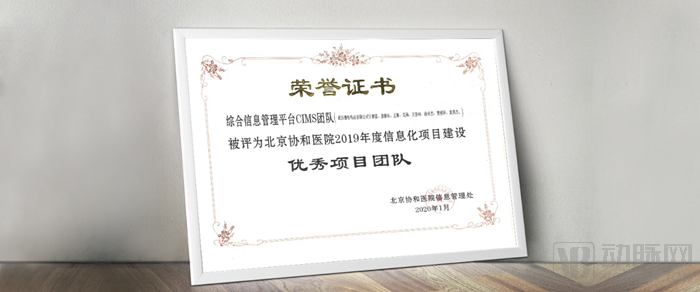
In addition, Peking Union Medical College Hospital manages all projects, documents, requirements, assets, meetings, and other elements through Weibaobao. The hospital has also renamed Weibaobao as the “CIMS System” and specially awarded it the “2019 Outstanding Project Team” award.
Since the onset of the pandemic, Wang Chunlei’s team has further identified the challenges hospitals face in personnel training and assessments. During the pandemic, hospital training programs still required the congregation of medical staff for on-site instruction, which undoubtedly increased the risk of cross-infection. Consequently, online communication and learning exchanges have become particularly crucial.
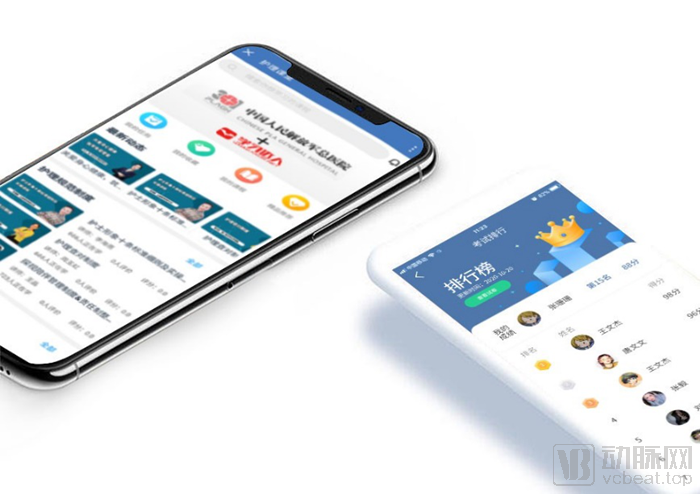
In response to these challenges, the Weibao team rapidly developed and launched a new system called “Learning Master.” This platform enables online training and integrates online and offline examinations with automated score tracking, helping hospitals implement an integrated solution for talent identification, assessment, training, and evaluation. It provides hospital staff with access to online courses, specialized training, pre-exam practice, online testing, and post-exam analysis, thereby reducing training costs and improving efficiency.
Although it has not been online for long, Xuexi Daren has achieved phased results. “At the Chinese People's Liberation Army General Hospital (301 Hospital), the number of Xuexi Daren users has exceeded 5,000, with an average of 4,500 daily visitors. The course videos receive an average of 80,000 views per day, and 90% of users are able to complete their course assignments.”
“The product is merely a vehicle; the key lies in conveying value through the product and delivering high-quality services to customers,” said Wang Chunlei. “During the launch of the project at PLA General Hospital (301 Hospital), any requirements raised during the day would be implemented by night, allowing clients to experience new features the very next day.”
The path of entrepreneurship is fraught with challenges. Addressing the issue of industry homogenization, Wang Chunlei expressed strong confidence: “Products mature through continuous user feedback. We ourselves use Weibaobao’s project management features to manage our own requirements.” To date, through practical application, Weibaobao has received over 4,000 customer suggestions for improvement. “A good product is shaped by its users. Without being tempered by the market, a product cannot gain a foothold in it.”
Wang Chunlei stated, “By not fixating on profitability, remaining undisturbed by external factors, striving for ultimate perfection in one endeavor, and continuously pushing forward, even a pig can take flight.”