

Mendel Genes: Revolutionizing Gene Sequencing with Internationally Leading Targeted Capture Library Preparation Technology
Genes are increasingly entering the public eye. Genetic sequencing is also revealing its true form through the continuous passage of time.
As we entered the second decade of the 21st century, the U.S. genomics company Illumina developed a high-throughput gene sequencing platform, bringing about a disruptive transformation in the cost and efficiency of gene sequencing. This change rapidly revolutionized the healthcare sector, extending gene sequencing from research services to clinical diagnostics and gradually opening up the mass market.
Given the current penetration rate, gene sequencing still has vast room for growth. So, who will be the next business legend in the field of gene sequencing? VCBeat will continue to closely monitor the gene sequencing sector and explore the development trajectories of various enterprises.
Recently, Guangzhou Wande Gene Medical Technology Co., Ltd. (“Wande Gene”) achieved outstanding results in the finals of the “2020 ‘Maker Guangdong’ Biopharmaceutical SME Innovation and Entrepreneurship Competition,” hosted by Guangdong Medical Valley, leveraging its cutting-edge technology and innovative projects. Allen Chen, Chairman of Wande Gene, stated, “This competition helped Wande Gene promote its project and connect us with multiple investors and partners across the upstream and downstream value chain.”
Wande Genomics is an integrated research, development, and production institution specializing in the frontier of life sciences. It focuses on the research and development of next-generation sequencing (NGS) technologies and has independently developed internationally leading products, including novel non-invasive prenatal testing (NIPT) and non-invasive cancer detection assays. Its R&D products are primarily applied in prenatal screening, newborn screening, cancer screening, personalized oncology medication guidance, and genetic health examinations.
Allen Chen, Chairman of Wande Gene, majored in mathematics during his undergraduate studies. During his master’s and doctoral programs, he conducted research in mathematical biology under the supervision of his advisor—a discipline later renamed bioinformatics. In 2012, when China’s gene sequencing industry was just taking off and bioinformatics experts were in short supply, Allen Chen decided to return to China, recognizing the greater development opportunities available there.
Allen Chen stated, “The crux of gene sequencing lies in technology; as long as costs are reduced, gene sequencing will benefit a broader population.” Consequently, Allen Chen left his position at a multinational corporation and co-founded Wande Gene in 2016 with like-minded partners, dedicating themselves to advancing next-generation sequencing (NGS) technology. To date, Wande Gene has been granted two invention patents, secured software copyrights for twelve independently developed core bioinformatics analysis technologies, and had five additional invention patent applications accepted by the China National Intellectual Property Administration (CNIPA).
The numerous patented inventions are inseparable from the outstanding core team at Wande Gene. Its core team comprises industry veterans with expertise in molecular biology, bioinformatics, and operational management, while its technical team includes members from prestigious U.S. research institutions such as the University of California, Berkeley. For instance, Chairman Allen Chen is an expert in bioinformatics and biostatistics who has engaged in research and teaching for over 25 years at renowned research institutes and biotechnology companies, including Thermo Fisher Scientific, Lawrence National Laboratory, Vaxgen (an AIDS vaccine company), and the Department of Mathematics at the University of California, Berkeley.
After years of research and development by its core team, Wande Gene has independently developed a targeted capture library preparation technology, which has been granted a national invention patent. Allen Chen stated, “Targeted capture library preparation technology is a multiplex PCR-based target region capture and enrichment technique established for high-throughput sequencing platforms. It can be widely applied to the detection of numerous diseases, including genetic disorders.”This technology performs targeted sequencing of disease-associated regions, significantly reducing sequencing costs while improving disease detection rates.”
Wande Gene’s other core technology is its big data analytics cloud platform. This platform replaces complex Linux operating systems and numerous bioinformatics software tools with a web-based interface, enabling parallel analysis of multiple high-throughput sequencing results simultaneously. It can handle massive datasets generated by sequencing techniques such as RNA-seq and whole-genome analysis, producing in-depth mining reports. By analyzing raw data, the platform delivers analytical reports for clinical interpretation within the same day.
Notably, Wande Gene has established a comprehensive gene database that incorporates data from authoritative public resources such as dbVar, PubMed, OMIM, ClinVar, LOVD, and UniProt, while integrating population variant frequency databases including the 1000 Genomes Project, ExAC, gnomAD, dbSNP, and dbNSFP. Furthermore, Wande Gene is developing its proprietary East Asian population database, which has currently accumulated exome sequencing data from over 5,000 healthy Chinese individuals, more than 3,000 Chinese cancer patients, and over 200 cases of Chinese patients with positive diagnoses of inherited metabolic disorders.
Due to genetic differences between Eastern and Western populations, the East Asian population database established by Wande Gene will help improve the accuracy of gene sequencing.
With breakthroughs in targeted capture library preparation technology, Wande Gene has developed kits for single-gene disorder screening and newborn genetic metabolic disease screening based on exome sequencing. These two products are primarily designed for the screening and diagnosis of birth defects.
Allen Chen stated, “There is a wide variety of birth defects, with more than 7,000 types currently identified. The incidence rate of birth defects in China is as high as 5.6%, and inherited metabolic disorders are one of the leading causes.” To reduce the incidence of birth defects, Wande Gene plans to establish a three-tier prevention system: primary prevention through premarital carrier screening, secondary prevention via prenatal diagnosis, and tertiary prevention through newborn genetic disease screening.
According to forecasts, the market for newborn genetic disease screening is valued at approximately RMB 5 billion, the prenatal diagnosis market at around RMB 10 billion, and the carrier screening market for premarital check-ups at roughly RMB 20 billion. Currently, Wande Gene has developed a screening kit for newborn inherited metabolic disorders, establishing a presence in tertiary prevention. In the future, Wande Gene will launch an upgraded version of its non-invasive prenatal testing (NIPT), extending its reach into secondary and primary prevention, thereby reducing the incidence of birth defects.
Single-Gene Disorder Screening
As inborn errors of metabolism are one of the leading causes of birth defects, single-gene disorder screening will help reduce the incidence of such defects. The single-gene disorder screening test developed by Wande Gene employs whole-exome sequencing technology. This approach shortens turnaround time and reduces the volume of data analysis while selectively capturing most of the information obtainable through whole-genome sequencing, thereby identifying the pathogenic causes of over 4,000 monogenic diseases.
Single-gene disorder screening helps users pinpoint the precise genetic cause of disease, thereby assisting in clinical diagnosis. It enables risk assessment for high-risk individuals with a family history, allowing clinicians to intervene early. Furthermore, it guides reproductive decisions for high-risk individuals with a family history or couples who have already had a first child affected by a genetic condition, helping to prevent the transmission of rare genetic diseases. Finally, single-gene disorder screening can advance scientific research by facilitating the discovery of novel pathogenic genes through the study of rare pathogenic variants.
Neonatal Screening for Inherited Metabolic Disorders
"As for the neonatal metabolic disease screening kit, it is used in conjunction with tandem mass spectrometry for combined diagnosis to avoid missed detections. Currently, genetic disease screening products on the market mainly adopt tandem mass spectrometry technology, which carries the risk of missed or misdiagnoses and fails to provide information on pathogenic genes and their loci.""Tandem Mass Spectrometry + Gene Sequencing"Combined screening protocols can prevent missed diagnoses, provide clinicians with more precise diagnostic evidence, and offer genetic counseling to patients' families.
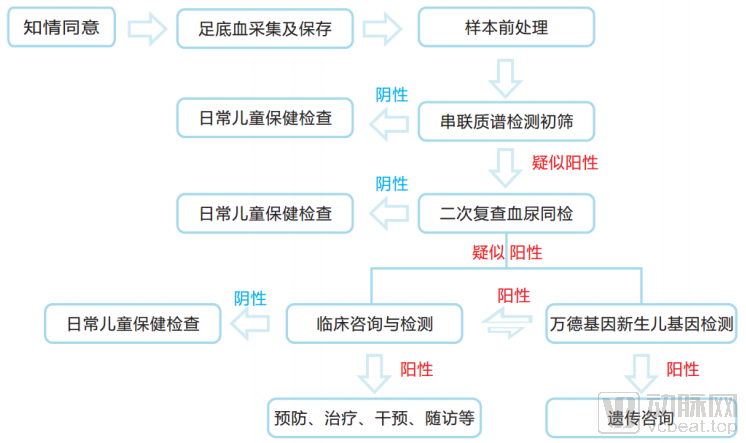
(Flowchart of the Combined Screening Protocol Using Tandem Mass Spectrometry and Gene Sequencing; image provided by the company)
Newborns first undergo tandem mass spectrometry screening. For samples that test positive, genetic testing is performed, analyzing the coding sequences of 290 pathogenic genes associated with 169 inherited metabolic disorders. In newborns with suspected positive results from tandem mass spectrometry, genetic testing helps differentiate and assist in the diagnosis of these diseases.
Allen Chen stated, “Currently, Wande Genetics is applying for the registration certificate for newborn metabolic disease screening. Meanwhile, we are strengthening the research and development of the upgraded version of non-invasive prenatal genetic testing, striving to reduce its production costs so that the product can be included in the national medical insurance scheme, thereby benefiting more users.”
In addition to single-gene disorder screening and newborn genetic metabolic disease screening, Wande Gene has also developed upgraded non-invasive prenatal testing (NIPT), tumor genetic testing, genetic disease testing, and genetic health checkup services and products. The company has established stable collaborative partnerships with medical institutions such as Guangdong Provincial People's Hospital, the First Affiliated Hospital of Sun Yat-sen University, the First Affiliated Hospital of Guangzhou Medical University, the Third Affiliated Hospital of Guangzhou Medical University, and Hong Kong Medical Laboratory.
Wande Genetics has developed a range of genetic testing products based on targeted capture library preparation technology. Thanks to its breakthrough technology, the detection accuracy of these products surpasses that of existing offerings on the market. Allen Chen added, “Wande Genetics collaborates with numerous medical institutions and enterprises, giving it a distinct advantage in distribution channels. Therefore, Wande Genetics has extremely broad prospects for future development. This year, Wande Genetics will partner with clinical laboratories to provide testing services to hospitals and individual consumers.”
Allen Chen concluded by stating, “Vande Gene is currently undertaking a new round of financing, raising RMB 20 million, which will be primarily used to apply for medical device registration certificates and to purchase clinical sequencing instruments and equipment for its medical laboratory.”
About the 2020 Maker Guangdong · Biomedicine Special Competition
The 2020 “Maker Guangdong” Biopharmaceutical SME Innovation and Entrepreneurship Competition, guided by the Provincial Department of Industry and Information Technology and the Provincial Department of Finance, and hosted by Guangdong Medical Valley, focused on the biopharmaceutical sector. With over 100 project registrations, the competition comprised five online preliminary rounds and one offline special final round. Twelve high-quality projects were recommended to advance to the provincial semi-finals, all of which ranked among the top 10 in their respective Enterprise and Maker categories.
Guangdong Medical Valley is a service provider for medical industry clusters, specializing in investment and incubation within the biopharmaceutical and medical device sectors. Its inaugural medical industrial park, located in Nansha, Guangzhou, is designated as a key municipal project with a total gross floor area of 180,000 square meters. To date, the park has attracted over 180 enterprises, including two companies founded by academicians of the Chinese Academy of Sciences or Chinese Academy of Engineering, and 13 entities led by recipients of national major talent programs. It has successfully introduced industry leaders such as Edogene, Genetron Health, and Tianke Ya, covering diverse sub-sectors including biopharmaceuticals, gene editing, vaccines, immunotherapy, high-end medical devices, stem cells, and medical industry funds. The valley is committed to building a world-class international innovation center for the medical industry.