

Huiying Medical Advances AI to Grassroots Clinics with DR-Based Fracture Diagnosis System

HY Medical
Provider of Medical Imaging and Oncology Radiotherapy Platforms
From September 18 to 20, the “2nd China Medical Imaging AI Conference,” hosted by the China Alliance for Industry-Academia-Research and Application Innovation in Medical Imaging AI (CAIERA), was grandly held at the Shanghai International Convention Center. This is the first conference of the year centered on medical imaging; as we count back, it is already golden autumn.
As the conference name suggests, this event featured in-depth discussions on the practical applications and scenarios of artificial intelligence (AI) in the Healthy China Initiative, the existing problems and challenges facing AI in medical imaging, and issues related to the clinical validation of AI products and the development of national databases. With the holding of this conference, the future direction of AI in medical imaging has become clearer.
Deconstructing the Report on the Development of AI in Medical Imaging: Deployment to Primary Care Remains a Major Trend
Two years have passed since the inaugural conference in 2018. Looking back at the medical imaging AI industry in 2018, it can be described as “full of hope.”
As Conference Chair Director Liu Shiyuan stated on the day of the conference: “The grandeur of the inaugural conference in 2018 remains vivid in my memory. Although medical imaging AI was still in its infancy at that time, I saw endless hope in the eyes of every attendee and unwavering conviction on the faces of every speaker.”
Two years after the pandemic. The “2020 Development Report on Artificial Intelligence in Medical Imaging” released by Director Liu Shiyuan at the conference, along with his in-depth analysis of the medical imaging AI industry, clearly demonstrates the strength exhibited by this sector.
The development report shows that,The medical AI industry is gradually breaking through its ceiling, driven by state-backed new infrastructure initiatives and the broader technological advancements in 5G, AI, and data centers.
In terms of industry development, the number of AI startups in medical imaging peaked in 2018 and has since gradually declined. Medical AI is progressively entering the stages of practical implementation and maturity.
In product applicationsThe penetration rate of medical AI deployment in tertiary hospitals has reached 4.5%–7%, and may reach 15%–20% in the future. Due to technological limitations at primary care institutions, the number of deployed devices remains low. Artificial intelligence companies need to expand their presence in the primary care sector and enhance the scenario generalization capabilities of their medical AI products.
Finally, Director Liu Shiyuan concluded:With the advancement of regulatory approvals, the rationalization of capital investment, and deepening corporate research, medical imaging AI is progressing in a healthy direction. In the future, trends in AI development will include multi-disease applications, end-to-end workflow integration, platform-based solutions, hardware-software integration, and online-offline convergence.
Many AI companies are following this trend, and HY Medical, as a leading enterprise in the field of AI medical imaging, is no exception.
Leading the AI Imaging Industry: HY Medical Makes a Stunning Debut
Over the past two years, HY Medical has once again demonstrated its prowess by developing the Dr. Turing® AI Intelligent Fracture Diagnosis System.
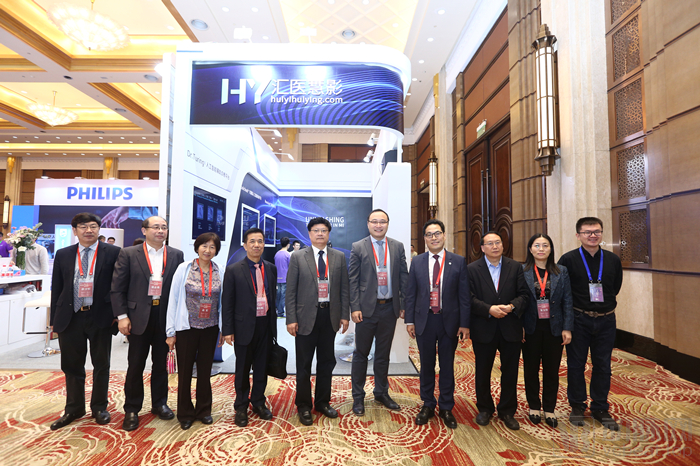
As Director Liu Shiyuan stated inOne of the seven major trends for the future development of the medical imaging AI industry mentioned in “Seven Major Trends for the Future Development of the Medical Imaging AI Industry” is the increasing diversification of product types, with medical imaging AI applications expanding from thoracic and neurological areas to various other body parts.。HY Medical selected the fracture domain, where no similar domestically marketed products existed, thereby expanding the application scope of AI in medical imaging.
HY Medical has developed target object detection models based on deep learning algorithms to achieve fully automated identification of fracture regions in the hands, feet, wrist joints, ankle joints, ulna and radius, and tibia and fibula. This technology reduces the rate of missed fracture diagnoses, enabling clinicians to provide timely treatment to patients with fractures, thereby promoting post-treatment recovery and functional restoration.
Chai Xiangfei, CEO of HY Medical, told VCBeat: “In addition to cardiovascular and cerebrovascular diseases, fractures have become a highly prevalent condition, with no fewer than 5 million cases annually, representing a substantial market size.”
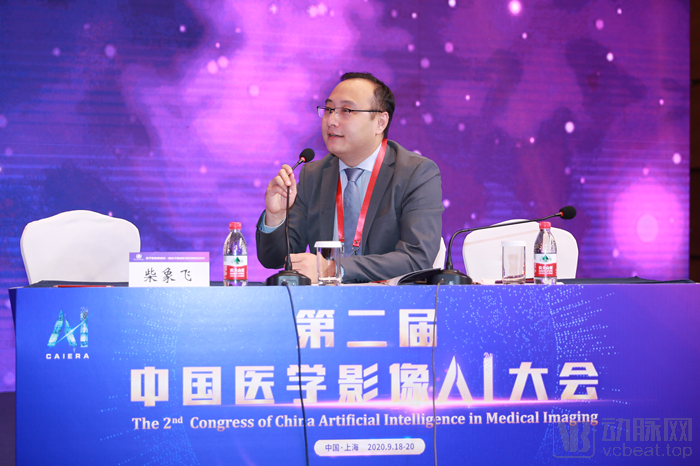
Not only that,Several major unresolved pain points still exist in the diagnosis of fracture-related diseases:
First, fracture-related conditions account for a high proportion of emergency and night clinic visits, imposing stringent requirements on the timeliness of imaging diagnosis. This necessitates that most hospitals possess corresponding diagnostic and treatment capabilities.
Secondly, due to the presence of occult fractures and other conditions, there is a risk of missed diagnoses in fracture-related diseases. According to relevant statistical data, the missed diagnosis rate for fractures on plain X-ray films is 15%, particularly in examinations of extremity bones involving multiple joints. Missed diagnoses can delay treatment, adversely affecting prognosis and functional recovery.
Price is a major advantage of DR products.Compared with CT scanners, which cost millions of yuan per unit, the price of a single DR system is under one million yuan. Statistics show that by the end of 2019, the installed base of X-ray imaging equipment in China was approximately 70,000 units, far exceeding that of CT (approximately 25,000 units) and MRI (approximately 10,000 units). Given the large installed base, versatility, and cost advantages of DR, HY Medical’s Dr. Turing® AI Intelligent Fracture Diagnosis System undoubtedly possesses the capability to penetrate primary healthcare institutions.
Faced with the two major challenges above, HY Medical has chosen the “DR + AI” strategy this time, determined to penetrate the primary healthcare market. It is widely acknowledged that primary healthcare represents where AI delivers its true value, and DR, as a widely accessible imaging modality for the general public, is clearly capable of truly realizing the value of AI.
Specifically, the integration of artificial intelligence with DR is a solution developed by HY Medical to address missed diagnoses in fracture cases and meet the timeliness requirements for diagnosis and treatment.
For fractures of small bones such as those in the hands and feet, as well as occult fractures, the Dr. Turing® AI Fracture Intelligent Diagnostic System utilizes deep convolutional neural network algorithms to detect fracture images that are difficult to identify with conventional DR and CR equipment. The system provides intelligent auxiliary diagnosis by automatically identifying and outlining fracture sites, screening images at a speed of nearly one per second. This offers supportive assistance for physicians’ diagnosis and treatment, significantly improving the accuracy of image interpretation and effectively reducing the incidence of missed and misdiagnoses. Currently, the product’s automatic recognition rate and sensitivity both exceed 90%.
Nowadays,Dr. Turing® AI Fracture Intelligent Diagnosis System has established a complete product closed loop, featuring diverse product functionality designs.The system can be decomposed into five major modules: the upload module, the file parsing and storage module, the algorithm module, the message processing module, and the application module.
In terms of file upload, the system supports image push from DICOM 3.0 imaging devices, workstations, and PACS systems. For file parsing and storage, it is capable of parsing image files, automatically archiving them, and storing them in compressed format. Furthermore, to meet the current hospital demand for integrated online and offline services, HY Medical has launched a cloud imaging platform that can be integrated with hospital information systems according to their specific needs. Doctors can view AI diagnostic results simply by accessing the hospital’s system. This means that HY Medical can provide patients with better disease management solutions through internet-based healthcare services.
Overall, the algorithm module of Dr. Turing® provides physicians with auxiliary diagnostic results; the message processing module handles the sending, receiving, and processing of various interactive messages; and at the application level, physicians can use the system to query imaging-assisted diagnostic results, initiate auxiliary diagnostic requests automatically or manually, and edit and print diagnostic reports.
CE Certified in the EU, Laying the Foundation for Overseas Market Expansion
In fact, the Dr. Turing® AI Intelligent Fracture Diagnosis System has been under development since 2017. Over the years, HY Medical’s accumulated expertise in product development, coupled with continuous validation and iteration, has culminated in today’s mature product.
Chai Xiangfei revealed, “Achieving a high level of accuracy with our proprietary algorithms presents significant challenges. Therefore, the volume of image annotations and video data used for validation is more than ten times greater than that of other products. Prior to launching this version to the market, we conducted extensive validation, and the product itself underwent multiple iterations.”
A single diagnostic error by a physician may harm only an individual patient, whereas an algorithmic error in AI can cause catastrophic, population-wide consequences for diagnosis. The critical importance of rigorous product validation is beyond doubt; such stringent validation will further enhance product credibility and raise the barrier to entry for the industry.
HY Medical obtained CE certification from the European Union in the first half of this year, and its comprehensive AI-based medical imaging solution has begun to roll out in the EU market. Meanwhile, following rigorous validation in China, HY Medical has entered the final stage of obtaining a Class III medical device registration certificate and expects to secure approval in the second half of this year. Clearly, HY Medical has delivered a relatively impressive performance record.
Chai Xiangfei told VCBeat, “Successfully navigating the ‘last mile’ hinges on accurately understanding the unique characteristics of the commercial scenario itself. In fact, prior to launching this fracture-care product, we conducted extensive market research and engaged in pre-sales activities targeting government agencies, emergency departments, radiology departments, related projects, and primary care screening platforms. This long-term accumulation has been highly beneficial for bringing this product to market.”
In addition to the Dr. Turing® AI Intelligent Fracture Diagnosis System, HY Medical has currently established a relatively comprehensive “Intelligent Medical Imaging Overall Solution” targeting COVID-19, chest radiography, the aorta, fractures, and lung cancer. In the future, HY Medical will gradually integrate these standalone products to build the ultimate “Digital Human” medical ecosystem.
Final Thoughts
Despite the continuous ups and downs in the AI medical imaging industry, participants have jointly driven its development through competition and collaboration, delivering satisfactory results today, two years later, with great hope.
As Director Liu Shiyuan remarked in his closing address: “Standing here today, two years on, and looking out at this audience of a thousand, what I see most is belief—belief in the work we do, belief in our cross-disciplinary partners, and belief in the future of AI in medical imaging. Because we believe, we can see.”
HY Medical’s bold move this time stems not only from its precise insights into the medical imaging industry and the strategic choices made in response to industry trends, but also from its firm belief that AI in medical imaging will undoubtedly benefit healthcare.
Overall, despite certain challenges, AI in medical imaging continues to advance in a positive direction, supported by companies such as HY Medical. The market for AI-driven medical imaging, now bolstered by rational capital investment, the participation of numerous chief physicians, and supportive national policies, may still require a period of consolidation. Nevertheless, the seeds sown in recent years have gradually taken root and begun to sprout; with a bit more patience, we may soon see abundant fruits.