

Tongshu Genomics Secures Hundreds of Millions of RMB in Series B Funding to Advance Tumor Precision Diagnostics
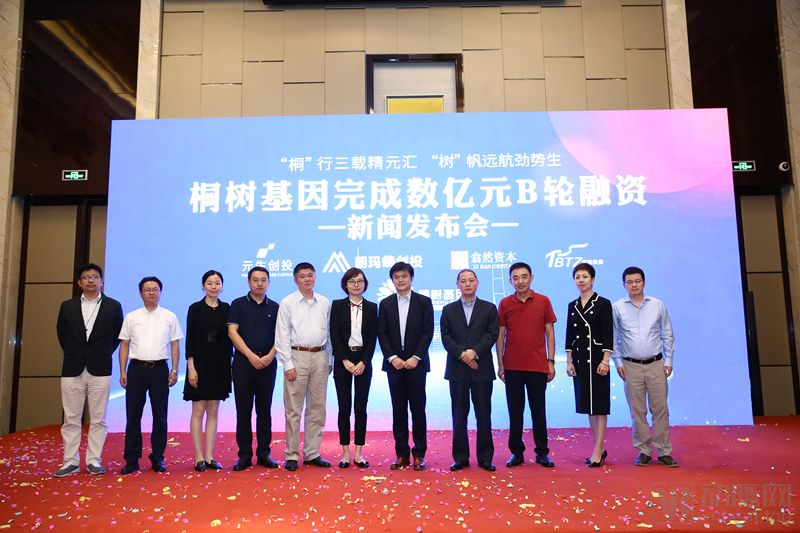
On September 22, 2020, Changzhou Tongshu Biotechnology Co., Ltd. (hereinafter referred to as “Tongshu Gene”) announced the completion of its Series B financing round, amounting to hundreds of millions of RMB. The round was led by OrbiMed Asia Partners, with participation from Longma Peak Venture Capital, Xiran Capital, and Jiangsu Tuobang. The funds raised will be used to accelerate the clinical development of the company’s new IVD technologies and to expand its product pipeline. Notably, this marks OrbiMed Asia Partners’ first investment in the field of precision oncology diagnostics.
TONGSHU GENE, established in November 2016, is a high-tech enterprise driven by innovative technologies and featuring a multi-platform layout, with a focus on the research and development, manufacturing, and sales of oncology genetic diagnostics. Since its inception, the company has witnessed exponential growth in business volume, with sales ranking among the top in the industry. Meanwhile, it has completed strategic deployments across multiple regions, including its Shanghai R&D headquarters, a third-party medical laboratory, and GMP-compliant production facilities.
Previously, TONGSHU GENE received angel-round investment from Ningbo Boyi at its inception and secured Series A funding from Fosun Medical in 2018. Yan Linghua, CEO of the company, stated that TONGSHU GENE has garnered widespread favor in the capital market due to two distinctive highlights:
First, a compliance-based operational system centered on NGS was established.NGS genetic testing services have achieved "integration of three certifications" (reagents, instruments, and bioinformatics software all adopt NMPA-approved products).Second, the company possesses robust reserves of core IVD technologies and maintains a broad product R&D pipeline.Progress is proceeding smoothly. The company’s first in vitro diagnostic (IVD) product, the Microsatellite Instability (MSI) Detection Kit (multiplex fluorescent PCR-capillary electrophoresis method), is at the forefront of domestic development. Clinical trials for two kits based on the MASS-PCR technology platform are currently underway, and several other products are in the stages of registration testing or clinical research.
In terms of product portfolio, TONGSHU GENE’s strategy is“Driven by clinical needs, we implement a multi-platform strategy based on core technologies to develop products with significant competitive advantages.”
Yan Linghua stated, “The development path of molecular pathology over the next five years can draw reference from clinical laboratories.” Previously, clinical laboratories were dominated by hematology analyzers; however, with the emergence of various testing indicators, no single technology now holds a monopolistic position within clinical laboratories.
Similarly, although next-generation sequencing (NGS) is a core technology in molecular pathology and currently the most prominent molecular diagnostic technique, clinical demands are diverse. Each technology has its corresponding application scenarios, and relying solely on one technology is far from sufficient to meet the complex needs of cancer patients. First-generation sequencing platforms, PCR, and other methods still possess advantages over NGS in terms of accuracy, speed, and cost.
Therefore, TONGSHU GENE meets the clinical needs of different tumor patients and various application scenarios by deploying first-generation sequencing platforms, quantitative real-time PCR (qPCR), next-generation sequencing (NGS) platforms, and CRISPR technologies.
In terms of next-generation sequencing platforms,TONGSHU GENE has developed the MULI-SEQ library preparation technology, which reduces the required DNA input to as low as 1 ng, thereby significantly conserving precious tumor samples. The company has also innovatively developed the PRIDE-cfTNA enrichment and detection technology, enabling the detection of fusion genes in cell-free RNA from blood samples, which lowers testing costs while enhancing sensitivity.
In terms of first-generation sequencing platforms,TONGSHU GENE has developed a highly sensitive and specific multiplex fluorescent PCR detection technology capable of simultaneously detecting microsatellite instability (MSI) with 2-base pair (BP) repeats. This innovation increases detection sensitivity by 18%, addressing the limitations of traditional techniques, which have lower sensitivity and can only detect MSI with 3-BP repeats. Furthermore, by improving the SNAPshot technology, the method enables simultaneous detection of mutations and MSI, significantly enhancing the sensitivity of first-generation sequencing.
In terms of quantitative real-time PCR,By leveraging MASS-PCR technology, the company avoids wild-type amplification, enabling simpler result interpretation. In the realm of CRISPR, its proprietary Credit-CRISPR technology lowers the limit of detection to the attomole (amol) level.
Leveraging a multi-platform layout and a strategy of coordinated development, TONGSHU GENE has grown into a leading player in China’s tumor genetic testing industry. According to reports, currentlyThe company's first IVD product, the Microsatellite Instability Detection Kit (Multiplex Fluorescent PCR-Capillary Electrophoresis Method), is at a leading position in China in terms of R&D., two test kits based on the MASS-PCR technology platform are currently undergoing clinical trials. In addition, technologies such as MASE-CE, NGS micro-library preparation, and CRIDIT-CRISPR have also advanced to the stage of registration testing or clinical studies.
In addition, in the field of tumor genetic testing services, TONGSHU GENE has established a compliant operational system centered on NGS, achieving full possession of the “three required certifications.”The testing service network has covered more than 500 core hospitals in China.Leveraging its accumulated data, the company has established a translational research center based on tumor evolution theory and a tumor genomics specimen bank, conducting extensive translational studies and publishing SCI-indexed articles with a cumulative impact factor exceeding 120.
Yan Linghua, CEO of TONGSHU GENE, has dedicated over a decade to the field of oncology molecular diagnostics, accumulating extensive experience in clinical practice, scientific research, and product development. Cai Weijing, CTO, brings 12 years of experience as a clinician and is a leading researcher in China on the theory of tumor evolution. Owing to the profound clinical backgrounds of both core founders, they possess deep insights into clinical needs and have a greater understanding and appreciation of the significant benefits that precision medicine offers to cancer patients.
In 2016, when China’s precision medicine industry was still in its nascent stages, Yan Linghua and Cai Weijing made several forward-looking assessments: low industry penetration, the emerging trend of targeted therapies replacing chemotherapy, the impending removal of payment barriers for targeted drugs, and a promising industry outlook. These insights underpinned Yan Linghua’s establishment of TONGSHU GENE, which has since focused deeply on the oncology genetic testing market.
To date, Yan Linghua remains confident in the field of precision tumor diagnosis, “The tumor gene testing market still has at least 10-fold growth potential,“In particular, the value of ctDNA in dynamic tumor monitoring is gaining increasing attention, presenting significant market opportunities in this area. Cancer early screening based on DNA methylation is also an important direction for industry development.”
Dr. Lin Yi, Managing Partner of OrbiMed Asia Partners, the lead investor in the Series B financing round, also expressed strong interest and optimism in the field of precision oncology diagnostics, stating, “After five to six years of market cultivation,Precision oncology diagnosis has entered the 2.0 era,“The market has evolved from a phase of widespread territorial expansion to one of consolidation, characterized by intensive cultivation and increasingly urgent compliance requirements. Meanwhile, clinicians are paying growing attention to the validity and cost-effectiveness of the massive amounts of data generated by high-throughput tumor sequencing in informing clinical value judgments.”
Amid the favorable landscape of the precision oncology diagnostics industry, TONGSHU GENE will continue to uphold its mission of “Innovation, Creating Value for Cancer Patients.” Committed to the field of precision medicine and centered on hospitals, the company adheres to a dual-track strategy of products and services, delivering high-quality solutions to both cancer patients and oncologists.