

Veeva Unveils New Product Strategy Aligned with Digital Transformation Trends, Reinforcing Commitment to 'Rooted in China, Serving China'

Veeva
Industry SaaS Service Provider
On September 16, the 2020 Veeva China Commercial and Medical Summit was held in Shanghai. Themed “Rooted in China, Serving China,” the summit focused on cloud-based solutions for the life sciences industry, bringing together more than 400 professionals from over 70 companies. Attendees represented various functions, including sales performance, IT, sales, compliance, marketing, and medical affairs departments within pharmaceutical enterprises.
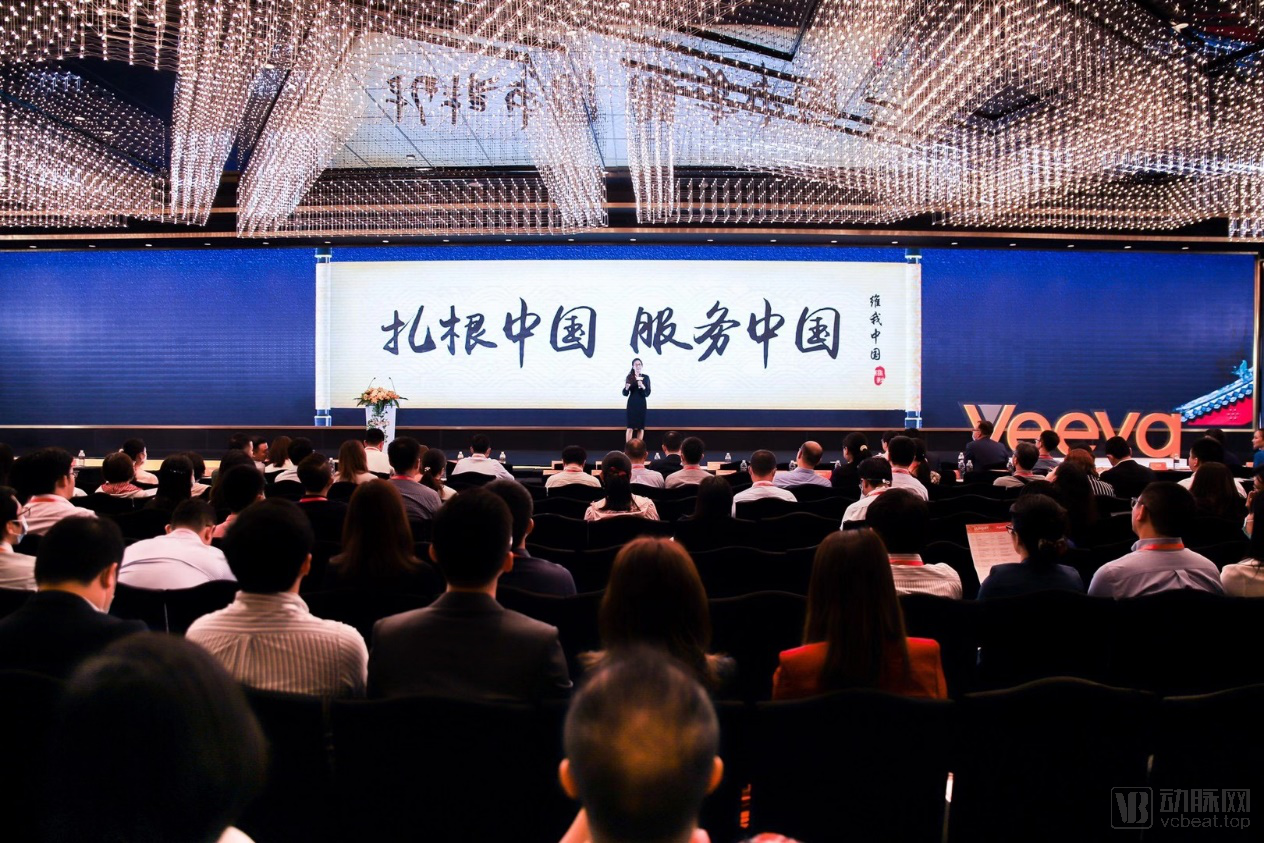
The conference featured 15 keynote presentations, focusing on the latest industry trends, sales excellence management, master data management for physicians and hospitals, and other cutting-edge topics and best practices. These sessions provided attendees with valuable experience, insights, and food for thought. Among the speakers, Wan Wei, Director of Medical Effectiveness and Operations at Amgen China; Luo Ying, Director of Commercial Excellence Operations and Performance Development at UCB; and Mou Yanping, CEO of Allist, delivered keynote addresses on topics such as new mindsets, innovative strategies, and sales innovation in the new normal.
During the roundtable discussion, Liu Qian, Vice President and Chief Marketing Officer of AstraZeneca China, served as the moderator. Wang Yilun, Head of Information Systems at Amgen China; Zuo Yongsheng, Deputy Director of Digitalization at Merck Serono China; Kang Shichen, Director of Digitalization and Market Intelligence for Sanofi China’s Primary Care Division; He Yong, Sales Regional Manager for Roche Pharmaceuticals China’s Oncology Business Unit 2; Wei Qiang, Marketing Director for Takeda China’s Plasma-Derived Therapies Business Unit; and Li Wei, Director of Business Performance at Eli Lilly China, explored the topic of “Redefining Marketing Practices in the Post-Pandemic Era and Under the Volume-Based Procurement Policy.”
American theoretical biologist and complex systems researcher Stuart Kauffman coined the term “Adjacent Possible” in 2002 to describe the state of affairs in the instant before life emerged on Earth. All the basic elements constituting primordial life (including even lightning) were already in place, ultimately giving rise to the most primitive forms of life. For instance, proteins and polysaccharides that form cell boundaries—all these elements constitute the “Adjacent Possible.” When the “Adjacent Possible” is fully assembled, change becomes possible.
Historically, multiple technological explosions have instantaneously generated more technologies when the “adjacent possible” was in place, triggering grander chain reactions. Peter Gassner, Founder and CEO of Veeva, strongly endorses the concept of the “adjacent possible,” which has been the underlying rationale for Veeva’s longstanding commitment to hosting the Veeva China Commercial & Medical Summit. On the 16th, Peter Gassner extended his welcome to attendees via an online address during the event and further elaborated on China’s important strategic position within Veeva’s global market.
“Complex and diversified ‘adjacent elements’ are more conducive to sparking creativity. By organizing the Veeva China Commercial & Medical Summit annually, we aim to bring together professionals from various fields—including pharmaceutical sales, marketing, IT, performance management, and digital marketing—to review the changes of the past year, look toward new directions, uncover new opportunities, and ignite fresh ideas,” said Wang Yun, General Manager of Veeva China.
“Magical” is the adjective many people have used to describe 2020, as numerous major events unfolded globally throughout the year. In China’s pharmaceutical industry, this year also witnessed significant transformations. Gao Xiang, Head of Commercial Product Strategy at Veeva China, highlighted three keywords for the Chinese pharmaceutical sector in 2020: the pandemic, Volume-Based Procurement (VBP), and centralized procurement. Building on these three themes, the conference outlined emerging trends in digital transformation and introduced a series of innovative product strategies launched by Veeva China under the “new normal.”
The Pandemic’s Impetus for Digital Marketing in the Pharmaceutical Industry Is Long-Term
A joke in 2020 revealed the pandemic’s massive impetus for digital transformation: “Who is the key driver of digital transformation in pharmaceutical companies? Not the CEO, nor the CRO, but COVID-19.”
Discussing the impact of the pandemic on China’s pharmaceutical industry, Gao Xiang cited a set of data: in the first quarter of 2020, approximately 4% of pharmacies and 12% of outpatient clinics across China were shut down. Even those that remained open experienced a significant decline in patient visits. Physical distancing measures severed the offline connections between medical representatives and physicians. As many pharmaceutical companies were unprepared, this disruption severely affected their sales. Relevant data show that drug sales declined by 2% in the first quarter of 2020.
Although the pandemic prevented in-person visits and offline academic conferences, physicians’ demand for academic knowledge and medical information remained undiminished. The report shows that during the pandemic, physicians’ acceptance of digital channels increased significantly, with 78% of physicians accessing academic knowledge and medical information through digital channels, and each physician obtaining relevant information via digital channels an average of eight times per week.
Discussing the impact of the pandemic on digital channels, Gao Xiang compared Veeva’s digital channels (Engage Meeting, Approved WeChat, and Approved Email) with offline channels (offline academic activities and face-to-face visits) across three phases: pre-pandemic (November–December 2019), peak pandemic (February–March 2020), and post-pandemic (July–August 2020).
During the peak of the pandemic, Veeva’s remote meeting channel saw a year-on-year growth of nearly 100-fold compared to pre-pandemic levels, while its compliant WeChat channel grew by nearly 13-fold year-on-year. Email, as a relatively niche digital channel, also achieved close to a threefold year-on-year increase. In the post-pandemic phase, remote meetings, WeChat, and email channels continued to demonstrate year-on-year growth of approximately 66-fold, 8-fold, and 2-fold, respectively. In contrast, offline channels declined during the pandemic to one-fifth of their pre-pandemic scale.
Therefore, Gao Xiang judges that the pandemic’s impetus for digital marketing in the pharmaceutical industry will persist.
Amid the pandemic, Veeva China has been consistently exploring ways to help customers better address the challenges brought by the outbreak. To support Chinese customers in maintaining interactions with physicians, Veeva’s global headquarters approved in early February for Veeva China to take the lead in launching the remote meeting initiative—Quick Start Engage Meeting—and offer it free of charge to physicians and pharmaceutical companies. By March, this remote meeting platform had attracted nearly 5,000 end users. In April, the platform was rolled out to all global markets and countries, with its user base continuing to grow. To date, Veeva Engage Meeting has reached more than 60,000 physicians, with each physician participating in an average of seven meetings on the platform, making it one of the most widely used remote meeting solutions in the industry.
VBP Compels Pharmaceutical Companies to Undergo Digital Transformation
In recent years, the continuously advancing Volume-Based Procurement (VBP) policy has been squeezing pharmaceutical companies’ profit margins, compelling them to increase the per-capita productivity of medical representatives and accelerate digital transformation. It is predicted that in the coming years, a model dominated by digital channels, supplemented by offline channels, will take shape.
Gao Xiang observed that, under the influence of the Volume-Based Procurement (VBP) policy, WeCom emerged as a new application and hit product for pharmaceutical companies’ digital marketing efforts in 2026. Gao Xiang believes that WeCom’s popularity is no accident. “Previously, pharmaceutical companies reached out to physicians unidirectionally through channels such as subscription accounts, resulting in poor user experience. By adding physicians as external contacts on WeCom, pharmaceutical sales representatives can engage in seamless one-on-one communication with physicians via the company’s official WeCom channel, significantly enhancing the user experience.”
In line with this trend, Veeva China has adjusted its product strategy by integrating WeCom into its product portfolio. WeCom enables bidirectional, complex interactive communication, offering high convenience, mobility, and strong user stickiness. It is expected that an increasing number of pharmaceutical companies will attempt to incorporate WeCom into their business operations in the future. Currently, WeCom has become one of the key directions for Veeva China’s product innovation this year, with independent R&D resources and full autonomy in China.
Cost-Control Measures Drive Demand for Efficient and Compliant Meeting Management in Pharmaceutical Companies
It is evident that cost containment has been the primary focus of policy in recent years, and the pharmaceutical market has naturally felt the pressure of these cost-control measures. Gao Xiang stated that the pharmaceutical industry spends as much as RMB 350 billion annually on conferences. Consequently, reducing the number and scale of offline meetings has become a key strategy for pharmaceutical companies to control expenses. In light of the impact of the pandemic, small-scale meetings with fewer than 100 attendees have become the predominant format for offline events.
In addition to excessive spending, the lack of verification of the actual attendance of KOLs and healthcare professionals increases compliance risks; insufficient event impact is also a pain point for conferences in the pharmaceutical industry.
So, how can pharmaceutical companies efficiently manage a large volume of small-scale meetings? How can they coordinate end-to-end expense planning to achieve better ROI? To address this challenge, Veeva China has launched a Meeting Management Platform, providing pharmaceutical companies with a unified solution for planning and executing all activities. This platform enables pharmaceutical companies to gain full visibility into all events, speakers, attendees, and associated expenditures, thereby helping them conduct more compliant, efficient, and high-quality meeting activities.
In summary, in the post-pandemic era, volume-based procurement (VBP) and cost containment will become the new normal in the pharmaceutical industry, imposing higher demands on the digital transformation of pharmaceutical companies. Veeva China aims to serve as a companion and partner on this transformation journey through a series of innovative product strategies, helping pharmaceutical companies adapt to the rapidly changing market environment in China’s life sciences sector.
Veeva is the global leader in cloud-based solutions for the life sciences industry, committed to customer success and serving more than 850 clients worldwide.
In 2011, Veeva officially entered the Chinese market. Wang Yun pointed out that, driven by China’s leadership in the pace of internet technology development and the mature models of digitalization and precision marketing in the financial, fast-moving consumer goods (FMCG), retail, and lifestyle sectors, the demand for digitalization in China’s life sciences sector is more pronounced than in other countries. Under the impetus of foreseeable macroeconomic policies, a combination of major healthcare reform measures—including health insurance cost containment, the one-invoice system, tiered diagnosis and treatment, and volume-based procurement—has prompted both multinational and domestic pharmaceutical companies to actively pursue digital transformation, thereby intensifying the demand for cloud-based solutions.
Meanwhile, unlike their international counterparts, Chinese domestic clients have distinct expectations and demands for standardization in cloud-based solutions within the life sciences sector. While customers in Europe and the United States typically seek relatively standardized products, each of the 100 Chinese clients may present 100 unique requirements. This implies that, as a SaaS software provider, Veeva must leverage the advantages of its standardized product offerings and SaaS model while simultaneously accommodating the diverse needs of Chinese clients.
“Therefore, we have put forward the slogan ‘Rooted in China, Serving China,’ aiming to fully integrate ‘standardization’ with ‘customization’ to maximize alignment with the needs and usage habits of Chinese customers,” said Wang Yun.
Veeva’s China SFA product is the best embodiment of its “Rooted in China, Serving China” strategy.
Jin Yue, General Manager of Veeva China’s Commercial Products and China SFA, stated, “China’s market environment, policy landscape, and the working conditions of Chinese physicians differ significantly from those in European and American markets. Additionally, China has a unique internet ecosystem. These factors have led Chinese pharmaceutical companies to demand faster update cycles and higher product performance from CRM systems. In response, Veeva China began developing China SFA, a cloud-based solution tailored specifically for the Chinese market, in 2016.”
China SFA is a mobile CRM solution that integrates business systems, services, data, and foundational platforms. It supports scenarios such as sales operations, marketing, medical information dissemination, and customer master data management, providing clients with comprehensive business solutions. The solution adopts a 100% China-oriented operational model and has established a local R&D team to better serve domestic customers.
To date, China SFA has secured more than 10 clients in China. Starting this year, the product is also being marketed to foreign pharmaceutical companies, aiming to meet their business development needs in China.
As a cloud solutions provider in the life sciences sector, Veeva China will closely follow emerging industry trends and demands, remain committed to delivering practical, high-quality services, and continue to prioritize identifying and adapting to local needs in China.