

Sensible Medical Innovations Ltd. Files for IPO: Pioneering Non-Invasive Lung Fluid Monitoring for Heart Failure Management

Sensible Medical
Developer of Wearable Pleural Fluid Status Monitor
Israel, the world’s second-largest supplier of medical devices. On this fertile ground, 750 life sciences companies have emerged. Of these, 55% of R&D-focused firms are engaged in the research, development, and manufacturing of medical devices, with Sensible Medical being one of them.
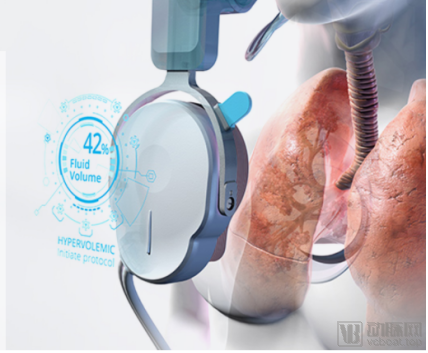
In 2007, Sensible Medical was founded, a companyReDS™ medical radar technology, developed based on the “see-through wall” technology from the defense industry, has been designed to detect lung fluid volume.
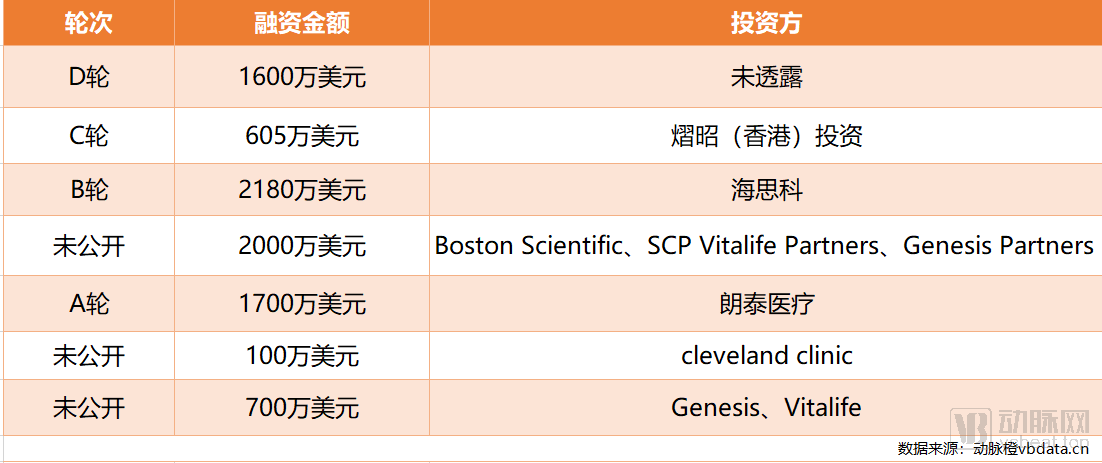
Since its establishment,Sensible Medical has raised a total of $88.85 million in funding.
The founders of Sensible Medical are almost all graduates of the Technion – Israel Institute of Technology, which has laid a solid professional foundation for the establishment of their company.
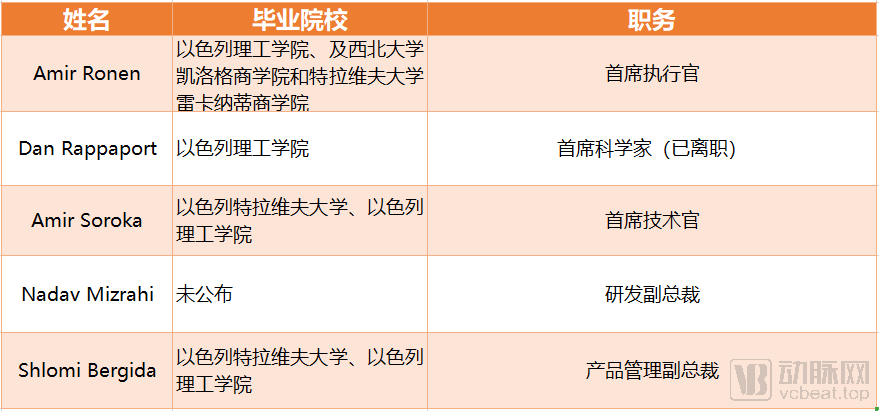
Amir RonenHe holds a Ph.D. in Electrical Engineering from the Technion – Israel Institute of Technology, as well as MBA degrees from the Kellogg School of Management at Northwestern University and the Recanati Graduate School of Business Administration at Tel Aviv University. After graduation, Ronen served as Vice President at two NASDAQ-listed companies, during which time he also assisted Intel Corporation with strategic planning.
Amir SarokaHolding a B.Sc. in Electrical Engineering and a B.Sc. in Science from Tel Aviv University, as well as a Ph.D. in Electrical Engineering from the Technion – Israel Institute of Technology, Saroka served as a department manager in the senior R&D division of the Israel Defense Forces after graduation. From 1997 to 2005, Saroka led projects for the Israeli Ministry of Defense in areas including wireless and wired communications, software engineering, embedded software, signal processing, and digital circuit design.
Shlomi BergidaHe holds a Bachelor of Science degree in Electrical Engineering and a Bachelor of Science degree from Tel Aviv University in Israel, as well as a Ph.D. in Electrical Engineering from the Technion – Israel Institute of Technology. During his career, Mr. Bergida held key positions in an electronic research and development department under the Israeli Ministry of Defense. From 1998 to 2006 (prior to founding Sensible Medical), Mr. Bergida led various large-scale research and development projects for the Israel Defense Forces.
Nadav Mizrahi holdsMizrahi holds a Bachelor of Science in Biomedical Engineering and a Ph.D. in Electrical Engineering from the Technion – Israel Institute of Technology. Upon completing his studies, he worked in an electronics R&D department at the Israeli Ministry of Defense.
From 1998 to 2006, Mizrahi led the research and development of various digital and analog platforms. During his service in the Israel Defense Forces, Mizrahi accumulated extensive experience in system design, high-performance digital hardware, microwave systems, ASICs, board-level design and R&D, as well as team management.
In 2007, leveraging their extensive work and management experience, they joined forces to co-found Sensible Medical, a medical device research and development company.
Prior to founding the company, they observed that many heart failure patients were readmitted to the hospital shortly after receiving treatment, and that physicians faced significant challenges in determining appropriate discharge criteria. In response to this market need, they decided to develop a device capable of monitoring the physiological status of heart failure patients.
Given the close association between pulmonary fluid accumulation and heart failure, they focused their attention on measuring pulmonary fluid.Although medications can clear excess fluid from the lungs, physicians cannot definitively determine whether the fluid has fully resolved. In cases where pulmonary effusion remains uncertain, patients with heart failure may be forced to return to the hospital within days of discharge.
In 2009, just two years after its founding, Sensible Medical completed the development of the first version of its ReDS™ device, which enables rapid, accurate, and non-invasive measurement of pulmonary fluid. Having successfully completed animal studies, the device was ready to enter human clinical trials.
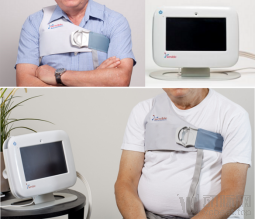
ReDS™ Device
Patients can easily use this vest-like lung fluid monitoring device at home, completing a brief measurement in just 90 seconds.ReDS™ can accurately measure the fluid content in the right middle lobe of the lung, with results expressed as the percentage of effusion volume relative to total lung volume; a range of 20% to 35% indicates normal fluid content.
Measurement results are automatically uploaded to a secure cloud application to monitor and adjust medication, maintain patient fluid balance, and prevent readmission. Using ReDS™ to guide patient management helps reduce hospital admission rates and inpatient costs, thereby alleviating the financial burden on patients to some extent.
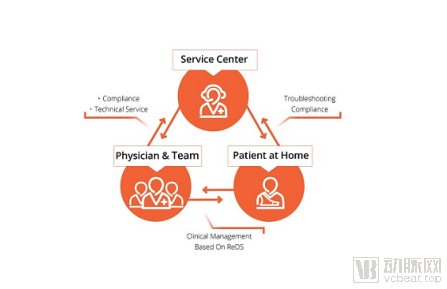
Product Service Model
In Israel, due to the country’s small land area, limited population, and constrained market capacity, most products are geared toward the global market. Therefore, it is particularly important for Sensible Medical to establish a presence in overseas markets as early as possible. In 2010, Sensible Medical opened its first U.S. office in Columbus, Ohio.
In 2015, the ReDS™ device received FDA approval and was launched in the U.S. market in August.Meanwhile, clinical trials will continue to be conducted to optimize the product. Sensible Medical has decided to design a prospective, randomized, controlled, and multicenter clinical trial named SMILE. To obtain sufficiently reliable trial data, approximately 380 patients are planned to be enrolled across 35 centers in the United States. The primary objective of this trial is to investigate the rate of rehospitalization for recurrent heart failure throughout the entire follow-up period under ReDS™ guidance.
Furthermore, Sensible Medical conducted a 9-month follow-up study on patients discharged to home. Clinical trial data is the most compelling way to persuade the public, and ReDS™ has demonstrated the device’s efficacy and safety through its trial results. Clinical studies have shown that patients using the ReDS™ system at home for three months after discharge experienced an 87% reduction in readmission rates compared to those receiving only routine care.
Based on this,In 2016, the TriHealth network, Randolph Hospital, and the emergency departments of Moses H. Cone Memorial Hospital partnered with Sensible Medical., this collaboration marks the first commercial partnership between ReDS™ and a hospital.
January 2019,Cardiovascular pharmaceutical company Medicure announces a collaboration agreement with Sensible Medical, becoming the exclusive marketing partner for ReDS™ in the United States.
Medicure seeks to immediately leverage its existing channels to commence sales of ReDS™. Under the terms of the agreement, Medicure will receive a proportional share of the sales revenue.
In addition, Medicure invested $10 million in Sensible Medical, acquiring a 7.71% equity stake.Meanwhile, Albert D. Friesen, President and CEO of Medicure, was appointed to the Board of Directors of Sensible Medical.
Medicure and Sensible Medical announced the termination of their partnership this year.During their collaboration, sales of the ReDS™ device also contributed to the growth of Medicure’s operating revenue.
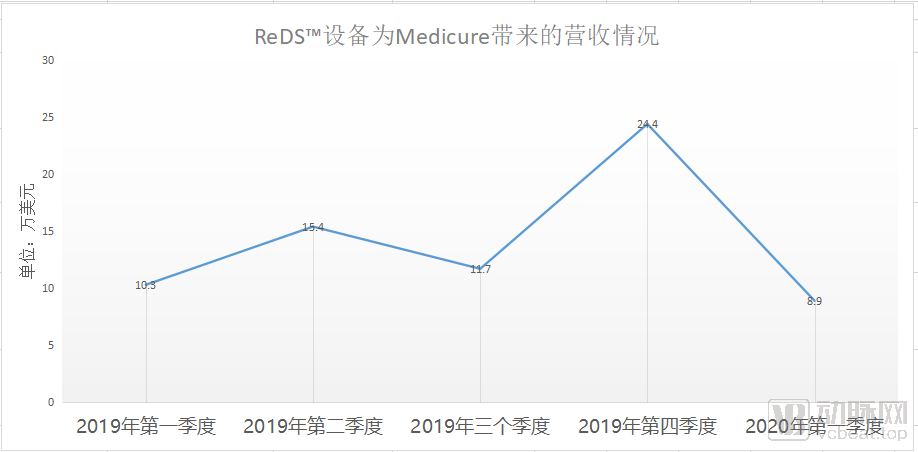
The information in the figure is sourced from Medicure's financial report analysis.
In May 2019, Sensible Medical signed an agreement with Bayer, under which Bayer would use the ReDS™ device to detect pulmonary congestion in trial participants, aiming to explore the validity of biomarkers.It was also in this year that the company launched the second-generation ReDS™ PRO device.
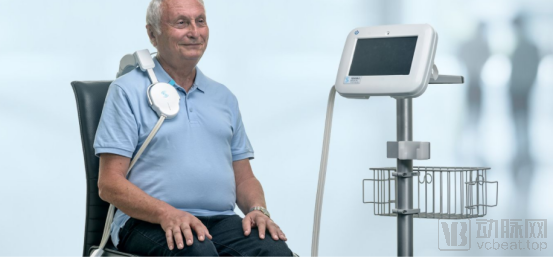
ReDS™ PRO Device
The new device made its debut at the Heart Failure Society of America meeting held in Philadelphia, Pennsylvania.ReDS™ PRO leverages non-invasive, low-energy RF technology to provide fluid volume data in just 45 seconds. ReDS™ PRO is applicable across the entire care continuum, from the emergency department to post-discharge follow-up.
It is worth noting that ReDS™ PRO can not only be used to monitor the physical condition of patients with heart failure, but also plays a role in pandemic prevention and control. One of the most urgent medical challenges brought by the pandemic is for doctors to timely identify which patients require immediate care.During the pandemic, Sensible Medical partnered with four hospitals in Italy.These hospitals will use this device to monitor changes in patients' pulmonary fluid levels to assess the severity of disease progression.
Compared with CT scans, ReDS™ PRO requires less time, enabling faster assessment of patients' pulmonary fluid status.During the pandemic, time was of the essence; saving time on diagnostics allowed for more time to treat patients and enabled screening of a larger number of patients within the same timeframe.
Clinical research data from Sensible Medical demonstrate that managing heart failure patients can effectively reduce their readmission rates. Additionally,BeautyDunli, Vectorious, and other large companies and startups are all developing products in the field of heart failure management., and as early as 2013, Medtronic acquired Cardiocomm Solutions, a remote patient management company, and subsequently launched multiple remote patient management platform services for heart failure. These two aspects suggest that the field of heart failure management offers promising opportunities.
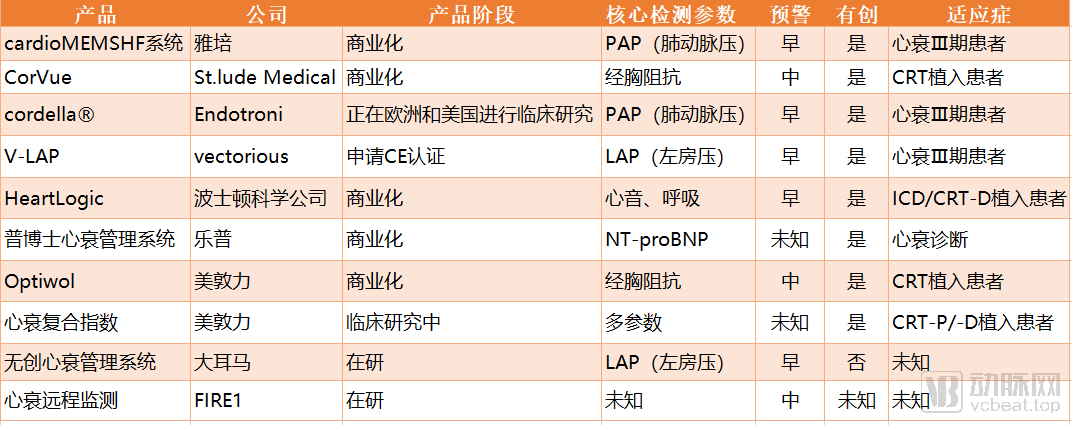
Currently, the most cutting-edge and authoritative indicator recognized by industry experts is cardiac filling pressure, which offers both sensitivity and specificity.It is not difficult to observe that among the products offered by the aforementioned companies, the majority rely on the detection of pulmonary artery pressure (PAP), left atrial pressure (LAP), and transthoracic impedance. These solutions cover both early monitoring and warning for heart failure as well as subsequent auxiliary management, with most products being invasive and even requiring the implantation of cardiac implantable electronic devices.
It can be inferred that the future direction of heart failure management will likely focus on technologies such as pulmonary artery pressure (PAP), left atrial pressure (LAP), and transthoracic impedance. Why, then, has the field of heart failure—often referred to as the “last battlefield” in cardiovascular medicine—attracted participation from major corporations like Medtronic and Abbott? VCBeat has summarized two key reasons:
First, for enterprises, the heart failure management market is large.. According to statistics, there are 117 million heart failure patients worldwide. Among them, China has over 10 million heart failure patients, with an additional 270 million people at high risk for heart failure. Furthermore, in the early stages of heart failure, it is difficult for the general public to detect the condition through self-observation and receive timely treatment. Therefore, the actual market potential is even broader, as individuals with conditions such as coronary heart disease, diabetes, hypertension, and obesity are all potential candidates for heart failure management.
Second, heart failure management can alleviate the financial burden on patients.. Heart failure leads to repeated hospitalizations for patients, imposing a heavy economic burden on them and their families. Data show that heart failure patients in China are hospitalized an average of 2.4 times per year, with approximately 69% experiencing readmission within one year, and the average annual length of stay reaching 22 days. Effective heart failure management can reduce patients’ readmission rates and, to some extent, alleviate their economic burden.
In summary, the future of heart failure management is promising, with the potential for explosive growth.