

Yitu Healthcare Unveils Vision for Intelligent Imaging at the 2nd China Medical Imaging AI Conference in Shanghai Amid IPO Filing
From September 18 to 20, 2020, the 2nd China Medical Imaging AI Conference, hosted by the China Alliance for Innovation in Medical Imaging AI (CAIERA), grandly opened at the Shanghai International Convention Center. Themed “AI Empowering Healthy China,” the conference attracted thousands of representatives from government, industry, academia, research institutions, healthcare, and the AI sector, both domestic and international. Yitu Healthcare was invited to attend and deliver a keynote speech, sharing insights on the development trends of smart imaging in the era of data intelligence. The care.ai series of AI solutions was also unveiled during the event.
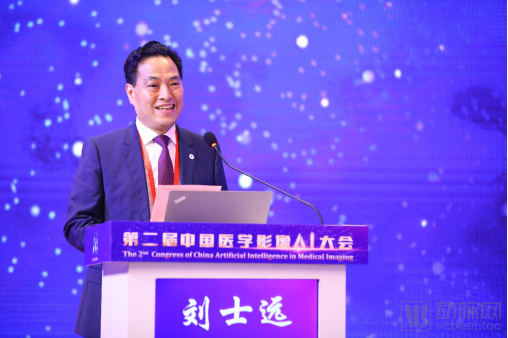
Conference Chair, President-Elect of the Chinese Society of Radiology (Chinese Medical Association), Chairman of the China Medical Imaging AI Industry-Academia-Research-Application Innovation Alliance, and Director of the Department of Medical Imaging at Shanghai Changzheng Hospital, Professor Liu Shiyuan
In his opening address, Professor Liu Shiyuan, Chairman of the Conference, President-elect of the Chinese Society of Radiology (CSR), Chairman of the China Medical Imaging AI Industry-Academia-Research-Application Innovation Alliance, and Director of the Department of Medical Imaging at Shanghai Changzheng Hospital, stated that the conference is held against the backdrop of significant strategic achievements in the fight against the pandemic. It serves as a strong declaration of the orderly return to normal operations under normalized epidemic prevention and control measures, marking a new beginning amidst changing circumstances. Efforts and research in medical imaging AI are just getting started, with many emerging needs and application scenarios yet to be discovered and explored. He expressed hope that government, industry, academia, research institutions, and end-users will join hands to collectively realize the vision of a Healthy China.
Professor Jin Zhengyu, Chairman of the Chinese Society of Radiology and Director of the Department of Radiology at Peking Union Medical College Hospital, delivered congratulatory remarks online for the convening of the conference. Professor Jin stated that the application of AI in medical imaging is an excellent research topic, attracting the greatest amount of attention. Under the joint leadership of Professor Liu Shiyuan and his team, the Industry-Academia-Research-Clinical Application Alliance has undertaken substantial work, effectively integrating resources from various stakeholders.
The COVID-19 pandemic was arguably the biggest black swan event globally in 2020. As the outbreak unfolded, AI-powered medical imaging technologies played a crucial role in multiple prevention and control areas, including precise screening, rapid diagnosis, and treatment efficacy prediction.
In his keynote address titled “The New ‘Battlefield’ of Intelligent Imaging in the Era of Data Intelligence,” Dr. Fang Cong from Yitu Healthcare, who personally experienced the entire course of the epidemic response, reviewed several classic moments from the fight against the pandemic.
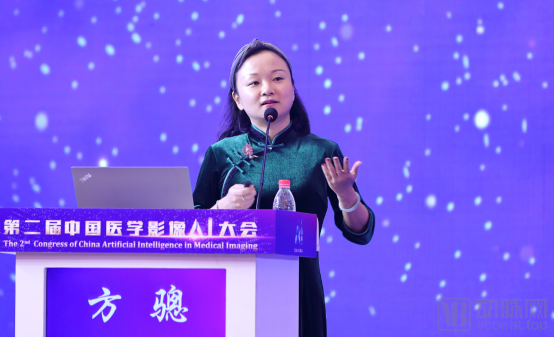
Dr. Fang Cong, Yitu Healthcare
In the early stages of the pandemic, the surge in demand for CT image interpretation at hospitals in Wuhan overwhelmed frontline medical staff, with daily CT scans at some designated medical institutions skyrocketing from 300 to 1,000. In this critical moment, Chinese AI technologies, represented by intelligent evaluation systems for chest CT scans in COVID-19 diagnosis, rose to the challenge, working alongside healthcare professionals to build a formidable defense against the epidemic.
Backed by robust clinical efficacy data and positive reviews, the AI system was deployed in over 100 hospitals within just a few months, spanning Shanghai, Wenzhou, Zhejiang, Xinjiang, and beyond—making “AI-powered epidemic control” ubiquitous.
Subsequently, healthcare institutions in Italy, France, Poland, the Middle East, Southeast Asia, and other overseas regions have increasingly begun to engage closely with “Chinese AI.”
But the evolution of intelligent imaging is far from over. As predicted at the RSNA annual meeting several years ago, AI is helping radiologists return to the center of clinical decision-making.
With advancements in medical standards, there are higher demands for the governance of multimodal full-lifecycle data in clinical decision-making and scientific research. However, the governance and value extraction of multimodal data pose severe challenges to the breadth and depth of AI technology; only those who have mastered AI technology can handle it with ease.
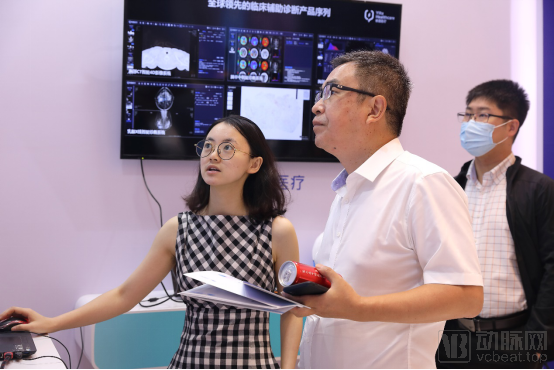
Attending Experts Visit Yitu Healthcare Booth
Taking the world’s first intelligent disease-specific database for lung cancer clinical research, jointly established by West China Hospital and Yitu Healthcare, as an example, missing TNM staging information in nearly 30,000 sets of full-lifecycle data from lung cancer patients during Phase I hindered the subsequent utilization of medical data. By leveraging Yitu Healthcare’s full-stack AI technology to comprehensively integrate multimodal data—including text, imaging, and pathology—the rate of missing TNM staging information was significantly reduced.
In another multicenter study, leveraging an intelligent multi-omics research platform, Yitu Healthcare and its partner hospitals successfully developed a high-performance deep learning model by integrating chest CT imaging with clinical pathological information. This model enables non-invasive, dynamic, and cost-effective prediction of ALK fusion status. The results serve as a significant complement to laboratory tests, guiding the use of ALK-targeted therapies, and providing healthcare institutions—particularly primary care facilities where high-throughput sequencing is not widely available—with an innovative, dynamic, accurate, and affordable novel detection method.
At the conference, Yitu Healthcare also presented its “Yitu Solution,” which leverages AI technology to empower primary care institutions in the early screening, diagnosis, and treatment of cancer.
Figures from the National Cancer Center show that malignant tumors account for 23.91% of all causes of death among Chinese residents, with annual direct diagnosis and treatment costs exceeding RMB 220 billion. In the “Healthy China Action—Implementation Plan for Cancer Prevention and Control” issued by the National Health Commission, goals such as “improving the five-year cancer survival rate, enhancing primary care diagnostic and treatment capabilities, and establishing a long-term mechanism for cancer screening” have remained top priorities.
Unfortunately, due to limited health literacy among patients at the primary care level, insufficient diagnostic and treatment capabilities, poor consistency in care, and a lack of full-lifecycle health management, this important national policy—beneficial to both the country and its people—has struggled to achieve widespread implementation. How can we truly promote division of labor and collaboration among medical institutions at different levels? How can we genuinely empower primary care providers to assume their critical role as health gatekeepers? And how can we achieve full-lifecycle health management for individuals undergoing early screening?
“Screening initiatives aim to reach grassroots levels, and empowering primary care diagnostic and treatment capabilities is key,” revealed Dr. Fang Cong. “By building an AI-powered, multi-tiered integrated platform for screening, diagnosis, and treatment, and by configuring personalized solutions based on regional conditions and disciplinary development needs, Yitu Healthcare has enabled primary care patients to be ‘effectively screened, retained locally, effectively treated, appropriately referred, continuously managed, and comprehensively documented’ across specialized diagnosis and treatment platforms and provincial cancer screening platforms in multiple provinces. This achieves the goals of ‘patient benefit, disciplinary advancement, and effective management,’ fostering a virtuous cycle within the healthcare ecosystem.”
In Zhejiang, Yitu Healthcare, in collaboration with multiple medical institutions including the Children’s Hospital of Zhejiang University School of Medicine, has established an intelligent diagnosis, treatment, and quality control management platform for pediatric growth and developmental disorders. During a five-day online screening campaign launched around International Children’s Day (June 1), the platform screened more than 5,500 individuals, a volume several times higher than usual.
In another provincial cancer screening platform, AI technology has successfully extended to village doctors, directly reaching villagers and significantly improving screening efficiency. Within just three months, the screening coverage reached 800,000 individuals. Supported by full-stack AI technology, the platform has achieved integrated lifecycle health management encompassing screening, diagnosis, and treatment, along with data accumulation. This lays a solid foundation for subsequent follow-up, quality control, scientific research, and management, thereby fostering positive and coordinated disciplinary development.