

Keya Medical: Pioneering AI Medical Imaging with China's First Class III AI Device Certification
Keya Medical
International AI Medical Technology Service Provider
As the golden autumn arrived, the “2nd China Medical Imaging AI Conference” was held in Shanghai. Two years after the previous conference, the medical imaging AI industry has experienced a journey from heated enthusiasm to a focus on commercial implementation, with its ups and downs. Although the number of start-ups in medical imaging AI has gradually decreased, the entire market has become more rational, with growing enterprises receiving more attention. Supported by rational capital, participation from numerous chief physicians, and promotion by national policies, the medical imaging AI industry continues to move forward.
Although debates over the approval timeline for the first medical AI imaging product had emerged as early as 2018, the absence of any registered and marketed products in the same category within China meant that most companies were still navigating uncharted territory. Regulatory approval still seemed distant, which contributed to a notably subdued climate in the medical AI capital market. Against this backdrop, Keya Medical stood out at the thousand-attendee conference as the first company in China to obtain a Class III medical device certificate for AI-based healthcare solutions. This milestone served as a much-needed boost, demonstrating to the medical AI-assisted diagnostics market the viability of successful commercialization.
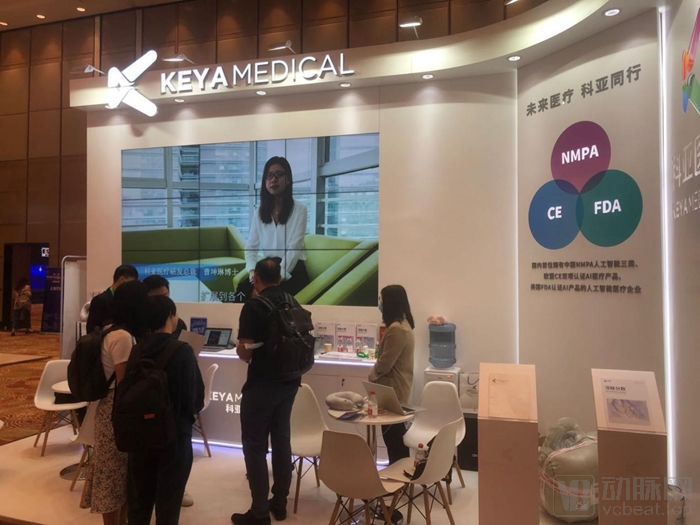
Keya Medical’s ability to secure Class III medical device certification ahead of its peers and repeatedly attract financing even during a capital winter stems from its “core competitive advantages.” At the conference, VCBeat had the privilege of conducting an exclusive interview with Dr. Cao Kunlin, President of R&D at Keya Medical, seeking to uncover the key factors enabling Keya Medical to navigate the medical imaging AI industry as a leading player.
Amid the dual downturn of the pandemic and the medical imaging AI industry, Keya Medical not only secured China’s first Class III medical device certification for an AI-based medical product but also raised two rounds of financing totaling hundreds of millions of yuan within just six months. These contrasting figures clearly demonstrate investors’ favor toward Keya Medical and their recognition of its core technological strength.
“The first domestic certification” and “two rounds of hundred-million-level financing within six months” may easily lead people to limit their understanding of Keya Medical to the word “leading.” However, a closer internal analysis reveals that behind this “leadership” lies the company’s continuous “innovation” and “accumulation” in the field of medical imaging AI.
The first Class III AI imaging product approved for Keya Medical already demonstrates the company’s innovativeness in R&D. Rather than focusing on well-established lung nodule detection or widely deployed fundus screening, it entered the less crowded field of CT-FFR.
Dr. Cao Kunlin told VCBeat“Deepening engagement with clinical departments, empowering functional departments, and targeting key diseases” is Keya Medical’s strategic plan for product research and development. It is precisely for this reason that Keya Medical began developing CT-FFR while many others were still focused on pulmonary nodules. We believe that products for pulmonary nodules assist physicians in image interpretation, primarily aiming to accelerate their workflow; whereas CT-FFR provides clinicians with a novel, non-invasive functional assessment tool, enabling evaluations that cannot be performed based on imaging alone, with the primary goal of enhancing clinical efficiency. Thus, the two differ in their clinical value.
As PayPal co-founder Peter Thiel has stated, doing what everyone already knows how to do only drives change from 1 to n, adding more of the same. Keya Medical’s forward-looking strategic positioning has enabled it to innovate continuously, driving a transformative shift from 0 to 1 in the medical imaging AI industry. It is this very innovativeness that secured Keya Medical’s place on the “Special Approval Pathway for Innovative Medical Devices,” making it the first medical artificial intelligence product to enter this pathway.
Keya Medical'sNon-invasive CT-FFR Product “Shenmai Fraction”This approach aligns with the direction of artificial intelligence by applying non-invasive CT-FFR evaluation metrics, thereby reducing a significant proportion of unnecessary invasive coronary angiography procedures and subsequent PCI treatments, while enhancing the accuracy of coronary CTA in assessing coronary artery disease. It enables non-invasive assessment of whether vascular stenotic lesions cause myocardial ischemia.
Dr. Cao Kunlin summarized the advantages of embedding artificial intelligence technology into it with the words “fast” and “accurate.”
“DeepVessel FFR” leverages proprietary artificial intelligence technology to not only reduce simulation time from hours, as required by traditional computational methods, to under 10 minutes, thereby enhancing detection efficiency; but also to overcome the limitations of conventional computational models. By adopting a data-driven approach, it performs deep learning on functional and anatomical data from diverse cases, extracting both commonalities and unique features to conduct patient-specific functional assessments. This enables rapid and reliable FFR calculation, achieving superior clinical accuracy.
Keya Medical’s distinctive approach to product development lies not only in its emphasis on technological innovation, but also in the precise insights into industry needs derived from its R&D team’s decade-long accumulation of industry knowledge and experience.Keya Medical deeply understands what products physicians need and how to ensure regulatory compliance, rather than simply “processing data.”
When it comes toWhy Keya Medical’s Products Have Attracted Investor FavorAt that time, Dr. Cao Kunlin told VCBeat, “Because Keya Medical places great emphasis on the technological leadership, functional applicability, and breadth of application coverage of its products, its R&D team maintains high standards in product development capabilities, regulatory compliance, and product line expansion. This has enabled the establishment of an effective closed-loop model of ‘R&D (developing leading-edge technologies) – Production (manufacturing compliant products) – Application (aligning with clinical needs),’ thereby facilitating rapid expansion of the product portfolio. Additionally, with strong investor support, Keya Medical has been able to strengthen and expand its R&D team, enhancing its capacity to develop a broader range of product lines within a short timeframe.”
Overall, the core factors that have earned Keya Medical favor from investors remain its team’s R&D capabilities, extensive accumulated experience, and the company’s unique R&D perspective.Driven by this momentum, Keya Medical has been able to continuously innovate its products, expand its product portfolio, and strengthen regulatory compliance efforts to facilitate successful market adoption.
“Accelerating imaging applications such as lung nodule screening is not the entirety of medical AI; the true clinical value of AI lies in its comprehensive coverage of the entire process of precise disease diagnosis and treatment,” said Dr. Cao Kunlin.
Based on this, Keya Medical has developed AI applications for clinical departments to optimize patient treatment experiences and assist physicians in formulating personalized treatment plans for patients, gradually improving and building aA comprehensive product portfolio providing end-to-end coverage of the entire clinical diagnostic workflow.
At this stage, its product portfolio comprises three major series.: Cardiovascular and cerebrovascular disease product series, imaging department application product series, and oncology surgery application product series, totaling more than ten products. The service scope has expanded from medical technology departments to various clinical departments, integrating multi-omics information including medical records, imaging, pathology, biochemistry, immunology, and molecular diagnostics. This achieves full-process coverage for single diseases from early screening, diagnosis, to treatment, and collaborates on related scientific research projects with multiple large comprehensive hospitals such as Beijing Anzhen Hospital.
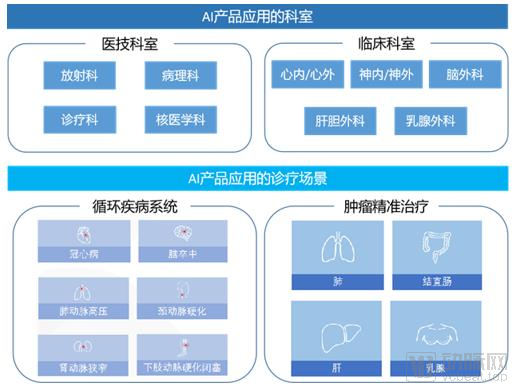
When askedWhy Did Keya Medical Choose to Expand Its Product Line?At that time, Dr. Cao Kunlin stated, “We remain closely aligned with clinical needs. While the expansion of our product portfolio may appear complex, it is in fact driven by the urgent demands of clinicians. For instance, AI-based medical imaging reconstruction of organs such as the liver and lungs enables both physicians and patients to clearly understand specific anatomical and physiological conditions. This allows doctors to develop more precise and efficient surgical plans, maximizing the resection of diseased tissue while minimizing damage to healthy tissue, thereby improving surgical outcomes—a benefit for both patients and healthcare providers.”
It has been less than a year since Keya Medical introduced this concept in 2019 to its current implementation phase. Such rapid growth may raise some concerns about the company’s ability to maintain stable and sustainable development within the industry. However, Keya Medical has leveraged its substantial accumulated expertise to mitigate any potential instability associated with its fast-paced expansion.
Dr. Cao Kunlin explained, “Although our product portfolio is extensive, there are in fact many commonalities among the products. For instance, while cardiology and neurology differ in their clinical applications, they share many underlying technologies. Consequently, the substantial development expertise accumulated in cardiology can be rapidly applied to other circulatory system diseases, helping Keya Medical expand its product line. Meanwhile, the Keya Medical team is growing rapidly, bringing together industry elites with rich experience in medical product development, as well as dozens of AI scientists with Ph.D. or postdoctoral qualifications from prestigious universities both domestically and internationally. Each product line is staffed accordingly across all stages—from R&D to regulatory registration to implementation—ensuring that all areas advance in tandem.”
Keya Medical has outlined another development vision for AI in medical imaging, once again demonstrating its potential in this field through concrete actions.
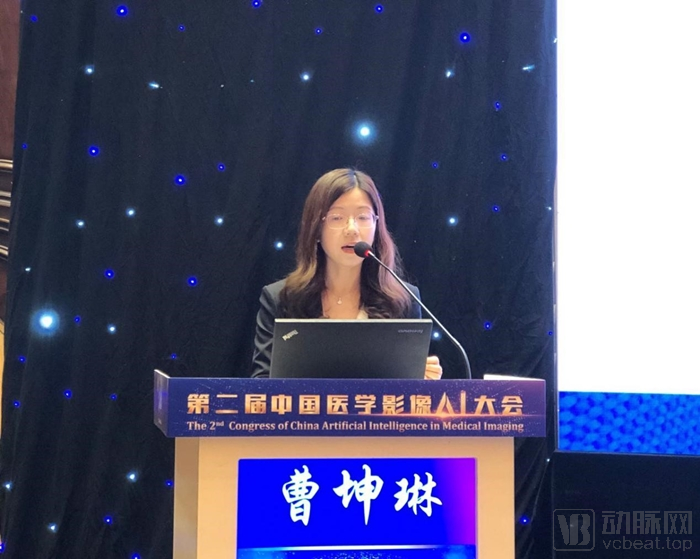
At the conference podium, Dr. Cao Kunlin summarized Keya Medical’s experience in obtaining Class III medical device certification with three key phrases: “Innovative Application,” “Compliance System Construction,” and “Regulatory Management.”
As the first company in China to obtain a Class III medical device certificate for AI healthcare, and currently the only artificial intelligence medical imaging enterprise globally with products holding triple certifications from China’s NMPA, the EU’s CE, and the US FDA, Keya Medical undoubtedly has a strong voice in product approval and certification.
According to the Center for Medical Device Evaluation, for a medical device to be classified as an innovative medical device, it must meet three criteria: possession of intellectual property rights, finalization of the basic design, and being the first of its kind in China with significant clinical value. In Keya Medical’s NMPA certification, the evaluation stating that the product “delivers significant economic and social benefits; no similar product has been registered and marketed in China, while only one similar product is available in the United States; and compared with similar products domestically and internationally, its performance indicators are at an international leading level” highlights the fundamental reason why Keya Medical was able to obtain the certification.
Regarding product certification, Dr. Cao Kunlin told VCBeat, “In fact, Keya Medical had no comparable products to reference during the approval and certification process, which led us down some detours. However, through ongoing communication with the National Medical Products Administration (NMPA), we gradually built consensus and continuously advanced product compliance. While this process may appear rapid, it was underpinned by our repeated engagements with the NMPA, where we received careful guidance and support from the regulatory authorities, thereby accumulating valuable experience in establishing compliance for AI-based medical products.”
Although Keya Medical was able to rapidly obtain regulatory approval and bring its products to market, Dr. Cao Kunlin repeatedly emphasized the word “product” during their conversation. The company’s ability to secure approval first, promote clinical adoption, and expand its product line ultimately stems from its continuous refinement and deep cultivation of its offerings. As reflected in the three key terms mentioned by Dr. Cao, innovation and regulatory compliance remain critical to product success.
Keya Medical’s establishment of a complete AI medical product R&D pipeline—spanning requirements analysis, data collection, algorithm design, and verification and validation—is key to its ability to meet robust product compliance requirements through a rigorous management system.