

Taysha Gene Therapies, a One-Year-Old Adenoviral Gene Therapy Company, Goes Public on Nasdaq

Taysha Gene Therapies
Gene Therapy Drug Developer
VCBeat (WeChat Official Account: vcbeat) learned that on September 2, Taysha Gene Therapies (stock ticker: “TSHA”), an adenovirus vector-based gene therapy company, filed for an initial public offering (IPO). Taysha Gene Therapies (hereinafter referred to as “Taysha Gene”) set its IPO price at $20 per share, offering 7,869,566 shares with the aim of raising $157 million. After deducting underwriting discounts and commissions as well as offering expenses, the company is expected to net $154 million. On September 24, Eastern Time, Taysha Gene officially began trading on the stock exchange. Its opening price was $22.25, representing an 11.3% increase over the IPO price, while its closing price reached $24.06, marking a 20.3% rise from the IPO price. Based on the closing price of $24.06, its latest market capitalization stands at $831 million.
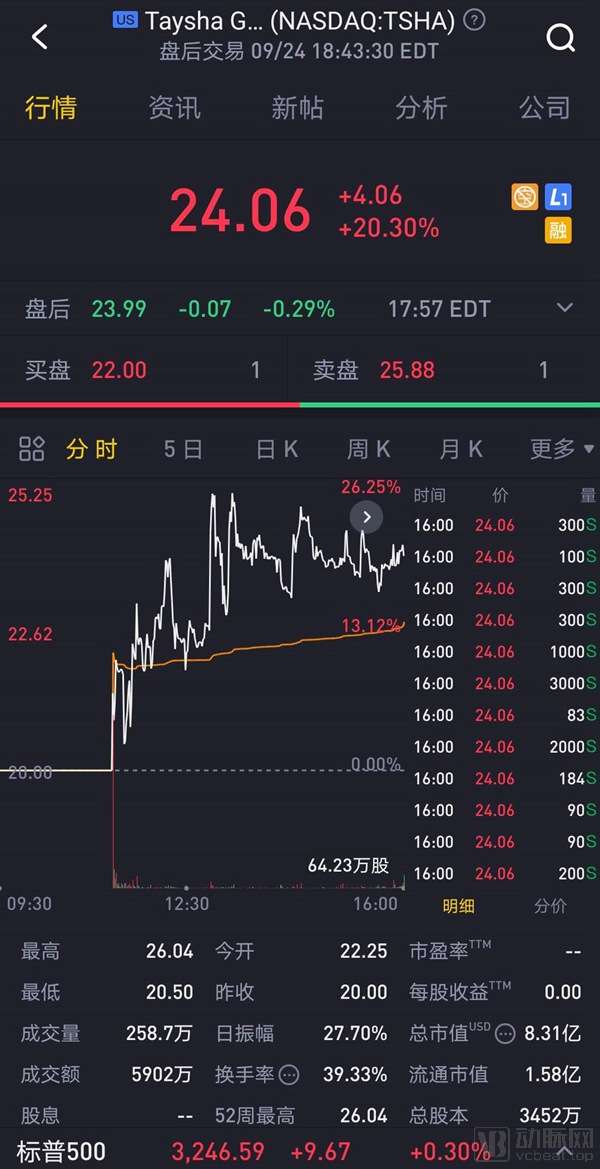
Figure source: Tiger Brokers
It is worth noting that Taysha Gene Therapies was founded on September 20, 2019, and went public on the Nasdaq in just one year. What is the background of this gene therapy company? Let’s take a look.

Headquartered in Dallas, Texas, Taysha Gene Therapies is a gene therapy company specializing in monogenic central nervous system disorders. In collaboration with The University of Texas Southwestern Medical Center (hereinafter referred to as “UT Southwestern”), the most renowned medical center in the southwestern United States, Taysha has pursued rapid clinical translation by developing multiple adeno-associated virus (AAV)-based gene therapies.
UT Southwestern Medical Center, established in 1943 on the foundation of a wartime hospital, is a renowned biomedical research center in the United States. UT Southwestern has cultivated numerous distinguished figures in the scientific community, including six Nobel laureates, 24 members of the National Academy of Sciences, 16 members of the National Academy of Medicine, and 13 Howard Hughes Medical Institute investigators.
Unlike typical industry-academia-research collaboration chains, Taysha Gene Therapies was established with direct support from UT Southwestern Medical Center. The company’s Scientific Advisory Board comprises Dr. Steven Gray and Dr. Berge Minassian, expert professors in the field of gene therapy who serve in the Department of Pediatrics at UT Southwestern Medical Center. They co-founded the UT Southwestern Gene Therapy Program, which is primarily dedicated to the clinical and commercial translation of UT Southwestern’s academic achievements in gene therapy. From the perspective of UT Southwestern, Taysha Gene Therapies can be regarded as its industrial incubation hub.
However, Taysha Gene Therapies is not entirely controlled by UT Southwestern; its true founder is RA Session II. With over 20 years of extensive experience in the life sciences industry, RA Session II specializes in business development, corporate strategy, and finance. He has held senior executive positions at two gene therapy companies focused on genetic disorders, serving as Chief Financial Officer at BridgeBio and Senior Vice President of Strategy and Business Development at AveXis.
Led by Taysha Gene Therapies, RA Session II is driving greater initiative and aggressiveness in R&D under the new “industry-academia-research collaboration chain.” For instance, Taysha Gene Therapies can collaborate directly with UT Southwestern faculty to conduct product development at the university’s GMP viral vector production facility, while partnering with on-campus researchers, clinicians, and investigators to carry out comprehensive product evaluations and clinical care studies.
When it comes to Taysha Gene Therapies, its bold and decisive approach has left a deep impression. Rooted in Texas, the company embodies the tenacious spirit of its people, having maintained a relentless pace of aggressive strategic moves since its inception.
On April 30, Taysha Gene Therapies completed a $30 million seed financing round to advance the development of its 15 adeno-associated virus vector gene therapy drugs for the treatment of monogenic diseases of the central nervous system.
On August 5, Taysha Gene Therapies completed an oversubscribed $95 million Series B financing round led by a consortium of life science investors headed by Fidelity Management & Research Company LLC. Taysha Gene Therapies will use the proceeds from this financing to advance the initial cohort of its lead program into clinical trials, accelerate the anticipated Investigational New Drug (IND) submission, and support early-stage clinical research for GM2 gangliosidosis, as well as further develop its advanced gene therapy technologies for monogenic central nervous system (CNS) diseases affecting both rare and large patient populations.
On August 17, Taysha Gene Therapies and Abeona Therapeutics, also a gene therapy company, entered into a license and inventory purchase agreement. This collaboration centers on ABO-202, an adeno-associated virus (AAV) vector gene therapy for the treatment of CLN1 disease. Under the terms of the agreement, Taysha Gene Therapies will pay Abeona an initial cash consideration of $7 million, comprising a $3 million upfront licensing fee and a $4 million inventory purchase price.
Not long after, on September 2, Taysha Gene Therapies filed its IPO application, and on September 24, the company officially went public. In the complex world of capital markets, Taysha Gene Therapies has thrived with remarkable ease.
Certainly, the strong interest from investors and the positive outlook from the securities market for Taysha Gene Therapies stem not only from its founding background but also from its advanced pipeline of adeno-associated virus (AAV) vector-based gene therapy drugs and its next-generation AAV vector engineering platform.

Taysha Gene Therapies centers its R&D on adeno-associated virus vectors, integrating gene replacement therapy with miRNA (microRNA) and shRNA (short hairpin RNA) therapies to develop 18 intrathecally administered gene therapy drugs. The company has established a pipeline targeting three broad categories of neurological indications, including seven neurodegenerative diseases, eight neurodevelopmental disorders, and three forms of recurrent epilepsy associated with brain development. This product portfolio serves patients with both rare and prevalent conditions, addressing a patient population of up to 500,000 across the United States and Europe.
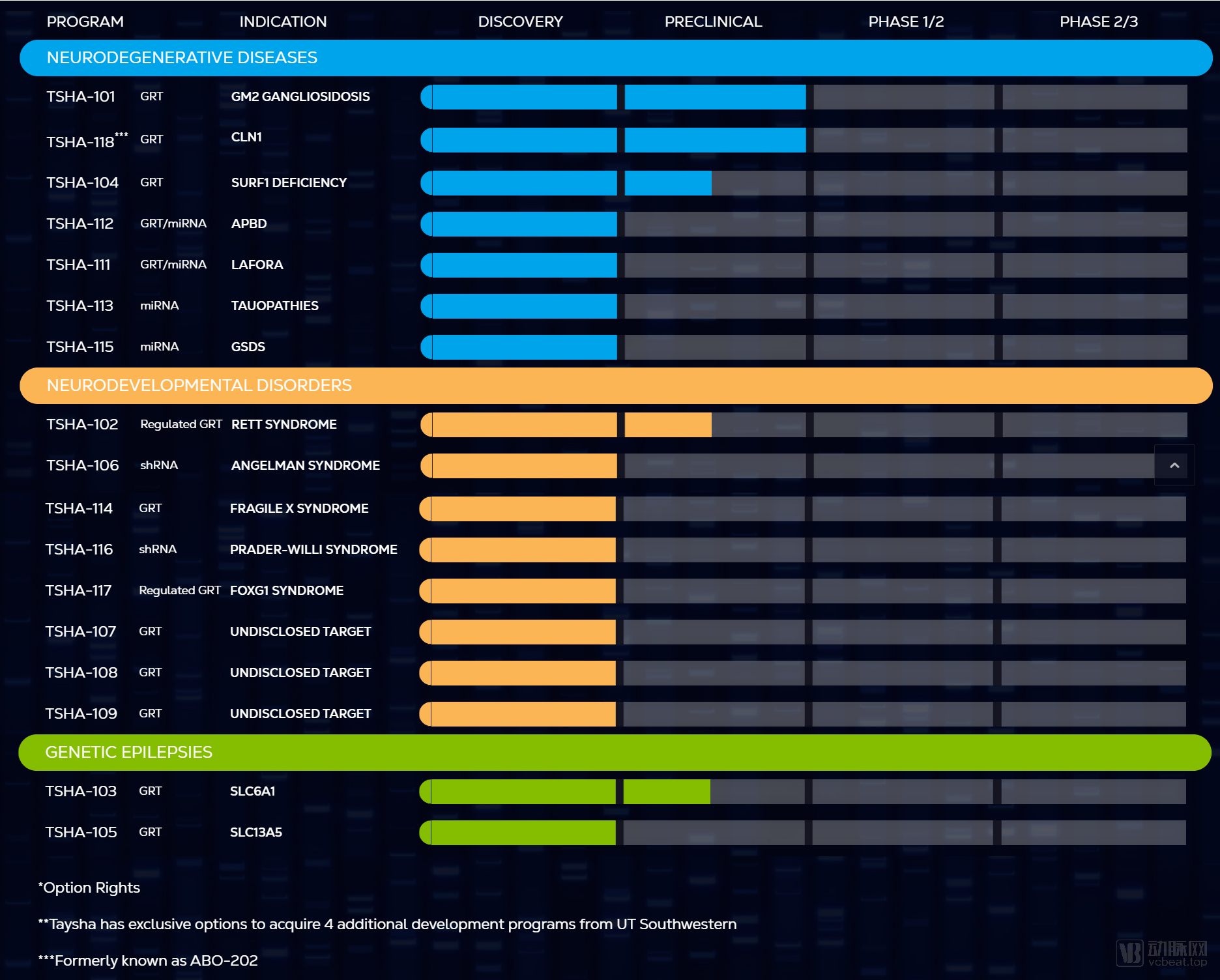
Taysha Gene Therapies Product Pipeline
The five drug candidates at the forefront of Taysha Gene Therapies’ R&D pipeline are TSHA-101, TSHA-118, TSHA-102, TSHA-103, and TSHA-104. Among these, three target neurodegenerative diseases, while one each is being developed for recurrent epilepsy associated with brain development and for neurodevelopmental disorders.
In the context of recurrent epilepsy associated with brain development, TSHA-103 is intended to treat SLC6A1 haploinsufficiency (a mutation in a single allele while the other allele remains normal, resulting in 50% protein expression levels that are insufficient to maintain cellular function). The drug consists of composite viral particles comprising a codon-optimized SLC6A1 gene and an adenoviral vector.
In the field of neurodevelopmental disorders, TSHA-102 is being developed to treat Rett syndrome (a hereditary condition characterized by severe intellectual disability, predominantly affecting girls, and caused by mutations in the MECP2 gene). TSHA-102 features a unique genetic construct comprising three components: a neuron-specific promoter, a minimized MECP2 sequence, and a microRNA (miRNA)-responsive self-regulatory element. This genetic construct is packaged into an adeno-associated virus vector to form composite viral particles. TSHA-102 has been designated by the U.S. Food and Drug Administration (FDA) as a Rare Pediatric Disease therapy for the treatment of Rett syndrome.
In the field of neurodegenerative diseases, TSHA-101 is an adenovirus vector-delivered gene therapy encoding HEXB-P2A-HEXA for the treatment of GM2 gangliosidosis. TSHA-101 has currently received FDA orphan drug designation and rare pediatric disease designation for this condition.
Furthermore, Taysha Gene Therapies will also establish a next-generation adenoviral vector engineering platform, conducting research, design, and modification in three key areas: mitigating immunogenicity associated with adenoviral vectors, regulating the expression of delivered gene sequences, and enhancing the organ- and cell-specific targeting of viral particles.
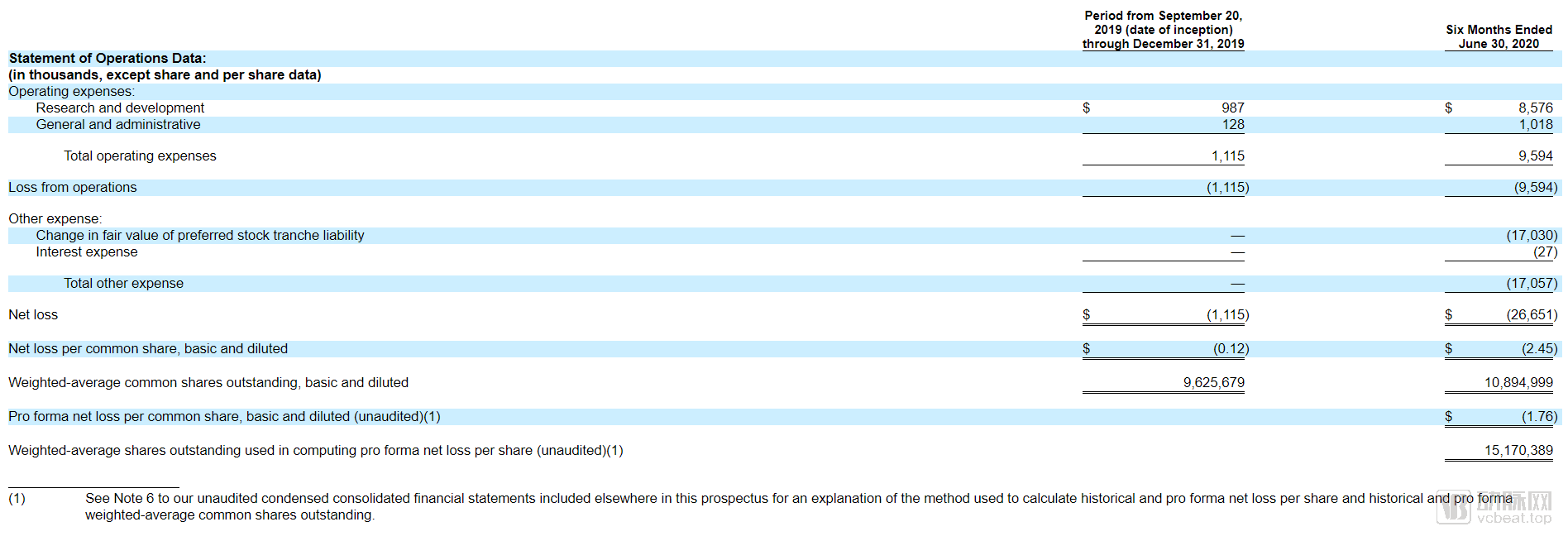
According to the prospectus, Taysha Gene Therapies currently has no revenue. As of June 30, 2020, Taysha’s net loss for 2020 increased 23-fold compared with its quarterly loss in 2019, rising from $1.1 million to $26.7 million, with an accumulated deficit of $27.8 million. Notably, Taysha’s R&D expenses in the first half of 2020 surged eightfold year over year to $8.57 million, driven by the advancement of multiple product pipelines.
As no products have yet been approved for commercial sale, Taysha Gene Therapies sustains its operations through equity sales. As of August 2020, the company had raised a total of $126 million by issuing convertible preferred shares.
Taysha Gene Therapies will allocate the proceeds from this offering to four areas. The first area covers research and development, manufacturing, and quality control testing for clinical and preclinical programs. The second area funds clinical trials and related medical services for five pipeline products. The third area supports the construction of production facilities for the company’s products. The fourth area is designated for corporate operations and other general corporate purposes.

Where Will This Gene Therapy Company with Only 10 Full-Time Employees Go After Its IPO?
Taysha Gene Therapies has outlined its current development roadmap.
The company will initiate Phase I and II clinical trials of TSHA-101, a drug for the treatment of GM2 gangliosidosis, in Canada by the end of 2020.
Furthermore, Taysha Gene Therapies plans to submit Investigational New Drug (IND) applications for four programs to the FDA by the end of 2021: TSHA-101 (GM2 gangliosidosis), TSHA-102 (Rett syndrome), TSHA-103 (SLC6A1 haploinsufficiency), and TSHA-104 (SURF1 deficiency). Under its currently active INDs, the company will develop new indications for TSHA-118 (formerly ABO-202) in infantile Batten disease and intends to initiate Phase I and Phase II clinical trials.
Beyond its product pipeline, Taysha Gene Therapies will leverage its next-generation adenoviral vector engineering platform to further upgrade its current adenoviral vector particles. Tailored to different genetic targets, Taysha’s viral nucleic acid complex particles will perform distinct functions—such as replacing mutated genes, enhancing the expression of silenced genes, or reducing gene expression—to achieve therapeutic outcomes.
For now, UT Southwestern’s GMP viral vector manufacturing facility can meet Taysha Gene Therapies’ basic production needs. However, Taysha Gene Therapies is already considering the construction of a new GMP viral vector manufacturing facility, and this plan is included among the intended uses of the proceeds from its current initial public offering.