

Healthy Data, Precision Decisions: InterSystems Empowers Healthcare Decision-Making Through Advanced Technology and Care Coordination
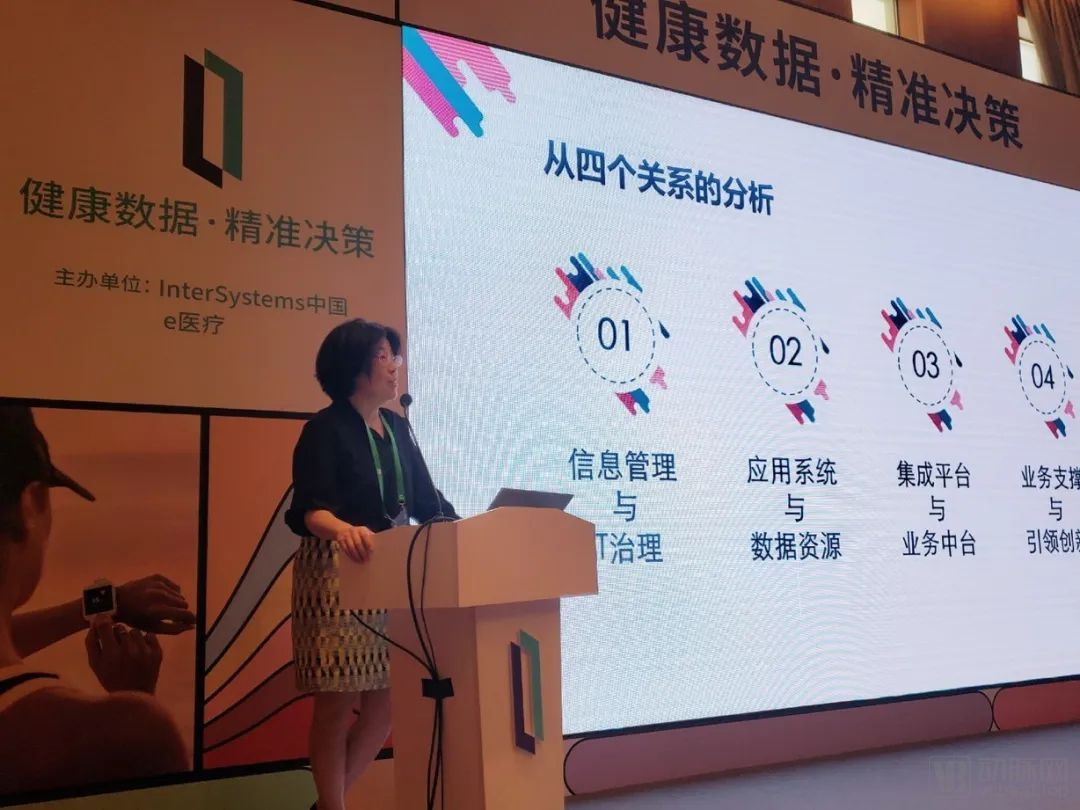
Xu Xiangdong
Division of Information Technology, Statistical Information Center, National Health Commission: Director
In recent years, driven and supported by national policies, the development of informatization in China’s medical institutions has progressed rapidly, achieving remarkable accomplishments. At the conference, Xu Xiangdong delivered a speech titled “Reflections and Prospects on Hospital Informatization.” She elaborated on her insights into the current state of hospital informatization in China from four dimensions: information management and IT governance, application systems and data resources, integration platforms and business middle platforms, and business support and innovation leadership. She stated, “First, we need to establish a robust IT governance system to optimize the interests of all stakeholders—including hospitals, vendors, and the ecosystem—during the informatization process, ensuring sound overall development. Second, the original intention behind the informatization and digitalization of medical data is to bridge the data gap and provide better support for clinical and operational activities. Furthermore, with integration platforms as tools and business middle platforms as the strategic direction, information systems can facilitate more effective information exchange. This is particularly significant in the current phase of continuous development in medical informatization, as it feeds back into optimizing medical processes and enhancing public-benefit services. Finally, strong data management capabilities not only directly serve daily operations but also promote the implementation of innovative applications in hospitals.”
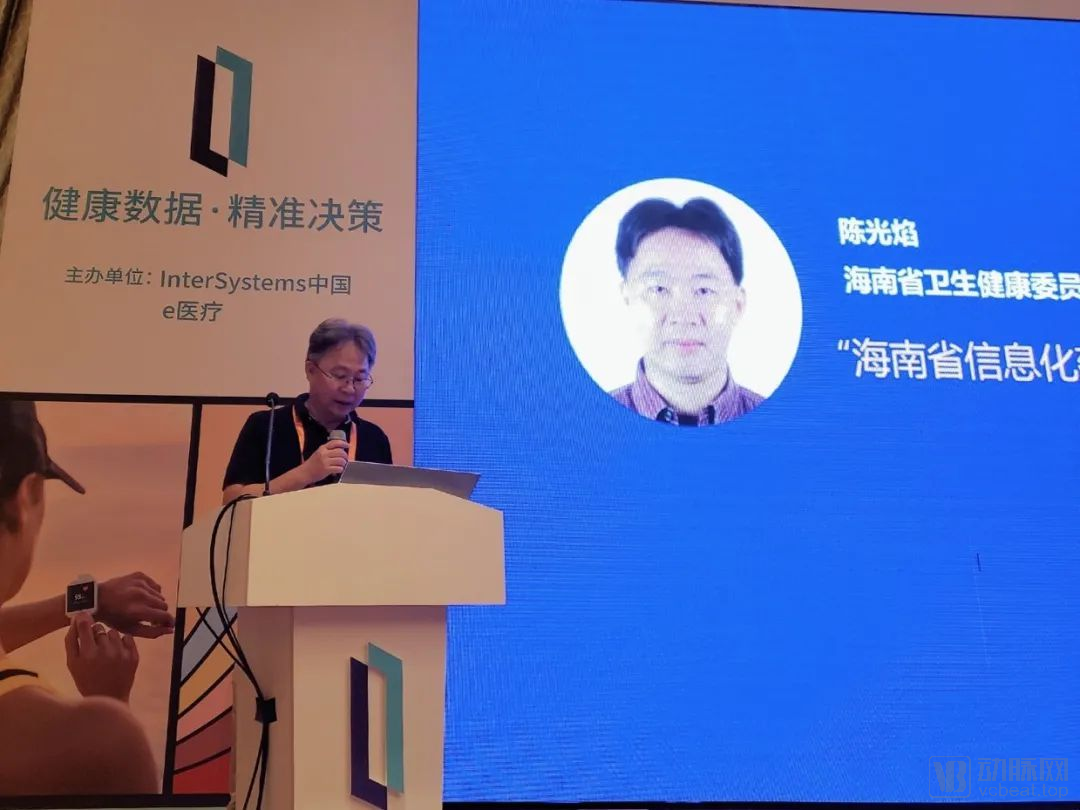
Chen Guangyan
Hainan Provincial Health Commission Statistical Information Center: Deputy Director
“In June this year, the Central Committee of the Communist Party of China and the State Council released the Overall Plan for the Construction of the Hainan Free Trade Port, aiming to build Hainan Island into a high-level free trade port with significant international influence. The health industry is a priority sector for the Hainan Free Trade Port and holds a particularly important position in Hainan’s industrial layout,” said Chen Guangyan in his welcome address, during which he introduced the development of Hainan’s health industry. He stated, “Hainan possesses natural advantages for developing the medical and health industry. Against the backdrop of strong central government support for building Hainan Island into a free trade port with Chinese characteristics, Hainan Province has issued the Hainan Provincial Health Industry Development Plan (2019–2025). This plan strives to establish Hainan as a national pilot zone for the health industry, a demonstration zone for high-quality integrated and clustered development of the health industry, a key strategic support point for the Health Silk Road, and a global destination for medical tourism. Furthermore, in recent years, Hainan has been making every effort to develop modern service industries, represented by healthcare. By focusing on the construction of big data centers and industrial parks, and centering on the application of healthcare big data, Hainan is actively promoting the integrated development of the digital economy and the healthcare industry. The goal is to make the broader health industry a top priority and a pillar of the economy in the construction of the Hainan Free Trade Port.”
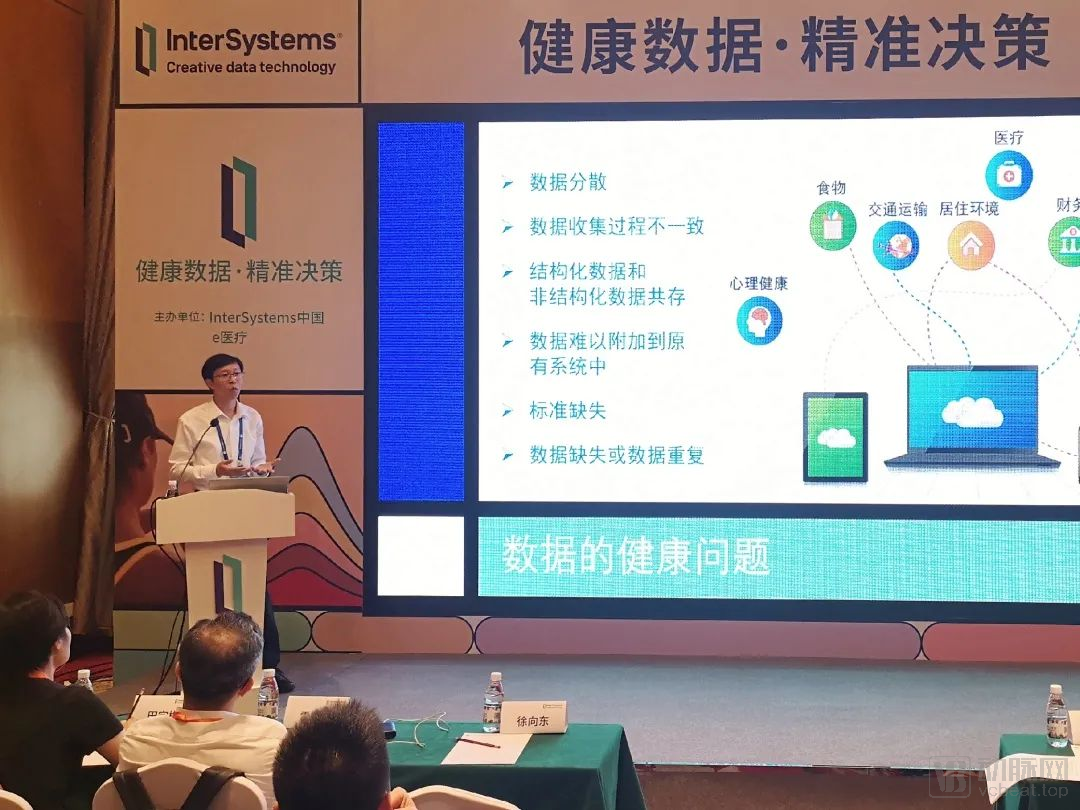
Qiao Peng
InterSystems China: Technical Director
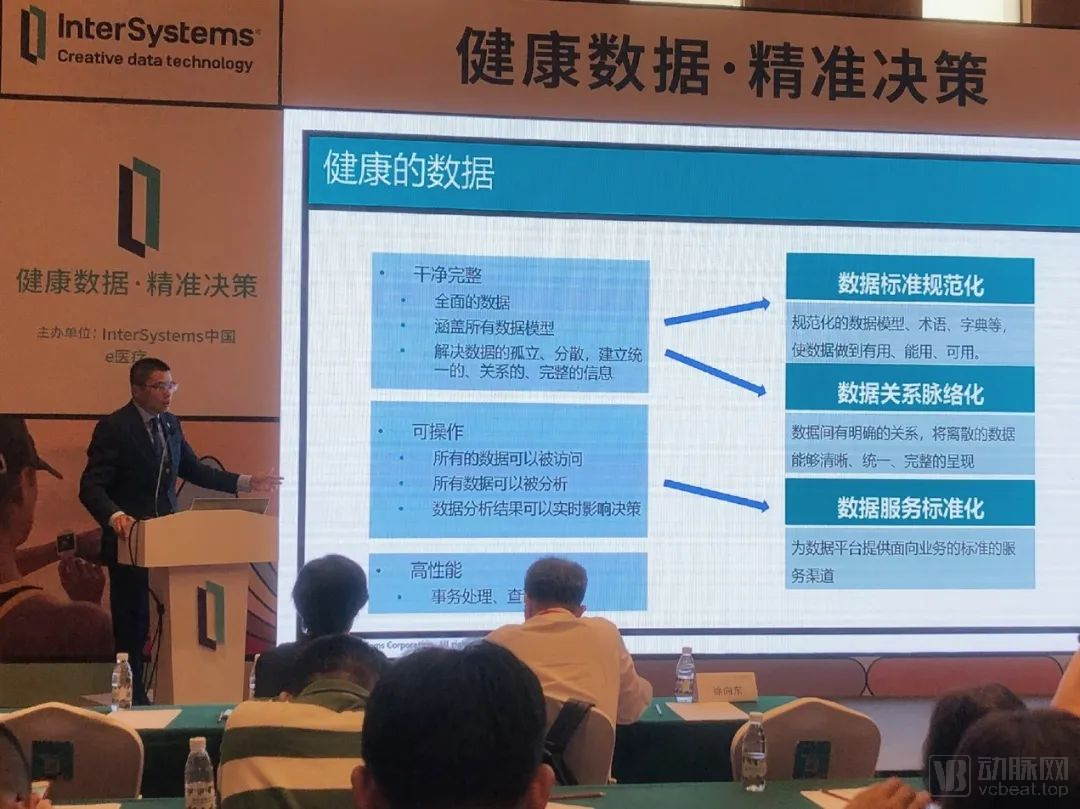
Today, integration platforms have been present in hospital information system construction for over a decade. While healthcare informatics has entered an era of data abundance, persistent data health issues—such as data silos, poor data quality, inconsistent terminology, weak data relationships, lack of real-time updates, diverse data types and structures, and massive data volumes—continue to hinder data-driven decision-making, particularly intelligent decision-making. In response, Qiao Peng stated in his keynote speech, “Acquisition and Utilization of Health Data Based on the IRIS Data Platform”: “The InterSystems IRIS for Health data platform helps address data health challenges and maximizes the value of data to drive digital transformation in healthcare through its core capabilities, including multi-model support, hybrid transactional/analytical processing (HTAP), interoperability, rich industry standards, open analytics, SQL-based automated machine learning, and horizontal scalability.”
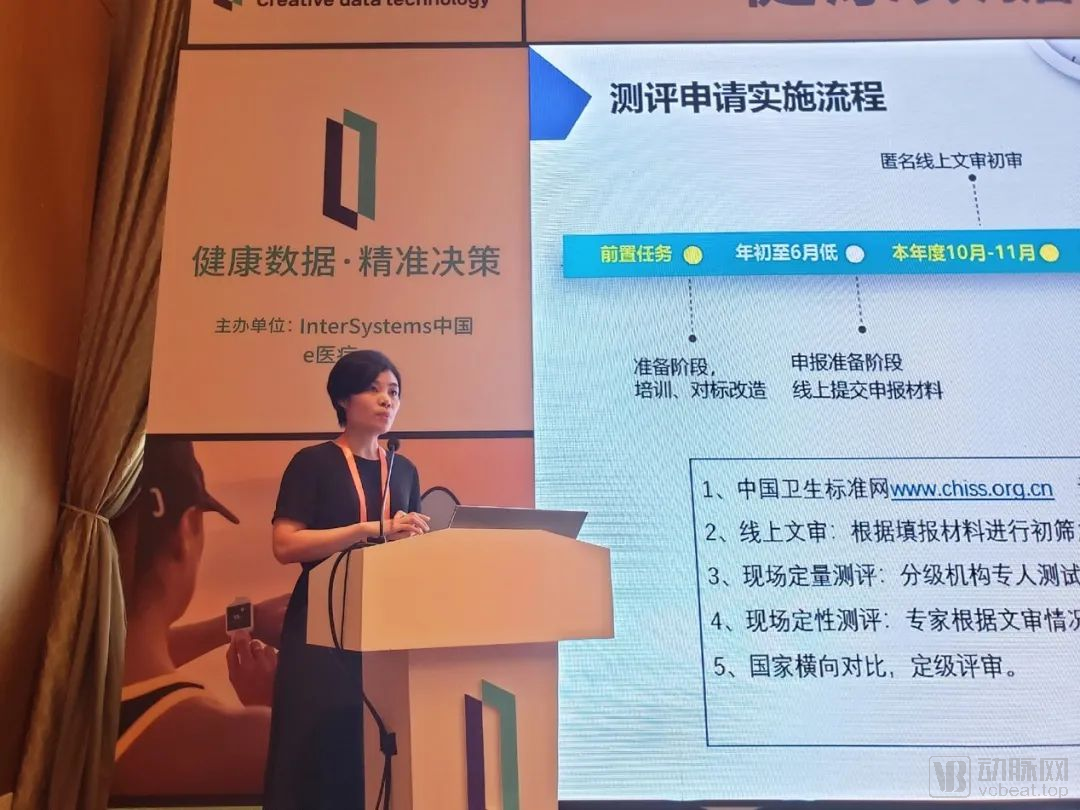
Tian Zongmei
Beijing Shijitan Hospital, Capital Medical University: Director of the Information Center
As a century-old hospital, Beijing Shijitan Hospital has continuously advanced its informatization initiatives in recent years and achieved Level 4 Grade A certification for the National Health and Medical Information Interconnectivity Standardization Maturity Assessment in May 2018. In her keynote speech titled “Key Points of Hospital Interconnectivity Maturity Assessment and Interpretation of the New Standards,” Tian Zongmei outlined the critical tasks for hospitals during laboratory testing, document review, and on-site audits, based on the overall requirements and evaluation methodologies of the Hospital Information Interconnectivity Maturity Assessment. She also provided an interpretation of the new standards released in 2020. She stated, “The process of building hospital information systems is not only one of business process improvement but also of restructuring the hospital’s information architecture, which helps enhance the overall level of hospital informatization. Throughout this comprehensive development process, planning of information systems is crucial, as a well-designed architecture ensures system stability, scalability, availability, and usability.”
Li Yan
InterSystems China: Business Development Manager
“Healthy data” not only better supports clinical decision-making and medical collaboration but also plays a crucial role in building high-quality applications, while the health of data depends on the capabilities of the supporting platform. In other words, the platform and data have a mutually reinforcing relationship. Li Yan, Business Development Manager at InterSystems China, introduced InterSystems HealthShare’s unified health record product components to attendees in his keynote speech titled “Building Interoperable Applications with Healthy Data.” These components include Health Connect for hospital-level integration, Unified Care Record for regional healthcare institution platform development, and Health Insight for real-time analytics, providing valuable references and insights for attendees in designing information or data platform solutions. Li Yan stated, “As healthcare digital transformation progresses, an increasing volume of data needs to be exchanged and collected. Hospitals require more comprehensive and accurate data for clinical care, scientific research, management, and other areas. During data flow, various methods must be employed to organize and standardize data, unlock its value, and drive the advancement of healthcare.”
Luciano Brustia, General Manager of InterSystems Asia Pacific, extended his sincere congratulations on the successful convening of this satellite symposium. He emphasized, “We hope to leverage this satellite symposium to enhance industry awareness of ‘healthy data.’ By capitalizing on InterSystems’ technological strengths and forging robust partnerships, we aim to empower healthcare institutions to activate and optimize their data utilization. This will help them confidently address the various challenges encountered in the process of healthcare informatization, drive transformation and change in the medical sector through information technology, and contribute to the implementation of the ‘Healthy China 2020’ strategy.”
Founded in 1978, InterSystems is a leading provider of critical data technology for the healthcare, financial, and logistics industries. InterSystems’ cloud-first data platform helps large enterprises worldwide address various challenges related to interoperability, speed, and scalability.
InterSystems boasts distinctive, best-in-class hospital EMR systems, unified community (and national) health record systems, and laboratory information management systems. Committed to excellence, InterSystems provides widely acclaimed 24/7 technical support to customers and partners in more than 80 countries worldwide. A privately held company headquartered in Cambridge, Massachusetts, USA, InterSystems operates 25 offices globally. For more information, please visit: https://www.intersystems.com/cn/