

The Future of Medical Informatization after the 2019 Interoperability Rating Results and the 2020 New Evaluation Framework: Insights from CHITEC 2020
"Informatization is a vital link for hospitals, moving from the periphery to the center."
At the 2020 China Health Information Technology/Healthcare Big Data Application Exchange Conference and Software, Hardware & Healthcare Products Exhibition (CHITEC), Chen Yongyi, Vice President of Hunan Cancer Hospital, succinctly highlighted the current status and direction of transformation in healthcare informatization.
In recent years, national policies on the evaluation of healthcare informatization have increased annually. Nearly every year, a core policy has defined the focal point for IT departments in healthcare institutions. From electronic medical record (EMR) evaluations and interoperability assessments to Classified Protection 2.0 (MLPS 2.0) and smart hospital service evaluations, the logic underlying healthcare informatization reform has gradually become clear. Informatization is poised to become the central axis driving transformations in the efficiency, payment mechanisms, and operational models of the healthcare system.
For CHITEC, the core focus is interoperability within the grading system. On September 25, 2020, the results of the National Health and Medical Information Interoperability Standardization Maturity Assessment were released here.
Based on the conference content and exhibition landscape at CHITEC, how will interoperability assessments evolve? And where is healthcare informatization headed? VCBeat has identified the following trends from the event.
In the 2019 assessment results for the maturity of interoperability standardization, a total of 31 regions participated in the evaluation. Among them, 164 hospitals were rated at Level 4 Grade B or above, with 154 hospitals reaching Level 4 Grade A. Additionally, six hospitals achieved Level 5 Grade B: Children's Hospital of Fudan University, Shanghai Chest Hospital, Wuhan Central Hospital, Bao'an District Maternal and Child Health Hospital of Shenzhen, Peking University Shenzhen Hospital, and West China Second University Hospital of Sichuan University.
Regional Disparities in Interconnectivity Advancement Are Highly Pronounced, with Coastal Cities Demonstrating Significantly Faster Progress than Inland Cities. Specifically, Guangdong Province, home to numerous internet giants, saw 22 additional hospitals achieve Level 4 Grade B certification and one hospital attain Level 5 Grade B certification. Zhejiang Province, known for its aggressive healthcare policies, recorded 21 newly certified hospitals at Level 4 Grade B. Following closely were Shandong, Jiangsu, Sichuan, and Hubei Provinces, with 14, 13, 12, and 11 hospitals, respectively, achieving Level 4 Grade B certification.
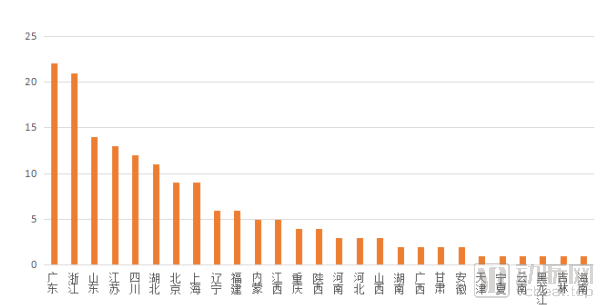
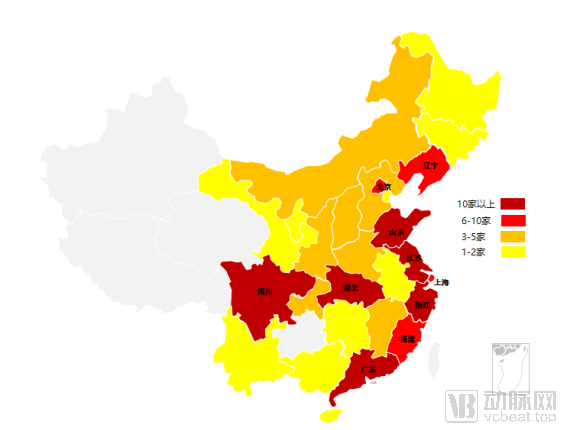
Geographic Distribution of the 2019 National Assessment on Standardization Maturity for Interconnectivity of Medical and Health Information
Compared with the approval rates for high-level interoperability over the past two years, the number of hospitals approved in Beijing and Shanghai in 2019 remained largely on par with the previous two years, while central China continued to experience slow growth, and western China showed weak momentum. On one hand, medical resources in some central and western regions are less concentrated and affluent than those in coastal cities; on the other hand, the overall pace of information technology transformation in some central and western regions has been relatively slow, with more lenient policy requirements. However, from another perspective, regions such as Chongqing, Hunan, and Tianjin boast a large number of Grade III Class A and Grade III Class B hospitals, indicating substantial potential demand for IT upgrades. These areas are poised to rapidly catch up with coastal cities once policy implementation accelerates.
Looking at information service providers, both traditional IT enterprises and next-generation information technology companies have offered substantial advice and product direction support for hospital assessment services. Companies such as Ewell Technology, Wonders Information, Peking University Medical Information Technology, Huimei Technology, Senyi Intelligence, and InterSystems have undertaken a large number of interoperability assessments for hospitals and regions.
Wonders Information delivered outstanding performance in the 2019 Interconnectivity Assessment, with nearly 40% of prefecture-level cities (regions) achieving Grade IV Class A status having their systems built by Wonders Information. In the Hospital Interconnectivity Assessment, Wonders Information participated in the construction for several hospitals, including Children's Hospital of Fudan University (Grade V Class B), Ningbo Traditional Chinese Medicine Hospital (Grade IV Class A), Ningbo Hangzhou Bay Hospital (Grade IV Class A), and Ningbo Women and Children's Hospital (Grade IV Class A). Including data from the previous two years, Wonders Information supported 46 institutions out of a total of 128 regions in their assessments, accounting for 36%. Among the seven regions rated at Grade V or above, Wonders Information participated in the construction of four, representing approximately 60%.
As the first implementer of HL7 V3 integration standards and the first healthcare IT vendor to deploy hospital information platforms and data centers, Peking University Healthcare Information Technology (PKU HIT) helped 17 hospitals achieve Level 4 Grade B or higher in assessments in 2019. In total, PKU HIT has assisted 34 hospitals across China, including Peking University Third Hospital (Level 5 Grade B), Jiangsu Province People’s Hospital (Level 5 Grade B), and The First Affiliated Hospital of Nanchang University (Level 5 Grade B), in successfully passing the Interconnectivity Standardization Maturity Certification. Additionally, it has developed practical and feasible information construction planning solutions for numerous hospitals.
InterSystems China also offers comprehensive and effective evaluation solutions. To date, InterSystems has assisted more than 80 hospitals in passing these evaluations. Notably, Wuhan Central Hospital, West China Second University Hospital of Sichuan University, and Shenzhen Bao’an District Maternal and Child Health Hospital, all of which achieved Level 5 Grade B certification in 2019, received support from InterSystems.
In 2019, Senyi Intelligence helped a total of eight clients pass the Level 5 Grade B and Level 4 Grade A assessments, namely: Children's Hospital of Fudan University (Level 5 Grade B), Shanghai Chest Pain Center (Level 5 Grade B), Shenzhen Hospital of Peking University (Level 5 Grade B), Shenzhen Bao'an District Maternal and Child Health Hospital (Level 5 Grade B), The University of Hong Kong-Shenzhen Hospital (Level 4 Grade A), Huai'an Second People's Hospital (Level 4 Grade A), Jining Psychiatric Prevention and Treatment Hospital (Level 4 Grade A), and Jingjiang People's Hospital (Level 4 Grade A).
Huimei Technology has also made significant efforts in electronic medical record (EMR) evaluations and interoperability assessments, helping nearly 20 hospitals achieve Level 5 Class B and Level 4 Class A interoperability ratings. In 2019, Huimei Technology primarily assisted institutions such as the Children’s Hospital Affiliated to the Capital Institute of Pediatrics, China-Japan Union Hospital of Jilin University, and Zhongnan Hospital of Wuhan University in completing their Level 4 Class A assessments.
As the Statistical Information Center of the National Health Commission officially issued in August"Standardized Maturity Assessment Scheme for Interconnectivity of Regional Population Health Information (2020 Edition)" and "Standardized Maturity Assessment Scheme for Interconnectivity of Hospital Information Systems (2020 Edition)", as the content of the Interconnectivity Standardization Maturity Assessment changes, enterprises’ assessed products and service models will also undergo certain changes.
Compared with the 2017 version, the new 2020 scheme has made localized adjustments in the following aspects: information integration methods, information integration technologies, information resource repositories, unified identity authentication and portal services, platform functions, interoperability and interaction services, hardware infrastructure, storage devices, network equipment, network security, information security, application security, construction of clinical service systems, construction of medical management systems, construction of operational management systems, construction and utilization of public service application systems, construction and utilization of medical service application systems, construction and utilization of health management application systems, application of new technologies, internal business connectivity based on the platform, and external business connectivity based on the platform.
Under the new framework, Senyi Intelligence has summarized it into the following nine points:
1. Encourage the adoption of microservices architecture technology;
2. Timeliness Requirements for Independent Clinical Information Databases (this point is strictly required in the Grade IV Class B assessment);
3. SSO saw a slight decline in its score during high-level accreditation reviews;
4. Data desensitization configuration has become a standard feature for Level 4A hospitals; the service subscription management function has been added;
5. Reduced difficulty for level advancement, with “opening capabilities to the internet” placed at Level 5;
6. Increased requirements for storage security; cloud storage has passed assessment;
7. The score for Level 5 continuous data capability has been significantly increased;
8. Level 5 requirements include IoT and 5G deployment capabilities;
9. MLPS 2.0 introduces new security requirements for cloud deployments, raising the bar for malware protection capabilities.
Based on the nine changes outlined above, we can broadly summarize the impact of evaluations on hospitals and enterprises.
First, there are significant changes in both the assessment process and content. The testing environment has shifted from laboratory simulations to actual production environments. Furthermore, the hospital information platform (or system) under evaluation must hold a software copyright certificate, have been in operation for more than one year, and have passed preliminary acceptance. This indicates that the focus of the new assessment has shifted from "methodology" to "practicality."
Secondly, most of the assessments conducted in the past were carried out by third-party testing agencies, whileIn the new version of the plan, third-party testing agencies have been directly eliminated, with review responsibilities transferred to national and authorized tiered management bodies.Furthermore, the tiered management mechanism under the new scheme more clearly defines the responsibilities and coordination mechanisms between national and local tiered management authorities. Evaluation and accreditation for Grade IV Class A institutions and below are directly delegated to the tiered management authorities for determination, while applications for Grade V and above must be submitted to the national-level management authority.
Finally,The standardization and application of “medical data” are increasingly becoming a national guide for hospital informationfibrotic "tendons."Under the new framework, the updated assessment scheme strengthens the application of big data intelligence and emerging artificial intelligence technologies, imposing higher requirements on the coverage (completeness) and standardization (accuracy) of hospital operational data. Transforming the vast amounts of previously siloed medical data within hospitals into actionable “knowledge” is set to become a standard capability for healthcare institutions.
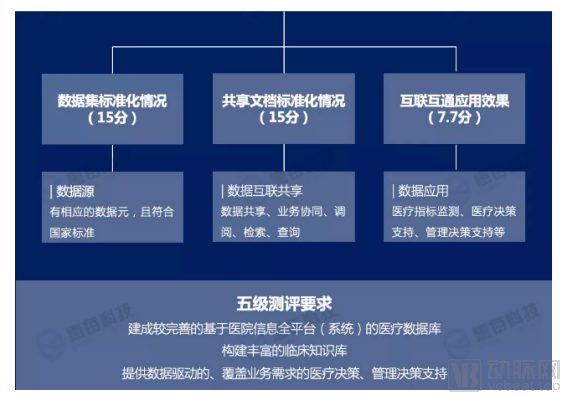
2020 Edition: Requirements for the Application of Data and Data Intelligence (Image provided by Huimei Technology)
Huimei Technology stated that in the Level 5 accreditation, three assessment categories—dataset standardization, shared document standardization, and interoperability application effectiveness—account for 40% of the total score. These categories impose high standards on data recording at the hospital’s source systems, as well as on data sharing, access, retrieval, and business coordination support. To earn points, hospital business systems must contain corresponding data elements that comply with national standards.
For hospitals that have deployed various operational systems such as HIS, RIS, LIS, and PACS, it may seem that data-side assessment is not difficult, but this is far from the truth. Huimei Technology has found in the process of implementing CDSS (Clinical Decision Support System) in hospitals that issues such as missing data and data errors at the source end are very common, manifested as null values and mapping errors. Moreover, some hospitals have an average of 4.73 data defects per medical record.
Therefore, to pass the Interconnectivity Maturity Assessment, hospitals must strengthen their business data governance initiatives. Data governance is akin to ore processing; the quality of governance affects data credibility and the level of intelligence enabled, while the extent of governance directly determines the value of data assets.
In addition to changes in evaluation criteria, the Evaluation Center will conduct unannounced inspections at major hospitals in the future. Hospitals that fail to meet the standards will have their previously assigned Hospital Interconnectivity Maturity Assessment ratings revoked. This is because assessments for Level 5 and below do not require on-site visits by review agencies; instead, hospitals merely need to complete corresponding forms based on their own circumstances, which creates certain “exam-oriented” compliance risks.
Regardless of how the detailed criteria for hospital ratings evolve, healthcare institutions must upgrade their internal information technology systems in accordance with specific requirements. However, such modernization efforts are often hindered by the limitations of traditional Hospital Information Systems (HIS) and Electronic Medical Record (EMR) systems. From this perspective, many companies at CHITEC have launched next-generation hospital management solutions, aiming to lay a solid foundation for hospitals to meet various rating standards.
Taking Nova Tech’s next-generation HIS system, VarMix, as an example, the system is designed around a “data-centric” approach. It employs a middle-platform architecture to decouple four key components: the business platform, technology platform, real-time exchange platform, and foundational business applications, enabling each module to be backed up and upgraded independently. In terms of data services, the system supports WS445 and WS500—essential standards for achieving interoperability certification—to facilitate data storage and exchange across various systems.
Furthermore, the system’s technical architecture supports flexible deployment and online upgrades; it enables comprehensive resource and end-to-end monitoring, along with proactive, intelligent operations and maintenance. Its open API services facilitate rapid integration of multi-source heterogeneous systems. The system supports structured physician order-driven closed-loop business management and medical quality control. It also supports high-quality data centers, helping hospitals build data assets, and accommodates multi-institutional applications to meet the needs of group-based development.
Winning Health’s WiNex follows the same logic as Neusoft’s. Winning Health plans to dismantle its previously redundant integrated information systems, reclassify the complex business-module-based systems within them, and consolidate them into three interacting platforms: the technology middle platform, the data middle platform, and the business middle platform, ultimately achieving an optimal solution for business collaboration and data integration.
Mandala Software has launched a new generation of electronic medical records (EMR) on top of CHITEC. This system can integrate with the company’s Hospital Information System (HIS), enabling information exchange across multiple systems. For instance, information entered by patients at outpatient workstations can be directly synchronized into the EMR. This approach will, to some extent, reduce the operational complexity for physicians and meet the requirements for information interoperability in the connectivity rating evaluation.
Compared with CHINC, the products exhibited by CHITEC exhibitors are more diversified, covering nearly all aspects of smart hospitals and traditional informatization, with minimal significant overlap. Overall, the themes largely revolve around “data” and “connectivity.”
Huawei, Tencent, and the three major telecom carriers—China Mobile, China Unicom, and China Telecom—were all present at the event, highlighting applications centered on three key modules: “5G+,” “IoT+,” and “Cloud.” Based on the products showcased, the four companies other than Tencent continue to play the role of infrastructure service providers in healthcare informatization, leaving application-layer solutions to traditional health IT vendors. Tencent, meanwhile, continued to promote its WeChat-based Electronic Health Card at the conference. The Electronic Health Card is currently being rolled out across China, and its connectivity capabilities via the WeChat platform give it a faster implementation advantage compared to internet healthcare companies.
Smart wards are another key focus of this exhibition. Centered on an IoT platform, smart wards enable real-time collection of ward environmental data and patient vital signs through tags. By leveraging shared platform capabilities, they serve the entire medical workflow, seamlessly connecting wards, patients, healthcare staff, and medical devices. Through the integration of IoT, internet, and artificial intelligence technologies, emergency call linkage is achieved among personnel positioning systems, smart bedside cards, bedside interactive terminals, smart ward displays, nursing dashboards, and nurses’ smartwatches. This ensures timely response to patient needs and enhances inpatient safety.
Yidu Cloud, Lianren Health, and Inspur Health, among other medical big data enterprises, have all launched big data products at CHITEC. Yan Jun, Chief AI Scientist at Yidu Cloud, shared insights on how data intelligence supports the construction of public health monitoring and early warning systems. He stated that, leveraging artificial intelligence technology, Yidu Cloud can transform non-computable data into computable forms based on authorized access. Driven by value-based scenarios, the company’s epidemic prevention solutions aim to achieve dynamic closed-loop management of outbreaks while they are still present, as well as a dynamic balance among social activities, economic development, and epidemic control measures, thereby assisting governments in decision-making and forecasting.
Both Lianren Health and Inspur Health have launched their big data research platforms, which provide standardized R&D services to institutions such as hospitals, universities, and pharmaceutical companies, thereby enabling the effective utilization of big data.
Quality control remains a hot topic among enterprises. Companies such as Huimei Technology and Jiahe Meikang have introduced specialized quality control products. The scope of this technology is gradually expanding from standalone quality control to integration with electronic medical record (EMR) systems and hospital management systems. Driven by requirements for interoperability ratings, EMR system ratings, and Diagnosis-Related Groups (DRG), this AI-based technology is poised for broader application in the future.
Overall, “interconnectivity” is the central theme of CHITEC; however, in the broader context of healthcare informatization, this theme represents only one of the driving forces shaping the industry. For hospitals, the more critical imperative remains the effective management of “medical data.”
Therefore, the informatization reform centered on “medical data” will continue to be a key component of the interconnectivity evaluations in the coming year. Existing ratings, as well as any new rating criteria introduced in the future, will inevitably depend on the standardization, storage, exchange, and application of data. An organization’s ability to manage “data” will remain a critical determinant of its core competitiveness.
Driven by the pandemic as a catalyst, hospitals’ application and upgrading of “medical data” are propelling industry development; however, excessive enthusiasm may also lead to futile construction. Both enterprises and hospitals must maintain an appropriate pace of development to achieve optimal application under effective investment, thereby ensuring the sustainable progress of healthcare informatization.