

Terumo Joins CD Capital's Medical Fund to Forge Strategic Collaboration in Minimally Invasive Devices
Shanghai, September 28, 2020 – Terumo, a Japanese medical device giant, and Chende Capital held a signing ceremony to officially announce Terumo’s participation in the Chende Capital Healthcare Fund and to establish a strategic partnership with Chende Capital in the field of minimally invasive devices. A delegation led by Takaki Shibasaki, China Country Representative of Terumo (China) Investment Co., Ltd., visited Chende Capital’s office, where the signing ceremony was completed with Tan Qing, Founding Partner of Chende Capital.
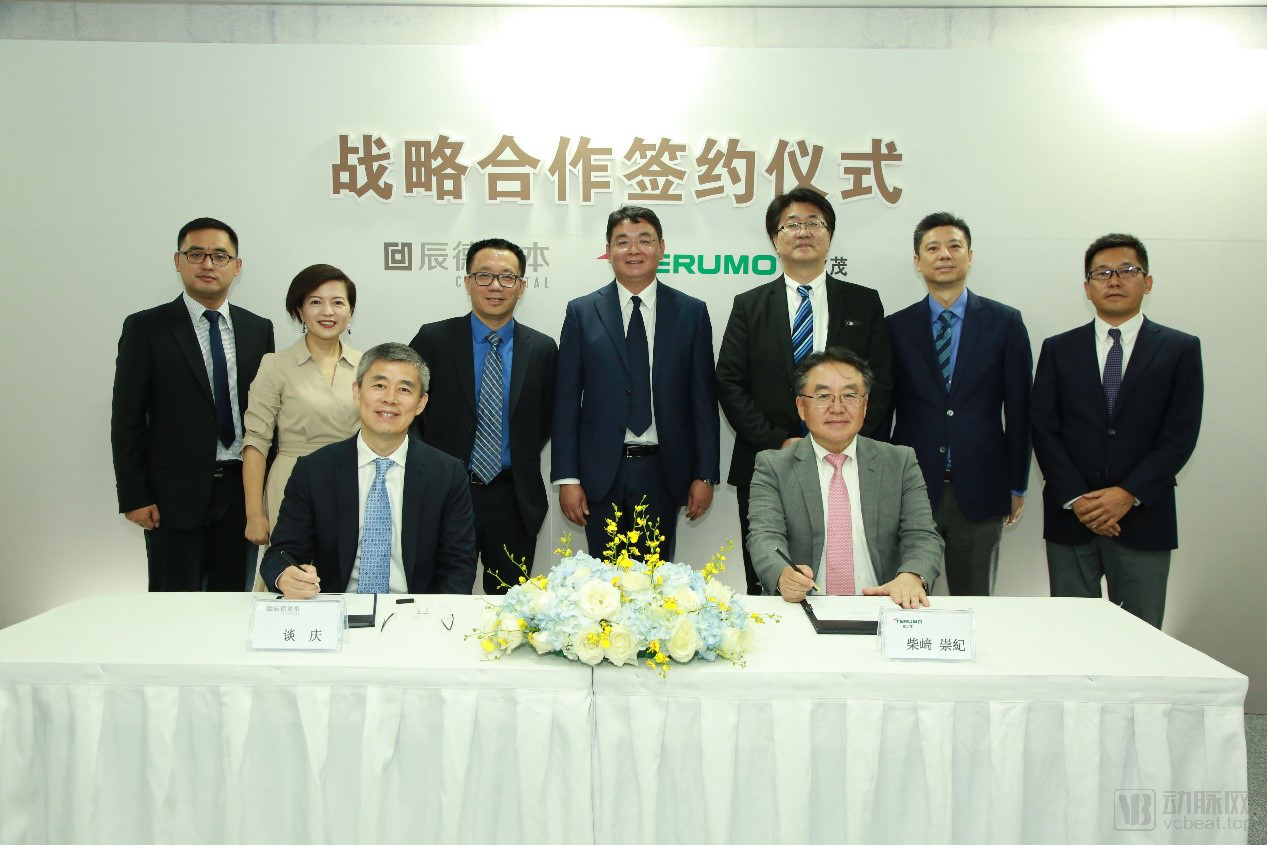
The photo shows the signing ceremony (Front row, from left to right: Tan Qing - Chende, Takaki Shibasaki - Terumo; Second row, from left to right: Wu Zhiguang - Chende, Lin Lei - Chende, Zhao Ruilin - Chende; Wang Li - Baixinan; Masayuki Maruta - Terumo, Baiming Dai - Terumo, Sun Baolei - Terumo)
At the signing ceremony, Takayuki Shibasaki, Terumo’s Chief Representative in China, delivered a speech. He stated that Terumo has long maintained a positive outlook on the Chinese market and has been actively seeking partnerships with influential investment institutions deeply engaged in the medical device sector. The decision to partner with Chende Capital was driven by its position as a leading fund in China’s medical device industry. Chende Capital’s investments in minimally invasive devices are industry-leading in terms of both coverage and performance returns. Furthermore, Chende Capital has invested in numerous outstanding enterprises in the medical device field, particularly in the cardiovascular and cerebrovascular sectors. These portfolio companies, along with potential future investments, may create additional opportunities for collaboration with Terumo, thereby supporting Terumo’s long-term development in China.
In his opening remarks, Tan Qing, Founding Partner of Chende Capital, stated that Chende Capital is a fund focused on hard-core medical technologies in China. As an early-stage healthcare investment firm, we firmly believe that advancements in medical technology can drive the progress of human health. Our mission is to integrate advanced international technologies, Chinese capital, and China’s vast market, while further leveraging the country’s top entrepreneurial talent, ultimately contributing to China’s healthcare sector. In the realm of entrepreneurship, we are confident that globally competitive medical enterprises will emerge from China’s large market. Today, we are delighted to welcome Terumo as an investment partner of our fund. Terumo’s participation will further enhance our understanding of global medical experts, technologies, and market dynamics, thereby facilitating a deeper integration of capital and technology and influencing the development trajectory of China’s domestic healthcare industry.
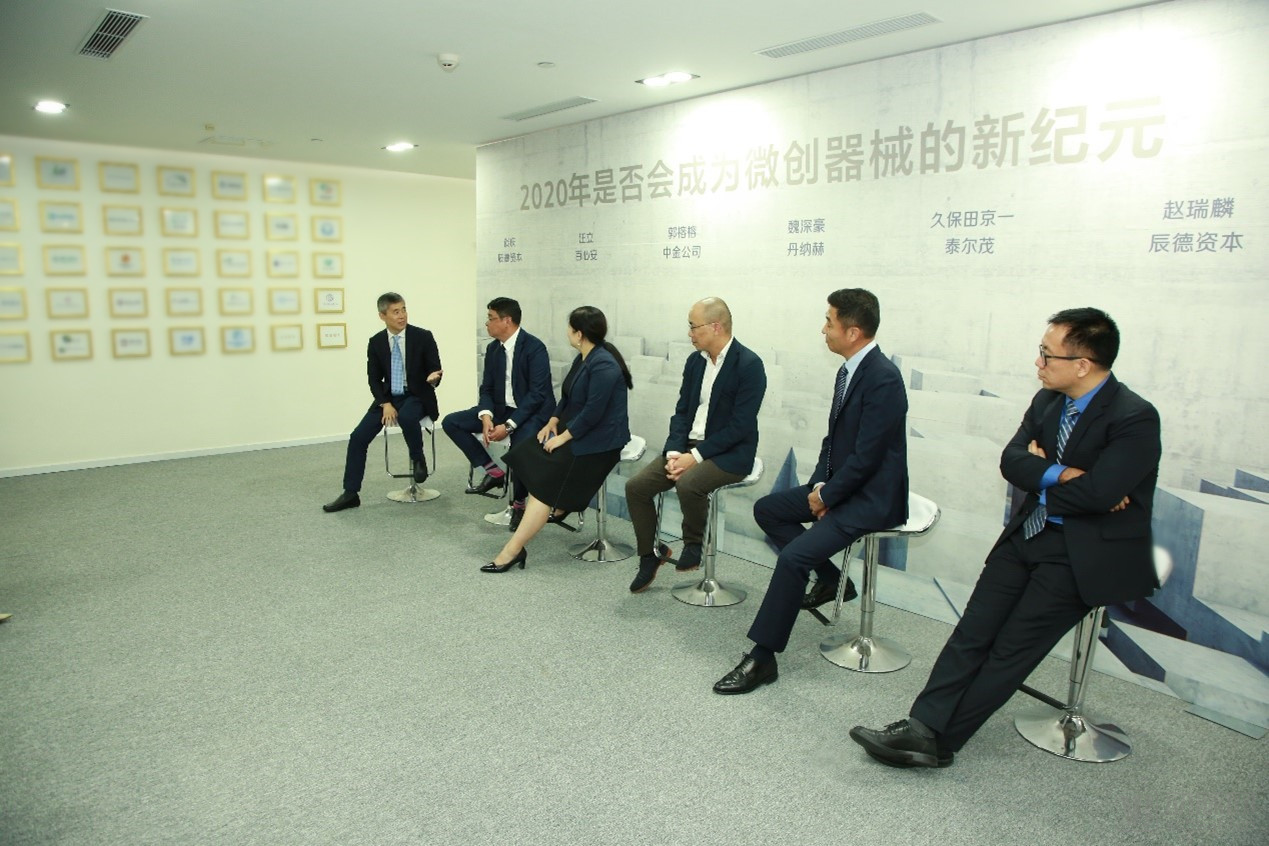
The signing ceremony also invited the founder of MicroPort, senior investment bankers in the healthcare sector, and executives from multinational medical device companies to join Terumo and Chende Capital in exploring the future development direction of the currently booming minimally invasive devices. As the moderator of the roundtable discussion, Tan Qing from Chende Capital led an in-depth exploration of industry dynamics and trends under the theme “Will 2020 Mark a New Era for Minimally Invasive Devices?” with participants including Kubota Kyuichi, Director and COO of Yisheng Technology (a subsidiary of Terumo); Guo Rongrong, Executive Head of the Healthcare and Pharmaceuticals Team at CICC’s Investment Banking Division; Wang Li, Founder of Baixinan Biology; Wei Shenhao, Vice President of Danaher Corporation’s China Innovation Center; and Zhao Ruilin, Investment Partner at Chende Capital.
Below is a summary of the roundtable discussion:
The Chinese market is not merely an end-user market, but also a driving force for R&D and innovation.
Host Tan Qing: In terms of medical device innovation, what are the respective characteristics and advantages of China compared with advanced countries worldwide?
Kyokichi Kubota: First, I perceive the Chinese market as significantly larger than the Japanese market, both in terms of population and growth rate. Second, a key characteristic is talent. I have observed that many Chinese professionals who pursued advanced studies in the United States, Europe, or even Japan are returning to China to launch startups. This is a positive trend, whereas it is currently less common in Japan for overseas-educated talent to return home for entrepreneurial ventures. Third, China has developed a relatively comprehensive ecosystem for minimally invasive medical devices, with capital investors, startups, and Chinese branches of multinational corporations all serving as major players in this market.
Wei Shenhao: From a technical perspective, Japan possesses highly advanced medical technologies, excellent academic resources, and strong R&D capabilities. However, in terms of building an ecosystem that translates academic research into innovation and subsequently fosters startups, Japan is less mature than the United States. The U.S. benefits from robust technology and capital, having cultivated a thriving local environment for technology transfer and entrepreneurship. The most critical factor behind America’s success in this regard is talent. In China, the government is driving medical technological advancements across various sectors, while a significant influx of overseas talent returning home is further propelling ecosystem progress in both technology and capital. This represents a uniquely distinctive feature of China’s current landscape. Taking Danaher as an example, although we have sales operations in many countries worldwide, we have currently established innovation centers only in China and the United States. This underscores that we view the Chinese market not merely as an end-user market, but rather as a dynamic hub for R&D and innovation.
Seize the Window of Opportunity for IPOs: Medical Device Companies Should Go All Out
Host Tan Qing: What are the driving forces behind the development of China’s medical device industry? Is it China’s immense market consumption power, technological innovation, or the push from capital markets?
Wang Li: I returned to China from the United States in 1997. During the early stages of my entrepreneurial journey, I felt that there was no particularly clear direction for development. In fact, throughout the history of private enterprise development in China, there have been two significant opportunities. The first was the launch of the ChiNext board. At that time, the A-share market consisted entirely of blue-chip stocks, forcing private enterprises to list overseas. The establishment of the ChiNext board provided a new pathway for the growth of private companies. The second opportunity is now. Currently, we have the A+H dual-listing mechanism, Chapter 18A of the Hong Kong Stock Exchange’s listing rules for biotechnology companies, and the creation of the STAR Market—all of which send strong signals encouraging innovation in the healthcare sector. The recent surge in interest in medical device projects is actually driven by secondary market dynamics influencing the primary market. If medical device companies wish to capitalize on this current wave of opportunities, they must strive aggressively to move forward.
Zhao Ruilin: From my perspective, beyond the impetus from capital markets in China, a critical issue is how to balance broad market coverage with the profitability of healthcare enterprises. India also has a large population, yet medical innovation has not taken off there, primarily because prices are too low, rendering it unattractive for innovative companies. China similarly boasts a vast population. How to balance the unit price of medical products with overall corporate profitability—thereby attracting the technologies China desires and facilitating their broader adoption within the country—is a dynamic process that serves as one of the key drivers behind the development of the medical device industry.
Medical devices are currently regarded by investors and investment banks as a subsector with greater potential.
Host Tan Qing: Recently, the valuations of medical device companies in the secondary market have risen significantly, although there has been some phased pullback in the past month or two. Nevertheless, we cannot help but wonder: Have valuations for medical device projects in the secondary market already peaked? Is it possible for valuations to continue hitting new highs, or have they already begun to decline?
Guo Rongrong: CICC has undertaken numerous domestic and overseas listing projects this year. Regarding medical devices, we believe there is significant future potential. In previous years, investment and IPO activities were concentrated in innovative drugs, but the current trend is gradually shifting toward medical devices. The majority of companies listed on the STAR Market during its initial phase were innovative drug enterprises, followed by the opening up of listings to a large number of medical device companies. While the innovative drug sector has become extremely hot, medical devices are currently regarded by investors and investment banks as a sub-sector with greater potential. Historically, China’s healthcare sector was dominated by multinational corporations; however, the COVID-19 outbreak earlier this year demonstrated the strength and leadership capabilities of many domestic healthcare enterprises. Although our investment banking division previously focused more on innovative drugs, the internal focus of our institution has indeed shifted toward the medical device sector.
Wang Li: The situation this year has been quite interesting. At the beginning of the year, the pandemic had a significant impact on interventional medical devices. However, judging from the subsequent reaction in the secondary market, the pandemic actually drove a rapid surge across the entire healthcare sector. This may be because capital struggled to find attractive outlets during the pandemic and ultimately flowed into healthcare, as it was widely perceived as an essential need. From an entrepreneur’s perspective, I hope this period of valuation premiums will last longer. If investors apply their approach to innovative drugs to the medical device sector, they will find that medical device companies require significantly less capital. With the emergence of the biopharmaceutical sector in Hong Kong, many firms that previously did not invest in medical devices have started to do so, albeit with smaller individual investment amounts, allowing them to invest in multiple companies simultaneously. This model is highly beneficial and, overall, will continue to drive the development of the medical device industry.
Tan Qing: I would like to add a few comments. From the perspective of actual corporate operations, different sectors have been affected by the pandemic this year. The interventional field, being relatively broad, has been rebounding and recovering in recent months. In certain areas such as diagnostics and ventilators, where Chende Capital has significant coverage, performance has seen substantial growth this year. Future developments will depend on innovation and the rise in consumer spending power. We feel that we underestimated the market’s growth rate over the past few years. Chende Capital is a relatively conservative institution, placing greater emphasis on technology. Many members of our team come from industry backgrounds and have sold medical equipment themselves, so we understand that sales are not easy. Nevertheless, the market development of domestically produced medical devices in China has more or less exceeded our expectations over the past few years.
Listing in Multiple Domestic and International Markets Will Be an Inevitable Trend
Host Tan Qing: There are many options for going public, including Hong Kong’s Chapter 18A, the STAR Market, the ChiNext Board (which will allow unprofitable companies to list after one year), and the U.S. stock market. For our company, choosing where to list is also a significant decision. I would like to ask Mr. Wang and Mr. Guo for their views on the selection of listing venues.
Guo Rongrong: If the entity planning to go public is a company with an onshore structure in China, domestic listing remains the preferred option given the current market environment. This is because listing thresholds have been lowered, allowing companies without profits or even revenue to file for listing if they meet other criteria. Additionally, industry restrictions under the registration-based IPO system on the ChiNext board have been significantly relaxed. Meanwhile, the registration-based system has become highly market-oriented in both the review process and issuance pricing, resembling the practices of the Hong Kong and U.S. stock markets. Furthermore, as overseas listings still face certain uncertainties, Chinese companies should seize this window of policy benefits to list domestically. However, for companies with red-chip or VIE structures, dismantling these structures to relist domestically may incur substantial tax costs. Given that the overseas capital markets have performed surprisingly well this year, many innovative drug companies have chosen to list abroad. For healthcare companies, which inherently have business needs in both domestic and international markets, pursuing dual or multiple listings across domestic and overseas exchanges is an inevitable trend.
Wang Li: Listing on different markets offers distinct advantages. A listing in Hong Kong facilitates easier access to HKD or USD for overseas transactions such as mergers and acquisitions; however, liquidity in the Hong Kong market is relatively limited. While a domestic listing may pose challenges in securing funds for overseas operations, it offers significantly better liquidity. With the introduction of full circulation of H-shares, I believe an A+H dual-listing strategy is a superior choice.
Staying Resilient Amid External Headwinds: Customer-Centric Innovation Is the Key to Success for Healthcare Enterprises
Host Tan Qing: Over the past two years, the Chinese government has been advancing centralized procurement, gradually extending price controls from pharmaceuticals to medical devices. Mr. Kubota, from the perspective of a multinational corporation, how do you anticipate the market prices for medical devices will change in the near future?
Kyokichi Kubota: As a multinational corporation, prices will inevitably fluctuate, but our commitment to innovation remains unwavering. Additionally, we must maintain effective communication with customers, suppliers, and government entities regarding our future product pipeline, ensuring the provision of comprehensive solutions to our customers.
Host Tan Qing: For medical devices, China-US relations have impacted the entire supply chain system. I’d like to hear Ruilin and Wei Shenhao’s views on what kind of impact China-US relations will have on the overall medical device industry.
Zhao Ruilin: Overall, apart from more sensitive areas such as gene sequencing, big data, and AI, the medical device sector has not been significantly impacted. However, it is difficult to predict how U.S.-China relations will further evolve this year. In fact, from a supply chain perspective, many Chinese medical device companies still rely on U.S. suppliers, but so far, the medical device sector has not experienced substantial disruption.
Wei Shenhao: Given the unique bilateral relationship between China and the United States, this situation presents a significant opportunity for Chinese healthcare enterprises. Influenced by Sino-U.S. relations, current Chinese policies strongly encourage domestic innovation and promote consumer preference for locally produced goods. As multinational corporations face substantial import and export tariffs, the Sino-U.S. dynamics have effectively accelerated their establishment of manufacturing facilities within China. This trend has significantly advanced the development of China’s industrial supply chain, and domestic enterprises should seize this window of opportunity.