

Future of China's 23,000 Private Hospitals Amid National Health Commission Regulatory Overhaul
The National Health Commission Has Decided to Take Action Against Private Hospitals.
Last month, the National Health Commission issued the “Notice on Launching the ‘Private Hospital Management Year’ Campaign.” The notice stated that,From August this year to December 2022, launch the “Private Hospital Management Year” campaign across private hospitals at all levels and of all types., this initiative includes standardizing the practice conduct of private hospitals and ensuring their medical quality and safety.
In a nutshell, private hospitals must be regulated.. How to standardize? Namely,In terms of medical quality and hospital management, private hospitals are subject to the same regulatory oversight as public hospitals.
In fact, the release of this plan was long anticipated. Last year, the National Health Commission, together with ten other departments including the National Development and Reform Commission, jointly issued the “Opinions on Promoting the Sustained, Healthy, and Standardized Development of Socially Run Medical Institutions” (Guo Wei Yi Fa [2019] No. 42), which"Made a comprehensive plan to promote the continuous, healthy, and standardized development of private healthcare institutions.". The “Private Hospital Management Year” initiative is a further implementation of the requirements set forth in the “Opinions.”
As is well known,Since the national liberalization of the healthcare market in 2001, the number of private hospitals in China has experienced rapid growth.. According to the National Health Commission's data on the number of medical and health institutions nationwide, as of the end of June 2020, the total number of hospitals in China reached 35,000, including 12,000 public hospitals,23,000 Private Hospitals. Compared with the same period in 2016,The number of private hospitals in China has increased by nearly 50% over the past five years.It is not difficult to see that,Private hospitals have surpassed public hospitals in both scale and growth rate.
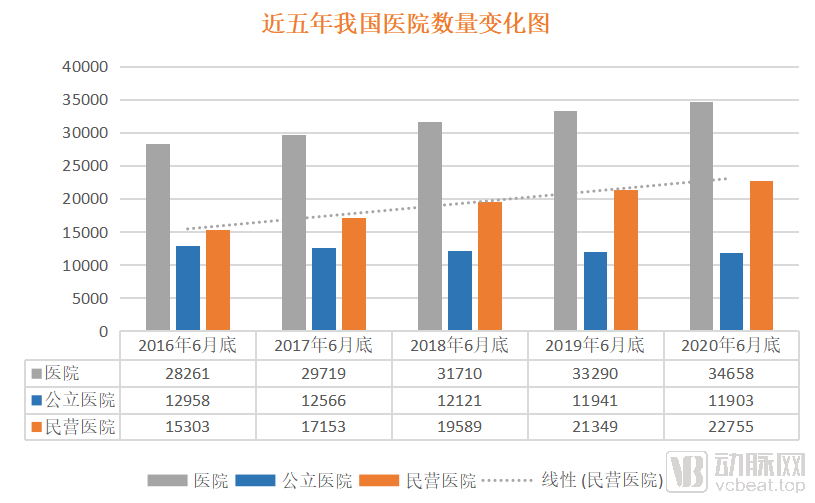
Alongside the data growth, private hospitals have been continuously exposed to negative news.For example, a private hospital in Neijiang, Sichuan Province, hired personnel without medical practice qualifications, forged test reports to exaggerate patients’ conditions, and even extorted money by exploiting patients’ pain and unconsciousness while they were on the operating table. In another case, a woman in Shenzhen visited the outpatient department of a local private hospital, where she was induced to undergo high-cost minimally invasive treatment and then detained in a second-floor observation room; the hospital demanded that she raise the full amount of medical fees before proceeding with further treatment...
Behind every negative incident lies a recurring drama unfolding during the wild expansion of private hospitals, characterized by the entanglement between the public-welfare nature of medical care—saving lives and healing the wounded—and short-term commercial interests.The blind profit-seeking behavior of some private hospitals has eroded public trust and undermined the long-term development of the industry.
While it is undeniable that the majority of private hospitals are diligently delivering high-quality medical services, the phenomenon of “bad money driving out good” means that the hard-earned reputation and credibility of some private hospitals can be instantly undermined by a single negative incident involving a peer. Therefore,Standardizing the management of private hospitals and ensuring their medical quality has become an urgent priority.
Judging from the launch of the “Private Hospital Management Year” campaign, this critical juncture has arrived.
Since the 21st century, the development of private hospitals in China has not been rapid, but it can be described as smooth sailing.
In particular, since the launch of the new healthcare reform in 2009, the state has attached increasing importance to the development of private healthcare. The report of the 19th National Congress of the Communist Party of China also explicitly stated: “Support social forces in establishing medical institutions and develop the health industry.” The introduction of a series of policies has fueled the rapid rise of private hospitals.The data speaks for itself: compared with 2009, the number of private hospitals in China increased by approximately 253% in 2019.
Although private hospitals have “grown” considerably in scale, with their “size” (number of hospitals) even surpassing that of public hospitals, the issues surrounding their existence“Puffiness”(A large number of hospitals, but low patient visit volume),“Multimorbidity”(frequent occurrence of medical malpractice), and"Picky Eating"(The problem of prioritizing marketing over medical care) is quite serious.
Let the data speak. First, let’s look at“Puffiness”(the issue of a large number of hospitals but low patient visits), according to data from the "National Medical Service Situation from January to November 2019" released by the Statistical Center of the National Health Commission, from January to November 2019, the total number of hospital visits nationwide reached 3.4 billion, with public hospitals accounting for 2.89 billion visits and private hospitals for 520 million visits. In other words,From January to November 2019, private hospitals accounted for only 15.3% of the total diagnostic and treatment services provided, despite their number being 1.85 times that of public hospitals during the same period. This indicates that private hospitals still play a relatively minor role in delivering diagnostic and treatment services.
Let's take another look"Multimorbidity"(The issue of frequent medical malpractice incidents). Although there is no official nationwide statistical data on medical malpractice across all hospitals in China, the data and cases disclosed by courts in recent years can, to some extent, illustrate the problem. On May 29 this year, the People’s Court of Changning District, Shanghai, released the “White Paper on Judicial Adjudication of Medical Aesthetic Dispute Cases from 2015 to 2019,” which showed thatBetween 2015 and 2019, the Changning District People's Court in Shanghai accepted a total of 94 cases involving medical aesthetic disputes., with the primary causes of action being medical malpractice liability disputes (accounting for 82.28%), medical service contract disputes, and health rights disputes.It is worth noting that all cases occurred in private hospitals.
Final Review“Picky Eating”(The issue of prioritizing marketing over medical care.) Unlike public hospitals, private hospitals regard marketing as a key initiative to boost patient volume and enhance profitability. However, the problem lies in the fact that some private hospitals (particularly small and fragmented ones) allocate an excessively high proportion of their budgets to marketing, thereby squeezing costs for medical services and making it difficult to ensure healthcare quality. A director of a private hospital, who requested anonymity, told VCBeat that, to his knowledge,In some private hospitals, marketing accounts for approximately 40% of expenditures.。
Not only that,The issue of insurance fraud in private hospitals has also been widely criticized.According to a review of China Judgments Online by relevant media outlets, 93 court judgments have been published regarding cases in which private hospitals defrauded medical insurance funds between 2014 and May 2019. Private hospitals designated as medical insurance providers have become hotspots for insurance fraud and deception, with serious issues including excessive medication dispensing, drug substitution, fictitious drug sales, inflated or fabricated charges, and “bed-hanging” hospitalizations.
Most importantly, private hospitals face a particularly severe shortage of talent.For healthcare institutions, physicians are always the most critical resource, yet high-quality physician talent is predominantly concentrated in public hospitals. Under China’s current healthcare system, the primary career choice for most top-tier medical professionals is not private hospitals, but rather public hospitals, which offer established staffing quotas (bianzhi) and attractive pathways for professional title advancement.
Certainly, although private hospitals have various issues, it would be unfair to generalize negatively about all of them. After all, there are still many private hospitals that provide medical services with dedication and seriousness. Moreover, the aforementioned problems,Public hospitals also experience this to varying degrees; the phenomenon is more pronounced in private hospitals due to a combination of industry-specific factors, social perceptions, and other reasons.。
Therefore, it is imperative to guide private hospitals onto a standardized path, thereby improving the overall industry ecosystem.
As early as 15 years ago (2005), China launched the “Hospital Management Year” campaign, which lasted for three years. The theme of the campaign was “Patient-Centered Care with a Focus on Improving the Quality of Medical Services.”Unlike this event, which primarily targets private hospitals, the focus at that time was on public hospitals.
In terms of concrete implementation, the “Hospital Management Year” campaign focused its efforts on six key areas. In particular, “improving medical quality, ensuring medical safety, and enhancing the safety and effectiveness of medical services” was prioritized as the most critical objective.
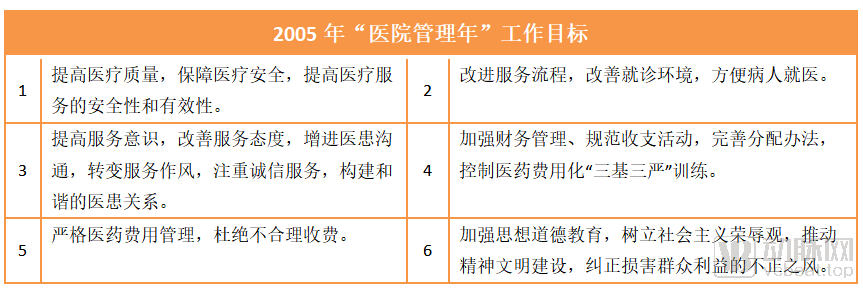
The management approaches of this year’s “Private Hospital Management Year” campaign and those of previous years are largely similar, yet the underlying strategic focus differs.The latter focuses on improving the quality of medical services, while the current "Private Hospital Management Year" emphasizes legal and regulatory compliance.
Specifically,This event sets forth work requirements for private hospitals in three key areas.。1. Improve various rules and regulations, including establishing and improving internal quality management and control systems, and enhancing the management system for the clinical application of medical technologies.Second, strictly practice in accordance with the law and standardize medical conduct, for example, conducting diagnosis and treatment activities strictly in accordance with the approved and registered practice address and scope of medical specialties, and using standardized names for diagnostic and therapeutic service items.3. Strengthen daily management and establish a long-term mechanism, including the full utilization of medical quality management tools and information technology to carry out routine medical quality management and control.
Implementation is primarily divided into three phases.。
Phase I was the mobilization and deployment phase, from August to November 2020.. Primarily, national and provincial health administrative departments formulate activity plans and detailed implementation schemes, clarify key priorities, organizational divisions of labor, and activity schedules, and ensure the execution of all activity components.
The second phase is the organization and implementation phase, from December 2020 to September 2022.This phase is further divided into three stages.
Phase I, themed “Lawful Practice and Standardized Diagnosis and Treatment,” spanned from December 2020 to June 2021. The key focus was on strengthening lawful practice in private hospitals, improving various rules and regulations, standardizing diagnosis and treatment behaviors, and consolidating foundational capabilities.
Phase 2, themed “Enhancing Quality and Ensuring Safety,” spanned from July to December 2021. Its key tasks included further improving medical quality on the basis of standardized diagnosis and treatment, enhancing the capacity and level of medical services, establishing a medical quality management and control system for private hospitals, strengthening the development of clinical specialty service capabilities, and effectively ensuring medical safety.
Phase 3, themed “Long-term Management and Establishing Role Models,” took place from January to September 2022. The key tasks were to implement various rules and regulations and establish a long-term mechanism for the management of private hospitals. Private hospitals that demonstrated outstanding performance in service quality, fulfillment of social responsibilities, and public satisfaction during the campaign were commended as role models and exemplars, thereby driving and encouraging private hospitals to provide higher-quality and more accessible medical services to the general public.
The third phase is the summary and exchange phase, from October to December 2022.The state will summarize the implementation of the activities, organize experience-sharing meetings, publicize and promote best practices and advanced experiences, and further establish and improve long-term mechanisms for medical quality and medical safety management.
To ensure the effectiveness of the initiative, the "Plan" requires strengthening organizational leadership and incorporating the "Private Hospital Management Year" campaign into the key priorities of the health system; private hospitals at all levels and across China shall take this opportunity to further enhance healthcare institution management.Improve medical quality and enhance service capabilities and standards. Establish and promote a cohort of model private hospitals that demonstrate standardized management, robust quality, high patient satisfaction, and social recognition. Explore the establishment of long-term mechanisms for private hospital management, and strengthen routine, standardized, and refined management practices.
Unlike most industries, the healthcare sector is not merely a business; it must also balance its public welfare mission of saving lives and healing the wounded. This makesBefore validating their business models, private hospitals, under pressure to survive, tend to allocate limited funds primarily to customer acquisition channels such as online bidding for search engine rankings, often at the expense of discipline development, reputation building, and service enhancement.
Fortunately, in the field of privately run healthcare, China has seen the emergence of high-quality private medical institutions such as Aier Eye Hospital and Topchoice Medical in recent years. During their development, they have encountered various challenges—some common to all private hospitals, others unique to them—but regardless,For private hospitals, learning from and drawing on their approaches to problem-solving will provide new insights and inspiration for hospital management.
Among them,As a leader in the ophthalmic hospital chain industry, Aier Eye Hospital’s market capitalization has been fluctuating around RMB 200 billion, with compound annual growth rates (CAGR) of both revenue and net profit exceeding 30% over the past five years.. There are many factors driving the rapid development of Aier Eye Hospital, with the following being the main onesAn Analysis of Aier Eye Hospital’s Medical Quality and Hospital Management from Three Perspectives。
First, Aier Eye Hospital places great emphasis on the research and development of medical technologies.Although the proportion of R&D expenditure in the medical services industry differs significantly from that in other healthcare subsectors, as companies scale up, possessing unique and industry-leading medical technologies has become a critical factor determining their future success. According to Aier Eye Hospital’s 2019 annual report, the company has established an integrated medical-educational-research system comprising “three hospitals,” “seven institutes,” and “two stations,” and has founded the Aier Eye Hospital Affiliated to Wuhan University, the Aier Eye Clinical College of Wuhan University, and the Aier Eye Research Institute of Wuhan University.
Moreover, numerous experts at Aier Eye Hospital have published academic papers in prestigious global journals. They have applied for and undertaken multiple research projects at international, provincial/ministerial, and municipal/bureau levels, achieving breakthroughs in national-level projects and provincial key R&D programs. Notably, Aier Eye Hospital’s integrated platform for medical practice, education, and research complements its tiered chain model, providing strong support for corporate resource synergy, group-wide medical technology assistance, and the development of talent training systems.
Second, in building the talent team, comprehensive equity incentives were implemented.At Aier Eye Hospital, technical or managerial professionals with core competencies may serve as cooperative shareholders to jointly establish new hospitals with Aier Eye Hospital, including newly built hospitals, expanded hospitals, or acquired hospitals.
To incentivize talent, Aier Eye Hospital has implemented various incentive programs, including a partnership model and equity incentives, to enhance management efficiency and accelerate expansion. These partnership and equity incentive plans have provided the company with a robust pipeline of hospital acquisition targets. While boosting the motivation of core personnel, these initiatives also address the challenges of medical talent shortages and high turnover rates associated with the company’s rapid expansion.
Third, in terms of management structure, an efficient content tiered management system is implemented.Aier Eye Hospital has a three-tier management structure, consisting of the group decision-making level, the middle-level supervision and execution level, and the operational level at the base.
At the group decision-making level, strategic planning is approached from a holistic perspective. While exercising macro-level coordination and oversight, appropriate decentralization of authority is implemented for certain non-core investment and management decisions. At the group level, Aier Eye Hospital has established specialty-specific academic committees and marketing departments. The academic committees provide unified management and supervision over technology, quality, and talent development across various ophthalmology-related specialties. The marketing departments oversee the operation and integration of all group resources within the national market, aligned with the company’s nationwide strategic layout.
The middle-level supervisory and executive tier is responsible for the strict implementation of powers and tasks delegated by the group in accordance with each province’s strategic layout, and holds the authority to supervise and manage hospitals at all levels within the respective provinces.
At the foundational operational level, hospitals at all tiers implement a dual-leadership system, with separate roles for the CEO and the Hospital Director, ensuring that professionals handle their respective areas of expertise. Specifically, the CEO is responsible for daily operations, marketing, and administrative management, while the Hospital Director oversees and ensures the execution of all medical-related activities.
The effect is significant.According to the annual report data of Aier Eye Hospital,From 2009 to 2019, the ratio of administrative expenses to operating revenue steadily decreased from 23% to 13%.It is evident that, under the guidance of this series of measures, Aier Eye Hospital has significantly improved its management efficiency.
Although the number of private hospitals continues to reach new highs, it must be acknowledged that there remains a certain gap between private and public hospitals in terms of overall medical care and scientific research capabilities. Particularly before public trust in private hospitals is established, there is much work to be done. The foremost priority is to ensure legal and regulatory compliance and to improve the quality of medical services.
In this process, survival is also crucial for private hospitals; therefore,Private hospitals need to identify development pathways and business models suited to their growth.First, in terms of mindset, private hospitals must recognize that their competitors are not public hospitals; rather, they should establish a differentiated and complementary relationship with public hospitals to improve China’s healthcare ecosystem. Second, in terms of implementation, private hospitals must place service quality at the core, as only a strong reputation can ensure long-term sustainability.
How Can Private Hospitals Choose the Appropriate Path? Based on the current development of private hospitals in China, there are two major directions. The following provides a brief analysis and discussion of these two approaches.
Turn Left: Follow the Path of Specialized Chain Operations, with Scale and Replicability as the Keys
After decades of development, specialized chain hospitals have become the most mature business model in China’s healthcare services industry. Prominent private healthcare institutions such as Aier Eye Hospital, Topchoice Medical, Jinxin Fertility, and Hygeia Healthcare are all leaders in their respective specialty fields.
What Are the Advantages of Specialty Care Chains?First, specialization facilitates the concentration of resources., enabling private hospitals to establish differentiated competitive advantages over public hospitals.Second, the barriers to entry and operational challenges for establishing specialized hospitals are relatively low, resulting in high replicability., after chain expansion, the marketing expenses incurred by the group can be diluted across its affiliated hospitals.Third, it helps private hospitals attract social capital., thereby attracting capital and resources from the industry.Fourth, for specialized medical chains, talent concentration is higher., thereby enhancing team efficiency.
Of course, private specialized chain hospitals are still on the eve of qualitative transformation, with many industry issues yet to be resolved.First, the number of specialties that can be rapidly scaled up is currently limited., for instance, specialized chain hospitals represented by ophthalmology, dentistry, and health check-up centers have demonstrated the strongest integration momentum. With robust capital support and operational expertise, leading industry players have become pioneers in their respective specialties through rapid expansion and replication, with their business footprint spanning across China and even extending to Europe and the United States.Second, for specialized fields with high technical barriers, such as pediatric and oncology hospitals, due to theirThe substantial capital investment required for a single hospital has become a major factor constraining the application of its chain model.
It is worth noting that in the process of developing specialized medical chains, scalability and replicability are key.First, economies of scale enable lower pricing, as hospital chains possess stronger bargaining power with downstream customers and enjoy more secure sales volumes. Second, replicability facilitates more standardized and reliable medical services, which boosts patient confidence in service and product quality and increases their willingness to pay for higher-quality offerings.
As specialized hospitals expand into grassroots markets, public brand recognition of specialized hospital chains strengthens, social capital floods in, and related specialties achieve breakthroughs in their operational models, private specialized hospital chains are poised for significant growth. It is even possible that leading chain operators with market valuations reaching tens or even hundreds of billions will emerge in each specialty sector.
Veering Right: Focusing on the Mid-to-High-End Medical Services Market, with Branding and Service as Key Priorities
According to the “In-depth Research and Investment Prospect Analysis Report on China’s High-End Medical Services Industry, 2019–2025” released by Zhiyan Consulting, China’s high-end medical services sector has experienced rapid growth in recent years. In 2018, the number of individuals served by the high-end medical industry reached 14.008 million person-times, representing a year-on-year increase of 25.1%; the market size attained RMB 423 billion, marking a year-on-year growth of 20.9%.
The mid-to-high-end medical services sector is a vital component of the health services industry and represents one of the key areas prioritized for development by the state.Since 2011, the national government and Shanghai Municipality have issued multiple policies to encourage the development of privately-run healthcare institutions, including those providing high-end medical services.
However, overall,The development of China's high-end medical service industry remains relatively slow, primarily due to two factors.
First, from the perspective of external factors such as policy, society, and economy, China’s advancement in implementing policies to support privately-run healthcare institutions remains relatively slow. Patients’ healthcare-seeking behavior still leans toward public hospitals, with a greater demand for medical treatment services, while the proportion of demand for health management services remains relatively low.
Second, from the perspective of internal factors such as talent, technology, and management, China’s mid-to-high-end medical services are still in their early stages of development. They face numerous challenges, including an overall shortage of human resources, an imperfect talent pipeline, technological capabilities that lag behind those of public hospitals, weak brand influence, and significant management difficulties.
Nevertheless, the prospects for the mid-to-high-end medical services market remain highly promising. This is primarily driven by China’s rapid economic growth, which has cultivated a consumer base with both the purchasing power and a strong emphasis on the quality of medical care. Additionally, with the advent of an aging society, healthcare and wellness-related medical projects are poised for explosive growth, accompanied by increasingly stringent demands for medical service quality.
Therefore, for private hospitals, establishing a firm foothold in the mid-to-high-end market has become one of the important directions for their development. AndThe core of this strategic direction lies in building a strong brand and prioritizing service, delivering the optimal user experience through refined operational management.
From the initial announcement to the finalization of the policy, the “Private Hospital Management Year Campaign” has consistently sparked heated debate. Optimists believe that the campaign will significantly standardize the operational and management practices of private hospitals; pessimists, however, argue that under such regulatory scrutiny, private hospitals will face operational difficulties in the short to medium term, potentially leading to widespread closures.
Admittedly, once private hospitals are subjected to “strict regulatory constraints,” their development will face significant oversight. They may even experience short-term discomfort due to standardization and normalization efforts, which could adversely affect their operational performance. ButOnly by ensuring medical quality and legal compliance can the entire private hospital industry ecosystem enter a virtuous cycle.
This is because the healthcare industry is unique in that it is a life-critical sector dedicated to saving lives and healing the wounded. This inherent characteristic necessitates that the development of the healthcare industry adhere strictly to compliance and regulatory standards. After three years of implementation of the “Private Hospital Management Year” initiative, we have reason to believe that the private hospital sector as a whole will usher in a period of more robust development.