

New Policy Unveiled: $300M Annual Market Opportunity as In-Hospital Nursing Informatics Is Set for Rapid Expansion?
In early September, the National Health Commission issued the "Notice of the General Office of the National Health Commission on Further Strengthening Nursing Work in Medical Institutions." In Part V, "Safeguard Measures," the Notice proposes advancing the development of nursing informatics, promoting the deep integration of information technology with nursing practice, leveraging informatics tools to actively optimize nursing service processes and models, improve nursing work efficiency, reduce nurses' workload, and ensure the quality and safety of nursing care.
This marks another emphasis on nursing informatization construction following the release of the “Guiding Opinions on Promoting the Reform and Development of the Nursing Service Industry” in July 2018. The introduction of this policy undoubtedly brings good news to practitioners in the field of nursing informatization. What does the scope of nursing informatization encompass? Under policy encouragement, what development trends will nursing informatization exhibit? And what is the current level of adoption of nursing informatization in hospitals? To address these questions, VCBeat has compiled this article.
Nursing care serves individuals throughout the entire life cycle, from birth to death, playing a critical role during the acute, chronic, and palliative care phases of illness. Beyond hospitals, there is substantial demand for nursing services in integrated medical and elderly care facilities, as well as in community-based health and elderly care institutions. However, this segment of the market has not yet been standardized, regulated, or quality-assured. Additionally, while the home is a significant setting for nursing care, the long-term financial burden often proves unsustainable for average households, and the level of care provided by family members frequently fails to meet professional standards.
With the diversification of nursing needs and the rapid development of modern technology, high-tech nursing methods that integrate new characteristics of care have begun to be extensively researched and applied. Nursing practices are gradually transitioning from manual labor to electronic systems.
However, there are still many pain points in the development of informatization in nursing work in China.
For instance, there is a shortage of nursing informatics talent, particularly a lack of core professionals and disciplinary leaders in this field. In the early 21st century, nursing informatics had already emerged as an independent discipline in foreign countries, represented by the United States, with dedicated teaching and research faculty, and it was established as a specific area for professional certification. In contrast, China still lags significantly behind.
Information systems can realize their significant value potential only when they are integrated with nursing management philosophies and culture. The level of nurses’ informatics competency is crucial for adapting to the demands of nursing practice in the information age and directly impacts the quality of care and the development of the nursing profession. Therefore, enhancing nursing professionals’ understanding of clinical workflows, their ability to assess patient needs, their sensitivity to new information, and their capacity to analyze complex data are essential prerequisites for maximizing the effectiveness of information systems.
Furthermore, early clinical information systems featured cumbersome and complex operations, making them difficult for nurses to master and prone to errors, thereby failing to achieve the intended goal of improving efficiency. Therefore, from the nurses’ perspective, simplicity, convenience, and ease of use are factors that nursing informatics vendors should consider in product design.
The “National Nursing Development Plan (2016–2020)” emphasizes leveraging information technology to strengthen the nursing informatics system and alleviate nurses’ workload. Meanwhile, the 13 nursing-sensitive indicators specified in the “Manual for the Use of Nursing-Sensitive Quality Indicators,” issued by the Hospital Management Institute’s Nursing Center under the National Health Commission, have become key metrics for assessing hospital nursing quality, one of which is the evaluation of nurses’ practice environment. Utilizing information technology to improve nurses’ practice environment and enhance their work efficiency has gradually become a focal area for hospitals.
Furthermore, in July 2018, the National Health Commission and ten other ministries jointly issued the “Guiding Opinions on Promoting the Reform and Development of the Nursing Service Industry.” Section VI, “Policy Measures,” of the Notice also explicitly mentions “strengthening the informatization of nursing care.”
Leveraging the rapid development of information technologies such as big data, cloud computing, the Internet of Things (IoT), and mobile communications, we will vigorously advance the informatization of nursing care, actively optimize nursing workflows, innovate nursing service models, and enhance nursing efficiency and management effectiveness. We will promote innovation in lifestyle service formats within the nursing sector, improve service processes, and actively foster new business models such as smart health nursing.
The Notice issued on September 2, 2020, continued to emphasize the significant role of information technologies—such as big data and the Internet of Things (IoT)—in enhancing the efficiency and quality of nursing care. It further specified certain requirements: a nursing management platform should be gradually established, incorporating functions such as nursing operations management, nurse workforce allocation, position-based training, performance appraisal, and quality improvement, thereby providing information technology support for achieving scientific and refined nursing management in healthcare institutions.
“For example, by leveraging big data technology to establish a nationwide nursing quality database, we can predict adverse events, issue risk alerts, and improve nursing processes and service delivery. By capturing multidimensional patient data through various nursing terminals, we can subsequently employ artificial intelligence to develop systematic decision-making scales, thereby enhancing nursing quality and management efficiency,” said Zeng Renxiong, CEO of Honghua Medical. The application of informatics in the nursing field encompasses clinical applications such as bedside interaction and mobile home-based services for injections and dressing changes, as well as hospital management applications including nursing quality evaluation, performance management and training, and nursing human resource management.
Nursing informatics is an integral component of healthcare informatics. China has consistently prioritized the development of healthcare informatics, making substantial investments; however, the outcomes have not been particularly significant. According to Chen Junjie, CEO of Paifan Technology, a key reason for this lies in the fragmented storage of data, where proliferating “data silos” hinder the advancement of healthcare informatics. With technological advancements, the application of encryption technologies can facilitate data interoperability while safeguarding patient privacy, thereby enhancing the utilization rate of medical data. To achieve this goal, it is essential to strengthen the standardization of nursing informatics and establish a standardized, unified nursing terminology.
Nursing informatics refers to the extensive application of modern information technologies in the field of nursing, based on specific needs, to effectively develop and utilize information resources, build advanced information infrastructure, and transform traditional nursing practice models through informatization, thereby continuously improving the overall level of nursing care. The nursing information system primarily comprises two components: clinical nursing informatics and nursing management informatics.
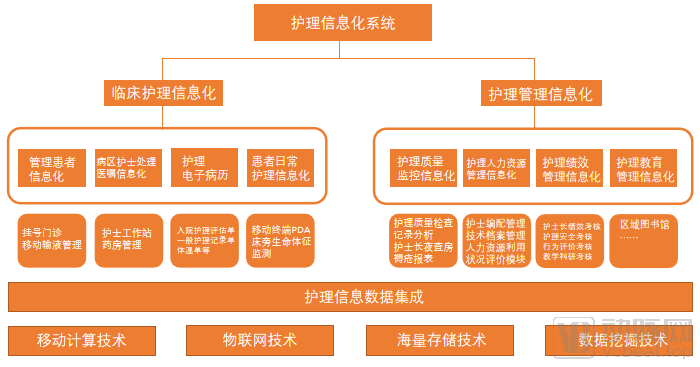
Clinical Nursing Informatics
The most direct impact of clinical nursing informatics is the simplification of clinical nursing workflows, thereby enhancing the practical effectiveness of clinical nursing operations. This is specifically manifested in two aspects:
First, it drives the optimization of the physician order entry system.Physicians enter medical orders directly into the system, allowing healthcare providers to view them through the nursing system. This eliminates misinterpretation and enhances the specificity and effectiveness of clinical care.
Second, the specific application of paperless systems and PDAs has facilitated greater convenience in medical care and nursing.Healthcare professionals can transcend the constraints of time and space, accessing patient information anytime and anywhere to monitor patients’ conditions and nursing care. By following nursing task lists, they can deliver care more conveniently and efficiently through the use of Personal Digital Assistants (PDAs), thereby reducing conflicts between patients and clinical nursing staff and effectively resolving doctor-patient issues. Application scenarios for clinical nursing management include clinical medication management, rounding management, structured holistic nursing processes, and specialized nursing care.
Nursing Management Informatization
The informatization of nursing management plays a significant role in streamlining administrative workflows, increasing nurses' direct patient care time, reducing nursing errors, and enhancing the satisfaction of both healthcare professionals and patients. It comprises two main components:
First, the construction of nursing business information systems,The primary focus is on digitizing the nursing workflow by entering patients' basic information, medical orders, and medication records into the system for information-based management;
Second, the construction of an integrated information system,Such as nursing human resources management (personnel file management, shift scheduling), daily nursing management (clinical rounds, critical case discussions, nursing quality management, patient satisfaction), and adverse event management (reporting and analysis of adverse events). Meanwhile, nurses’ service quality and patient satisfaction also serve as key reference indicators for performance appraisal.
Specifically, the nursing information system comprises a mobile nursing information system, a nursing management information system, a nursing training and examination platform, a nursing quality indicator system, mobile nursing workstations, personal digital assistants (PDAs), bedside nursing systems, and electronic nursing medical records.
The implementation of nursing informatics can bring benefits to patients, healthcare professionals, and hospitals.
Taking the infusion monitoring system as an example. With the support of information technology systems, neither medical staff nor patients need to constantly monitor the infusion process. When the remaining infusion volume falls below a critical threshold, the system automatically alerts the nurse. Patients can view detailed information on drip rate, elapsed time, remaining time, and medications administered, thereby enhancing their healthcare experience. Medical staff can also use mobile PDA terminals to determine whether patients require assistance, needle removal, or medication changes, thus reducing workload and stress.
For hospitals, advancing nursing informatization not only enhances their level of intelligence and modernization but also replaces traditional infusion methods, creating an orderly, quiet, and comfortable environment. This transformation further improves service quality and boosts patient satisfaction.
As long as genuine demand exists, the market will never lack those seeking to strike gold. Leveraging their inherent strengths, technology professionals are taking root and flourishing in the field of smart nursing care.
Xingxin Technology: Inpatient Nurse Workstation
Inpatient Nurse Workstation is a computer application designed to assist ward nurses in completing daily nursing care for hospitalized patients. Its primary functions include helping nurses verify and process long-term and temporary medical orders issued by physicians, managing the execution status of these orders, and supporting nurses in routine tasks such as nursing care and ward bed management.
Xinxing Technology’s Inpatient Nurse Workstation System features functions such as patient basic information management, physician order processing, nursing record management, and cost management. Additionally, this workstation provides comprehensive support for specialized wards, including special handling for admissions and discharges in the ICU, operating rooms, and mother-baby co-rooming units, and automatically generates relevant physician orders during bed transfers, ward transfers, and ICU transfers.
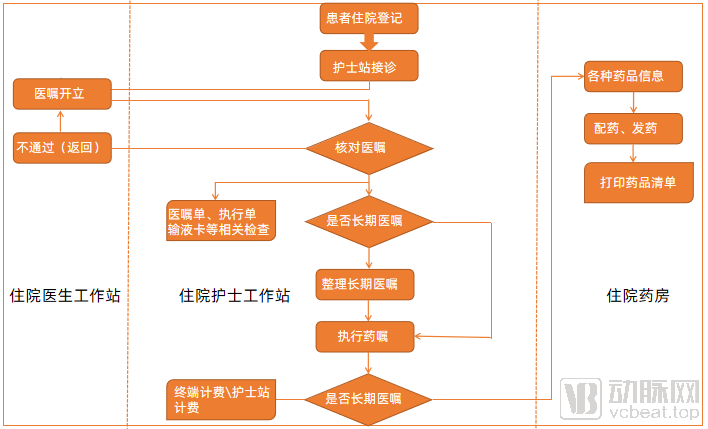
Xingxin Technology Inpatient Nurse Workstation Flowchart
Yihui Technology: IoT-Based Smart Ward Comprehensive Solution
Based on a common IoT open platform, real-time data on ward environments and patient vital signs are collected via tags. By leveraging the platform’s shared capabilities, the entire medical process is supported, seamlessly connecting wards, patients, healthcare professionals, and medical devices. YiHui Technology’s common open platform utilizes “IoT + Internet + Artificial Intelligence” technologies to achieve intelligent ward management through three key aspects: ward environment monitoring, proactive patient services, and intelligent clinical care services.
Achieve unified perception of ward label data, break down data silos among devices and labels within the ward, enable proactive acquisition and automatic upload of ward data, facilitate accurate and rational nursing care by medical staff, implement unified management and control of ward sensing devices, leverage a common IoT platform to achieve comprehensive monitoring and intelligent control of hardware devices in the ward, provide all-around convenient services, realize unified management of ward perception data including status monitoring, ensure seamless integration with clinical business systems, seamlessly connect wards, patients, medical staff, and clinical business data to serve the entire medical process, and ultimately achieve routine intelligent nursing services in the ward.
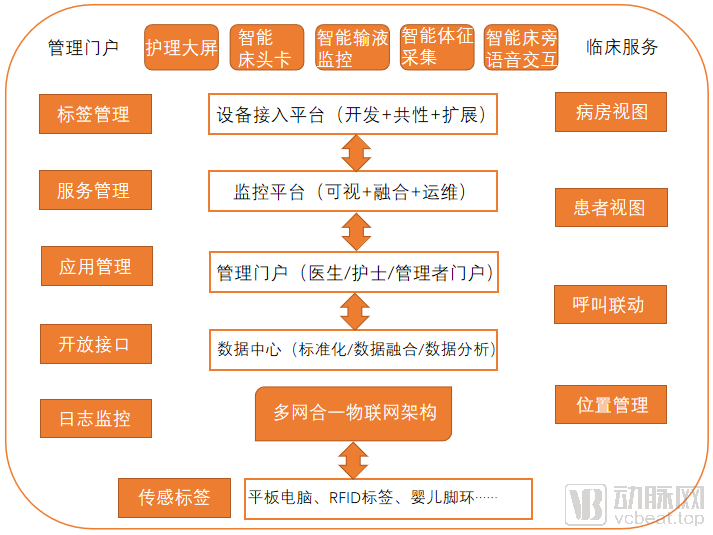
Yihui Technology Smart Ward Comprehensive Solution
Winning Health: Integrated Nursing Management Platform
Winning Health Integrated Nursing Platform, built on data integration as its foundation and powered by a professional knowledge base, combines mobile nursing to comprehensively cover all clinical nursing and nursing management scenarios. It enables real-time updates and visualization of ward nursing status through large-screen dashboards, creating a convenient and lean nursing model.
The platform consists of four components: mobile bedside nursing execution devices, a nursing knowledge base, clinical nursing, and nursing management.
Mobile bedside nursing devices enable real-time data sharing across all mobile terminals, reducing communication costs and facilitating closed-loop tracking during the nursing process to establish a traceability mechanism. The nursing knowledge base offers over 200 major health education categories, more than 4,000 subcategories, over 1,700 medical record templates, and knowledge-based nursing care plans, ensuring standardized nursing care. The clinical nursing system ensures high-quality entry of nursing records, achieves interoperability of clinical operational data, and guarantees the implementation of scientific nursing care plans. The nursing management system provides refined nursing quality management by establishing standardized nursing-sensitive quality indicators, thereby streamlining the monitoring and reporting process.
Paifan Technology: One-Stop IoT Smart Healthcare Management System
In contrast to traditional hospital informatization, represented by Hospital Information Systems (HIS), Nursing Information Systems (NIS), Picture Archiving and Communication Systems (PACS), and Electronic Medical Records (EMR), a distinct characteristic of IoT-enabled smart healthcare informatization is “data centralization and scenario refinement.” IoT-enabled smart medical devices generate massive volumes of data daily. These multidimensional data encompass patient information, healthcare personnel information, diagnostic and treatment information, nursing care information, equipment information, and management quality information. How to leverage both medical and nursing data to further enhance the quality of nursing care has emerged as a new direction for development.
PaiFan Technology has developed a clinical nursing decision support system based on its Internet of Things (IoT) platform, integrating big data and artificial intelligence technologies. Centered on intelligent screening for critical care assessment, nursing risk assessment, and tiered nursing care, the system aims to further ensure nursing safety, improve nursing efficiency, and enhance the quality of nursing care.
To advance nursing informatics, Paifan Technology has developed a suite of innovative products within its IoT-based Smart Healthcare One-Stop Management Platform, including the Smart Hospital IoT Ward Round System, Continuous Temperature Monitoring System, Intelligent Safe Infusion System, and Intelligent Bed Position Management System. The Paifan Technology IoT Smart Healthcare One-Stop Management System can integrate with hospital information systems to automatically consolidate data, thereby accelerating the adoption of nursing informatics. This integration eliminates errors associated with manual data entry, reduces the workload of nursing staff, and ensures they have sufficient time and energy to provide superior patient care.
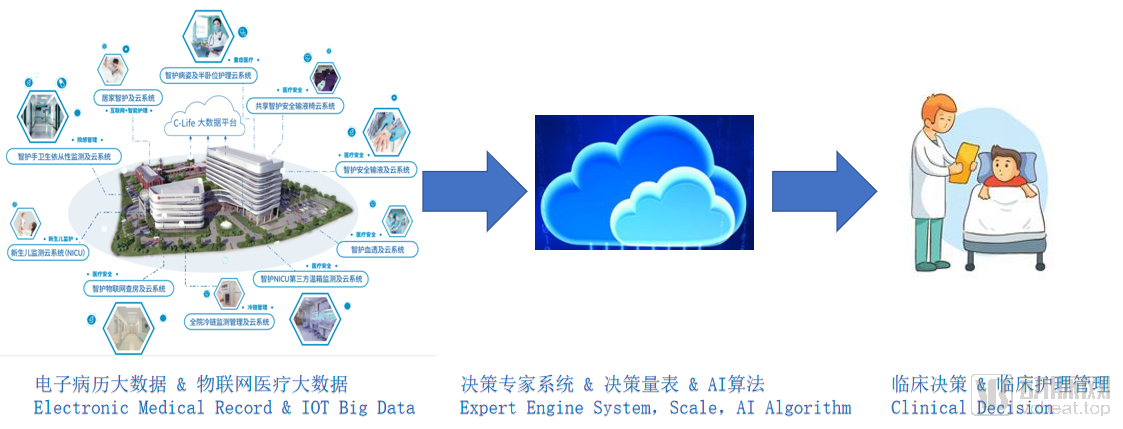 Paifan Technology Nursing Big Data - IoT Platform
To explore the practical application of nursing informatics in hospitals, VCBeat monitored publicly available tender and procurement samples related to nursing informatics from 2019 and 2020 (up to August) on the China Government Procurement Network and the government procurement websites of 31 provincial-level governments. Through structured data processing, a total of 206 valid samples of nursing informatics were extracted, involving a total amount of RMB 233 million.
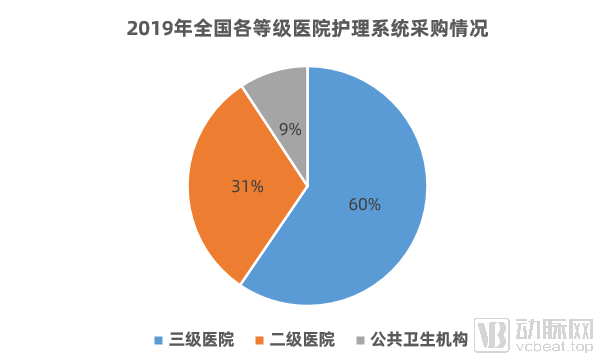
In hospital procurement, tertiary hospitals account for 60% of the number of procurement projects. Although there are far more secondary hospitals than tertiary hospitals nationwide, they currently lag behind tertiary hospitals in terms of funding availability and strategic prioritization. Due to heavy nursing workloads, complex clinical and hospital management challenges, and a high acceptance rate of new technologies, tertiary hospitals have an extremely strong demand for nursing informatization solutions. Public health institutions, including health commissions and medical colleges, primarily procure nursing informatization systems for medical administration and academic teaching and research, with only a minority using them for clinical management; consequently, system update frequency remains low.
With the nationwide launch of performance assessments for secondary hospitals in China in 2020, coupled with the strain on medical resources observed during the COVID-19 pandemic, the informatization of nursing care in secondary hospitals is likely to accelerate in 2020.
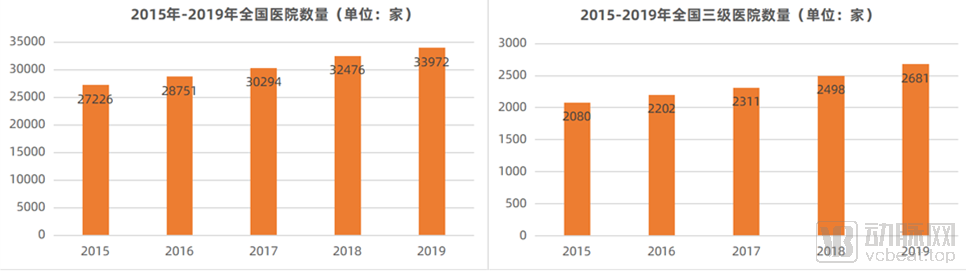
According to the latest statistics from the Statistical Information Center on healthcare institutions nationwide, China had a total of 27,226 hospitals in November 2015. By the end of November 2019, this number had reached 34,000, with an average annual increase of more than 1,500 hospitals. Although the substantial growth in the number of hospitals suggests significant market potential, the majority are secondary-level hospitals, and only a limited number possess both the willingness and the capability to adopt nursing informatics systems.
Looking at the number of tertiary hospitals, with an average annual increase of 150 facilities, coupled with expansion and renovation projects for new buildings and campuses of traditional large-scale hospitals, there remains considerable market growth potential for nursing informatics projects.
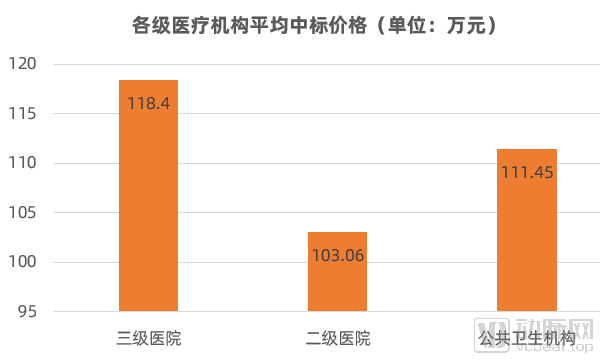
Based on an estimated annual procurement by approximately 200 hospitals, with a procurement value of RMB 1.1296 million per hospital, the annual market size for in-hospital nursing informatics is approximately RMB 226 million. This figure does not include the substantial annual maintenance fees from hospitals that have already implemented nursing informatics systems. Nursing informatics companies will strive to expand their market share within this limited market.
Furthermore, driven by policy support, the overall market size for smart nursing care may present a more optimistic outlook. On February 12, 2019, the National Health Commission officially issued the “Notice on Launching Pilot Programs for ‘Internet + Nursing Services’” along with the pilot implementation plan, designating Beijing, Tianjin, Shanghai, Jiangsu, Zhejiang, and Guangdong as the six pilot regions for “Internet + Nursing Services” from February to December of that year.
Section IV of the Notice released on September 2, titled “Continuously Improving the Quality of Nursing Services in Medical Institutions,” also proposes to actively develop “Internet + Nursing Services” and encourages medical institutions with the necessary conditions to actively carry out “Internet + Nursing Services” based on their actual circumstances.
The “Notice” encourages large medical institutions to leverage their high-quality nursing resources to support and drive primary care institutions in enhancing their nursing service capabilities through mechanisms such as medical consortia, paired assistance, advanced study programs, and remote training, thereby enabling primary healthcare facilities to play a more significant role in “Internet + Nursing Services.” This indicates that the out-of-hospital nursing market also holds substantial promise.
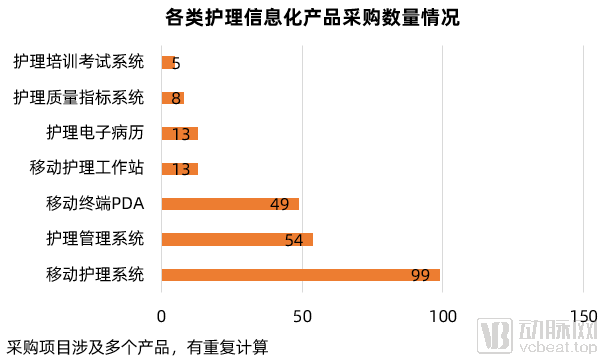
As shown in the figure above, clinical nursing projects represented by mobile nursing information systems currently hold a dominant position in hospital settings, with a total of 99 projects, accounting for as high as 39.6% of all nursing informatization projects.
The Mobile Nursing Information System is an extension of the nurse workstation to the patient's bedside. Its solution leverages the hospital’s new system as its foundation, handheld PDAs as its platform, and a wireless local area network (WLAN) as its medium for data transmission and exchange. By fully utilizing the data resources of the Hospital Information System (HIS), it extends HIS capabilities to the wards and enables real-time data exchange, thereby significantly advancing the informatization of nursing care in hospitals.
Mobile nursing information systems leverage the portability of mobile terminal devices and intelligent recognition of wristband tags to achieve error-free patient identification, error-free medication administration, and quantifiable nursing tasks, thereby enhancing the accuracy and efficiency of nursing care. However, mobile nursing information systems constitute only a part of smart nursing. Generally, other common nursing systems include nursing risk early warning, nursing big data analytics, and nursing mobile applications.
Overall, nursing is a critical component of the healthcare delivery process. Information technologies such as artificial intelligence, big data, and the Internet of Things (IoT) are bringing significant opportunities and room for development to the nursing industry, playing an increasingly important role in improving nursing efficiency and ensuring patient safety. As the executors of medical orders, nurses are the closest caregivers to patients and serve as the final safeguard for patient safety. Hospitals, vendors, and other industry stakeholders must properly recognize nurses’ work needs and understand their working environment, thereby continuously striving toward a win-win outcome for nurses, hospitals, and patients alike.
We extend our gratitude to the following expert contributors for their support of this article (listed in no particular order):
Zeng Renxiong, Founder of Honghua Medical
Chen Junjie, CEO of Paifan Technology
References:
Luo Min, Wang Ying, Li Huifang. A Brief Discussion on the Current Status and Development Trends of Nursing Informatics[J]. Chinese Journal of Emergency Resuscitation and Disaster Medicine, 2013, 008(001):94-95.
Wu Xiaoying, Wang Ling, Li Sen. Nursing Informatics Construction: We Are on the Way [J]. China Hospital CEO, 2015, 000(015):73-75.
"Chinese Journal of Nursing Management": How Can Informatics Facilitate the Development of Nursing in the Context of Big Health?
Chen Qichang. Discussion on the Construction of Clinical Nursing Informatics [J]. Management Observer, 2019, 000(019):182-183.