

Suizhen Technology Files IPO Prospectus: Powering Internet-Based Chronic Disease Management Across 200+ County Hospitals
In 2019, public hospitals at the district/county level and below in China recorded a total of 5.9 billion outpatient visits, of which over 4.2 billion were by patients with chronic diseases. The number of people with chronic diseases nationwide exceeded 350 million. However, due to limited health awareness, most patients do not proactively seek medical care when they are asymptomatic. As a result, fewer than 10% of patients adhere to treatment regimens and achieve target clinical indicators. This low rate is attributable both to neglect of the disease and to the complexity of traditional healthcare-seeking processes.
Taking hypertension as an example, the prevalence of hypertension among adults in China was 18.8% in 1998, and the latest figure has climbed to 25.5%. The absolute number of people with hypertension exceeds 200 million. With follow-up visits once a month, hypertension alone generates 2.4 billion patient visits for medical services annually.China’s current policies permit online follow-up consultations, and follow-up care for chronic diseases represents the primary opportunity for internet healthcare at this stage.。
With the advancement of the times, people are placing increasing emphasis on their own health. Meanwhile, as internet and artificial intelligence technologies continue to mature, hospital information systems are becoming increasingly sophisticated. This has created favorable conditions for “breaking down the walls of hospitals,” enabling healthcare institutions to provide precise remote services tailored to each patient’s medical condition.
2015 was hailed as the inaugural year of internet healthcare, witnessing the emergence of a large number of chronic disease management software solutions. However, these were predominantly positioned for physician-led patient management rather than hospital-led patient management. While individual physicians may possess strong professional expertise, can they address all patient needs? Furthermore, in the event of disputes, who bears the primary liability?

Wu Qiong, Founder of Suizhen Technology
As a veteran player in this sector, how does Suizhen Technology stand out in the field and undertake the internet infrastructure development for more than 200 county-level primary hospitals within a short period? VCBeat (WeChat ID: vcbeat) conducted an exclusive interview with Mr. Wu Qiong, founder of Suizhen Technology, to present readers with an authentic picture of internet-based chronic disease management in China’s county-level regions.
Precision Patient Services
In 2020, the sudden onset of the pandemic led most district and county hospitals to suspend routine outpatient services, depriving a large number of patients with chronic diseases of convenient access to timely medical care and forcing them to rely on self-management experience and previously stocked medications. According to the Regional Disease Standardized Management and Construction Branch of the China Health Care Association for the Elderly, a survey involving nearly one hundred district and county hospitals showed that hospital revenues plummeted by 20–40% in the first half of the year due to the decline in the number of patients seeking in-person care.
Wu Qiong stated, “We have reason to believe that, from this point forward, every hospital will prioritize patient retention as a key focus. However, chronic disease management must be centered on hospitals as the primary service providers. The workload incurred by physicians in delivering patient management services should be incorporated into performance evaluations with appropriate incentives, thereby achieving a win-win outcome for hospitals, physicians, and patients.” It is reported that Suizhen Technology has established a chronic disease management platform named “Kangsai Suizhen.” This platform has assisted hospitals in maintaining communication with patients during the epidemic prevention and control period by integrating with hospital Information Systems (HIS). Furthermore, it has enabled comprehensive, end-to-end patient management tailored to each individual’s specific condition, thus addressing the challenges faced by chronic disease patients who are unable to visit hospitals for consultations and prescription renewals.
“Adopting a patient-centric approach requires practitioners to possess exceptional observational skills, with the precise identification of patients being the top priority. In fact, patients are ‘asleep’ within the Hospital Information System (HIS); we have simply neglected to leverage this resource in the past. Tapping into this vast chronic disease market demands that hospitals invest human, financial, and material resources, reengineer medical service processes, and establish independent chronic disease management centers. Moreover, support from the internet, the Internet of Things (IoT), and artificial intelligence is indispensable. The Kangsai Follow-up Platform was developed precisely with the logic of enabling this scenario,” Wu Qiong told VCBeat.
Two Key Hurdles in the Implementation of Follow-up Platforms
Only by gaining comprehensive access to a patient’s complete health records can physicians provide personalized solutions and deliver precise diagnostic and therapeutic services. So, how can hospital information systems be integrated?This became the first challenge that needed to be addressed for the implementation of the Saikang follow-up platform.。
“Having worked at the grassroots level for many years, Wu Qiong has a deeper understanding of district and county hospitals. He responded, ‘The Kangsai Follow-up Platform is not the owner of patient data. Our positioning is to assist hospitals in establishing chronic disease management centers, providing technical services and solutions, and serving as a tool for communication between hospitals and patients. This allowed us to easily solve the first challenge and rapidly deploy the Kangsai Follow-up Platform in more than 200 district- and county-level hospitals.’”
Constrained by the limitations of the current fiscal allocation system, hospitals derive their primary revenue from medical service fees, such as those for diagnosis and treatment. Consequently, patient adherence serves as both the driving force and the fundamental source of hospital development. Therefore, enhancing patients’ healthcare experience, strengthening their trust in hospitals, and encouraging them to return for follow-up visits constitute critical operational challenges for district and county-level hospitals.This is also the second challenge facing Suizhen Technology.。
In August 2019, Suizhen Technology launched Version 2.0 of its Kangsai Suizhen platform, helping hospitals leverage AI technology to achieve centralized management of patients with chronic diseases. The platform assists hospitals in establishing chronic disease management centers focused on post-consultation follow-up services, elevating disease management from traditional in-hospital care to comprehensive health management covering the entire county. This approach aligns with the national direction for reforming county-level medical consortia. On the Kangsai Suizhen platform, patients can complete online follow-up consultations and prescription renewals, with medications delivered offline through nearby contracted physical pharmacies, thereby addressing practical patient needs. By providing end-to-end services spanning pre-, during, and post-consultation phases, the platform facilitates the transformation of chronic disease management from a hospital cost center into a profit center. This strategy reaffirms the focus on achieving a win-win-win outcome for hospitals, physicians, and patients, representing the second “prescription” issued by Suizhen.
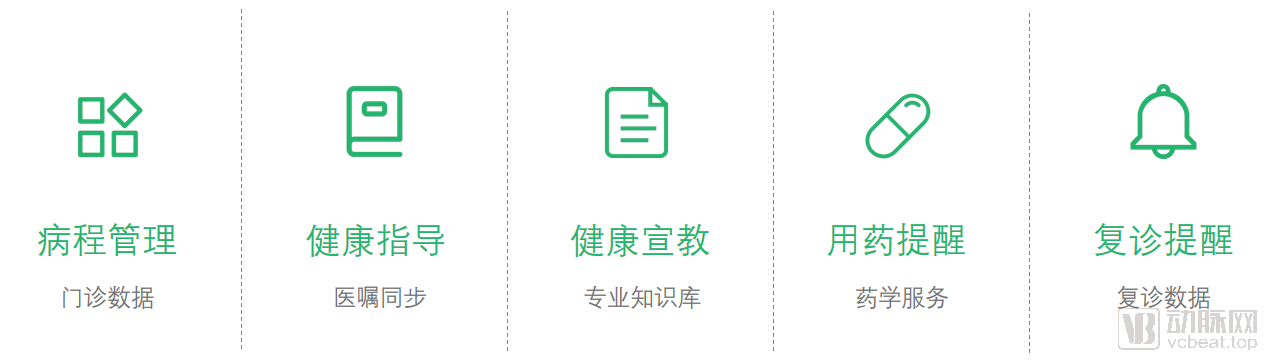
The Kangsai Follow-up Platform can provide personalized medication reminders, health education, and follow-up visit alerts to patients via WeChat, SMS, and phone calls, based on each patient’s disease progression and prescription records. It also assists chronic disease management centers in establishing green channels for patients, offers SMS or phone call reminder services for those using basic mobile phones, and enables contact with family members to extend care to patients who do not use mobile phones. Additionally, by deploying communication-enabled monitoring devices such as blood pressure monitors and glucometers at the primary care level, Kangsai Follow-up Technology helps chronic disease management centers identify new patients, striving to achieve extensive coverage and management of patients within the region.
According to data provided by partner hospitals, the deployment of Suizhen Technology’s services has yielded significant results: the average follow-up visit rate at these hospitals has increased by approximately 30%, while the incremental growth in new patient referrals within their service areas ranges from 6% to 10%. The cost of re-engaging lost or inactive patients through hospital internal systems is RMB 1 per person, whereas the cost of acquiring a new patient within the local area is around RMB 10. In contrast, the average revenue contribution per outpatient visit at county-level hospitals is approximately RMB 230.
Actively Explore Innovative Business Models
While Follow-up Tech delivers value to hospitals, how does the Kangsai Follow-up Platform generate revenue? What exactly is Follow-up Tech’s business model?
Wu Qiong explained, “Our platform does not charge hospitals any fees; Suizhen Technology currently provides all its services to county- and district-level hospitals free of charge. Our expenditures are covered by our own funds and partial social sponsorships. We collaborate with socially responsible large enterprises that bear a portion of the platform’s development and operational costs. Additionally, we have leveraged resources accumulated over many years to reduce the costs associated with hospital-side development. Of course, to ensure long-term sustainability, we have been conducting research into patient needs and working jointly with hospitals, insurance companies, and other partners to develop personalized paid service offerings, such as healthcare service packages and condition-specific health insurance products. I am confident that diverse needs will inevitably emerge within such a vast population.”
Over the past three years, Suizhen Technology has deployed the Kangsai Suizhen Platform in 225 district- and county-level hospitals, managing a total of 30 million patient visits. “I owe this achievement to my team. Our founding team comprises talent from prestigious institutions and companies such as Harvard University and Samsung Electronics, with a well-balanced age distribution. We are capable not only of publishing papers in international academic journals and presenting at conferences but also of engaging deeply with village clinics and village doctors to discuss the challenges faced by primary care physicians—even chatting with them about their harvests from previous years.” Wu Qiong’s pride in his team was evident as he spoke.
Hard work always yields fruitful results. In 2018, the Kangsai Follow-up App was recognized as an Outstanding Chronic Disease Management Platform in China. During the 2020 pandemic, it was officially recommended by the Chinese Preventive Medicine Association for its tangible support to partner hospitals in stabilizing and retaining patients. Regarding the future development vision of Suizhen Technology, Wu Qiong expressed strong confidence: “Let us embark on a new Long March for our follow-up services, plant the red flag across 2,000 districts and counties nationwide, and assist the government in establishing standards for internet-based follow-up care at district and county hospitals.”