

Alibaba Cloud's 'Digital Human' Spine Diagnosis Challenge Concludes: Advancing Digital Health Solutions for Clinical Integration
VCBeat (WeChat ID: vcbeat) has learned that the award ceremony for the Spark AI “Digital Human” Challenge—Intelligent Diagnosis Competition for Spinal Diseases was held in Hangzhou on October 10, 2020. The competition was jointly hosted by Alibaba Cloud Computing Co., Ltd. and Intel (China) Co., Ltd., under the guidance of Xiangya Hospital, the Second Affiliated Hospital of Zhejiang University School of Medicine, the PLA General Hospital (301 Hospital), and the Professional Committee of Postgraduate Medical Education in Orthopedics of China. It was co-organized by Wanliyun Medical Information Technology (Beijing) Co., Ltd. and Weiyi Orthopedics.
The competition released a massive volume of real-world MRI orthopedic datasets, which reflect industry consensus and possess global influence. It called upon developers worldwide to leverage artificial intelligence for exploring efficient and accurate automated diagnosis of spinal degenerative diseases, actively promoting the clinical application of related technologies. The event attracted 3,107 teams comprising 3,330 participants from around the globe, yielding high-performance algorithmic outcomes.
Following the competition, Alibaba Cloud leveraged the award ceremony as an opportunity to host an industry-academia-research symposium aimed at facilitating the practical application of the competition’s outcomes. The event brought together industry leaders, clinical experts, academic luminaries, and technical pioneers in the healthcare sector to engage in in-depth discussions and share insights on cutting-edge technologies, development trends, and innovative practices in smart healthcare.
Smart healthcare is an emerging field that has been rapidly rising in the healthcare sector in recent years. The new global wave of information technology revolution, driven by next-generation information and network technologies such as cloud computing, big data, artificial intelligence, mobile internet, and the Internet of Things (IoT), has accelerated the development of smart healthcare.
The integration of smart healthcare and emerging technologies has not only transformed the industry's foundational infrastructure from the perspectives of technology and resource supply, but also fundamentally reshaped the supply-and-demand dynamics of healthcare services in terms of business models and operational practices.
As one of the global leaders in digital technology, Alibaba Cloud has long maintained a strong optimism regarding the implementation and integration of technologies such as AI, big data, and cloud computing in the healthcare sector.
Liu Xiangwen, President of Marketing and Public Affairs at Alibaba Cloud, stated, “As China’s largest AI crowdsourcing platform, Alibaba Cloud Tianchi has also recognized that the path to realizing the value of AI has been fraught with challenges. Tianchi aims to develop practical, implementable AI solutions by starting with the resolution of specific problems. By focusing on spinal diseases this time, we hope to foster a deep integration between AI and orthopedics, thereby creating more opportunities for unlocking the value of AI and cultivating talent.”
What pathways should digital technologies, represented by AI, take to unlock their value?
Hua Xiansheng, Head of the Artificial Intelligence Engineering Center at DAMO Academy, stated: “As the research institute of the Alibaba Economy, the research directions of DAMO Academy’s Artificial Intelligence Center are primarily distributed across four major fields: City Brain, the Visual Intelligence Open Platform, industrial vision, and healthcare.”
In the healthcare sector, we identify three fundamental challenges in China’s medical and health system: an imbalance between health insurance revenues and expenditures, a mismatch between the supply and demand of medical services, and an asymmetry of knowledge between doctors and patients. AI can play a significant role in addressing all three areas. It can strengthen health insurance supervision, enhance physician efficiency, and empower individuals with greater awareness and control over their health. DAMO Academy has made extensive efforts in this regard, with research papers and patents covering multiple fields such as cardiology, orthopedics, and oncology. The academy has developed products including intelligent diagnostic systems for coronary CT angiography (CTA) and spinal MRI, measurement tools for hip and knee joint surgeries, comprehensive pulmonary diagnostics, enhancer localization during cardiac development, and disease prediction models.
In the future, DAMO Academy will continue to build a healthcare AI middle platform, leveraging an AI production middle platform, an AI R&D platform, and AI algorithms to create intelligent industry application engines/business middle platforms, ultimately empowering various stakeholders in the healthcare sector, including hospitals, pharmaceutical companies, and insurance firms.
Unlike previous technologies that evolved along linear paths and transformed individual segments of the medical industry, smart healthcare reconstructs every aspect of the traditional healthcare sector with greater efficiency, more precise support, and entirely new doctor-patient interactions.
Shen Guo from Zhuji People's Hospital stated, "As a primary-level hospital, with the development of internet technology, the boundaries of the hospital are constantly expanding, and the service models of the hospital are continuously updating. However, hospital administrators are cautious about how to expand these boundaries, especially concerning data security and privacy."
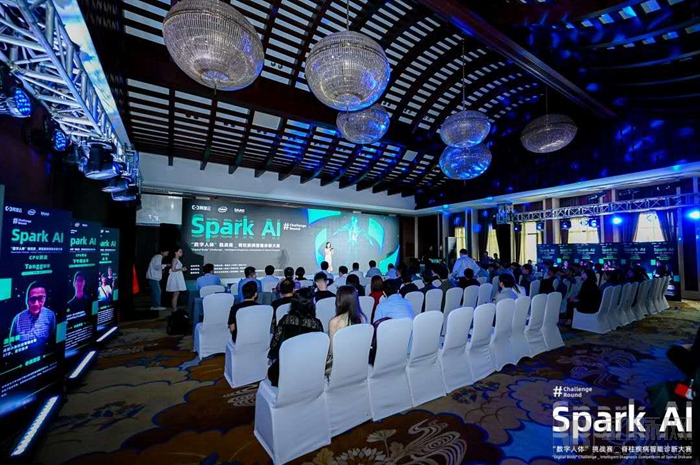
Competition Awards Ceremony
As a hot topic in the construction of smart hospitals, whether hospitals should migrate to the cloud has become a key focus of the seminar. Compared with traditional construction models, the cloud model offers advantages such as unified planning, unified deployment, and maintenance-free operation. Healthcare institutions can achieve rapid deployment of information systems within a short period, with flexible system configuration and easy scalability, without the need to independently build server rooms or purchase infrastructure such as hardware servers, operating systems, and databases.
Although cloud computing has become the infrastructure for many industries, many hospitals are still hesitant to be the first movers.
Fei Yujiang, Director of the Information Department at Zhejiang Provincial Hospital of Traditional Chinese Medicine, stated: “We are now in an era of explosive growth in informatization. In fact, whether hospitals should migrate to the cloud is a false premise, as hospitals do not deliberate over whether or not to adopt cloud services. Instead, they focus solely on their needs and are concerned with how to solve practical problems.”
Obviously, a one-size-fits-all approach is not applicable to the migration of hospital data to the cloud. Many attendees at the event agreed that hospitals should clearly define their objectives and identify suitable scenarios for cloud adoption.
Liu Song, Senior Vice President of B-Health, stated, “Different regions have varying requirements for cloud computing. We believe that hospital cloud adoption should follow a natural progression, requiring the accumulation of humanistic experience, technological advancement, and alignment with hospital-specific needs.”
Undoubtedly, discussions surrounding cloud adoption have become increasingly prevalent, and hospitals are approaching the decision of whether to migrate to the cloud with greater rationality. Hospitals should prioritize migrating those business operations and scenarios to the cloud where cloud services can deliver maximum value.
As a hospital imaging cloud service provider, Wanli Cloud serves over 3,000 hospitals. Huang Jiaxiang, Chairman of Wanli Cloud and a pioneer in specialized cloud services, pointed out: “If hospitals adopt cloud computing merely for internal operational communication, the significance of such migration is limited. The greater value of cloud services lies in interoperability and connectivity. This also underscores the national rationale for encouraging the development of data centers. Regionally interconnected data centers can break down hospital data silos, providing a foundational data platform for regional health management and clinical research. In practice, we have observed growing recognition of the value brought by interoperability and cloud adoption.”
Regarding other challenges in industrial development, the on-site guests also put forward constructive suggestions.
Wang Yu from Alibaba’s DAMO Academy pointed out that a clear takeaway from hosting the Digital Human Competition was the insufficient size of medical datasets. This, in essence, reflects the longstanding challenge hospitals face in data acquisition. Furthermore, standardizing and structuring data after collection also requires substantial investment."As technology developers, we can secure greater support by leveraging technological advancements to drive costs down sufficiently and amplify value significantly."
The concept of "Smart Hospitals" was introduced in 2014, derived from the broader "Smart Cities" framework. In 2017, national construction standards were proposed, and by 2018, local authorities began implementing smart hospital initiatives. In March 2019, an evaluation system for smart hospitals was officially released. Looking toward future development trends, the construction of smart hospitals is now diverging into two distinct directions: enhancing disease treatment capabilities and improving healthcare management efficiency.
New technologies represent an incremental growth driver in the evolution of smart healthcare, yet their implementation remains grounded in the existing foundation, with clinical practice serving as the most critical benchmark. Smart clinical care within smart hospitals will be the ultimate destination for the development of smart healthcare.
From 2014 to 2020, radiology emerged as the fastest-growing smart specialty department, driven by its amenability to the implementation of AI technologies. Currently, AI, cloud computing, and other technologies are penetrating deeper into a broader range of departments. Orthopedics stands out as a key frontier in the development of digital healthcare, integrating numerous cutting-edge intelligent technologies such as AI, 3D printing, and virtual reality. Although the digital transformation of orthopedics presents significant challenges, it holds substantial market potential.
Dr. Luo Jianping, Director of the Department of Spinal and Spinal Cord Surgery at Henan Provincial People’s Hospital, stated: “Orthopedic subspecialties are becoming increasingly refined, surgical techniques more precise, and physicians’ understanding of orthopedics deeper. This trend imposes higher demands on clinicians and extends their training periods. In spinal corrective surgery, precision is paramount; even a single misplaced screw can compromise neural function. However, digital technologies such as 3D printing and surgical robots have provided substantial benefits to orthopedics, becoming indispensable tools in our practice.”
What Are the Future Trends in Smart Orthopedics?
Liu Zhengrong, CEO of Weiyi Orthopedics, stated, “From the perspective of overall development trends in the orthopedic industrial internet, patient-side orthopedic services need to shift from a hospital-centric model to one centered on the patient’s lifecycle. On the physician side, it is essential to achieve precise matching, enhance service quality, and ensure transparency in physicians’ income. For hospitals, smart hospitals are becoming the trend. On the manufacturer side, channel profits will be compressed, and processes from R&D to marketing will undergo digital transformation.”
"The future smart orthopedics ecosystem will be patient-centric, creating a closed-loop online-offline diagnosis and treatment experience that enables seamless data flow, circulation, and traceability among multiple stakeholders—including patients, hospitals, physicians, pharmaceutical and medical device companies, insurers, and payers. By leveraging artificial intelligence as a tool to empower all roles within the healthcare system, we aim to establish industry standards for AI in orthopedics, thereby advancing China’s medical capabilities and accelerating healthcare reform."
Although smart healthcare is no longer an unfamiliar term in the industry and has a history of several years of development, the development of smart healthcare in China is still in its early stages, facing many pain points and obstacles that urgently need to be overcome. However, we firmly believe that as an important foundation for realizing the Healthy China strategy, by combining research, education, industry, and investment, integrating modern smart technological means, and establishing a new medical ecosystem with integrated symbiosis, we will usher in a brand-new ecosystem for healthcare and wellness.