

Reaching for the Stars and Keeping Feet on the Ground: Reflections on Digital Transformation in Pharmaceutical Enterprises
Standing on existing technological infrastructure, tech giants continuously pursue innovation and development in their core business sectors while simultaneously leveraging technology to disrupt traditional industries across various sectors. Among these, the health and wellness industry has become a key target, attracting a continuous influx of capital driven by concepts of both technological and business model innovation.
Stimulated by a multitude of buzzwords, data professionals in the pharmaceutical industry have become exceptionally enthusiastic in recent years. However, the onset of the pandemic acted like the child’s cry in “The Emperor’s New Clothes,” compelling us to reflect on what the introduction of new concepts truly means for enterprises. Within the specific context of digitalization, where does the path to corporate transformation lie?
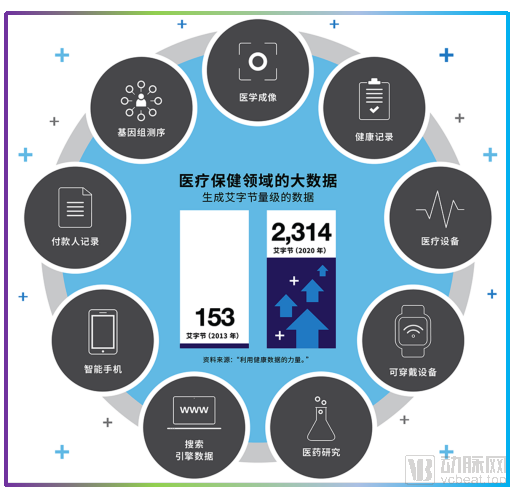
Data Asset Volume in the Big Health Industry Surges. A report from Stanford University noted that the big health industry generated approximately 153 exabytes of data in 2013, equivalent to about 2.6 trillion music albums. By 2020, this figure was projected to soar to 2,314 exabytes, representing an increase of over 11,000%. These data are captured by stakeholders at all levels of the industrial chain through various channels—leveraging currently active technologies—including medical imaging, health records, medical devices, wearable devices, pharmaceutical research, genomic sequencing, search engines, and payer records.
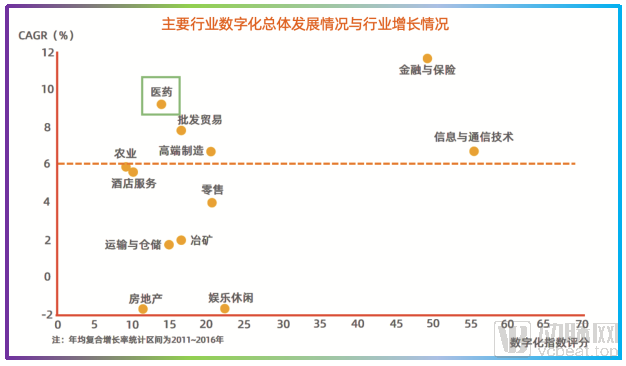
Digital Opportunities Amid Industry Growth. Even as healthcare reform policies continue to be implemented, making industry transformation and turbulence the new normal, future growth in the broader health industry remains predictable, with compound annual growth rates staying at a high level. However, against the backdrop of rising industry productivity and expanding data asset volumes, the overall level of digitalization in the broader health sector remains relatively low. Drawing on historical experiences from other industries, the potential for digital upgrading in the broader health industry is substantial.
Anticipating that digitalization would drive accelerated growth in the pharmaceutical industry, both pharmaceutical companies and technology firms have actively entered the market in recent years. They are pursuing diverse digital applications and their commercialization, establishing new models such as mobile consultations, AI-assisted diagnosis, and new retail e-commerce across patient, physician, and pharmaceutical enterprise touchpoints to meet the multifaceted needs of the healthcare system.
However, during the pandemic, we also witnessed the dilemmas faced by enterprises in various scenarios:
1. Absence of a closed-loop management system and business cycle for data-driven operations. Faced with a sudden surge in mask demand, a medical device company in Zhejiang Province seized the window of opportunity presented by the “pandemic dividend.” However, while actively stocking up and ramping up production, the company failed to promptly grasp the actual demand and absorption capacity across different regions, endpoints, and channels. Consequently, it did not proactively enhance its flexibility to capitalize on market opportunities through improvements in internal management, supply chain coordination, and channel distribution. After numerous competitors entered the market, the company neither established competitive barriers nor foresaw risks in a timely manner, leading to significant supply chain management challenges during the later stages of the pandemic.
2. Inadequate Infrastructure for Business Datafication. In response to post-pandemic work resumption, a pharmaceutical manufacturing enterprise established a proactive control system encompassing access management between production sites and offices, as well as the full cycle from protective supply management to employee health status feedback. Despite significant investments in manpower, resources, and capital in information technology infrastructure in recent years, the IT team failed to promptly deploy a group-wide digital epidemic prevention application when senior management mandated digitalized pandemic controls. This failure was primarily due to incomplete master data on personnel. Consequently, epidemic prevention and control measures reverted to pre-digital era practices, relying on manual records and Excel-based consolidation. The resulting decline in pandemic control efficiency adversely impacted both the efficiency and safety of production operations.
Behind these dilemmas lie the challenges currently facing pharmaceutical companies in their digital transformation:
1) Lagging digital infrastructure in the pharmaceutical ecosystem, with fragmented internal data within pharmaceutical companies
2) Enterprises lack a mindset for data-driven business operations, and their data applications fail to establish management and business closed loops oriented toward decision-making.
3) Best practices for digitalization remain unclear, necessitating exploration of sustainable models for enterprise data application
Enterprise digitalization can essentially be abstracted as a supply-chain collaboration issue centered on data value: processes occurring in the real world by business entities are recorded by business systems or other technologies; data is then processed through technical methods such as ETL, OLAP, and data mining; finally, insights extracted from the data are fed back into business operations via data visualization and automated alerts, enabling decisions that influence original business processes through human judgment or algorithmic automation. Thus, the transformation process requires resource investment and strategic focus across three key stages: information collection, information processing, and business insight generation. Specifically, this involves expanding the breadth, quality, and speed of supply channels at the information collection stage; enhancing productivity and efficiency at the information processing stage; and delivering tailored solutions aligned with demands at the business insight stage.
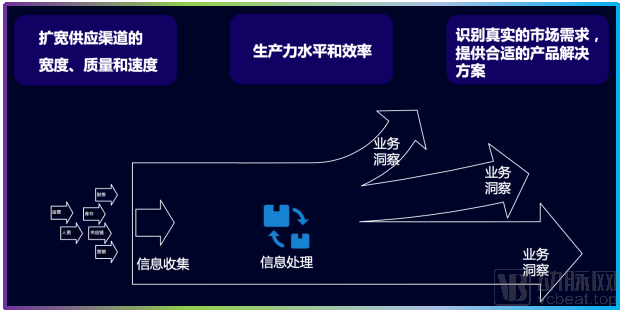
These three stages form a vertically integrated supply chain. Therefore, when making decisions on investments in information technology resources, companies can refer to the Theory of Constraints (TOC) by first assessing their current status and identifying the area with the highest return on investment as the entry point. However, regardless of the chosen entry point, practical experience from FanRuan’s benchmark enterprises in the pharmaceutical industry indicates that a “market-oriented mindset” focused on business value is essential:
1. Shift in Mindset: Top-Level Design Starting from Business Value Delivery
Regardless of how technological or business model concepts are packaged, it is ultimately data professionals within the pharmaceutical industry who build and implement the digital infrastructure of pharmaceutical enterprises. However, when confronting current challenges, many data practitioners often lack a macro-level perspective, with a particular scarcity of cross-functional talent within enterprises. According to visits conducted by FanRuan to numerous pharmaceutical companies, IT personnel in most organizations devote 60%–80% of their time and energy to resolving technical issues, while rarely engaging in strategic thinking about enterprise data competitiveness from a corporate strategy standpoint.
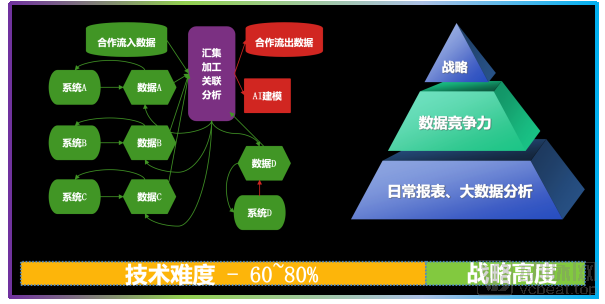
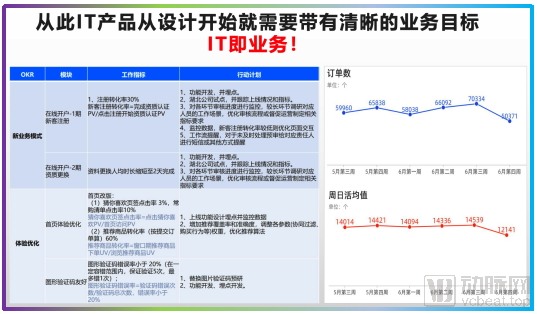
However, for enterprises to truly harness the data dividend and unlock data potential, a mindset centered on business and management value is indispensable. As Wan Yougang, Assistant General Manager of Jointown Pharmaceutical Group, stated, “IT products must be designed with clear business objectives from the outset—IT is business!”
2. Strengthening Understanding: Building Data Applications for Business Goals from Process to Outcome
Guided by a business-objective-oriented mindset, data projects must align their goals with specific business objectives—whether in underlying data infrastructure or front-end application framework design—and even quantify these objectives.
However, during actual implementation within enterprises, even with a business-goal-oriented mindset in place, significant challenges often persist. The most common issues are that business units fail to recognize the value delivered, while senior management sees no tangible outcomes. In this process, FanRuan’s experience suggests that organizations should integrate data across silos to provide actionable business insights and strengthen their understanding of business perspectives, thereby enabling systematic planning of enterprise applications.
1) Data integration provides business insights
Guided by business objectives, the most critical aspect of implementation is not creating flashy visualizations, but rather clearly defining business goals, assessing the current state of data, and identifying core gaps. Starting from these core gaps, effective information should be provided to key stakeholders within application scenarios. Only when these key stakeholders leverage such information to make decisions on critical business processes and improve business entities can the true value of data be realized.
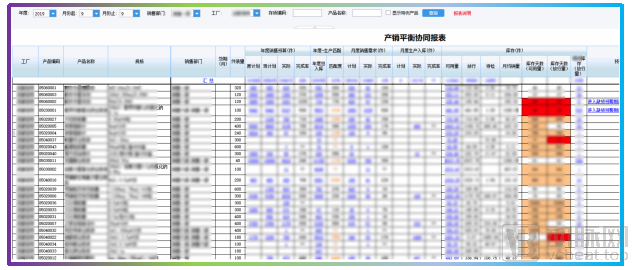
For example, in the context of production-sales coordination, the core business objective is to achieve low inventory, high turnover, and product supply that meets market demand. However, there is an imbalance in the collaboration between production and sales operations, with each function operating in silos. The key gap lies in the lack of critical supporting information for business decision-making, ultimately leading to severe impacts on the group’s operations due to stockouts and slow-moving inventory across different products.
To address this issue, the most effective entry point for delivering business value lies not in the introduction of sophisticated technologies or the implementation of elaborate visualization effects, but rather in enabling production personnel to promptly access real-time information on the execution progress of current production plans, inventory levels, and future sales forecasts, while empowering sales teams to timely monitor available inventory, progress toward sales targets, and upcoming production supply capacity.
With timely and effective information support, sales personnel can adjust their sales strategies based on future supply conditions; promptly provide feedback to the production department to adjust supply plans in response to changes in sales plans, thereby ensuring adequate supply; enable production staff to adjust production scheduling according to future sales plans; and allow the sales department to proactively manage related risks in the event of supply shortages.
Under this business objective, the most appropriate approach should be selected based on the current state of the enterprise’s data infrastructure. Even in the absence of robust business system support, interconnectivity of relevant information can be achieved through manual data entry, thereby delivering value to business units in the shortest possible time and aligning data value with business goals.
2) Strengthen understanding from a business perspective
Most data professionals, after providing effective and timely information to support business operations, often lack further ideas or strategies to deepen the exploration of data value. As a result, they find themselves constantly responding to a high volume of business requests, struggling to keep up with demand.
In fact, based on the experience of benchmark enterprises, systematically planning enterprise data applications is the optimal choice when facing a large volume of business requirements. This process should achieve the following:
1. Closed-loop management, providing decision-making insights and business traceability analysis tailored to different hierarchical levels, thereby enabling the effective delegation of management decision-making responsibilities.
For instance, by displaying key metrics such as supply gaps and production-sales coordination alongside corporate financial indicators, senior management can drill down from the financial metrics of greatest concern. If issues arise in these financial indicators, they can trace the root causes across numerous operational processes.
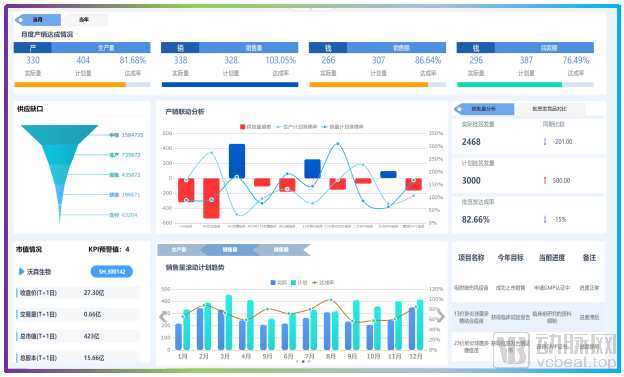
2. Business Closed-Loop: Deconstruct key elements and distill metrics for business management across different lines, measuring business effectiveness, efficiency, and benefits through unified and consistent standards.
For instance, the issue of misalignment between production and sales plans can be broken down by product, and further disaggregated into planning deviations on the production side and those on the sales side for each product, thereby enabling layer-by-layer factor decomposition to pinpoint the root causes.
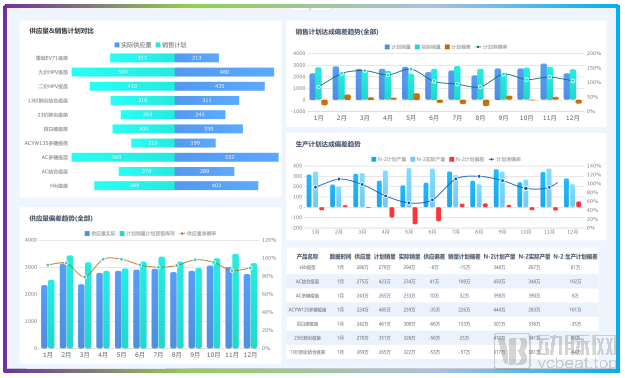
3. Information Closed Loop: Align with user experience and data content across multiple scenarios through rational design, delivering data to the right key stakeholders at the right time, in the right place, and in the appropriate format.
For example, in the pharmaceutical marketing phase, the core activity of pharmaceutical companies is academic marketing directed at physicians by disseminating knowledge and information on treatment modalities, thereby stimulating drug demand and ensuring supply.
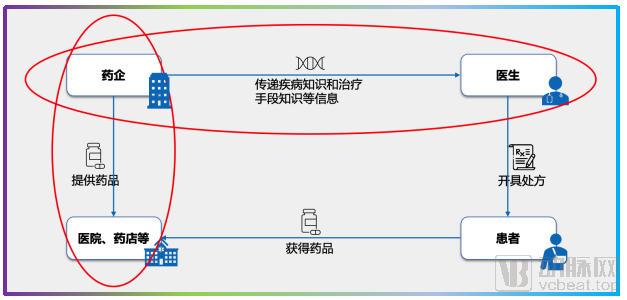
However, behind the execution of marketing campaigns, pharmaceutical marketing is not merely about the goals, actions, and results of a series of marketing teams centered around hospitals and pharmacies. To ensure the success of marketing efforts, it is also necessary to leverage market insights within focused areas to define target markets and corporate positioning, establish phased marketing objectives, design marketing strategies based on viable opportunities, and develop regional plans, incentive schemes, staffing arrangements, activity schedules, and budget plans aligned with these strategies. This enables targeted and planned investment in key areas for effective campaign execution and outcome generation.
Therefore, to meet the needs of different roles in this process, we must provide reasonable designs that align with user experience and data content across multiple scenarios.
Not only does it provide the sales execution line with comprehensive hierarchical performance task KPI tracking capabilities, but it also offers a platform for the operations and planning departments to analyze opportunities and risks across all stages of marketing.
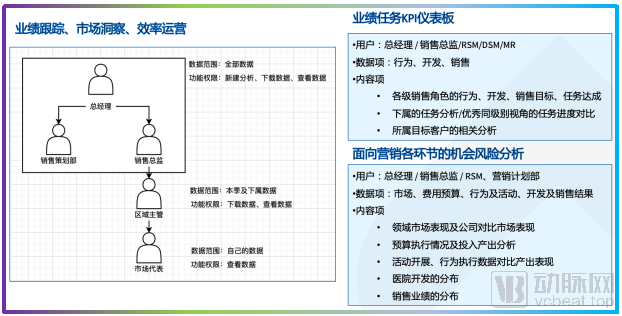
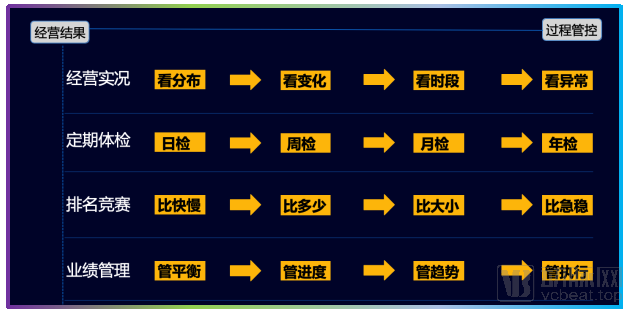
It is not only about displaying outcome data, but also about providing appropriate tools across different stages of business execution to help key stakeholders access information for effective management, thereby achieving process control from outcomes back to execution. For instance, using the comparison between target progress and timeline progress as an early-warning indicator, with multi-tiered alerts (such as mid-term alerts, imminent-deadline alerts, and overdue alerts), enables data to proactively reach users at the right time, facilitating business assessment and decision-making.
At the Smart China Expo in September 2020, Jack Ma mentioned “digitalization” more than 30 times during his eight-minute speech: “Amid all the tremendous uncertainties today, one thing is certain: the trend toward digitalization remains unchanged. In the past, digitalization merely helped some companies perform better; today, it is the key to their very survival.”
In the future business landscape, data will no longer be a mere luxury that adds icing on the cake; rather, it is increasingly becoming an essential necessity that provides critical support for corporate competition and survival. This transformation is undoubtedly not a challenge that can be addressed by the data department alone. However, whether data professionals can help enterprises enhance their data competitiveness hinges on their ability to think from the perspective of data value supply, remain oriented toward business objectives, and strengthen their understanding of business operations.