

Puhua Life: Building an Integrated Male Health Service Ecosystem and Pioneering Intelligent Diagnosis in Chinese Reproductive Medicine
VCBeat has learned that the first in China to focus on“Big Data and Artificial Intelligence” Research Group in the Field of Male ReproductionRecently completed, jointly established by Puhua Life and the Human Sperm Bank of West China Second University Hospital.
This research group aims to promote the innovative development of big data and artificial intelligence technologies in the field of medical and health services, and to strengthen in-depth research on next-generation intelligent technologies in the medical field.
The joint research team will leverage the complementary strengths of both parties in resources, talent, and technology to establish a big data analytics platform for male reproductive health. By applying artificial intelligence and big data analytics techniques, the team will develop a big data model for male reproductive health, enabling intelligent statistical analysis, prediction, and clinical decision support in male reproductive medicine.
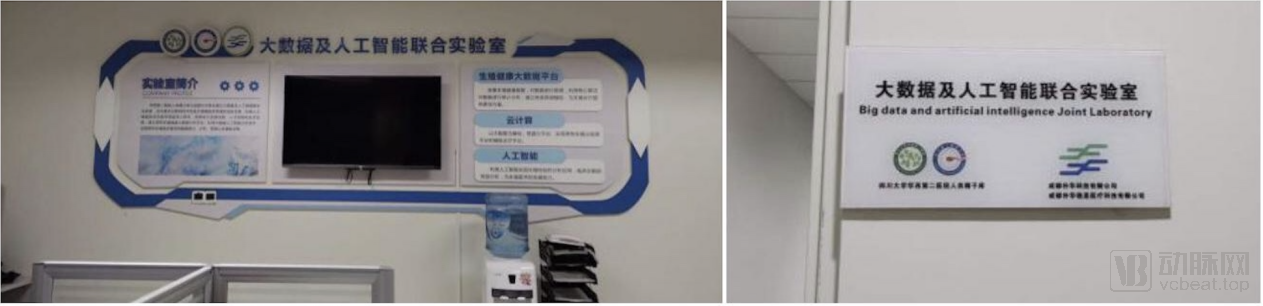
It is reported that Puhua Life entered the field of reproductive medicine as early as 2014, committing itself to integrating big data, artificial intelligence, and internet technologies with in vitro diagnostics. The company provides integrated solutions for reproductive medical testing and clinical applications, thereby contributing to the Healthy China initiative through the deep integration of new technologies with the biomedical industry.
Currently, the high-value clinical diagnostic and therapeutic technologies and medical device products independently developed and marketed by Puhua Life include: those based on deep learning artificial intelligence algorithmsSemen Quality Analyzer、Automatic Staining Instrumentand sperm DNA fragmentation, nuclear maturity, viability, leukocytes, reactive oxygen species, etc.Companion Diagnostic Kit, and the cloud-based Andrology Research Group for medical institutionsPlatform-Wide Solution, for assisted reproduction centersSperm Selection Microfluidic Chip, consumer-facingSmart Home Semen Analysis Device、Mobile Application for Online Doctor-Patient Consultationsa series of product lines centered around men's reproductive health services.
“During my studies at the University of Sheffield in the UK, I recognized the significant gap between domestic and international practices in translating biological diagnostic technologies into clinical medical applications. I believed that China’s industry could not only bridge this gap but potentially surpass its global counterparts,” remarked Liu Chang, founder of Puhua Life. Upon returning to China, Liu established Puhua Life and appointed Professor Xu Wenming, Director of the Joint Laboratory of Reproductive Medicine at The Chinese University of Hong Kong and Sichuan University, as Co-Head of Industry-Academia Research and Development. The company chose to pioneer the integration of new technologies with the biomedical industry by focusing initially on the field of male reproductive medicine.
“As China’s negative population growth trend becomes increasingly pronounced, and comprehensive factors such as environmental issues lead to a surge in infertility rates, encouraging childbirth and implementing eugenics will become long-term national policies, driving sustained high-speed growth in the reproductive medicine market,” introduced Liu Chang. “Among these challenges, male health issues are particularly prominent, with male-factor infertility, recurrent miscarriages, and genetic problems accounting for more than half of all cases. Millions of newly diagnosed patients each year require assistance, representing a vast market size. However, compared to popular sectors such as oncology, chronic diseases, obstetrics and gynecology, and maternal and child health, male reproductive health has received relatively less attention, and its industry development lags behind. Various stakeholders, including hospitals, assisted reproductive technology (ART) centers, physicians, laboratory personnel, and patients, face numerous pain points that urgently need to be addressed.”
Liu Chang and his founding team have sorted out and summarizedFive Key Industry Shortcomings:
1. In the testing and inspection process, from sample preparation, observation, and analysis to conclusion, there are numerous manual steps, with a severe lack of automation and widespread non-standardized practices. Quality control standards are lacking, which is particularly evident in new testing projects and small- and medium-sized medical institutions.
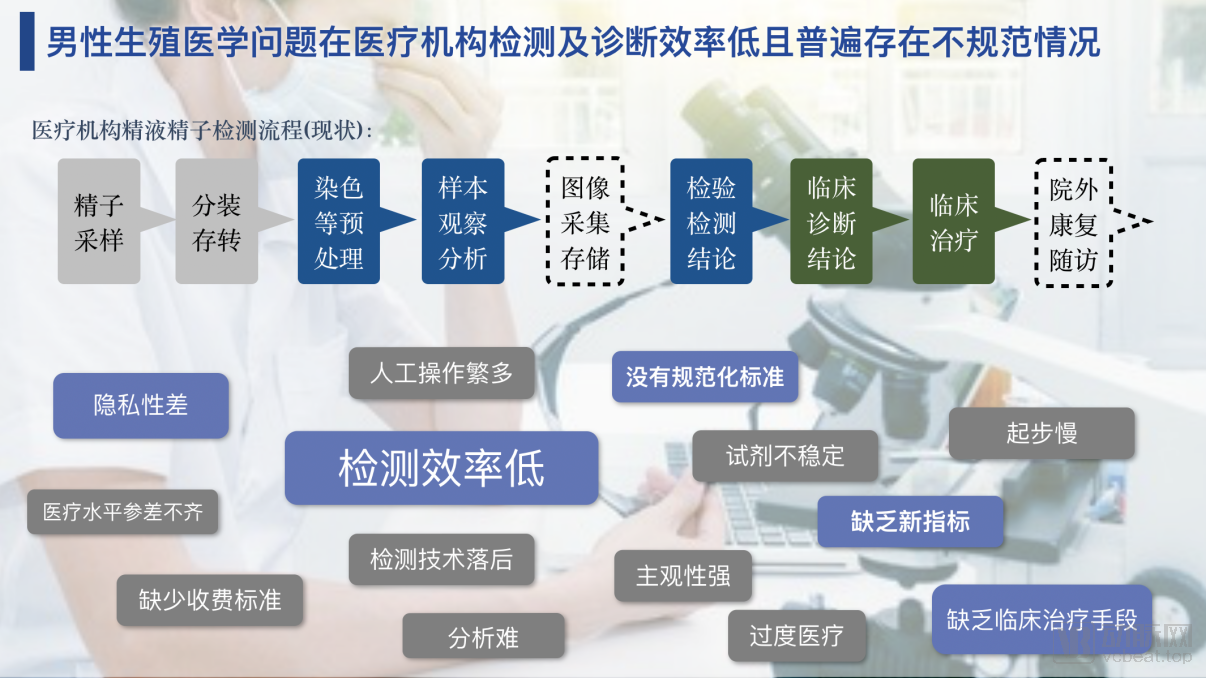
2. Existing computer-aided sperm analysis (CASA) software and hardware products on the market generally suffer from the “three lows and one shortage” problem: low throughput, low recognition rate, low accuracy, and limited applicable parameters. As a result, some medical institutions, after procuring such software or hardware through tendering processes, end up using these suboptimal products merely as tools for microscope image acquisition, still relying entirely on manual analysis and judgment by laboratory personnel for final conclusions.
3. Beyond routine tests such as sperm concentration, clinicians urgently need additional relevant biomarkers to elucidate the etiologies of infertility and support clinical decision-making. Advances in this area rely not only on increased investment in basic research and improved translation of research findings into clinical practice, but also on comprehensive, continuous, real-world patient data with large sample sizes.
4. Following a diagnosis of infertility, there is currently a significant lack of effective clinical interventions and adjunctive therapeutic tools within the industry to improve prognosis. Similarly, during assisted reproductive procedures such as intrauterine insemination (IUI) or in vitro fertilization-embryo transfer (IVF-ET), there is an urgent need for additional methodologies and auxiliary devices to further enhance success rates and improve embryo development quality.
5. Chinese male patients generally exhibit low willingness to seek hospital-based examinations and consultations. This reluctance stems partly from deeply ingrained concerns about “saving face,” and partly from suboptimal experiences during clinical visits. In some hospitals, patients are still required to use urine cups or generic measuring cups to collect semen samples in restrooms, highlighting inadequate privacy protection. Meanwhile, beyond improving the patient experience, the healthcare industry must also devote greater attention and resources to providing psychological counseling and humanistic care for couples and their families throughout the fertility journey.
To address the aforementioned issues, Liu Chang led his team to conduct in-depth engagements with both hospitals and patients, guided by market demands and centered around“End-to-End Process of Semen and Sperm Testing in Medical Institutions” and “End-to-End Process of Diagnosis, Treatment, and Follow-Up for Andrology Patients”Allocate resources to R&D and operations to explore solutions that effectively enhance diagnostic and treatment efficiency and deliver medical value to patients. Currently, Puhua Life’s product lines and services basically cover all aspects of male reproductive medicine diagnosis and treatment.
In the fifth edition of the WHO Laboratory Manual for the Examination and Processing of Human Semen, published in 2010, the World Health Organization explicitly affirmed the advantages of Computer-Aided Sperm Analysis (CASA) over manual methods and specified requirements for its application in assessing sperm concentration and motility. Consequently, numerous commercial companies have emerged both domestically and internationally to develop related hardware and software products.
Most existing CASA software solutions rely on previous-generation algorithmic technologies, such as traditional mathematical models. Consequently, they commonly suffer from inaccuracies in sperm cell localization and image segmentation, leading to false positives and missed detections due to background noise. These systems also exhibit weak anti-interference capabilities during computation and lack scalability. Puhua Life is the first company in the industry to introduce artificial intelligence deep learning algorithms for specialized identification and diagnosis of sperm cells, and has integrated its complete product suite into its independently developedHigh-Throughput Fully Automated Sperm Quality Analyzerabove, obtained authorization from the national food and drug regulatory authoritiesClass II Medical Device Manufacturing License。
Hou Wei, Head of AI R&D at Puhua Life, is a Tsinghua University graduate with ten years of experience in cybersecurity within China’s national security apparatus. He possesses extensive engineering and theoretical expertise in image recognition and data mining. “Theoretically, a neural network can approximate any function if it is sufficiently large,” he explained. “With the rapid advancement of artificial intelligence in recent years, the time is fully ripe to introduce deep learning algorithms for the identification, analysis, and diagnosis of human sperm cells.”
Computer-assisted "sperm morphology" analysis is a globally recognized challenge. The number of CASA (Computer-Assisted Sperm Analysis) products launched domestically and internationally that target "sperm morphology" parameters is extremely limited. Moreover, existing products fail to accurately identify and analyze sperm with atypical morphologies or subcellular structures, necessitating manual calibration and assessment. Nevertheless, "sperm morphology" parameters serve as a critical reference for the clinical diagnosis of teratozoospermia and are routine tests performed by 100% of medical institutions.
Puhua Life, by integrating its independently developed“Cellular Microstructure Recognition Engine Based on Convolutional Neural Network Deep Learning Algorithms”——GeniConvo™, it launched an assisted sperm morphology analysis software, which won widespread acclaim in the industry. In a closed-door, on-site head-to-head test involving testing personnel from four well-known domestic medical institutions and GeniConvo™, GeniConvo™ outperformed manual on-site results for the same batch of "sperm morphology" test samples, achieving a recognition rate of 96.8% and a processing speed of 108 seconds per sample. This performance earned high recognition and long-term cooperation agreements from all four institutions, significantly raising the standard for computer-aided analysis across the entire industry.
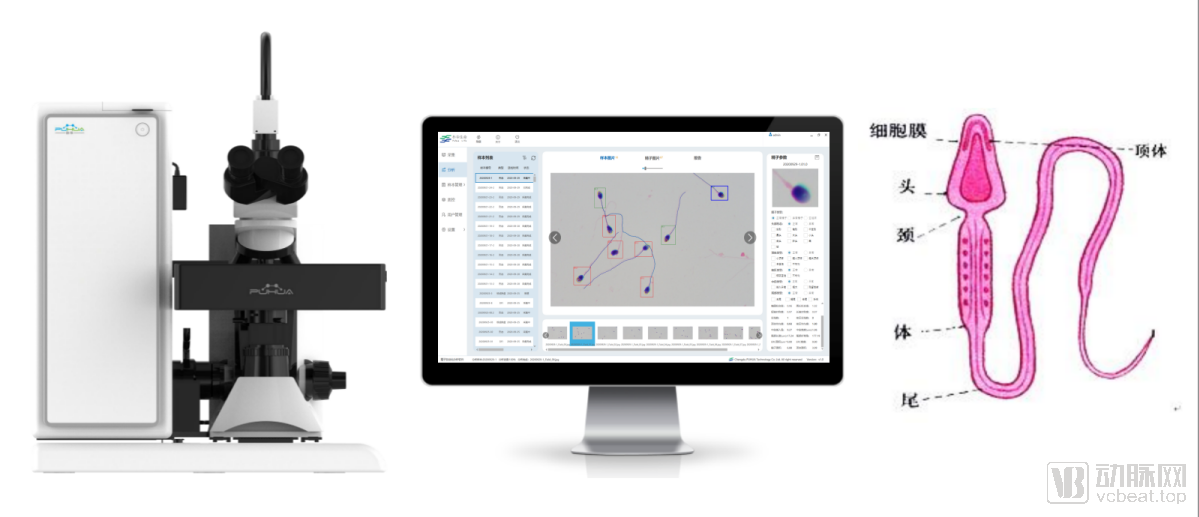
“Taking the sperm morphology-assisted analysis model as an example, it comprises over 80 hidden layers and thousands of neuronal features, including the GeniConvo™ underlying core algorithm,” Liu Chang explained. “The construction of each model is not merely a matter of core algorithms; rather, it requires close cross-team and cross-disciplinary collaboration, which is crucial. Meanwhile, the development of each model necessitates annotation training and regression validation on at least hundreds of thousands of high-quality, single-indicator samples, a process that typically spans six months to several years.”
It is understood that during the development of individual models at Puhua Life, Xu Wenming led senior medical laboratory professionals in contributing their knowledge and expertise, summarizing patterns, and completing precise annotation for all samples in the sample library, along with ongoing long-term proofreading and validation. Hou Wei was responsible for building the underlying core algorithms based on project requirements and the empirical insights summarized by laboratory professionals.(The establishment of the GeniConvo™ engine has greatly accelerated this process, and each application model demonstrates strong iterability and scalability.), and during the validation process, categorize and address identified issues to continuously optimize the machine model’s data mining capabilities, autonomous deep learning abilities, and anti-interference robustness, thereby facilitating model maturation until it reaches a stable state.
In addition, teams specializing in R&D of biological reagents, automation control, and optical design also participated and collaborated. By providing holistic solutions to clients, we not only ensured standardized and regulated testing procedures but also further guaranteed the accuracy of AI-driven analytical results, while effectively addressing issues related to software platforms and commercial profitability models.
Regarding data sample repositories, there are currently no ready-made, open-source sperm sample datasets available for deep learning in artificial intelligence within the industry. One of the primary sources of the Puhua Life Sperm Sample Repository is its collaboration with multiple large, authoritative medical institutions and assisted reproductive technology centers across China. Through these partnerships, real-world sperm test samples from male patients are collected in a targeted manner. Following informed consent from patients and data de-identification processes, these samples are continuously stored in the digital sperm sample repository.
Meanwhile, Puhua Life regularly procures fresh samples from multiple provincial sperm banks across China, conducting standardized staining, pre-processing, collection, analysis, and storage in its own or partner laboratories. Additionally, Puhua Life collects samples from special and rare cases nationwide to serve as a significant supplement to its sample repository. Through these various approaches, Puhua Life ensures the large volume, high quality, continuity, and diversity of its digital sperm sample bank.
In terms of data security, the top-tier team from Tsinghua University, led by Hou Wei, has introduced a national-security-level data protection system and standardized operational management protocols. The team strictly adheres to the requirements of the "Administrative Measures for Standards, Security, and Services of National Health and Medical Big Data (Trial)" in the collection, de-identification, storage, structuring, extraction and use, and regular monitoring of data, thereby establishing a routine mechanism for daily maintenance and management. Their professional data security awareness and operational measures have been highly recognized by partner institutions, providing robust technical support for ongoing scientific research collaboration and the application of research outcomes.
As of September 2020, the Puhua Digital Sperm BankOver 3 million cases have been cumulatively stored.Applicable to high-quality sperm samples for artificial intelligence deep learning, we have cumulatively developed AI-based analysis software and supporting staining reagents and automated equipment for multiple indicators, including sperm morphology, DNA integrity, nuclear maturity, and white blood cells.
“The COVID-19 pandemic has drawn global and societal attention to advancements in the biomedical field. In the realm of male reproductive medicine, fundamental research on sperm DNA, sperm cells, seminal plasma biochemistry, sperm motility, sperm-egg interaction, and implantation development still requires deeper exploration. Many mysteries remain regarding the correlations between various biological biomarkers and genetic diseases or clinical diagnoses. Each new discovery and technological innovation holds the potential to bring about breakthroughs in diagnostic, interventional, and preventive measures.” Liu Chang spoke with evident enthusiasm about his professional field. It is this very focus and passion that drive PuHua Life to delve deeper into the niche sector of male reproductive health. “Our team has worked diligently in a focused environment, dedicating ourselves to product refinement and algorithm training. With nearly a decade of accumulated expertise in basic scientific research and engineering technology, we are now entering a phase of intensive product launches starting this year.”

Among a series of automated devices integrated with artificial intelligence software, the product that has garnered the most industry attention, aside from semen quality analyzers, is Puhua Life’s latest market launch.Fully Automated Sperm Staining Analyzer. This productCapable of processing up to 96 samples in a single run, fully automated and programmable, with pre-set preprocessing protocols for assays including sperm DNA integrity, nuclear maturity, and morphology., new test items can be added via software updates in later stages. The entire staining process requires no manual intervention, effectively improving the standardization of examinations in medical institutions and significantly lowering the operational threshold. As the first fully automated staining instrument in China specifically designed for high-throughput male reproductive testing, it not only fills a market gap but will also greatly accelerate the adoption and popularization of male reproductive testing programs across medical institutions at all levels.
Addressing the pain points in assisted reproductive technology (ART), Puhua Life has independently developed solutions tailored for use in in vitro assisted reproduction procedures.Sperm Selection Microfluidic Chipand its accompanying accessoriesSperm Culture Medium, and no similar products are currently available on the market in China. In clinical assisted reproduction, it is necessary to separate sperm from semen to ultimately prepare a sperm suspension containing a high proportion of morphologically normal motile sperm, free from debris, other cells, and dead sperm.
According to the recommendations in the 5th edition of the WHO Laboratory Manual for the Examination and Processing of Human Semen, three methods are advised: simple washing, discontinuous density gradient centrifugation, and direct swim-up. The first two methods have limited applicability and carry a risk of causing some degree of damage to sperm.
The product solution provided by Puhua Life creates a near-physiological and relatively closed microenvironment for sperm cells. Its fluidic direction is designed based on the U-shaped swimming path of sperm during fertilization within the female reproductive tract. By leveraging microfluidic chip technology, the system retains dead or functionally abnormal sperm and employs a direct swim-up method to select sperm with intact DNA, normal morphology, and maturity. This enables the sorting and preparation of viable sperm while ensuring sperm vitality and preventing damage, thereby facilitating in vitro fertilization.
Since its launch, the product has garnered close attention from major assisted reproductive technology centers and institutions involved in human and animal reproduction, such as the China Conservation and Research Center for the Giant Panda. Currently, collaborative efforts with multiple authoritative institutions are underway to conduct animal experimental validation, human clinical trial validation, and registration certification for Class III medical devices.
In enhancing the in-hospital patient experience at medical institutions, as well as enabling long-term follow-up, monitoring, and remote consultations for home-based care outside the hospital, PuHua Life also provides relevant products and solutions, including those integrated into the physician- and patient-facing mobile apps “Pre-Consultation Privacy Questionnaire”, patented male-specific disposable semen collection cups, portable smart semen analysis devices suitable for home follow-up or infertility screening, and patient education, report interpretation, and psychological counseling services integrated into the patient-facing app. This has established the industry’s first multi-scenario coverage spanning both in-hospital and out-of-hospital home settings.(i.e., all stages of the full process: prevention, detection, diagnosis, treatment, and follow-up), a provider of comprehensive solutions encompassing medical devices, biological reagents, AI software, cloud platforms, smart home devices, and doctor-patient mobile applications.
Furthermore, the Company’s current R&D initiatives—including biomimetic organoids, ultra-high-speed 3D imaging of sperm-egg fusion, and multiple fluorescence-based detection assays—are all at the forefront of global scientific and technological innovation in male reproductive medicine.
Epilogue
Compared to the vast number of traditional medical device manufacturers, academic sci-tech innovation institutions, and conventional healthcare service providers in the industry, Puhua Life appears to demonstrate more vibrant vitality. The team has deeply penetrated a sufficiently niche market segment, surveying industry-wide shortcomings from the perspective of user needs. By introducing and deeply integrating hard-core technologies such as artificial intelligence, biomedicine, clinical medicine, and the internet, they address pain points across various links within this niche sector. This approach has enabled them to develop a comprehensive strategic toolkit and build a sustainable business model that features both competitive moats and continuous profit streams, offering valuable insights and references for both traditional enterprises and new-technology companies specializing in AI and other emerging fields.
It is reported that the PuHua Life team currently includes several national, provincial, and municipal-level experts, as well as specially appointed experts under high-level talent programs. Its sales channels now cover 22 provinces and municipalities across China. The company has recently secured tens of millions of RMB in Series A financing.