

How Has the Pandemic Catalyzed the Transformation of Internet Healthcare? Insights from the 2020 5th China Health Industry Upgrade Summit

JD Health
Internet Medical and Health Service Platform Provider

AliHealth
Medical and Health Services Network Service Provider
On October 10, 2020, the “Tianfu Health Talk · CHS 2020 The 5th China Big Health Industry Upgrade Summit” officially kicked off in Chengdu. Driven by new technologies and new models, a wave of innovative companies represented by “innovative drugs,” “smart healthcare,” “health management,” and “non-public healthcare” has emerged successively, bringing numerous development opportunities to the industry. Medical enterprises from these four sectors participated in the conference, fostering deep integration of perspectives across various medical fields through vigorous debate.
When discussing the development of the healthcare industry this year, the pandemic is an unavoidable topic. The pandemic has not only accelerated public attention to online healthcare, but also made medical data applications and smart healthcare highly prominent fields in the post-pandemic era. After being catalyzed by the pandemic, the underlying changes and continuities in the development of smart healthcare have gradually become clear through discussions at this conference.
Every enterprise has its own DNA. How can it leverage this inherent DNA to further drive development? How can medical resources be reintegrated and infrastructure optimized? How can new technologies, particularly big data, be harnessed to support clinical decision-making? These are all new issues that have emerged in the post-pandemic era.

In fact, smart healthcare in China began developing as early as the 1980s, although initial efforts primarily focused on hospital information systems and financial accounting systems. After 2010, with the gradual advancement of big data technology in China, medical big data became increasingly sophisticated, ushering in a period of explosive growth in healthcare informatization and driving the development of smart hospitals.
The pandemic has acted as a catalyst, propelling smart healthcare onto the priority agenda. Driven by demand-side forces, smart healthcare products have proliferated, intensifying industry competition to a fever pitch. During the outbreak, smart healthcare ensured that COVID-19 patients received diagnosis and treatment, while expanding the scope of online services such as remote consultations and web-based medical advice.However, in the post-pandemic era, many smart healthcare products have fallen into disuse. On the other hand, gaps in medical informatization persisted during the pandemic.
As the clear-cut demand driven by the pandemic gradually fades, where should smart healthcare ultimately head? How can it be further developed? These remain questions worthy of deep reflection within the industry.
Director of the Talent Exchange and Service Center, National Health Commission; Deputy Secretary of the Party Committee; Former Director of the Statistical Information Center, National Health CommissionZhang Xuegao shared his insights on digital health in the post-pandemic era, pointing out the direction for the future development of medical informatization.In summary, it can be distilled into four key points.
1. The development of informatization must be driven by needs and oriented toward problem-solving. Business expansion is meaningful only when it aligns with actual demands. While moderate foresight can yield technological dividends, excessive advancement may prove counterproductive.
2. With policy support, informatization must continue to play a foundational role in providing support and safeguards.
3. As data becomes further unified and standardized, healthcare information systems must advance into a phase of open integration and collaborative co-construction and sharing.
4. With the release of “Level Protection 2.0,” information security management and operations and maintenance (O&M) management have been placed on the agenda.
Building on this foundation, Director Zhang Xuegao expanded and summarized the key development direction of “building foundational capabilities for national health informatization.” In his speech, Director Zhang Xuegao first emphasized “The Importance of "Standardization Construction"He believes that big data serves as the foundation, while computing power and algorithms provide the support; however, without unified standards, what we have is merely “large volume of data” rather than true “big data.”
Therefore, “standardization” and “unification” should be the key terms for current data center and infrastructure construction. Only on the basis of standardized construction can big data enable rapid system deployment and achieve dynamic resource scaling.
Secondly, current informatization efforts largely remain at the “data recording” stage, failing to further derive usable and analyzable data from the documentation of medical big data production scenarios.Director Zhang Xuegao pointed out that vigorous efforts should be made to conduct data analysis. Only through continuous analysis and application of data can data quality be improved.
During the pandemic prevention and control period, public adoption of and attention to smart healthcare have increased significantly. Statistics show that the volume of online consultations during the pandemic was 17 times higher than in the pre-pandemic era. Internet-based medical services, such as online consultations and remote multidisciplinary consultations, have enabled patients to receive timely diagnosis and treatment without leaving home, thereby breaking down temporal and spatial barriers between doctors and patients. Furthermore, smart healthcare has expanded the scope of medical services, while its continued application has helped clarify market demands and drive technological iterations.
In the post-pandemic era, as immediate demands recede, the development of smart healthcare has moved to the forefront, with “standardization” emerging as the next key direction. After all, health informatization prioritizes interoperability; without unified standards, interoperability is unattainable, and information silos will persist. Furthermore, smart healthcare should no longer remain confined to peripheral hospital functions such as registration, payment, and inquiry services. Instead, it should pursue more comprehensive and in-depth strategies for health data infrastructure. In the future, significant opportunities for exploration remain in specialized areas including healthcare reform, tiered diagnosis and treatment systems, pharmaceuticals and medical services, and health outcome measurement.
Overall, the future of smart healthcare will enter a phase of comprehensive digitalization, leveraging data as a core technology, adhering to standardized development, and orienting around needs to accurately steer its direction.
The development of information infrastructure has paved the way for internet-based healthcare, while the pandemic has accelerated societal acceptance of third-party internet healthcare platforms. Many third-party enterprises have been relentlessly exploring the future direction of smart healthcare and further adjusting their corporate development strategies. Embedded within this process are both the changes and constants in internet-based healthcare.
Wang Hang, CEO of HaodaifuHe stated: “The development of internet healthcare is the result of continuous driving forces from both the demand and supply sides. In the process of users making medical consultation decisions and searching for relevant information online, since no one wishes to be a ‘guinea pig,’ everyone pays close attention to the experiences and insights others have gained during their medical consultations.”
As Wang Hang mentioned, for internet healthcare driven by both demand-side and supply-side forces, user experience should serve as a critical hub connecting users with products.Under the influence of mechanistic materialism, modern medicine has gradually lost its humanistic care for patients. Despite the rapid development of internet healthcare, attention to user needs and the provision of compassionate care remain crucial aspects of its ongoing development.
Baidu Health, JD Health, AliHealth, and other enterprises have also made corresponding adjustments and restructurings on the user side during the pandemic.
Baidu HealthLeveraging the inherent entry-point and technological advantages of search engines, Baidu Health can authentically and directly capture user intent from massive volumes of personalized search data, intelligently connecting it to the services provided by Baidu Health. Currently, Baidu Health covers five major service scenarios: knowledge services, online consultation services, health e-commerce services, internet hospital services, and chronic disease management services, offering users a comprehensive suite of solutions ranging from science popularization and knowledge acquisition to long-term disease management.
Yang Minglu, General Manager of Baidu Health and General Manager of Baidu Health Medical EncyclopediaSpeaking to VCBeat: “During the pandemic, Baidu Health provided a cumulative total of 110 million free consultations to users worldwide. By leveraging our own search engine to profile user personas, we found that many users sought comfort and reassurance rather than cold, impersonal results during this period. What Baidu Health aims to do is to continuously infuse such warmth and care into our services. In our view, quality healthcare must be service-oriented, not merely limited to medical or surgical treatments. Baidu Health will continue to cultivate and strengthen this aspect.”
Meanwhile,JD HealthIt positions itself as an auxiliary medical service provider, leveraging its own internet platform and operational capabilities. Its strategic layout spans smart hospitals, medical consortia, and pharmaceutical supply assurance, to renowned expert initiatives, family doctor contracting, and public health services, aiming to build an integrated online-to-offline (O2O) medical service system that provides full-lifecycle health management.
AliHealthIts initiatives also focus on internet-based medical services. With the launch of the Yilu app, the platform has rolled out additional features centered on user needs. In addition to online consultations and intelligent search, Yilu offers innovative internet healthcare services such as appointments for health check-ups and vaccinations, as well as rapid medication delivery. Leveraging its resource integration capabilities, AliHealth combines various business segments—including Taobao, Alipay, UC, and Quark—and draws on its physician network to provide “user-centric” medical services.
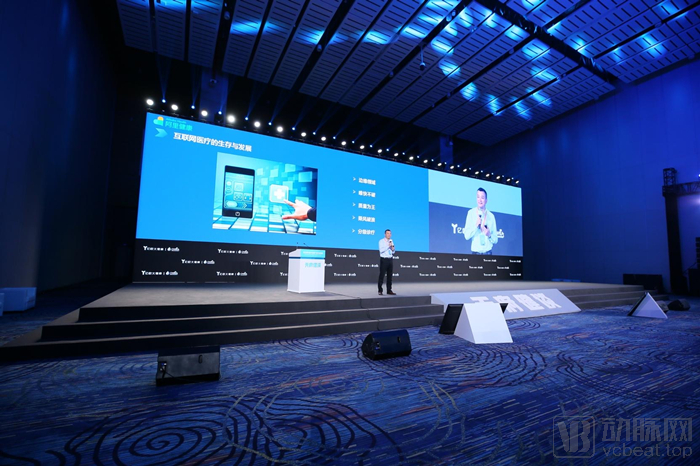
It is evident that third-party enterprises in the internet healthcare ecosystem have each carved out their own development paths and undertaken strategic restructuring based on their unique corporate DNA. Nevertheless, it remains clear that their strategic direction is guided by user needs, with a focus on supply-side demands, aiming to establish a comprehensive, full-ecosystem medical service system.The next step for third-party enterprises may be to comprehensively lay out the medical service system, leveraging users and the supply side as key focal points.
In fact, from the initial standardization of electronic medical records to the official release of the Tiered Evaluation Standards for Smart Healthcare Services in 2019, the state’s supportive stance toward smart hospitals has been clearly evident. However, numerous pressing issues remain in the construction of smart hospitals. For instance, the complexity of hospital operations and the operational and maintenance challenges associated with information technology equipment have made it difficult to effectively resolve many problems. Furthermore, as hospitals establish their information technology platforms, the proliferation of mobile applications and other programs on users’ smartphones has become an additional burden.
First, centralized entry points, standardized data, and personalized services may become the next step for smart hospitals.
Secondly, with the National Health Commission issuing standards, enterprises will meet the demands generated by hospitals and provide technical services, ultimately forming a smart hospital model oriented toward physicians, patients, and hospital management.
Third, assistance, collaboration, and connectivity are the key words for internet healthcare. It is absolutely impossible to disrupt the medical system.
Furthermore, as current services such as intelligent triage, patient convenience services, and remote consultation lack sufficient depth, comprehensive smart healthcare has not yet been realized, giving rise to greater opportunities for innovation in the field.
No Distance Too Far: The “Internet+” Breeze Will Eventually Reach Healthcare, Promoting Its Practical Implementation and Widespread Adoption. Although serious, low-frequency medical care may seem at odds with the rapidly evolving internet technology, a review of smart healthcare’s performance during the pandemic, coupled with ongoing compliance-driven exploration, allows us to remain optimistic about its future development.