

2020 China Pharmaceutical Digital Marketing Forum: Accelerating the Transformation of 'Internet+' in Pharmaceutical Digital Marketing

JD Health
Internet Medical and Health Service Platform Provider
The pandemic has accelerated the continuous rise in consumer health awareness. Particularly against the backdrop of successive policy initiatives promoting “Internet + Medical Health,” this trend has heightened hospitals’ and physicians’ emphasis on and provision of online diagnosis and treatment services, while also reinforcing pharmaceutical companies’ focus on and investment in digital channels.
Against this backdrop, the 2020 China Pharmaceutical Digital Marketing Forum, hosted by JD Health, was successfully held in Shanghai on October 12. As a high-profile and influential summit on digital marketing in the pharmaceutical industry, the inaugural China Pharmaceutical Digital Marketing Forum brought together numerous industry leaders, featuring representatives from dozens of top global pharmaceutical companies and more than 100 senior executives across the pharmaceutical supply chain. Participants engaged in extensive discussions and knowledge sharing on hot topics such as excellence in product launch and market access, innovative marketing, innovative payment models, and channel transformation.
During the opening session, Jin Enlin, General Manager of the Pharmaceutical Division and Head of Strategy and Investment at JD Health, shared the original intentions behind establishing the “China Pharmaceutical Digital Marketing Forum.” First, the timing is both opportune and urgent. After more than a decade of physical interaction between the pharmaceutical and internet industries, it is time to catalyze transformative chemical changes. At this juncture, it is necessary to systematically summarize and discuss pharmaceutical marketing methodologies to better serve the pharmaceutical industry. Second, “a single hand clapping, however fast, makes no sound.” Addressing topics in pharmaceutical marketing requires participation from the entire industry, with diverse voices influencing one another to jointly shape the future.
As special guests of the forum, Xiaobin Wu, General Manager of BeiGene China and President of the Company; Yanhui Feng, Global Senior Vice President of Eisai Co., Ltd. and President of Eisai China; Fangqian Jin, General Manager of Abbott’s Pharmaceutical Business in China; Xin Wu, General Manager of UCB Pharma China; and Enlin Jin, General Manager of the Pharmaceutical Division at JD Health and Head of Strategy and Investment, jointly participated in the opening “Leaders’ Dialogue” session of the forum.
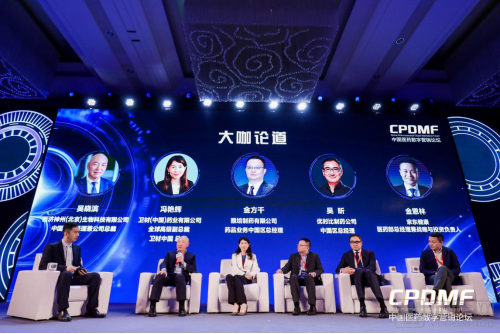
From left to right: Wu Xiaobin, General Manager of BeiGene (Beijing) Biotechnology Co., Ltd. China Region and President of the Company; Feng Yanhui, Global Senior Vice President of Eisai (China) Pharmaceutical Co., Ltd. and President of Eisai China; Jin Fangqian, General Manager of AbbVie’s Pharmaceutical Business in China; Wu Xin, General Manager of UCB Pharma China Region; and Jin Enlin, General Manager of the Pharmaceutical Department at JD Health and Head of Strategy and Investment.
The five panelists engaged in an in-depth discussion on the challenges and opportunities brought to the pharmaceutical industry by volume-based procurement, the impact of shifts in doctor-patient behavior in the post-pandemic era on pharmaceutical companies and distribution channels, and the development opportunities presented to pharmaceutical enterprises by the rapid growth of “Internet + Healthcare” and digital marketing. The panelists unanimously agreed that trends such as digitalization and the “post-pandemic” landscape are here to stay and will have a profound impact on the pharmaceutical industry and market players. Meanwhile, digital platforms represented by JD Health will become the focal point for pharmaceutical companies and distribution channels.
Feng Yanhui believes that the COVID-19 pandemic has not only transformed the traditional ways in which patients consult doctors and access medical services, but also provided an opportunity for internet-based healthcare to address the supply-demand imbalance in the pharmaceutical and health sectors. Wu Xin stated that pharmaceutical marketing has long been primarily targeted at clinicians, with little attention paid to the true end-users—the patients. The empowerment of patients through the internet enables medical service providers and pharmaceutical companies to listen to their voices and adopt a patient-centric approach, which holds immense potential to reshape the industry landscape. Wu Xiaobin expressed his expectations for the rise of innovative drugs in China. He noted that as a country with a population of 1.4 billion, establishing a strong foundation for Chinese innovative drugs and building national core competitiveness is something everyone hopes to see. It is hoped that through the joint efforts of all parties, Chinese innovative drugs will embark on a path of breakthrough and surpassing achievements in the future.
In the four subsequent thematic discussions on Excellence in Launch and Market Access, Innovative Marketing, Innovative Payment Models, and Channel Transformation, representatives from pharmaceutical companies, consulting firms, industry associations, and the broader pharmaceutical supply chain shared their insights, demonstrating forward-looking perspectives on the future development of digital marketing in the pharmaceutical industry.
During the session on Excellence in Launch and Market Access, Wang Lu, Director of Management Consulting at IQVIA, stated that big data and the internet are key to achieving patient-centricity, and that the primary competitors for pharmaceutical companies and the industry in the future will be technological advancements and time. Hao Yiming, Senior Vice President and General Manager of the Innovative Healthcare Solutions Division at HLT, proposed that pharmaceutical and medical device enterprises should fully align with the broader trend of digitalization within China’s healthcare system during their digital transformation. They should seize the demands arising from the evolution of the industrial ecosystem and formulate digital development strategies tailored to their product portfolios and future corporate positioning. Zhao Jinghua, Marketing Director for the Immunology and Inflammation Therapeutic Area at Sanofi’s Specialty Care Division, indicated in her speech that it is essential to leverage the respective strengths of platforms with potential user bases and professional medical institutions. By strengthening online-offline integration, innovative customer acquisition can be achieved at every stage of patient decision-making. Chang Yue from the Innovative Business Department of the Pharmaceutical Division at JD Health stated that providing patients with an integrated online management platform combining healthcare, pharmaceuticals, and insurance, while continuously accumulating real-world data insights from out-of-hospital treatment, represents a practical new solution to address the marketing challenges associated with new drug launches.
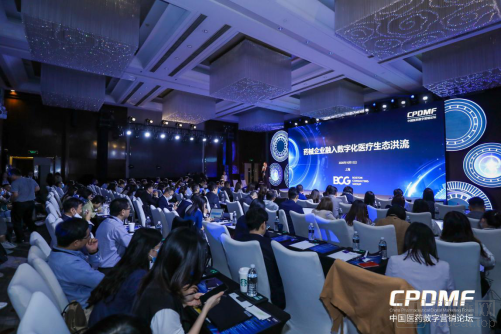
However, regulatory approval for market launch is merely the first step in pharmaceutical marketing; thereafter, pharmaceutical companies still face a series of challenges, including the implementation of marketing strategies. During the session on innovative marketing, Xu Siqing, Partner at Boston Consulting Group, stated in his speech that the development of the internet and 5G technology will drive the decentralization of services, enabling more effective integration of data resources and clinical pathways. Zhang Tianze, Founder and CEO of LinkDoc Technology, emphasized the need to establish a closed-loop patient data system to assist pharmaceutical companies in making R&D and marketing decisions. Chen Siying, Senior E-commerce Marketing Manager at AstraZeneca, argued that what the industry lacks is not advanced technology or tools, but rather insight, empathy, and understanding of end consumers. Fan Jing from the Innovative Business Department of the Pharmaceutical Division at JD Health believed that innovative marketing should leverage inherent advantages and the dividends of the internet, adopt a patient-centric approach, and provide one-stop services ranging from disease education, diagnosis, treatment, and disease management to financial services, while also delivering value-added services to pharmaceutical companies.
Meanwhile, new payment mechanisms present both challenges and opportunities for pharmaceutical companies. Zhao Heng, founder of Latitude Health (also known as “Cunfu’s Diary”), a healthcare strategic consulting firm, shared insights on diverse payment models in the U.S. market, health insurance systems in European countries, and international experiences collaborating with commercial insurers. Wang Yi’ou, Secretary-General and founder of the Beijing Pain Challenge Public Welfare Foundation, elaborated in her speech on the financial burden faced by patients with rare diseases when accessing high-value medications, and described how the foundation, together with government agencies, pharmaceutical companies, and other stakeholders, is exploring multi-party co-payment models. In addition to rare diseases, oncology represents another key area actively pursuing innovative payment initiatives under the value-based healthcare paradigm. Hui Ying, Head of Market Access and Payment Innovation for Roche China, shared Roche’s explorations into innovative drug payment solutions within China’s multi-tiered medical security system. Gan Bo, Head of Prescription Drug Division I at JD Health’s Pharmaceutical Department, stated that beyond addressing patients’ direct out-of-pocket costs, innovative payment solutions should also leverage internet platforms to integrate physical products with services, thereby expanding from solving individual patients’ problems to addressing the needs of their entire families.
At the conclusion of the thematic seminar, the panelists engaged in an in-depth discussion on “Channel Transformation.” Wu Yi, Co-founder of Nuoxin Chuanglian, introduced the concept of a data-empowered super marketing organization, leveraging user personas generated from data to guide marketing strategies. Zhou Xinyuan, General Manager of Channel Innovation at JD Health and Head of Yaojingcai, presented the concept of the “Pharmacy of the Future” to the attendees and outlined how technological advancements can benefit a broad patient population. Zhang Shenying, Head of Internet Hospital Business at Sanofi, addressed the issue of trust in online consultations, emphasizing the need to remain strictly patient-centric to enhance patients’ willingness to use and satisfaction with online medical services. Wang Yiting, from the Pharmaceutical Consumer Division of JD Health’s Medicine Department, stated that the expansion of data scope and improved efficiency present a rare opportunity to achieve full lifecycle user management. She noted that business growth requires a strategic shift from a traffic-oriented mindset to a user-oriented one, focusing on deep user engagement and capturing user mindshare through service excellence.
In fact, traditional pharmaceutical marketing has long relied predominantly on offline channels, such as medical representatives and in-person academic conferences, characterized by low digitalization and outdated concepts. In recent years, relevant national authorities have introduced a series of innovative policies, including the consistency evaluation of generic drugs, the reform separating prescribing from dispensing, centralized volume-based procurement led by the National Healthcare Security Administration, and the “Internet + Healthcare” initiative. The implementation of these new policies has ushered in significant transformations in China’s pharmaceutical marketing landscape.
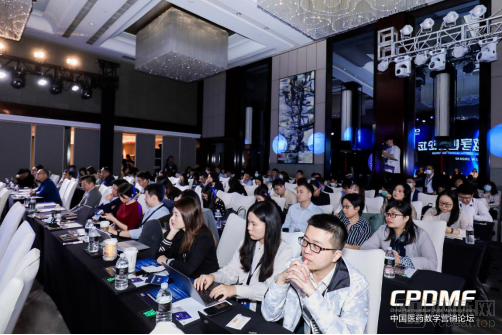
With the maturation of internet healthcare technologies, operational models, and user experiences, coupled with a series of policy initiatives, hospitals, physicians, and consumers are increasingly embracing internet healthcare. Leveraging “Internet Plus” and big data to enhance the conversion rates of pharmaceutical digital marketing has become a preferred strategy for a growing number of pharmaceutical companies, emerging as a key industry trend.
According to the "2020 White Paper on the Development of China's Pharmaceutical E-commerce" released by iResearch in May this year, the market size of pharmaceutical distribution and pharmaceutical e-commerce in China grew year by year from 2013 to 2018. In 2018, the national market size of pharmaceutical e-commerce reached RMB 97.8 billion, a year-on-year increase of 32.7%. The rapidly growing share has made the internet an indispensable new scenario for drug promotion.
According to the recently released “2020 Digital Healthcare Insights Report,” consumer-side data show that the average annual growth rate of digital healthcare users over the past three years reached as high as 30%. By the end of 2019, the number of digital healthcare users in China had approached 70% of the total mobile internet user base, reaching 620 million. Among these users, more than 60% obtained pharmaceutical-related information online, including health and wellness tips as well as disease diagnosis and treatment guidance. This ongoing shift in user behavior demonstrates that pharmaceutical marketing has increasingly penetrated the broad consumer population. Meanwhile, the penetration rate of physicians registering with internet hospitals and participating in online academic education continues to rise.
“In summary, pharmaceutical marketing drives sustainable sales growth by acquiring new customers and encouraging repeat purchases, all while ensuring accessibility. Pharmaceutical e-commerce platforms and internet hospitals enable nationwide, equitable access to medications and medical services through the ‘one store, one hospital’ model. Meanwhile, they establish a closed loop encompassing users, data, and processes, making both data and behaviors traceable, visible, and analyzable,” said Jin Enlin. He added that the China Pharmaceutical Digital Marketing Forum will annually provide an industry platform for exchange and sharing, inviting partners across the sector to collaborate in developing new marketing strategies leveraging ‘Internet Plus’ and helping pharmaceutical companies accelerate the comprehensive digital transformation of their marketing operations.