

Respicardia Files IPO Prospectus to Address Sleep Challenges in 6.5 Million Heart Failure Patients with Its remedē® System

Respicardia
Developer of Implantable Neurostimulation Therapies
Breathing: The Beginning of Life. However, for certain patients, breathing during sleep is not an easy task.
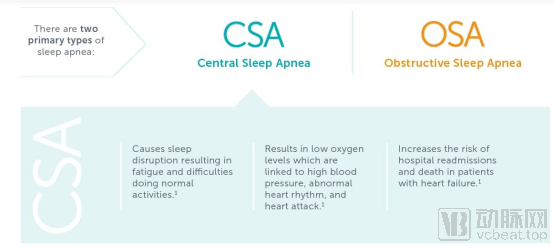
Image source: Respicardia official website
Central Sleep Apnea (CSA) refers to the condition characterized by the absence of airflow through the mouth and nose, accompanied by a cessation of thoracic and abdominal respiratory movements for more than 10 seconds during sleep.In healthy individuals, respiration during sleep is regulated by the non-behavioral control system. Patients with heart failure often experience sleep apnea, including both central sleep apnea and obstructive sleep apnea; either type increases the risk of mortality in these patients.
For patients and their families, how to effectively treat sleep apnea is particularly important. Amid the trend of most companies focusing on how to reduce cardiac workload in heart failure patients,Respicardia has taken a novel approach by developing implantable devices to regulate breathing patterns, with the ultimate goal of improving the quality of life for patients with heart failure. The first product developed by Respicardia is remedē®Primarily targets patients with central sleep apnea.
2006 was a global bull market, with stock markets in countries around the world on an upward trend. The healthcare industry was also experiencing rapid development; in 2006, total sales in the medical device market reached $290 billion. It was at the end of that year that Danny Sachs founded Respicardia in Minnesota, USA.
Prior to the founding of Respicardia,Danny Sachs is a Lecturer in Medicine in the Department of Emergency Medicine at Harvard Medical School and was formerly a venture capitalist at Investor Growth Capital and Spray Venture Partners.Years of work experience have allowed him to recognize the market demand for central sleep apnea.
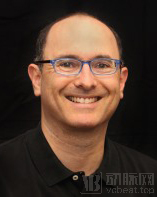
Respicardia Founder Danny Sachs
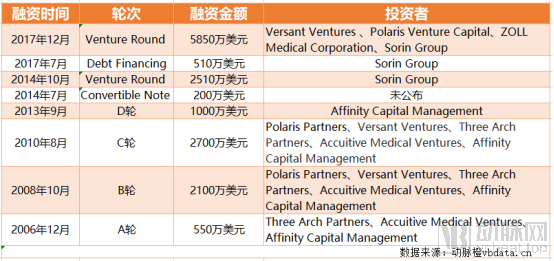
At that time, Danny Sachs realized that treatment options for patients with central sleep apnea were limited, indicating substantial unmet market demand. Drawing on his prior entrepreneurial experience, Danny Sachs quickly founded the company andSecured $5.5 million in Series A financing to accelerate the R&D of related products。
The development of medical devices often requires a lengthy period. The rise of the medical device outsourcing industry has significantly addressed the issue of insufficient research resources for some startups. Shortening product development time can accelerate a company's path to profitability. Based on this concept,Danny Sachs chose to partner with Integer, the world’s largest contract manufacturing and design organization (CMDO) for medical devices, entrusting it with product research and development as well as quality control.
Even so, it took Respicardia, Inc. many years to go from product research and development to the finalization of its product.2010, remedē®The device has obtained CE certification in Europe. It can automatically initiate the treatment program and sustain it throughout the night, while requiring no external devices from the patient.
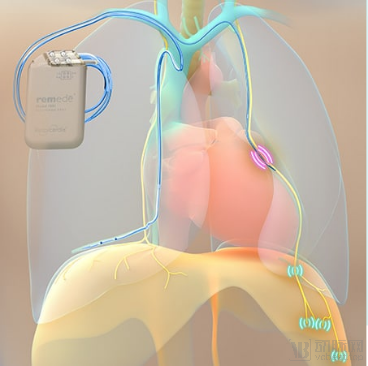
remedē® device
Compared with commonly implanted heart failure devices, they have a similar appearance. The difference lies in the fact that heart failure devices act on the heart, whileremedē®The device acts on the phrenic nerve of the human body.。
remedē®There are two leads: one for sensing respiration and one for modulating respiration.Implanted into the patient’s body via a minimally invasive outpatient procedure through venous access, the device delivers electrical stimulation to the phrenic nerves, transmitting signals to the musculature between the chest and abdomen. This electrical stimulation induces contraction of the muscle tissue, enabling the patient to breathe “actively.”
Although the product's research phase has concluded, clinical trials for remedē will now commence.®The safety and efficacy of the device, as well as remedē compared to pharmacotherapy®In what aspects are the advantages of the device reflected? To address these issues,Respicardia enrolled patients at 25 trial centers in the United States and several trial centers in Europe to conduct clinical studies, and announced the study results in 2013.
A total of 44 patients were implanted with the remedē system in this clinical trial.®device, a 6-month follow-up survey was conducted after surgery. The results showed that,The patient's Apnea-Hypopnea Index (AHI) decreased by more than 50%, oxygenation improved by more than 50%, and quality of life was significantly enhanced.
With the AHI reduced by 50%, such impressive data significantly boosted Respicardia’s confidence in its product and strengthened the company’s resolve to participate in the 2013 “U.S. Healthcare Product of the Year” awards. remedē®Living Up to Expectations, forRespicardia received the honor of the Financial Award. The following year, remedē®Won the Best Cardiovascular Innovation Award.
For medical device companies, clinical trial data is the most effective form of promotion. This is particularly evident in the case of Respicardia; in 2014, remedē®Clinical trial results were released less than a year ago.Sorin Group, a leader in the field of cardiovascular disease treatment, has invested in Respicardia and signed a distribution agreement.
According to the terms of the agreement, Solin Group holds the rights to remedē for a period of five years following the effective date of the agreement.®Exclusive distribution rights for the device in Europe. Sorin Group focuses on its portfolio of cardiac devices and blood management products. The collaboration between Sorin Group and Respicardia will further expand Sorin Group’s presence in the cardiac device sector, delivering mutual benefits to both parties.
To obtain FDA approval, Respicardia also designed a prospective, multicenter, randomized controlled trial to evaluate remedē®Safety of the Device and Efficacy of Transvenous Phrenic Nerve Stimulation. This trial targeted patients with moderate to severe central sleep apnea. Clinical trials were conducted simultaneously at 31 sites in the United States and Europe, enrolling a total of 151 patients who were randomized in a 1:1 ratio to the experimental and control groups to ensure the validity of the trial results.
In terms of comparing device efficacy, the primary comparison focused on the difference in the Apnea-Hypopnea Index (AHI) from baseline to 6 months between the experimental group and the control group. The results indicated that the AHI in the experimental group decreased by more than 50% compared with the control group.Following the release of trial results, Respicardia applied for FDA approval and obtained commercialization approval from the FDA in 2017. In October of that year, it began limited sales in the U.S. and European markets.
Thereafter, Respicardia began to drive the commercialization of its products in the United States. In early 2018, remedē®The device completed its first commercial implantation procedure. Nevertheless, for longer-term considerations and to evaluate remedē over an extended period®Safety and efficacy of the device. Respicardia initiated another clinical trial following FDA commercial approval, with a duration of 2–3 years.
During the trial, Respicardia conducted 24-hour polysomnography and recorded patients’ sleep patterns to evaluate the device. The trial results showed:
1. The median Central Apnea Index (CAI) decreased by 99% from baseline;
2. The apnea-hypopnea index (AHI) was reduced by 59% in 93% of patients;
3. Improved percentage of rapid eye movement (REM) sleep and oxygen saturation during sleep;
4. 90% of patients experienced no serious adverse events.
Based on the results of this trial, remedē®The duration of the device's safety and effectiveness can last up to 3 years, but the upper limit of the device's lifespan requires further clinical trials for investigation.
In 2019, Respicardia’s distribution agreement with the Sorin Group was nearing expiration. Consequently, Respicardia sought new commercial partners for the next round of collaboration. Shortly thereafter,Integer, a globally renowned MDO manufacturer, announced the signing of a development agreement and a supply agreement with Respicardia. Under the terms of the seven-year agreement, Integer will serve as the exclusive provider for remedē during the first five years.®Exclusive supplier of the device.
Counting from 2013, this marks a “reunion” after six years apart. Six years ago, they collaborated on R&D; six years later, they are partnering on distribution. What opportunities this long-awaited collaboration will bring remains to be seen. However, it is undeniable that, aside from Respicardia, Integer is likely the company with the deepest understanding of remedē®The party with superior equipment.
Additionally, regarding future development plans, Peter Sommerness, President and CEO of Respicardia, stated, “The company is eager to collaborate with more medical center teams to bring this therapy to a broader patient population.”
According to relevant statistics,By 2027, the global market size for sleep apnea devices is projected to reach $13.24 billion, with a compound annual growth rate (CAGR) of 6.8% during the forecast period.Fortune pointed out in its report on sleep apnea that the rising incidence of cardiovascular disease and diabetes among the elderly population has led to a surge in the number of patients with sleep apnea, which will in turn drive market growth during the forecast period. It is predicted that the market size for sleep apnea treatment and diagnostic devices will reach $7.81 billion by 2027.
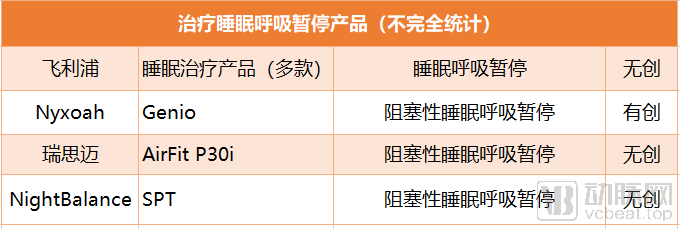
The trend of global population aging is becoming increasingly pronounced, indicating that relevant companies need to introduce more advanced devices to meet market demand. For instance, mandibular advancement devices (MADs) are being introduced for the treatment of obstructive sleep apnea. To address the discomfort associated with continuous positive airway pressure (CPAP) therapy, there is a shift from CPAP machines toward oral appliances. In summary, more advanced devices are being launched to address the current limitations of respiratory equipment.
As patients’ awareness of early diagnosis continues to rise, it will drive growth in the health industry market. Notably, with continuous advancements in global technology and growing demand for advanced medical devices, enthusiasm for research and development of such equipment in the market will be further stimulated.
From every perspective, there remains substantial unmet demand in the market for sleep apnea devices. However, several unresolved issues persist with these devices. First, cost: sleep apnea devices are generally expensive, imposing an additional financial burden on patients. Second, size: respiratory support devices are often bulky and not easily portable. Furthermore, for implantable devices such as the remedē® system, device longevity is also a critical concern. In summary, across all industries, continuous self-improvement driven by technological advancements is essential to stay current and competitive through ongoing optimization.